
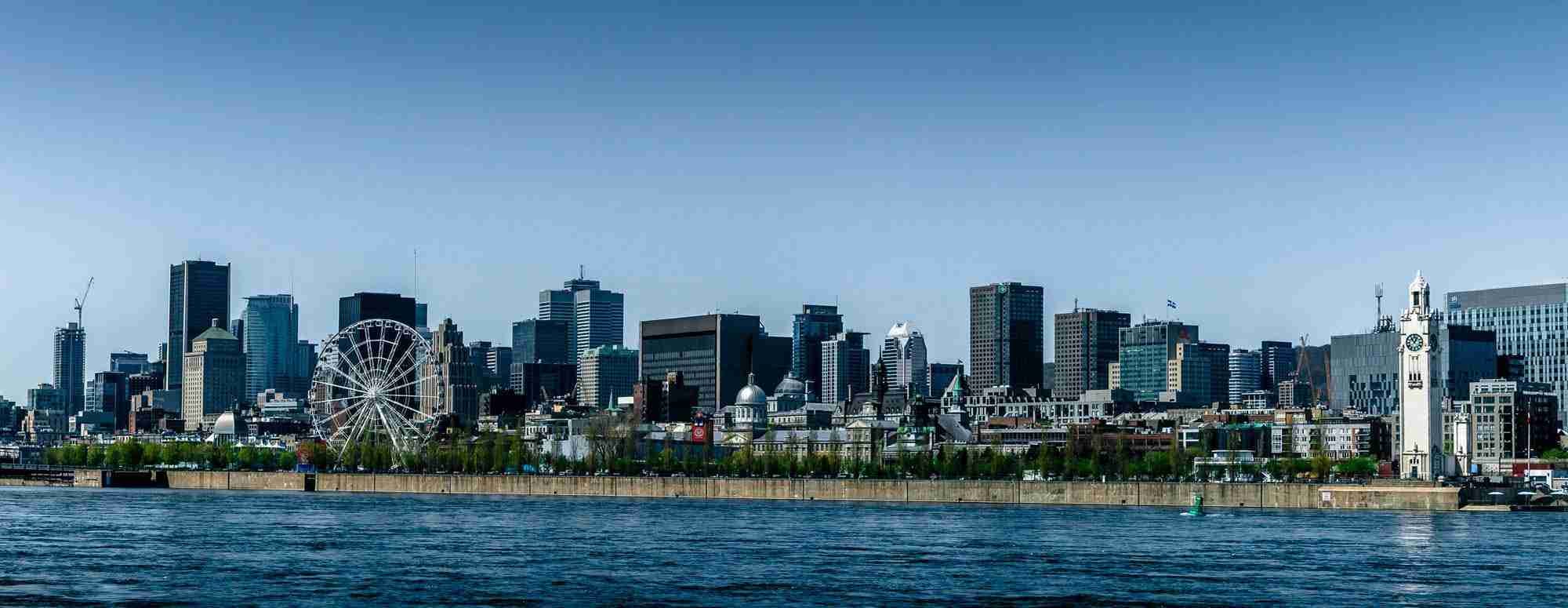
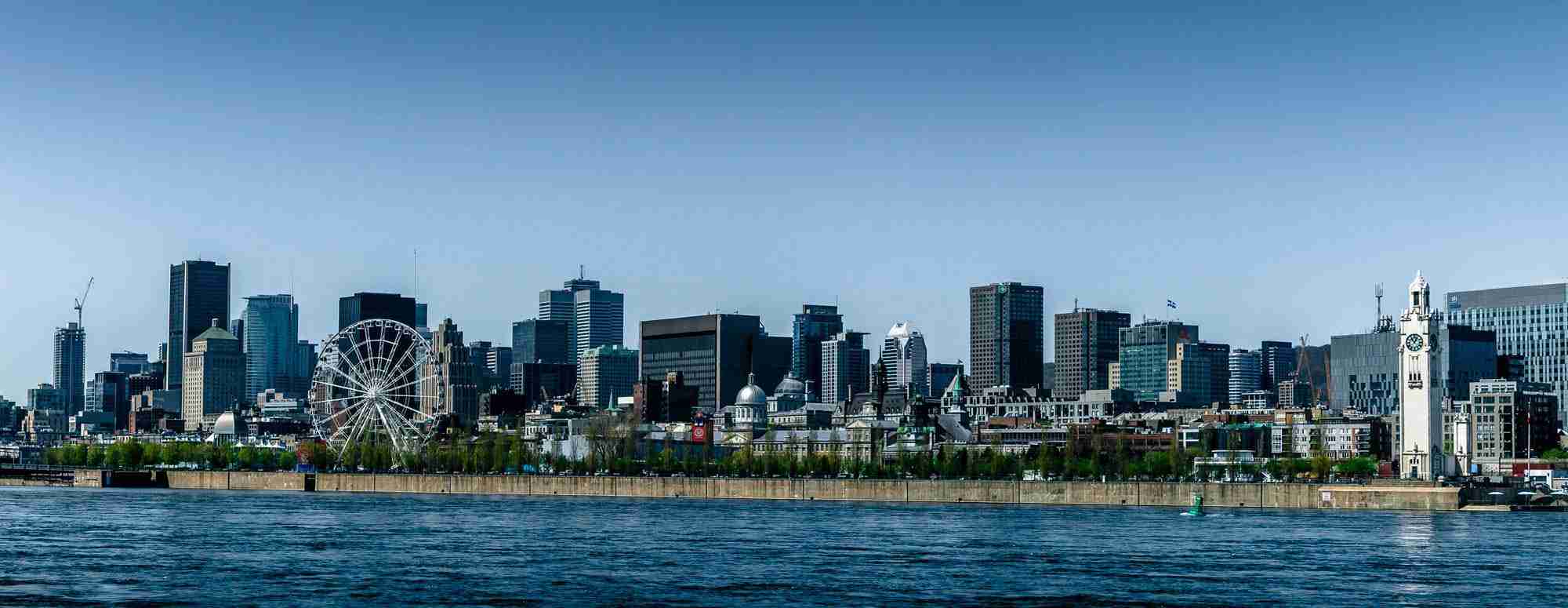
Positioned directly across the St. Lawrence River from downtown Montreal, the boardwalk on St. Helen's Island in Parc Jean-Drapeau offers one of the city's most expansive and accessible panoramic views. With the Montreal skyline rising beyond the water and the city's signature bridges and high-rises punctuating the horizon, this location has become a favorite for landscape and cityscape photographers alike. Whether under midday clouds, the golden glow of a sunset, or the luminous architecture of a city at night, the vantage point from this riverbank captures Montreal in both motion and stillness. Framed by the natural beauty of the island park, this site offers an ideal balance of urban geometry and open sky.
Best Photography Opportunities
• Full skyline panorama from the boardwalk edge
The main draw of this location is the uninterrupted view across the St. Lawrence River toward downtown Montreal. The boardwalk runs parallel to the skyline, offering clean, open sightlines perfect for wide panoramic compositions. From this vantage point, you can include the full breadth of the skyline—beginning with the silhouettes of the western high-rises and stretching toward the Jacques Cartier Bridge on the east. A wide-angle zoom allows you to take in the whole cityscape, while a longer focal length is ideal for shooting multi-frame panoramas with enhanced resolution and compression. Blue hour and golden hour light add dimensionality to the buildings, casting warm highlights and cool shadows across the glass and stone façades. With a sturdy tripod and careful leveling, photographers can create high-detail panoramic images ideal for large prints or editorial work.
• Sunset backlight and silhouette compositions
During certain times of the year—particularly late spring through early autumn—the sun sets directly behind the Montreal skyline when viewed from the boardwalk. This creates powerful silhouette opportunities where the outlines of the buildings are backlit by glowing gradients of orange, pink, and purple. For maximum impact, arrive 30 to 45 minutes before sunset to scout your framing and monitor cloud movement. A longer focal length helps isolate the most distinctive architectural elements like the inclined roof of the Olympic Tower or the stacked mass of Place Ville Marie, compressed against the warm sky. Bracketing exposures allows you to balance detail in both the sky and foreground, especially if you include reflective water or trees in your frame. Reflections on the river amplify the drama, and the slight surface movement can be softened with a neutral density filter for a painterly effect.
• Night cityscapes and skyline illumination
As daylight fades, Montreal's skyline becomes a beacon of warm artificial light. Office towers, high-rise condos, and civic structures like the Olympic Stadium and the Biosphere all come to life with distinct nighttime character. The boardwalk is well-suited for long exposures, with steady ground, minimal foot traffic in the evening, and a clear view of the skyline across the water. Set up a tripod and use exposures between 10–30 seconds at low ISO for maximum clarity and minimal noise. Wide and mid-range lenses are ideal for capturing the breadth of the city, while a telephoto lens allows for selective compositions that isolate specific architectural lighting or create abstract studies of illuminated windows. Light pollution is minimal from this angle, and reflections on the river add a dynamic second layer to night frames, especially in winter or after rain.
• Bridge framing and geometric compositions
From slightly farther east along the island's pathways, photographers can incorporate the Jacques Cartier Bridge into their skyline compositions. The steel trusses and angular geometry of the bridge add a structural frame that contrasts beautifully with the vertical forms of downtown buildings. At night, the bridge's programmed lighting system changes color and intensity, offering a vivid, moving subject when paired with the steady, glowing skyline. During the day, strong shadows and diagonals from the bridge's structure can be used to guide the viewer's eye across the frame. From ground level, shoot upward to exaggerate perspective; from an elevated point, you can capture the full curve of the bridge arching toward the skyline. A circular polarizer or ND filter is helpful when working with water reflections or strong sky contrast in daylight.
• Seasonal foregrounds and environmental layering
The beauty of this vantage point lies not only in the skyline itself but in the changing environment that frames it. In spring and summer, the green lawns and flowering trees around the boardwalk provide vibrant foregrounds. Use these elements to create layered compositions—shoot through low-hanging branches or across grassy clearings to add dimensionality. Autumn brings bold red and orange tones from the island's maples, especially in early October, which visually echo the warm stone tones of Montreal's architecture. In winter, snow and frost reduce the color palette to minimal tones of white, grey, and rust, allowing the city to emerge as a clean, luminous subject above the frozen river. Including these seasonal details in your foreground not only provides scale and depth, but also anchors the skyline in time, making each image feel unique to a particular moment and mood.
Best Time to Visit
The boardwalk at St. Helen's Island is photogenic year-round, but certain times of day and season dramatically alter the mood and light quality.
Spring provides soft morning light, fresh foliage, and clear post-winter skies—ideal for wide environmental portraits of the city. It's also one of the quietest seasons, allowing for peaceful long exposures.
Summer offers the longest golden hour windows and sunsets directly behind the city. While crowds may gather in the park, early mornings and post-sunset hours remain calm and productive for photography. Late evening light reflects warmly off the buildings and water.
Autumn is arguably the most visually rich time to shoot from this location. Colorful foliage across the island and cool, haze-free air create vibrant clarity. The low angle of the sun throughout the day enhances building texture and shadow.
Winter transforms the scene into a graphic study of contrast—snow-covered riverbanks, stark leafless trees, and glowing buildings under a slate sky. Blue hour in winter is particularly dramatic, with deep, rich hues and fewer distractions on the water surface.
How to Get There
St. Helen's Island is part of Parc Jean-Drapeau, located between Montreal's Old Port and Longueuil. The island is accessible via public transit, bike, or car. From downtown Montreal, take Metro Line 4 (Yellow Line) to Jean-Drapeau Station. From the station, it's a 10–15 minute walk through the park to reach the boardwalk along the northwestern shore of the island.
Cyclists can reach the island via the Concorde Bridge or bike paths connecting through the Old Port. For drivers, parking is available in Parc Jean-Drapeau lots, especially near La Ronde or the Biosphere. Be sure to check seasonal closures or event restrictions, particularly during the summer months.
The boardwalk and surrounding waterfront paths are open year-round and accessible at all hours. While there are no barriers to photography, always be respectful of other park users and consider off-peak times for setting up tripods or staying in one spot for long exposures.
Recommended Photography Gear
A wide-angle zoom (16–35mm) is essential for skyline shots, environmental compositions, and panoramic scenes. For more compressed skyline silhouettes and detail studies of the cityscape, a mid-range zoom (24–70mm) or a telephoto lens (70–200mm) offers flexibility and reach.
A sturdy tripod is crucial for blue hour and night photography. Use it in combination with a remote release or timer to eliminate camera shake. A circular polarizer helps reduce glare off the water and deepen sky tones in daytime shots, while a 3-stop or 6-stop ND filter is useful for smoothing water during longer daylight exposures.
Weather protection for both camera and photographer is important during colder months or in damp summer conditions. A lens cloth and rain sleeve can make all the difference when moisture rolls in from the river.
Consider a panoramic head if shooting stitched multi-frame panoramas, and bring a microfiber cloth for keeping front elements clean when shooting close to the waterline.
Nearby Photography Locations
• La Ronde Ferris Wheel and Waterfront Path
Located nearby on the island, the amusement park offers unique silhouettes, colorful lights, and reflection opportunities at night. Excellent for abstract city/park combinations.
• Biosphere and Environmental Museum
The geodesic dome of the Biosphere makes for bold architectural compositions. Pair it with seasonal foliage or soft twilight skies for graphic, modern contrast.
Just across the river, this historic area offers classic stone architecture, boats, and human-scale scenes that contrast beautifully with skyline shots taken from the island.
• Habitat 67
Located on the southern end of Cité-du-Havre, this architectural landmark is best photographed in late afternoon light from the water's edge or across the inlet on the island.
• Concorde Bridge Viewpoint
Walkable from the boardwalk, this elevated spot offers a different angle on the skyline and the bridge itself. Ideal for framing light trails or sunset reflections on the water.
The St. Helen's Island boardwalk isn't just a spot—it's a long, evolving stage for Montreal's skyline to perform under the shifting light of the river's edge. Whether you're aiming for editorial crispness or moody storytelling, this location offers the rare ability to step back and frame a world-class city with space, quiet, and clarity.
Comments
Loading comments…