
Best Photography Opportunities
• Classic mill composition from the riverbank across the falls
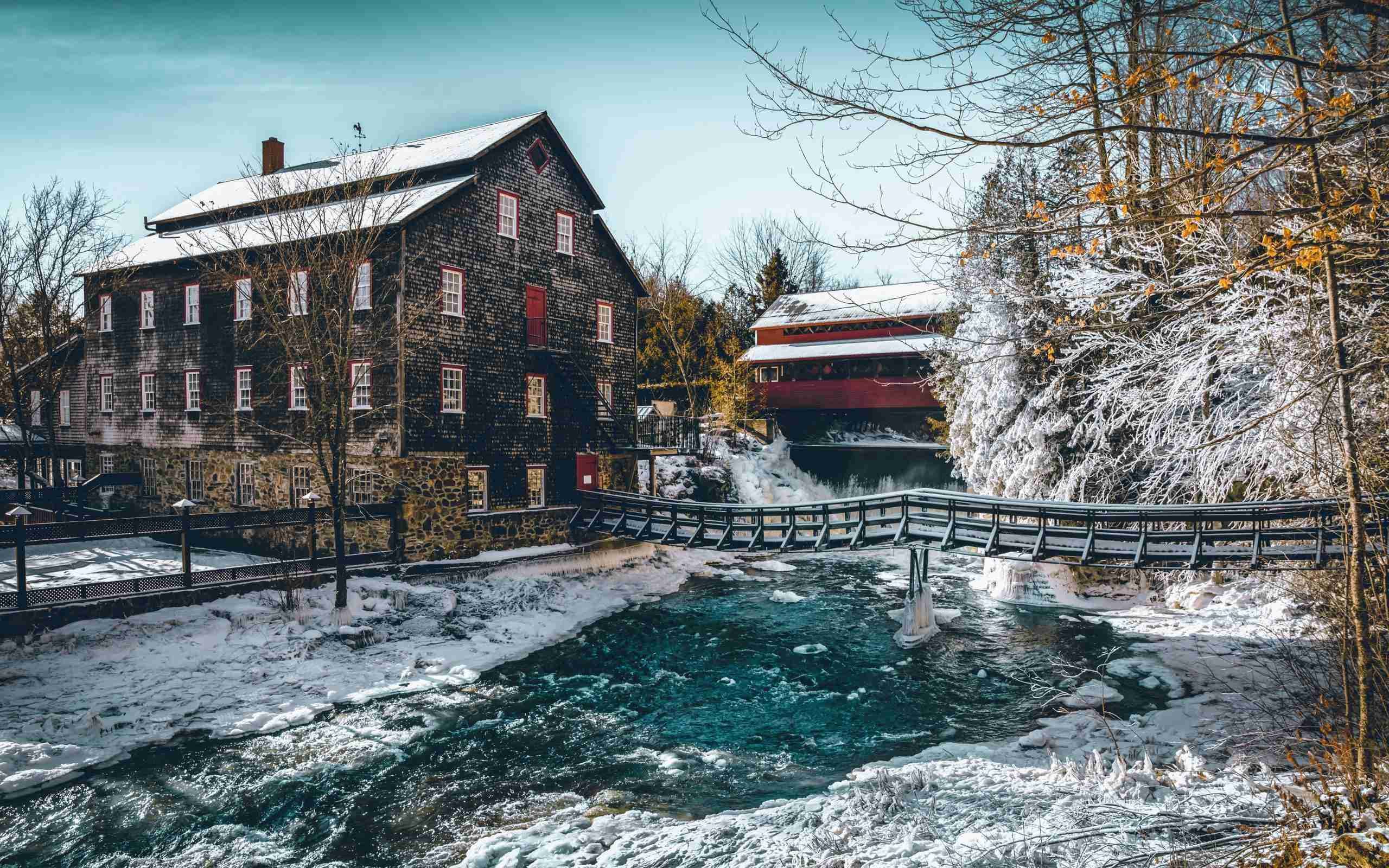
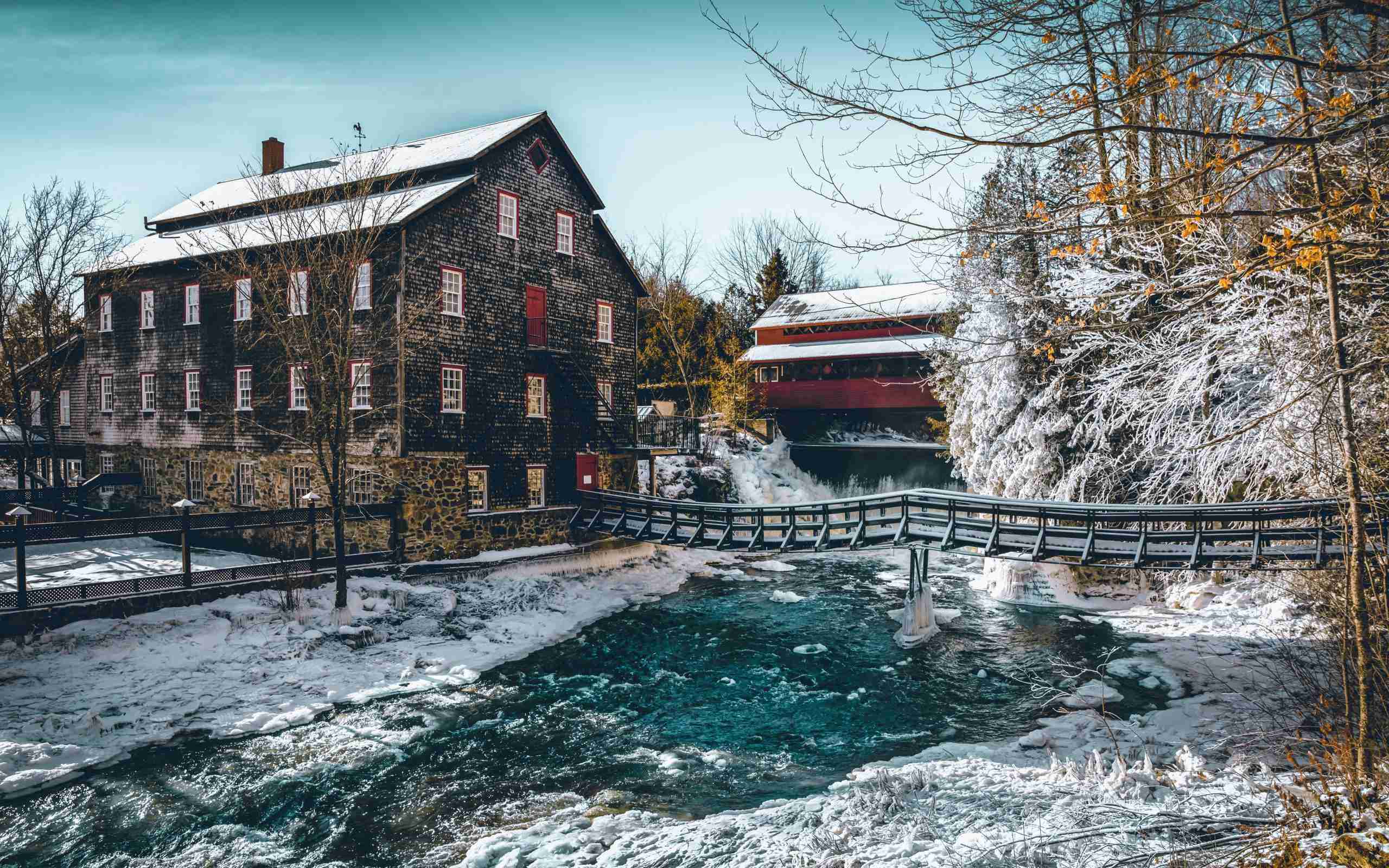
One of the strongest photographic vantage points is from the opposite bank of the river, where the full site can be captured in one balanced frame: the covered bridge arching over the water, the mill building set just behind it, and the cascading waterfall threading between them. This composition benefits from a wide-angle lens to fully include each visual element while maintaining context in the trees and riverbank. In spring and fall, color from surrounding foliage enhances the frame, while in winter the entire scene becomes a soft monochrome study, with snow outlining the architecture and forming natural contrast against the deep wood and river stone.
• Framing the covered bridge from the entrance and interior
The covered bridge itself is a work of rustic geometry, constructed in warm-toned timber and filled with diagonal beams that lead the eye naturally through the frame. Shooting from one entrance, you can compose symmetrically with the vanishing point at the far opening and the mill visible just beyond. Inside the bridge, soft light filters through the slats, casting angular shadows and revealing the texture of the aged wood. Use a standard or mid-range lens to compress these lines, or a wider focal length for dramatic depth and inclusion of overhead beams.
• Long exposure waterfall studies from river level
Just below the bridge and mill, the river drops in a clean, multi-tiered waterfall that flows over rocks shaped by generations of use. This is a prime location for long exposure work using ND filters. Shooting from a lower angle at the river's edge, you can smooth the water into a fine veil while holding sharp focus on the stone and wooden structures above. In autumn, fallen leaves swirl in eddies, adding visual motion and color, while in spring, the water volume and mist enhance the drama. Snow and ice in winter create sculptural edges and layered visual textures for minimalist compositions.
• Architectural and historical details around the site
Beyond the main building and bridge, the mill grounds are filled with small but evocative details: antique wheels and machinery, wood beams with iron bolts, rustic signage, and neatly stacked firewood. These elements make excellent material for close-ups or shallow depth-of-field studies. Early morning or late afternoon side lighting helps reveal the patina of old surfaces and creates depth in texture-heavy scenes. Using a fast prime lens can yield characterful images that highlight the hand-made, tactile nature of the site.
• Seasonal storytelling through environmental changes
The mill's story shifts with every season, and those who return often are rewarded with new perspectives. Spring brings fast-moving water, bare trees, and emerging greens that contrast sharply with the weathered wood. Summer is rich with foliage, bees buzzing among wildflowers, and the golden tone of sunlight on the wooden siding. Fall delivers peak visual drama with the surrounding trees ablaze in red and orange. But winter is when the mill becomes a true postcard: frozen spray along the falls, snow-laden roofs, and still reflections in slow-moving river pools. Each season allows for a complete photographic treatment—wide scenes, intimate studies, and mood-driven compositions.
Best Time to Visit
Moulin à laine Ulverton offers photogenic opportunities in every season, though the mood and structure of your shots will vary greatly depending on the time of year and day. In terms of light, early morning is best for soft shadows and minimal visitor traffic, particularly on clear days when the sun rises behind the river and bathes the mill in angled light. Late afternoon and golden hour bring long shadows and warmth, ideal for shooting the bridge and building from the front or side.
Winter is arguably the most visually dramatic season. Snow softens every angle, creating high contrast between the white landscape and the dark wood of the structures. The river, partially frozen, creates an interplay of motion and stillness, while icicles form naturally on eaves and stone walls. This is a season for tripod work and long exposures, with ambient silence enhancing every frame.
Spring is dynamic but short-lived, with fast river flow, wet surfaces, and blooming plants offering textures and light transitions within the same shoot. Summer gives the longest shooting window and the fullest coverage of the bridge and mill in foliage, making it ideal for color compositions and architectural framing. Autumn is the best time for richness in tone and overall contrast, with fire-toned trees and reflective water balancing the composition and creating natural vignettes around the subject.
How to Get There
The Moulin à laine Ulverton is located in the municipality of Ulverton, Quebec, in the Eastern Townships. From Montreal, it is about a 1.5-hour drive via Autoroute 10 eastbound and Route 143. From Sherbrooke, the trip is approximately 40 minutes north.
Once near Ulverton, follow local signage to Chemin Porter, which leads directly to the mill site. The road is paved and well-maintained, though winter visitors should be prepared for snow conditions. A large parking lot is available at the site entrance, and visitors can explore the grounds easily on foot. The terrain around the mill and riverbank is mostly level but uneven in places, so good footwear is recommended.
The site operates with regular hours in warmer months, and while winter access may be unofficial, the grounds are often walkable and open for photographers. Always check ahead during transitional seasons for site hours and accessibility, especially after storms or during melt periods when paths may be slippery.
Recommended Photography Gear
A wide-angle zoom (16–35mm) is indispensable at this site, especially for full-scene compositions that combine the mill, bridge, and waterfall into a single image. A mid-range zoom (24–70mm) is well-suited for tighter framing of architectural elements, reflections in water, or the bridge interior. For long-distance compositions from nearby hills or to compress visual layers, a telephoto (70–200mm) gives strong control over depth and background compression.
A tripod is essential for shooting long exposures at the waterfall, early morning light, or low ambient light in winter. ND filters (6- or 10-stop) allow control over water movement in daytime conditions, while a circular polarizer can cut glare and improve color in both water and sky.
A fast prime (35mm or 50mm) is excellent for handheld detail shots around the grounds and inside the bridge or near shadowed areas. In cold seasons, bring extra batteries and microfiber cloths, especially when transitioning between warm interiors and cold exteriors, which may cause condensation. A lightweight but weather-sealed backpack is preferable to rolling gear on the uneven ground.
Nearby Photography Locations
• Pont Richmond
Located nearby in Richmond, Quebec, this historic metal truss bridge spans the Saint-François River and offers a completely different industrial aesthetic with strong linear design and open sky views. It's particularly striking in early morning fog or golden hour.
A botanical park in Kingsey Falls featuring meticulously designed gardens, reflective pools, and floral sculptures. Ideal for macro work, botanical textures, and contrast with the mill's rustic tone.
• Ulverton Cemetery and hillside chapel
Just minutes from the mill, this small cemetery and white chapel on a hill offer a peaceful setting for moody, contemplative images. Excellent in soft light, especially in spring and fall.
• Mont Ham
A short drive south, this regional park provides panoramic views and excellent ridge-line photography at sunrise. Trails offer wooded compositions and highland landscapes ideal for combining nature with distant architecture.
• Old Town of Richmond
With its 19th-century storefronts and quiet side streets, Richmond offers soft urban scenes, strong architectural symmetry, and small-town detail shots. It's an ideal detour for capturing Quebec's rural built environment.
Moulin à laine Ulverton is the kind of place that photographers return to season after season—not just for the postcard-perfect views, but for its quiet shifts in light, color, and texture. Whether you're capturing the frozen stillness of winter, the gentle growth of spring, or the golden blaze of fall, the site invites a careful eye and a thoughtful approach. This is heritage at its most photogenic: authentic, atmospheric, and endlessly reinterpretable.
Comments
Loading comments…