
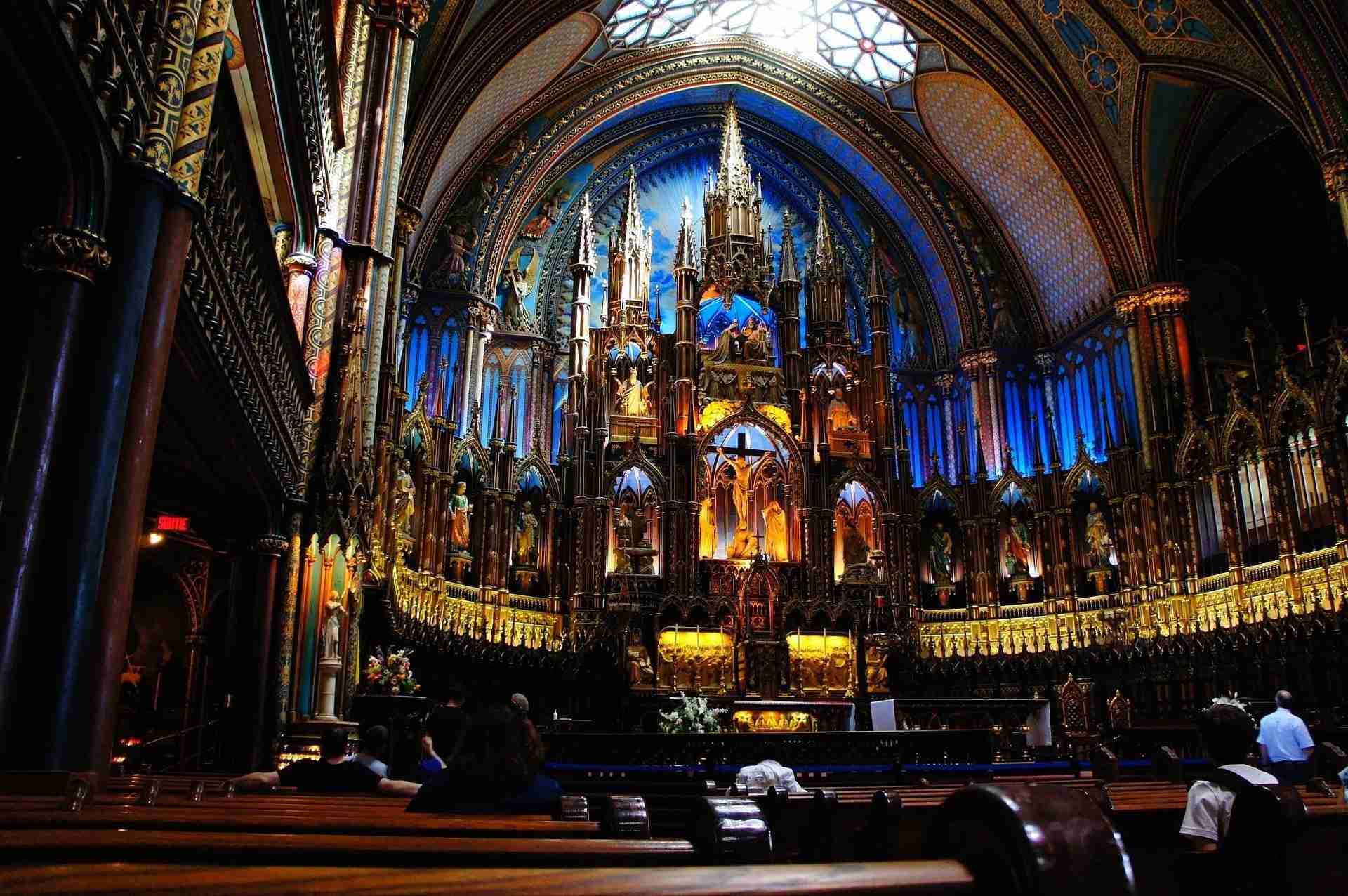
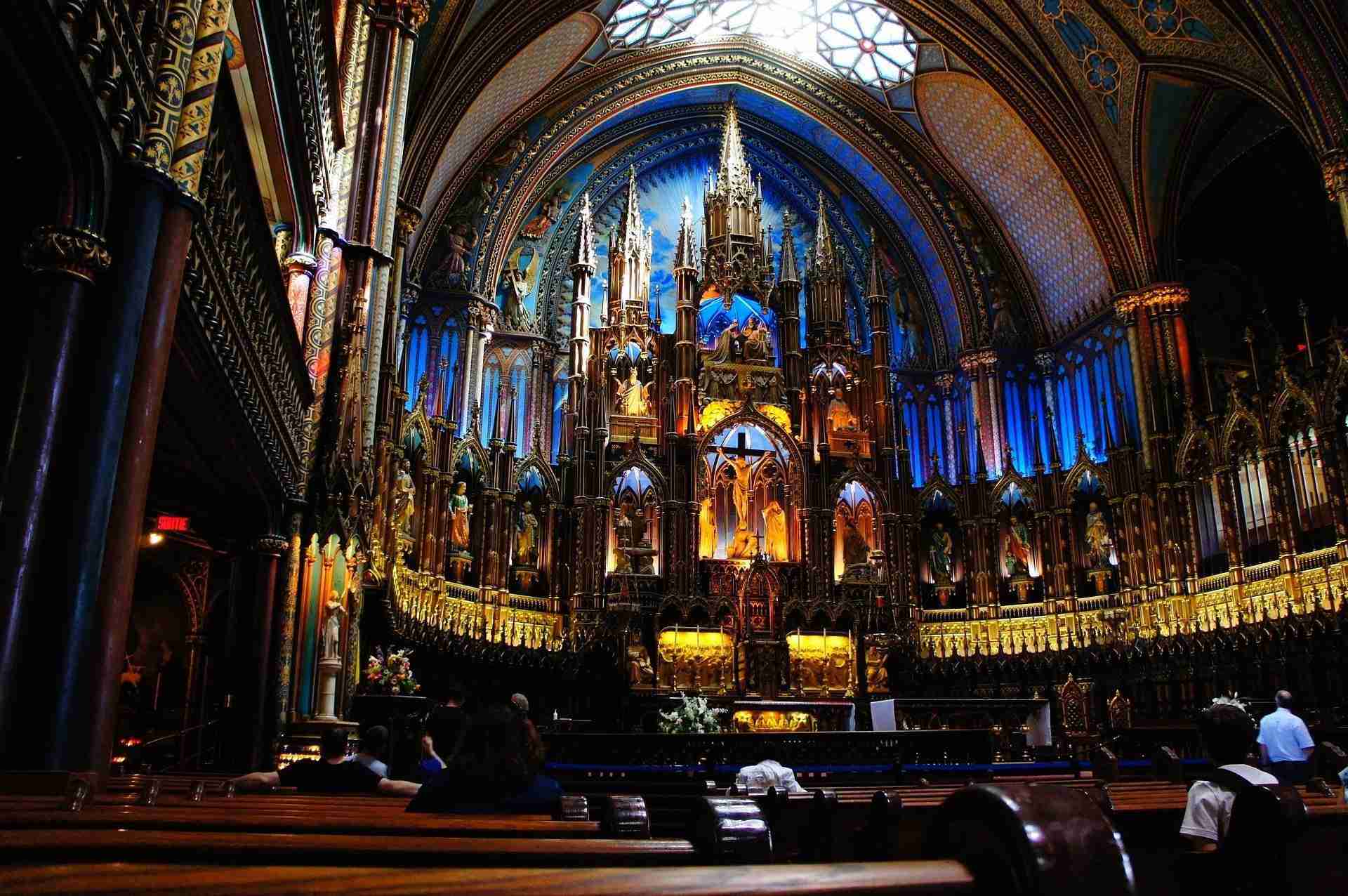
The Notre-Dame Basilica of Montreal is not only one of the city's most visited landmarks, but also one of the most stunning examples of Gothic Revival architecture in North America. Located in the heart of Old Montreal and constructed between 1824 and 1829, the basilica is a monument to intricate craftsmanship, religious artistry, and architectural drama. From the soaring twin towers that dominate Place d'Armes to the richly decorated interior that glows with celestial blues, gilded carvings, and luminous stained glass, every corner of this space offers photographic inspiration.
Best Photography Opportunities
• Grand Altar and Choir Loft Interior Compositions
The basilica's deep blue sanctuary, highlighted by a radiant golden altar, is its most photographed feature. Wide-angle lenses are essential here to capture the full sweep of the altar, choir loft, and vaulted ceiling. Shooting from the central aisle creates strong symmetry, while sidelong compositions reveal the depth and layering of the carved woodwork. The interplay between blue and gold creates a vibrant but reverent color palette that responds well to balanced exposures and low ISO shooting.
• Details of Sacred Woodwork and Ceiling Vaults
Close-up work reveals a wealth of carved figures, gilded elements, and painted motifs that line the basilica's columns and arches. Using a mid-range zoom or fast prime lens with shallow depth of field allows you to isolate these details in low light, capturing the tactile richness of the church's handcrafted interior. Focus on sculptural groupings, hand-carved angels, or repeating motifs that curve up into the vaulted ceiling. Early morning light enhances texture without overwhelming contrast.
• Stained Glass Narrative Panels
Unlike traditional European churches, the stained glass windows in Notre-Dame Basilica depict scenes from Montreal's religious and civic history, making them visually and historically unique. These panels are best photographed during midday when natural light backlights the glass most effectively. A tripod is useful here, allowing for longer exposures at lower ISO. Consider framing individual panels or capturing multiple panes together to showcase the narrative depth and color transitions.
• Exterior Views from Place d'Armes
From outside, the basilica's twin towers serve as a commanding subject, particularly when photographed from Place d'Armes. Wide shots in early morning or golden hour produce clean shadow lines along the stone, emphasizing the structure's balance and ornamentation. Using the square's cobblestones, the Paul de Chomedey statue, or passing street life as foreground adds interest and scale. Reflections in wet pavement after rain offer additional compositional possibilities.
• Evening Ambience and Blue Hour Illumination
In the evening, the basilica's façade is softly lit with warm light that contrasts with the cooler tones of the surrounding square. This makes for compelling blue hour photography, especially when combined with long exposures that capture foot traffic or the glow from interior lights through the stained-glass windows. A tripod is essential here, as is careful timing to capture a balance of artificial and ambient light.
Best Time to Visit
Notre-Dame Basilica is photogenic year-round, but timing matters depending on what you hope to capture. The interior is at its most visually dramatic during late morning to early afternoon, when sunlight streams through the stained glass, bringing the rich colors of the sanctuary to life. These hours also ensure you have sufficient ambient light for handheld shooting, though a tripod (if allowed during your visit) still enhances image quality and flexibility.
Early mornings are best for exterior work—especially for photographing the façade from Place d'Armes without crowds. This is also the most peaceful time for architectural studies. Blue hour, roughly 30–45 minutes after sunset, creates magical lighting on the façade and square, ideal for symmetrical long exposures or low-light mood work.
The basilica is popular and busy year-round, with peak tourist traffic from spring through fall. Visiting during off-peak months like late January to early March, or mid-November, can yield quieter interiors and fewer interruptions when composing wide frames. During religious holidays or special events, additional interior lighting or decor may enhance the space but also limit access or photography permissions.
How to Get There
The Notre-Dame Basilica is located directly on Place d'Armes in Old Montreal, within walking distance of most major attractions in the area. The nearest metro station is Place-d'Armes on the Orange Line, located just a few minutes away by foot. Paid parking is available in nearby underground garages, but walking or public transit is generally more efficient in this historic, pedestrian-friendly district.
The basilica is open to the public daily, though hours may vary based on mass times and special events. There is an entry fee for tourists during non-service hours, which includes access to both the main sanctuary and the chapel. Photography is allowed, but flash and tripods are prohibited inside. Photographers are expected to remain quiet and respectful during their visit, avoiding obstructive gear or loud conversations.
Recommended Photography Gear
Inside the basilica, a fast wide-angle lens (16–35mm f/2.8 or similar) is invaluable for capturing the grandeur of the sanctuary and ceiling vaults in low light. Pair it with a camera body that performs well at higher ISOs to ensure clean exposures without blur. A 35mm or 50mm prime lens is excellent for detail shots and will deliver crisp results with minimal distortion.
For exterior work, a mid-range zoom (24–70mm) gives flexibility for architectural framing, while a longer lens (70–200mm) can isolate sculptural details or architectural flourishes high on the towers. If you're shooting the building from a distance or during crowded conditions, a telephoto lens allows you to compress foreground elements and add depth.
Tripods are not permitted inside the basilica, so use image stabilization or fast lenses to counteract motion blur. Outside, a tripod is highly recommended for blue hour and nighttime shooting. A circular polarizer can help reduce reflections on windows and deepen sky color, especially during midday. Always bring extra batteries, as low-light shooting can be power-intensive.
Nearby Photography Locations
• Place d'Armes
Directly in front of the basilica, this historic square offers excellent symmetrical compositions and a dynamic mix of old-world architecture and modern pedestrian life. It's perfect for capturing the basilica's façade with changing light and seasonal elements.
• Rue Saint-Sulpice
Running along the side of the basilica, this narrow street provides unique angles of the building and quieter backdrops for architectural detail shots. It's also a strong choice for leading-line compositions.
• Saint-Paul Street
Just a short walk away, this cobblestone street is a favorite for urban scenes with historic charm. Shoot storefronts, window reflections, and vanishing perspectives under varying light conditions.
South of the basilica, this riverfront location opens up opportunities for wide-angle cityscapes, street photography, and sunset reflections over the St. Lawrence River.
Tucked behind the historic Château Ramezay Museum, these small formal gardens offer a serene contrast to the basilica and a place to photograph seasonal blooms, stone paths, and heritage textures.
Photographing Notre-Dame Basilica is both a visual and spiritual experience. Whether you're capturing its luminous sanctuary from a reverent angle or exploring its commanding presence from the busy square outside, this monument rewards patient observation and thoughtful framing. It is a space where light and artistry meet, and where every image feels like a quiet act of reflection.
Comments
Loading comments…