
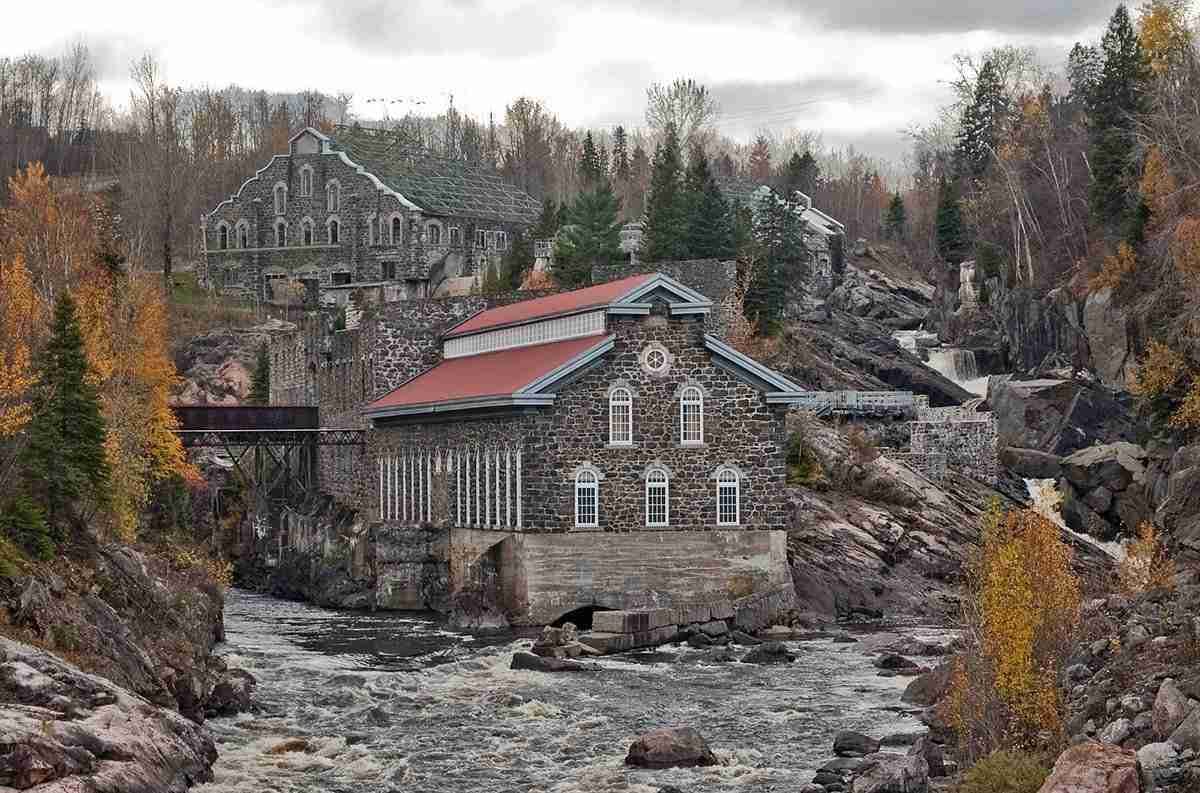
Overlooking the banks of the Saguenay River in Quebec's Saguenay–Lac-Saint-Jean region, the Old Chicoutimi Pulp Mill stands as a monument to Canada's industrial past. Once the crown jewel of the Chicoutimi Pulp Company—Canada's leading producer of mechanical wood pulp around 1910—this imposing structure now serves as both a cultural site and a striking photographic subject. With its multi-level architecture, red brick, and riverside position, the mill offers a rich interplay of historical context and aesthetic geometry. Best of all, it can be beautifully framed from the adjacent Dubuc Bridge and surrounding walkways, making it accessible for everything from moody twilight scenes to tight architectural detail studies.
Best Photography Opportunities
• Riverfront panoramic compositions from the Dubuc Bridge
One of the best vantage points for photographing the mill is from the pedestrian-accessible Dubuc Bridge, which spans the Saguenay River just downstream. From here, photographers can capture the full breadth of the mill's riverside façade as it cascades down the hillside. The building's brick structure contrasts against the rock face and the reflective water below, offering a layered composition ideal for wide-angle or panoramic work. Early morning or late afternoon light hits the façade with a warm, directional glow, while twilight or blue hour creates an atmospheric contrast between lit windows and the deepening sky. Use a tripod to stabilize longer exposures and include the river in the lower third for balance.
• Side elevations and layered geometry from the Rue de la Fabrique walkway
A path along Rue de la Fabrique leads to secondary viewpoints where photographers can shoot the mill from an elevated lateral angle. From here, the staggered architecture becomes a study in angles, with stair-stepped levels and visible additions revealing its early 20th-century industrial evolution. These compositions benefit from mid-range zoom lenses to control framing and emphasize vertical structure. The combination of brick, concrete, and aging metal creates a texture-rich subject well-suited to both color and monochrome interpretations, especially in soft light or under brooding skies.
• Detail shots of industrial features and historical markers
On site, the mill has been partially restored to accommodate interpretive signage and cultural exhibits. This creates opportunities for tighter compositions that focus on architectural details like window frames, aging machinery, riveted staircases, and weathered signage. Use a fast prime lens for handheld shooting in lower light and to highlight textures and materials. In autumn or winter, look for contrasts between the industrial surfaces and surrounding foliage or snow, allowing you to juxtapose decay and seasonal transformation in close-up compositions.
• Reflection photography from river-level access points
Downstream and slightly west of the bridge, there are several points along the riverbank where still water offers opportunities for symmetrical compositions with the mill reflected on its surface. These work best in early morning, when the river is calmest and light fog sometimes settles over the scene. A circular polarizer helps control reflection strength and deepen sky color. Including reeds, rocks, or trees in the foreground adds environmental context and breaks up the symmetry for visual interest.
• Moody weather and seasonal storytelling
The industrial setting of the pulp mill lends itself well to atmospheric conditions. Overcast days, mist, and winter snowfall amplify the mill's visual weight and historical presence. In fog or rain, the red tones of the brick deepen, and water accumulates on surfaces to enhance contrast. Snow turns the structure into a monochrome composition punctuated by architectural lines. These conditions are ideal for black-and-white imagery and for creating a timeless mood that speaks to the building's origins and resilience.
Best Time to Visit
Photographers can work the Old Chicoutimi Pulp Mill site year-round, though each season changes the story it tells through light and environment.
Spring reveals the mill against a backdrop of budding trees and rising water in the Saguenay River. Overcast light enhances surface texture and allows for all-day shooting without harsh contrast. Spring fog in the early morning adds mood and layers, especially when viewed from across the river.
Summer provides the clearest light and longest shooting windows. While the greenery softens the industrial lines slightly, early morning and late afternoon remain the most effective times to photograph, when the sun is low enough to define the mill's shape. Warm reflections on the river can extend compositions into golden hour and beyond.
Autumn is arguably the richest time to shoot the mill. The surrounding trees turn brilliant tones of orange, yellow, and red, providing a vivid natural contrast to the muted reds and browns of the structure itself. Leaves floating in the river or gathering at the building's base add interest to foreground compositions, and morning light often carries a slight mist.
Winter transforms the scene into something stark and elemental. Snow collects on rooftops and ledges, turning the mill into a sharp-edged silhouette. The river, partially frozen, can create high-contrast opportunities between flowing water and static structure. Blue hour during the winter months can be particularly powerful here, especially when the building is lit internally or by ambient city light.
How to Get There
The Old Chicoutimi Pulp Mill is located along the Saguenay River in the city of Saguenay, Quebec, specifically in the borough of Chicoutimi. From downtown, follow Rue de la Fabrique or Boulevard du Saguenay to reach the mill, which is now part of the Centre historique des Sœurs du Bon-Conseil and accessible on foot.
Photographers looking for river-facing shots can access pedestrian walkways from the Dubuc Bridge, which includes sidewalks on both sides and connects easily to city paths. There are parking options along Rue de la Fabrique and in nearby city lots. Those approaching from outside Saguenay can reach the city via Route 175 from Quebec City or Highway 170 from the Lac-Saint-Jean region.
The mill is open to the public during certain hours as a museum and cultural site, but photography of the exterior and riverside views is unrestricted and accessible any time of day. Winter visitors should check road conditions and dress for variable temperatures, especially if planning a long shoot near the riverbanks.
Recommended Photography Gear
A wide-angle lens (16–35mm) is ideal for capturing the full façade from the bridge or across the river, allowing for dramatic framing of the building's layered geometry and its riverside setting. A mid-range zoom (24–70mm) gives you flexibility to adjust compositions quickly from bridge or walkway locations, and is well-suited to tighter architectural shots and changes in perspective.
A telephoto lens (70–200mm) can be used to isolate specific elements—windows, brick patterns, reflections, or signage—and works especially well from elevated points or across the river. A tripod is strongly recommended for blue hour, twilight, or long exposure river reflections. Use a neutral density filter if you want to smooth water movement, and a circular polarizer to cut glare and deepen sky contrast.
For on-site detail shots or interior elements during open hours, a fast prime (35mm or 50mm) allows for low-light shooting without flash and preserves the mood of aged, weathered interiors. Bring lens wipes and rain protection if shooting during wet or transitional seasons near the water.
Nearby Photography Locations
This urban riverside boardwalk area offers wide views of the Saguenay River, marina reflections, and modern contrasts to the pulp mill's historic tone. Best during sunset when boat lights and sky color reflect off the water.
A sprawling nature park with woodland trails, waterfalls, and winter snowshoe paths. Ideal for forest compositions and quiet nature shots that balance well with the industrial mood of the pulp mill.
The sister site to the old mill, now operating as a museum within a restored pulp complex. Offers additional historic structures, machinery, and museum-quality interior photography opportunities.
• Monts-Valin National Park (45 minutes north)
For photographers looking to pair industrial imagery with large-scale wilderness, this park provides mountainous terrain, alpine lakes, and winter landscapes that contrast sharply with the urban riverside scenes.
• Petit-Saguenay Fjord Viewpoints (1 hour east)
Dramatic, high-cliff overlooks of the Saguenay Fjord offer some of the most powerful landscape compositions in the province. Especially recommended for sunrise or fog-layered valley photography.
The Old Chicoutimi Pulp Mill tells the story of an era when raw material and industrial ambition shaped both the landscape and the communities around it. For photographers, it's a structure that balances mass and memory—still standing, still weathered, and still visually powerful when framed with care. Whether you're drawn to reflection, ruin, or rhythm, this is a place where history holds its shape through the lens.
Comments
Loading comments…