
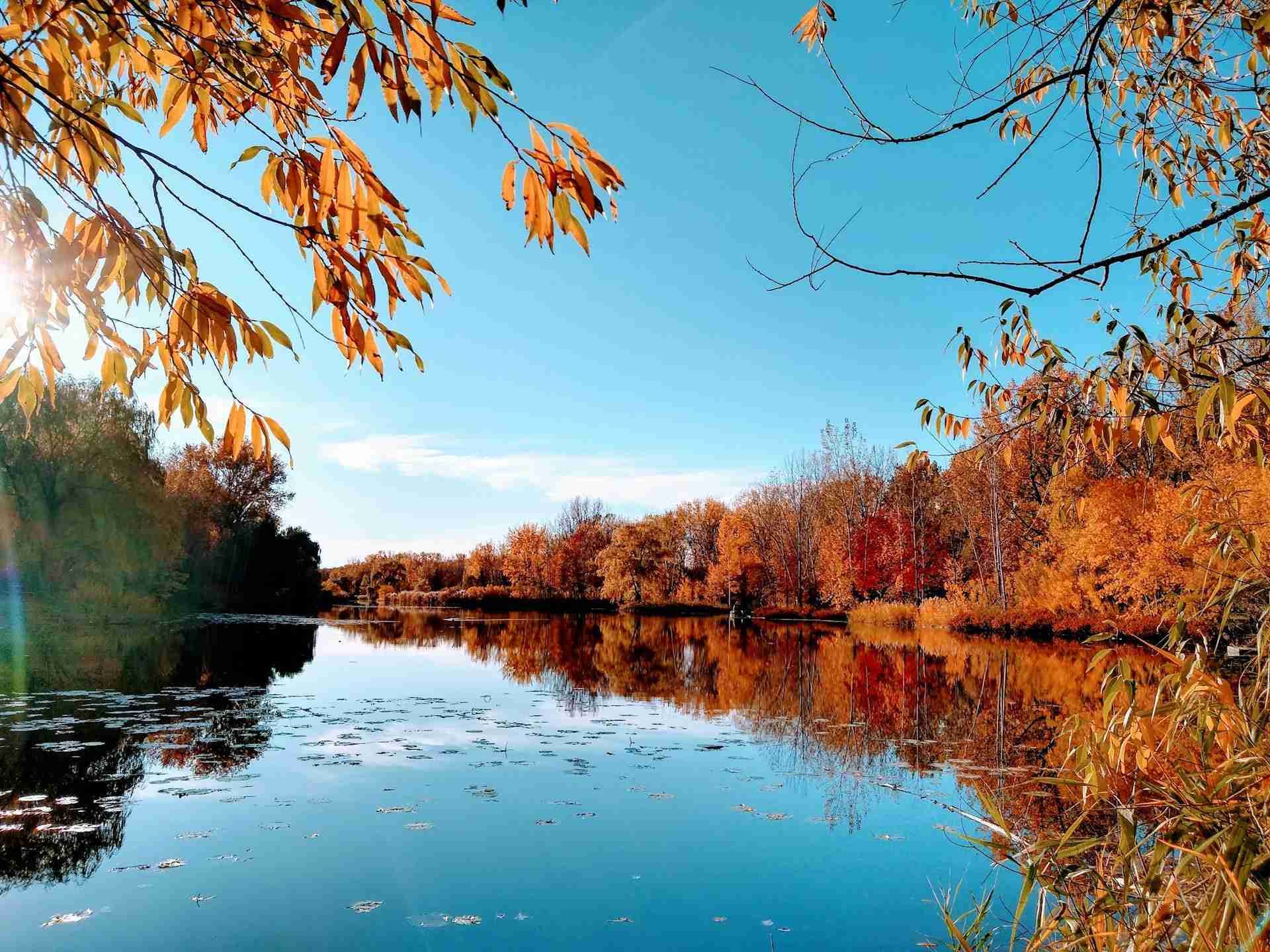
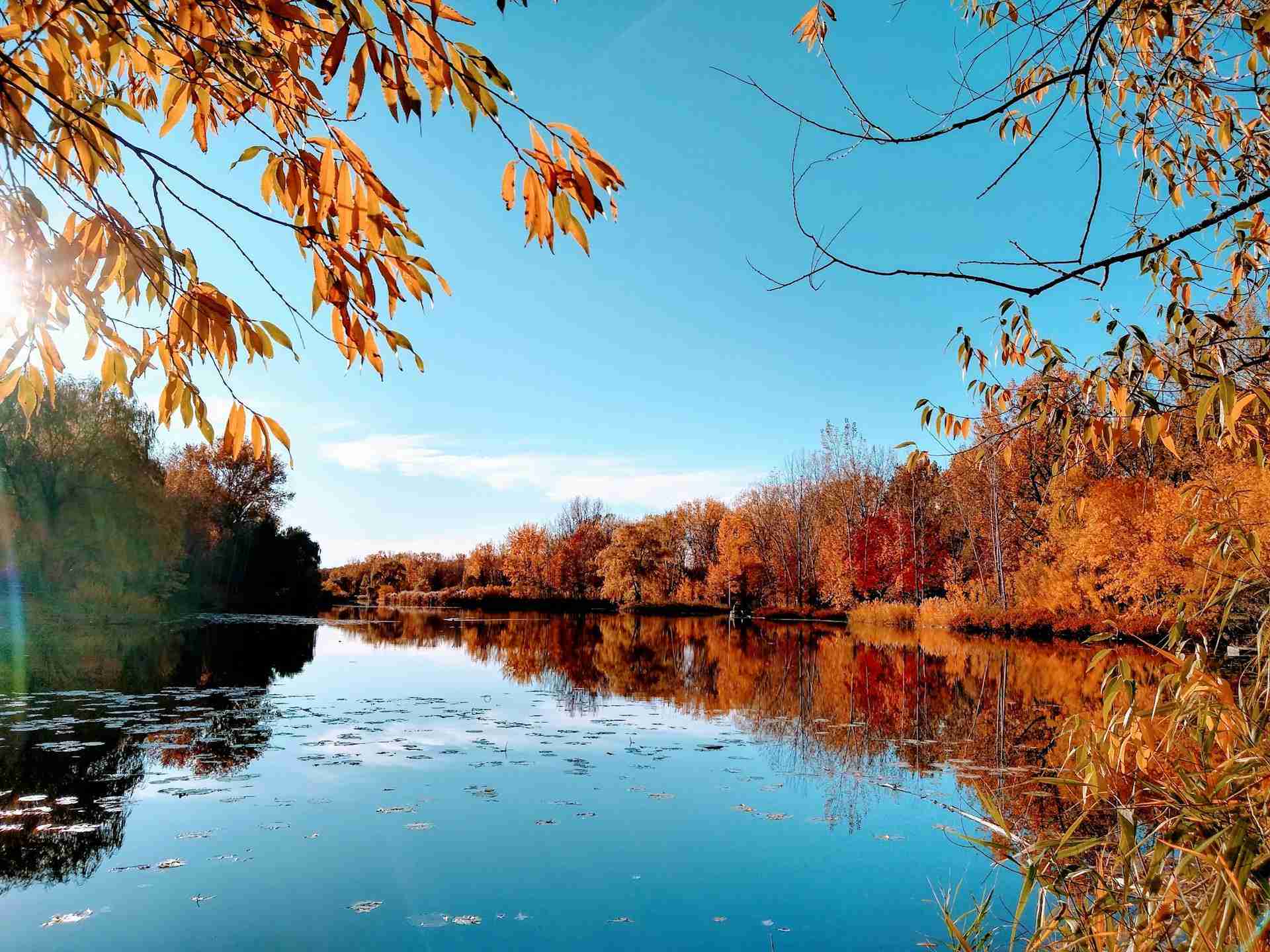
Parc Angrignon, tucked into the southwest end of Montreal, is a large urban park with a distinctly peaceful feel that sets it apart from the city's better-known green spaces. Built on the grounds of a former estate and designed in the spirit of 19th-century English gardens, the park features a long central pond, winding footpaths, stands of mature pine trees, and quiet lawns that lend themselves to slow, intentional photography. There's a balance here between structure and stillness that appeals to landscape and nature photographers alike. Whether you're shooting broad reflections across the water, soft textures in morning fog, or tight frames of seasonal color, Parc Angrignon offers a variety of compositions in a compact, walkable area.
Best Photography Opportunities
• Pond Reflections Along the Central Waterway
The main pond stretches through the center of the park and is bordered by grass, trees, and a walking path. On calm mornings or just after rainfall, the water acts like a mirror, especially when the surrounding trees are full with spring growth or autumn color. Use a wide-angle lens to incorporate both shoreline and reflection, or isolate segments of the water with a mid-telephoto lens to focus on color and symmetry. Overcast skies help keep the tones balanced, while early light brings warmth and subtle highlights across the surface.
• Pine Groves and Forest Paths
The northern part of the park includes a dense grove of pine trees that form straight, towering lines with filtered light drifting down between trunks. These scenes are ideal for vertical compositions and moody light studies, especially in low fog or after fresh snowfall. A standard zoom lens lets you adjust quickly between broader context and tighter detail. Compositions benefit from careful spacing and framing through trunks or along natural clearings.
• Footbridges and Curve of the Trails
Several footbridges cross narrow points of the pond and add clean structure to compositions. These are best photographed from slightly off-center, allowing the curve of the trail or the reflection beneath the bridge to anchor the frame. Look for people walking across to add a human element, or wait for still moments to shoot long exposures. These small architectural touches provide contrast with the surrounding organic forms.
• Seasonal Color Around Grassy Clearings
In late spring and throughout autumn, the open lawns fill with color from surrounding trees and flowering plants. These areas are ideal for wide, simple compositions where trees frame an open space and light moves across the grass. Shoot during golden hour for best results, when side light adds depth to the scene. A polarizer is useful here to cut glare and bring out color, particularly in autumn when the trees are rich with reds and yellows.
• Wildlife and Birdlife Along the Water's Edge
The quieter ends of the pond attract ducks, herons, and smaller birds that move between shoreline and trees. Early morning is best for bird photography before the park fills with joggers and walkers. Use a long telephoto lens and shoot from low along the bank for clean backgrounds and strong foreground separation. Reflections and subtle ripples can be used to enhance framing and introduce motion.
Best Time to Visit
Parc Angrignon offers something different in each season, but spring and autumn are the most photogenic for varied color and soft light. In spring, trees and grass take on a fresh green hue, and the water is clear and active with wildlife. Autumn is perhaps the best time to visit, with rich foliage and morning mist that adds a soft, natural filter across the park. Reflections become more intense, and paths are often covered with color that enhances composition options.
Summer brings consistent foliage and long days, but harsh midday sun can flatten the image. Plan to shoot early or in late evening to make the most of the light. Winter photography is also possible, particularly after a snowstorm when the pine groves turn quiet and monochrome. Early morning frost and bare trees around the pond lend themselves to more minimal work.
How to Get There
Parc Angrignon is located in the borough of Le Sud-Ouest in Montreal, adjacent to the Angrignon Metro station, which makes it easy to reach by public transit. If arriving by car, there is parking available at multiple entrances, particularly along Boulevard des Trinitaires and near the metro entrance. The park's trail network is well-maintained and flat, with access to all key features by foot or bicycle.
There are no fees to enter or photograph in the park. Tripods can be used without restriction, and the trails offer plenty of space to work without interfering with other visitors. The park is busiest on weekends, especially in the afternoon, so weekday mornings are best for quiet, uninterrupted sessions.
Recommended Photography Gear
A 24–70mm lens offers the most flexibility for shooting reflections, footbridges, and wider views of the pond and trees. A wide-angle lens such as a 16–35mm is useful for framing full landscapes or working from within the pine groves. A 70–200mm lens is ideal for wildlife photography or isolating trees, trail curves, and abstract water textures.
Bring a tripod for early morning and golden hour shots, especially if you're working with long exposures or low ISO settings. A circular polarizer helps manage surface glare on the water and enhances color in the trees. In winter or fog, keep a lens cloth handy to manage condensation or light rain. A lightweight kit is recommended since the park is walkable but spread out across a large area.
Nearby Photography Locations
Just a short drive or bike ride from Parc Angrignon, the Lachine Canal offers industrial structures, water reflections, and long paths ideal for linear compositions. It's a great spot for sunrise or golden hour sessions with strong leading lines.
Northwest of the city, this large park offers forest trails, small rivers, and quiet footbridges. It is especially good for autumn photography and wildlife scenes with less urban influence.
• Île des Sœurs Waterfront Paths
Located just across the St. Lawrence River, the island's waterfront paths provide views of the downtown skyline, open water, and modern residential buildings. Best photographed in the late afternoon or early evening with soft directional light.
This location along the river is strong for motion photography with rapids, rocks, and bird activity. Long exposures and wildlife compositions work well here, especially in spring and early summer.
Though more popular and often crowded, Mount Royal offers wide views over the city, forest trails, and structured gardens. It is ideal for pairing with a day that starts in Parc Angrignon for a broader photo session across different urban greenspaces.
Parc Angrignon offers a calm and flexible space to work with light, form, and seasonal variation. It rewards photographers who are willing to slow down and explore smaller details; from the line of a bridge to a ripple on still water. Whether you're building a series or looking for a single clean frame, this park gives you a place to focus without distraction.
Comments
Loading comments…