
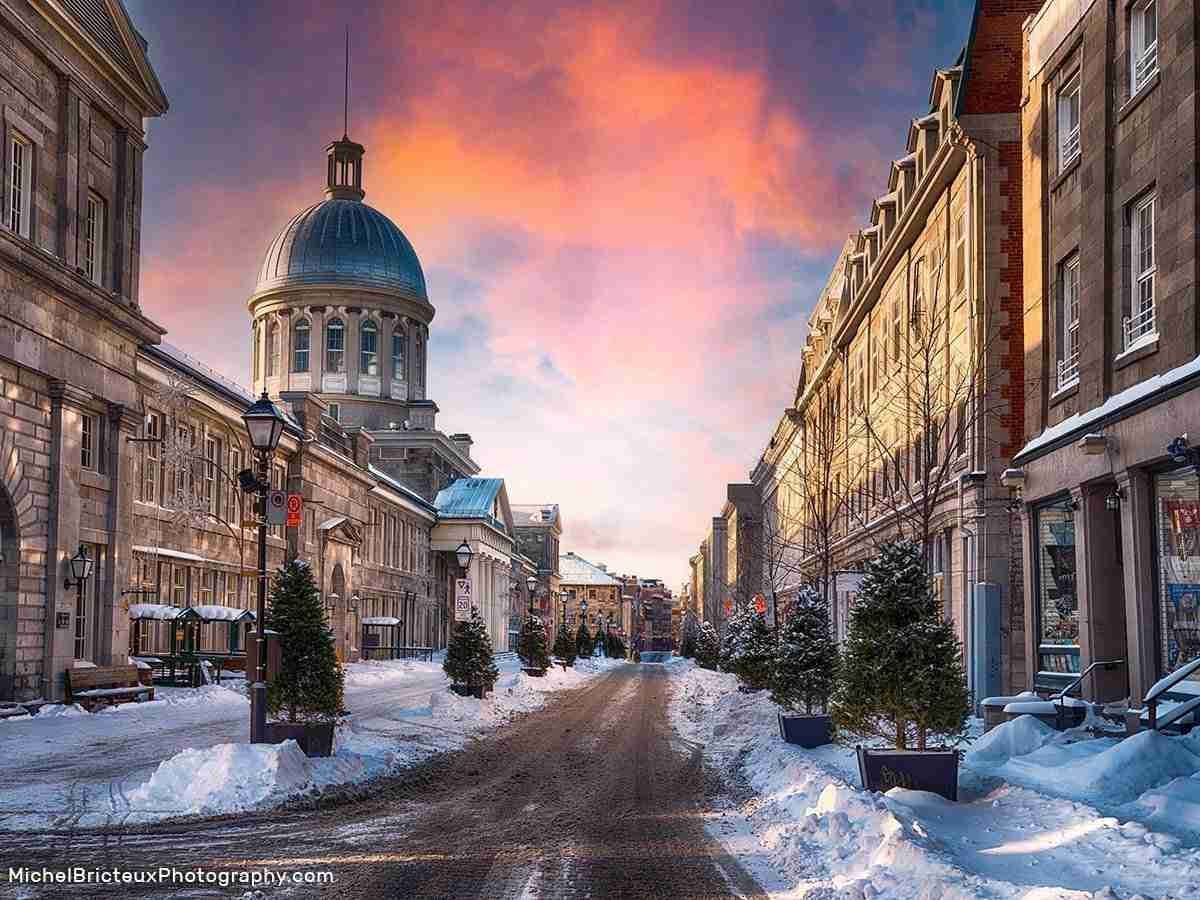
In the heart of Old Montreal, Rue Saint-Paul Est stands as one of the city's most photogenic and historically evocative streets. Lined with 18th and 19th-century stone facades, wrought iron balconies, and low archways, this stretch of cobblestone offers an immersive sense of place that feels both European and unmistakably Quebecois. Running parallel to the Old Port and just steps from the city's oldest markets and churches, Rue Saint-Paul Est is rich in texture, atmospheric light, and character. Whether you're chasing the soft glow of golden hour or the slick reflections of rain on stone, this street delivers a classic urban scene shaped by history and designed for storytelling through the lens.
Best Photography Opportunities
• Street-level wide compositions emphasizing texture and depth
The cobblestones of Rue Saint-Paul Est are among its most defining features and photograph beautifully when captured from a low angle. Shooting down the street with a wide-angle lens allows you to exaggerate the texture of the stones in the foreground while drawing the viewer into the vanishing point created by the narrow corridor of buildings. Morning light typically hits from the south, casting warm glows on building fronts and long shadows across the street, while evening golden hour wraps the entire scene in soft warmth. Wet weather enhances this effect—cobblestones become reflective and bring subtle movement into otherwise static frames.
• Architectural facades and layered historic elements
Along Rue Saint-Paul Est, the mix of architectural styles creates ample opportunity for photographing contrasting textures and forms. Doorways are often arched or framed with stone keystones, window shutters vary in color and condition, and many facades include engraved dates or period signage. Use a mid-range zoom to isolate elements such as iron balconies, French signage, or weathered limestone walls. These features can be captured as standalone compositions or layered into broader architectural studies. In every season, there are soft contrasts between warm stone and cool light, ideal for subtle tonal work.
• Night photography under lamplight and low ambient illumination
Once dusk falls, Rue Saint-Paul Est transforms. The iron lamp posts that line the street glow with a golden hue, casting diffused pools of light onto the cobblestones. Use a tripod for long exposures that allow you to maintain low ISO and capture the subtle glow of the lamps, the starburst effect of smaller bulbs, and the quiet blur of movement in passing pedestrians or bikes. Rainy nights are especially fruitful, as reflections double the light sources and add complexity to the texture of the street. Buildings are often lit from within or with small exterior spotlights, which add visual structure and anchor points to your frame.
• Framed shots through side alleys and passageways
Several narrow lanes and alleys connect Rue Saint-Paul Est to adjacent streets like Rue Notre-Dame and Rue de la Commune. These narrow passages provide natural compositional frames through which the main street can be photographed. Shooting through an alley toward the curve of Rue Saint-Paul adds depth and narrative, especially when a lone figure or cyclist enters the frame. The contrast between shadowed passage and sunlit street adds drama and tonal variation. These are excellent for shooting at f/4 or f/5.6 to maintain detail in both near and far elements.
• Seasonal ambiance and curated street scenes
Throughout the year, Rue Saint-Paul Est changes in subtle but significant ways. In spring, early morning light filters through budding trees and glances off shop windows, offering pastel tones and a sense of reawakening. Summer sees the arrival of flower boxes, café seating, and pedestrians in light attire, allowing for environmental portraits or documentary-style street photography. In autumn, fallen leaves collect between cobblestones, and shop awnings contrast warmly against greying skies. Winter transforms the entire scene into something serene and monochromatic, with string lights, holiday garlands, and snow-softened details—perfect for contemplative or minimalist compositions.
Best Time to Visit
Rue Saint-Paul Est is at its most photogenic during early morning and late afternoon, when the light is soft and directional, and the street is relatively free of tourists or delivery traffic. During golden hour—especially in autumn—the light intensifies the warmth of the limestone facades, while blue hour brings out the soft glow of historic lamplight. Overcast days work surprisingly well here, as they reduce harsh shadows and deepen the tone of the stonework.
Seasonally, spring offers a cool color palette and fresh textures that highlight the renewal of the street's flora and café life. Summer extends the shooting window, with long daylight hours and intermittent direct light on the eastern facades. Autumn is perhaps the most rewarding time overall, offering the richest tonal contrasts, variable weather conditions that create atmospheric mood, and a high likelihood of mist or post-rain puddles. Winter, though cold, provides the clearest visual identity—snow-filled gutters, clean edges along rooftops, and a slower pace of life that suits long-form, narrative image-making.
How to Get There
Rue Saint-Paul Est is located in Old Montreal, just south of Rue Notre-Dame and east of Place Jacques-Cartier. From downtown Montreal, take the Orange Line on the STM Metro and disembark at either Champ-de-Mars or Place-d'Armes station. From there, it's a short 5–10 minute walk down into the historic district.
Pedestrian access is excellent, and the street is frequently closed to vehicle traffic, particularly during summer and autumn weekends. While limited metered parking is available in nearby lots, walking or biking is the most convenient way to explore the area thoroughly. Public washrooms are available near Place Jacques-Cartier, and cafes along the route offer stops for rest or mobile editing sessions. Cobblestone paving is uneven in places, so photographers should avoid rolling camera cases and instead carry gear in a backpack for comfort and mobility.
Recommended Photography Gear
A wide-angle lens (16–35mm) is essential for capturing the full length of the street and its architectural rhythm, particularly when working from low angles or near the building line. For more selective framing or architectural detail, a mid-range zoom (24–70mm) offers flexibility to isolate textures, signage, and compositional contrasts.
A fast prime (35mm or 50mm) is excellent for handheld twilight shots, environmental portraits, or detail-focused compositions that benefit from subject isolation. If shooting at night, bring a tripod to allow for slow shutter speeds, and consider a cable release or 2-second timer to prevent motion blur.
A circular polarizer is useful on bright days to manage window glare and deepen sky tones, while ND filters can help balance exposure for creative long exposures during golden or blue hour. In colder months, carry extra batteries and lens cloths for condensation control, and consider weather-sealed gear or covers if shooting in snow or rain.
Nearby Photography Locations
• Bonsecours Market (Marché Bonsecours)
Just east of Rue Saint-Paul Est, this neoclassical building with its iconic silver dome provides strong symmetrical compositions and foreground framing opportunities with seasonal street activity. It works well at both sunrise and sunset when the dome catches warm directional light.
• Old Port of Montreal
A short walk south offers access to wide riverfront vistas, moored ships, and long exposure possibilities along the Saint Lawrence. The contrast between natural sky and industrial shoreline is especially striking at twilight.
Located at the western end of the street, this lively plaza offers bustling cafés, buskers, and dramatic architectural backdrops, including the Nelson's Column monument. It's a strong spot for dynamic street photography and golden hour crowd scenes.
This historic chapel offers detailed stonework, rooftop angel statues, and a hilltop position for layered compositions. Best photographed in morning light or silhouetted against an evening sky from Rue de la Commune.
• Rue Saint-Amable
A narrow and often overlooked alley, Rue Saint-Amable is filled with colorful string flags, hanging art, and small boutiques. It's ideal for vertical compositions, street-level detail, and playful environmental portraits.
Rue Saint-Paul Est remains one of the finest urban photography locations in Montreal—not for grandeur, but for intimacy. Its length may be short, but its photographic depth is exceptional. Every window, stone, and shadow contributes to a scene that feels less staged and more discovered. For those looking to build a visual narrative grounded in time, light, and layered detail, this is a street that delivers.
Comments
Loading comments…