
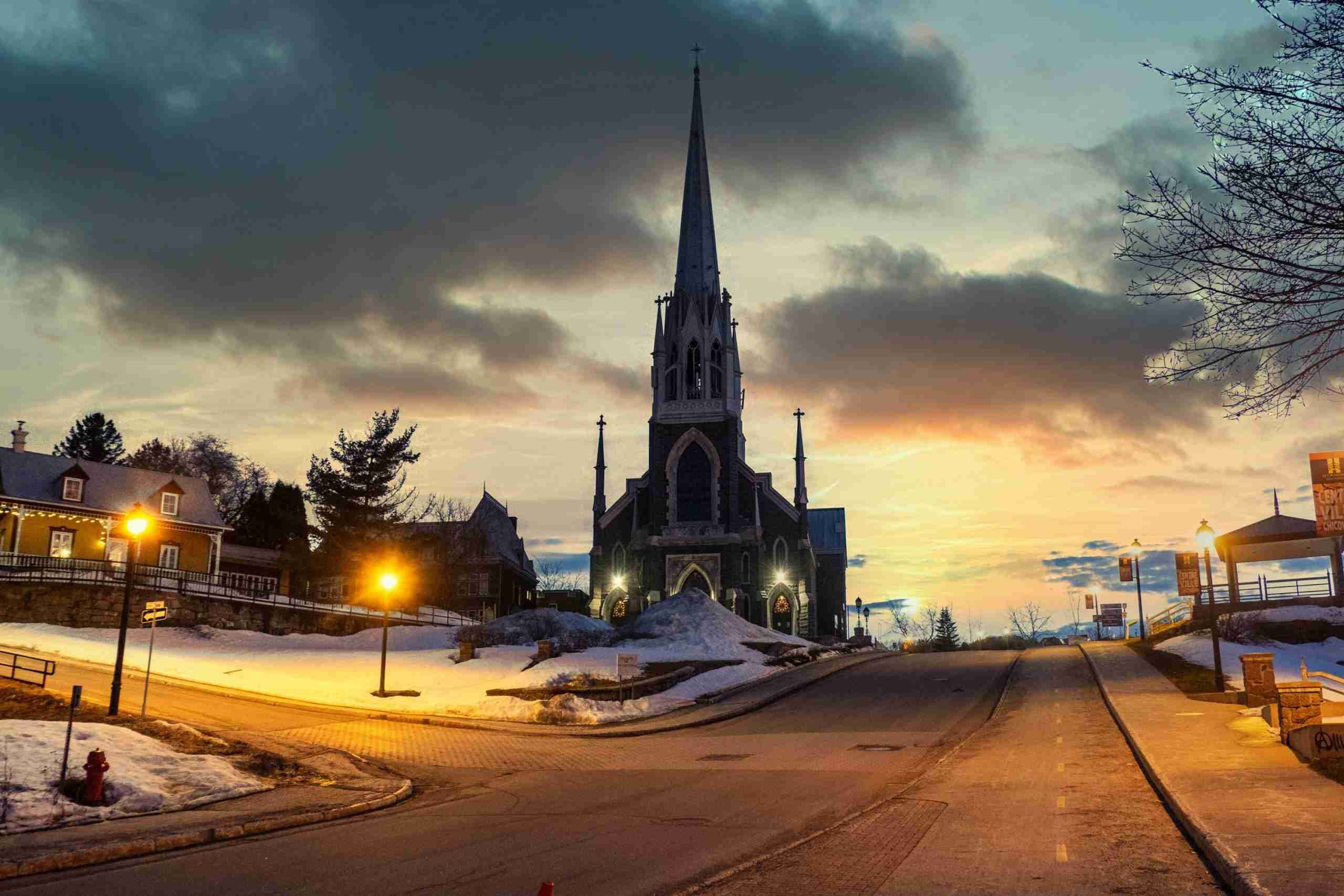
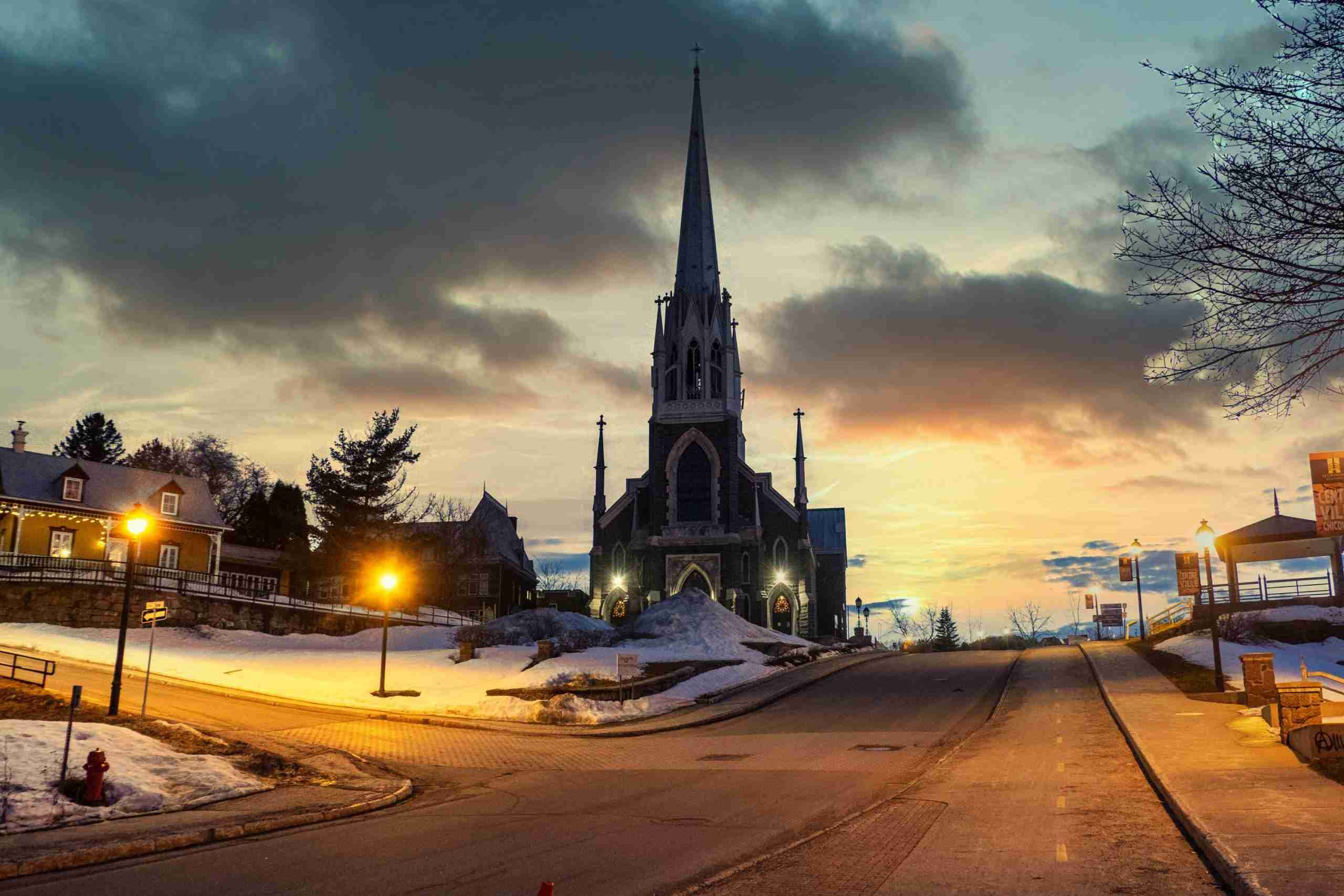
Sacré-Cœur Church in Chicoutimi is one of the most visually striking religious structures in Quebec's Saguenay–Lac-Saint-Jean region. This Neo-Gothic cathedral, with its twin spires and elaborate stonework, rises dramatically above the Saguenay River and the city blocks that frame its foundation. Built in the early 20th century and set at a high elevation overlooking downtown Chicoutimi, the church dominates the skyline with vertical precision and a richly ornamented facade. For photographers, Sacré-Cœur offers a compelling blend of monumental architecture, elevated perspectives, and soft riverside light—perfect for both sweeping environmental compositions and intricate architectural studies.
Best Photography Opportunities
• Frontal elevation from Rue Racine and Place du Citoyen
The best direct view of the church's facade comes from Rue Racine or the open public space of Place du Citoyen, where its symmetry and verticality can be captured with minimal obstruction. From these positions, photographers can showcase the full height of the twin spires, the richly carved entrance arches, and the rose window, all framed by the surrounding urban grid. Wide-angle lenses are ideal here, especially when standing close to the building, as they allow the height and scale to be fully expressed. Shooting during early morning light provides subtle texture across the stonework, while blue hour shots benefit from the church's exterior lighting, which softly illuminates the facade and creates a quiet, reverent mood.
• Skyline compositions from the opposite bank of the Saguenay River
For broader, environmental compositions, crossing the river provides a sweeping view of Chicoutimi with Sacré-Cœur rising prominently above the city. Using a longer lens from across the water, the church can be layered against other historic rooftops and framed by riverfront vegetation or midground buildings. This angle works particularly well at golden hour, when warm light bathes the entire hillside. In autumn, the church is framed by fiery foliage, while in winter, it emerges in stark contrast above a snow-blanketed cityscape. This location is excellent for showing the relationship between the church and the larger city around it, ideal for image series that incorporate context and distance.
• Architectural detail studies along the facade and entrances
Up close, Sacré-Cœur's Neo-Gothic design reveals numerous intricacies—stone tracery, pointed arches, carved columns, and statues tucked into niches along the entrances. These elements are rich with texture and formal rhythm, especially under raking sunlight or light cloud cover. Use a mid-range zoom or fast prime to isolate these details while maintaining depth and dimensionality. Door hardware, arch moldings, and vertical shafts provide excellent material for black and white studies or symmetrical compositions that emphasize structure and historical craftsmanship. These images lend themselves well to vertical orientation, especially when using architectural elements as natural frames within the frame.
• Interior perspectives with vaulted ceilings and stained glass
If open to the public, the church's interior provides a soft-lit, serene environment with high ceilings, stained glass windows, and a long central aisle flanked by wooden pews. A wide-angle lens is necessary to fully capture the interior volume, while a tripod allows for longer exposures in the lower light typical of these spaces. Centering your composition on the aisle helps emphasize the balance and rhythm of the nave, while side chapels and altar details offer more intimate photographic opportunities. Colored light from the stained glass is especially visible in early morning when sunlight passes directly through the windows, casting patterned reflections on the stone floor and wooden pews.
• Seasonal and atmospheric transitions around the hilltop site
The elevated position of the church allows photographers to work with changing weather and seasonal effects to dramatic advantage. In spring, fresh foliage begins to emerge along the streets leading up to the church, softening the scene and introducing vibrant green into compositions. Summer provides clean, high-contrast skies and long daylight hours that suit architectural studies. Autumn brings the richest visual palette, with orange and red trees framing the grey stone, while in winter the church becomes a focal point against a white landscape, with icicles forming along buttresses and snow piling in crevices. Fog and rain offer a moodier approach—ideal for black and white photography that highlights form and atmosphere over detail.
Best Time to Visit
Sacré-Cœur Church is photographically accessible year-round, with each season offering a different palette and mood to work with. The best times of day are early morning and late afternoon, when the low sun creates soft angles that bring out texture in the church's stonework and enhance the vertical elements of its spires and buttresses. Early morning is especially valuable for minimizing pedestrian and vehicle interference along Rue Racine and capturing peaceful, ambient light.
Spring brings clarity and subtle color back to the hilltop after the long winter. The light is gentle, and water on the streets after rain can produce subtle reflections that accentuate vertical forms. Summer allows for extended golden hour and full use of exterior light, but heat haze and tourist activity may require earlier or later visits for uninterrupted shots. Autumn is the most visually complex, offering deep, warm tones and dramatic contrast between the grey stone and surrounding foliage. Winter introduces strong tonal contrast, especially in snow-draped scenes or on overcast days when the cathedral emerges through light mist or flurries. Blue hour works beautifully in winter and summer alike, thanks to the subtle lighting on the church and clear sightlines from surrounding streets.
How to Get There
Sacré-Cœur Church is located at 189 Rue Bossé in the Chicoutimi district of Saguenay, Quebec. It is easily visible from most points in the city due to its elevated site and twin spires. From downtown Saguenay, follow Rue Racine to the east and continue uphill along Rue Bossé, where parking is available on adjacent streets.
Photographers coming from outside the region can reach Chicoutimi via Route 175 from Quebec City or via Highway 170 if approaching from the west. Once in town, the church is walkable from the Zone Portuaire area or from most hotels in the historic district. Parking is available nearby, though street access can be limited during peak hours, especially on weekdays.
Interior access varies depending on service times and local events, so photographers should plan visits early in the day or contact the parish in advance if interior shooting is a priority. The exterior grounds are open and unrestricted for photography at any time, and surrounding sidewalks offer good vantage points for both close and distant shots.
Recommended Photography Gear
A wide-angle zoom (16–35mm) is essential for capturing the height and full frame of the church's facade, as well as for working in tighter interior spaces where depth is key. A mid-range zoom (24–70mm) is ideal for detailed studies of exterior ornamentation and for layering the church within the surrounding urban environment. For distant skyline or riverbank compositions, a telephoto (70–200mm) provides excellent reach and compression.
A tripod is highly recommended for early morning, blue hour, and interior work. A fast prime lens (35mm or 50mm) enables handheld low-light photography and excels in capturing shallow depth of field details—such as stained glass, statues, or column capitals. A circular polarizer can be used to manage glare on windows or enhance the contrast between clouds and sky when shooting wide exterior scenes. In winter or rainy conditions, pack microfiber cloths and weather protection for your gear, especially when setting up near sloped terrain or steps.
Footwear with grip is essential, particularly during cold months or after rain, as the approach streets and church steps can become slick. A compact gear kit with the option to switch between wide and tight focal lengths without changing lenses frequently is useful due to traffic and foot traffic in the area.
Nearby Photography Locations
This riverside boardwalk area offers panoramic views back toward the city and the elevated spires of Sacré-Cœur Church. Excellent for twilight and long exposures, especially with reflections from the river.
• Old Chicoutimi Pulp Mill
A riverside industrial ruin just minutes away from the church. Its brick textures, river movement, and historical weight provide a gritty, architectural counterpoint to the church's elegance.
A heritage and cultural complex set among forested trails and preserved mill buildings. Great for natural framing of historic stone structures and moody woodland compositions.
A larger natural park offering waterfalls, footbridges, and wooded trails. Ideal for quiet nature photography that contrasts with the architectural density of central Chicoutimi.
Located across the river, this elevated trail offers stunning views over Chicoutimi and the Saguenay River. Ideal for sunrise or sunset skyline compositions that feature the church prominently in a layered cityscape.
Sacré-Cœur Church is more than just a landmark; it's a focal point for understanding the relationship between city, history, and topography. Its architectural detail, elevated presence, and seasonal versatility make it an essential stop for any photographer working in Saguenay. Whether capturing distant silhouettes from the river or intricate carvings up close, the church provides both grandeur and grace—an anchor of stone and light at the heart of Chicoutimi.
Comments
Loading comments…