
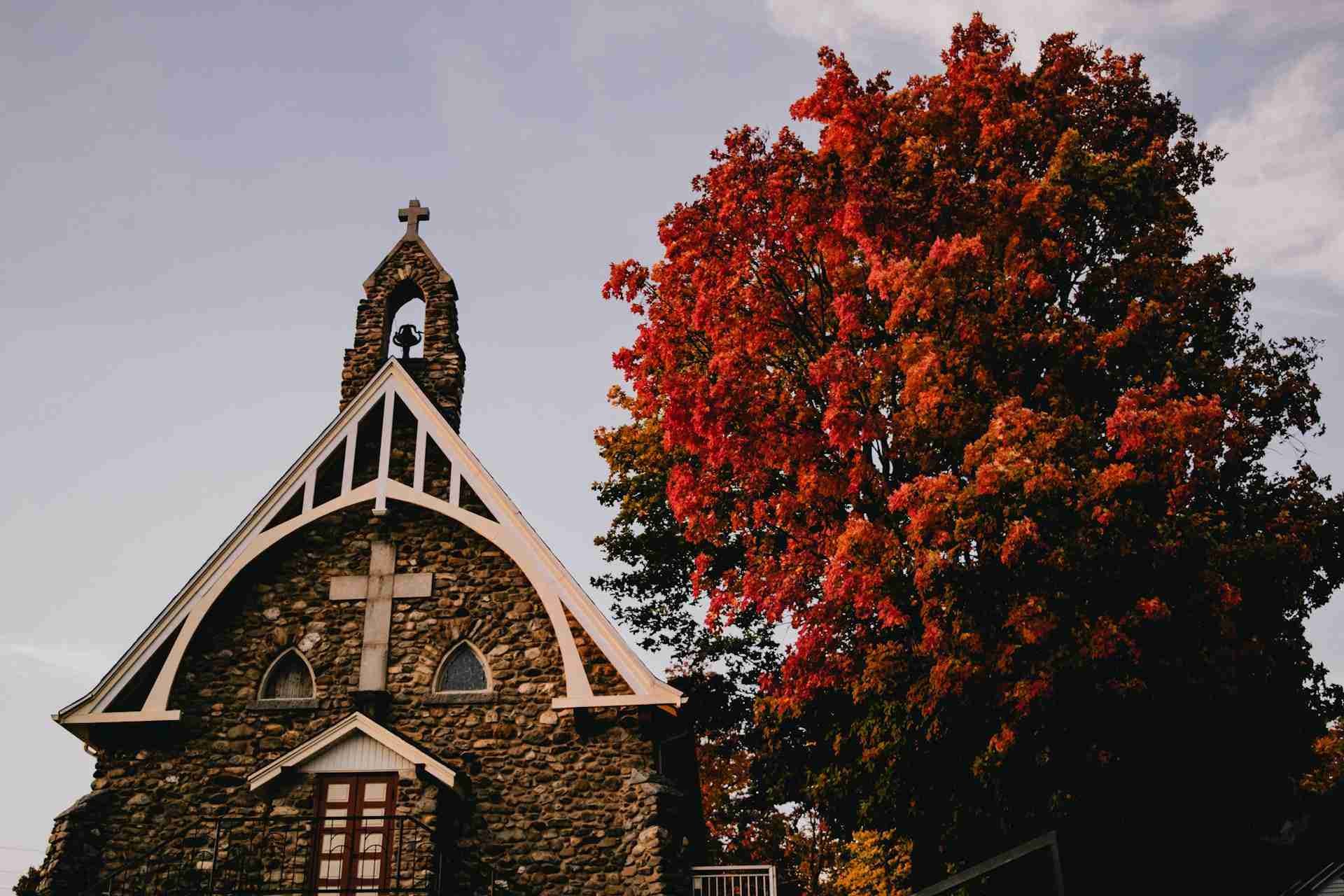
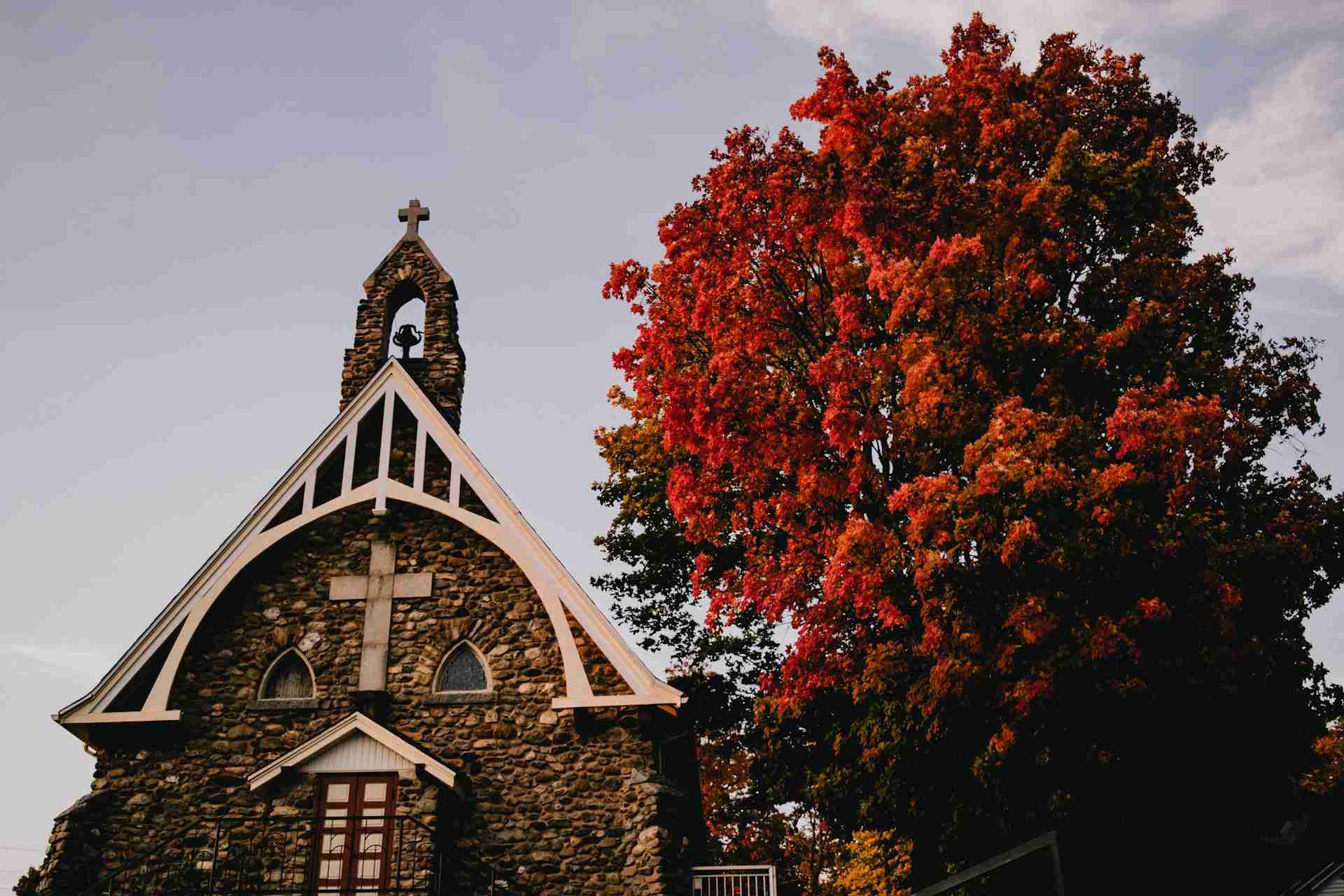
Perched above the city of Sherbrooke in Quebec's Eastern Townships, the Sanctuaire du Sacré-Cœur de Beauvoir is a quiet yet deeply compelling subject for photographers interested in architecture, landscape, and light working in harmony. As one of the oldest pilgrimage sites in Canada, the sanctuary balances religious history with the soft grandeur of its hillside setting. The chapel's stone structure rises from a forested bluff, flanked by winding trails, statues, and carefully placed devotional spaces that open onto panoramic views of the valley below. What makes this site so photographically rich is not just its architecture, but the way changing light moves across the forested hillside, casting long shadows through trees and reflecting off the stone in the early and late hours. Whether you're photographing intimate religious details or the sanctuary within its broader landscape, Beauvoir rewards slow observation and thoughtful framing.
Best Photography Opportunities
• Golden Hour on the Chapel Facade
The stonework of the main chapel catches late afternoon light with a warmth and softness that transforms the entire setting. During golden hour, the sun filters through the surrounding pines and illuminates the chapel's western face, pulling out the warm undertones of the stone and enhancing its textures. A midrange zoom lens works well here to frame both the architectural details and the natural context. Composing slightly off-center allows the light to lead the viewer's eye across the scene. This is a good moment for bracketed exposures, as the contrast between lit and shaded areas becomes quite pronounced.
• Views over the Saint-François Valley
Behind the sanctuary, several viewpoints overlook the Saint-François River and the surrounding Sherbrooke countryside. These open spaces are framed by the sanctuary grounds, including low stone walls, benches, and carefully placed crucifixes that can be used as compositional anchors. In autumn, the valley explodes with color, and wide-angle lenses can capture both the sanctuary and the landscape it presides over. Shooting here during early morning gives the best light across the valley, while late afternoon works better for backlit scenes with silhouetted foreground elements. It is an excellent place for layered compositions that balance human-made structures with natural scale.
• Pilgrimage Pathways and Woodland Shrines
A series of forested walking paths weave through the hillside, connecting small shrines, crosses, and religious sculptures. These wooded areas are shaded, quiet, and often dappled with filtered light, making them ideal for contemplative and detail-rich photography. A fast prime lens or a macro setup can isolate carved figures, candles, or the textures of moss-covered wood. These trails also provide opportunities to frame leading lines through the forest, with natural light drawing attention to focal points along the path. Shooting in soft morning light helps maintain color balance without deep shadow contrast.
• Interior Stone and Candlelight Scenes
Inside the sanctuary, the stone walls and wooden pews are lit softly by filtered window light and votive candles. This creates opportunities for low-light shooting that emphasizes intimacy and atmosphere. A camera body with strong low-light performance and a fast lens in the 35 to 50 millimeter range works well here. Tripods may not be appropriate during services, but handheld shooting at wider apertures can capture quiet moments without disturbing the space. Look for symmetry in the architecture and the repetition of religious elements such as statues, stained glass, and iconography.
• Snowfall and Quiet Drama in Winter
In the winter months, the sanctuary takes on an entirely different character. The surrounding forest and trails become blanketed in snow, and the chapel itself stands out starkly against the muted landscape. Snowfall adds a peaceful quality to the scene, and soft light reflecting off the snow allows for gentle contrast and clean compositions. This is an ideal time for black-and-white photography, emphasizing form and mood over color. A weather-sealed camera body and proper lens protection are recommended, as light snow or moisture often lingers on exposed gear.
Best Time to Visit
Sanctuaire du Sacré-Cœur de Beauvoir offers strong photographic potential throughout the year, but the mood and light vary greatly by season. Spring brings subtle greens and early morning mist, especially after rainfall, which works well for shooting along the wooded paths and the valley overlooks. Summer provides the longest shooting windows, but midday light can be harsh, so early and late hours are more productive. The structure itself is west-facing, so golden hour light strikes directly across the facade, providing ideal conditions for texture and warmth.
Autumn is the most visually dynamic season, especially from late September through mid-October, when the forests around Sherbrooke explode into red, orange, and yellow. Fog is common in the mornings and helps add atmosphere to woodland compositions. Winter, while colder and more challenging, transforms the sanctuary into a quiet, reflective landscape. Snow-covered paths and the subdued palette of stone against white offer powerful material for minimalist shooting. Photographers should time their visit for early morning light if hoping to photograph valley views and save golden hour for architectural and woodland scenes near the chapel itself.
How to Get There
Sanctuaire du Sacré-Cœur de Beauvoir is located on Mont-Bellevue's eastern slope, about 10 minutes by car from downtown Sherbrooke, Quebec. The sanctuary is accessible via Route 216, which climbs into the forested hills before arriving at a dedicated parking area near the chapel. Parking is free and spacious, even during busy pilgrimage days. From the lot, paved paths lead directly to the chapel and overlook points, while forest trails branch off into the hillside and loop through the shrine network.
The site is open year-round, and while access to the main sanctuary may be limited during services or special events, the grounds remain open to visitors for photography and quiet exploration. There are no entry fees, though donations are welcome and help support the upkeep of the site. During winter months, paths may be icy, and snow can cover signage, so proper footwear and caution are advised. While drones are not permitted on the sanctuary grounds due to its spiritual function and forested setting, tripods are allowed and useful for shooting during low light.
Recommended Photography Gear
A visit to the sanctuary benefits from a gear setup that can handle mixed lighting, modest elevation changes, and both wide and intimate framing. A full-frame camera or an APS-C body with strong low-light capability is ideal, especially for indoor shooting or early morning woodland paths. A wide-angle lens, such as a 16 to 35 millimeter, will serve you well for landscape shots from the viewpoints and architectural images of the chapel. A midrange zoom like a 24 to 70 millimeter offers flexibility for compositions around the sanctuary grounds and interior details.
Prime lenses in the 35 or 50 millimeter range are excellent for low-light interior work and can isolate subjects without introducing distortion. A lightweight but stable tripod is useful for golden hour, twilight, and winter conditions where longer exposures are necessary. A circular polarizer can help manage reflections on stone and enhance sky contrast during clearer days. In winter, bring lens cloths and weather protection for your gear, as snow and condensation can quickly become issues during longer shoots. If you plan to explore the wooded trails, consider carrying a compact kit to stay mobile and avoid fatigue during longer visits.
Nearby Photography Locations
Just west of the sanctuary, Mont-Bellevue Park offers forested trails, rolling hills, and winter sports infrastructure that becomes visually compelling during off-peak hours. In autumn, the forest canopy glows with layered color, and in winter, the slopes provide striking contrast between bare trees and snow. The elevation also allows for clear skyline shots of Sherbrooke in the distance.
This small lake sits near downtown Sherbrooke and is bordered by a well-maintained walking path with modern sculpture, bridges, and open views across the water. It is an excellent place for reflection shots, especially at sunrise or dusk, when still conditions mirror city lights and sky. Wildlife is common here as well, providing a chance for environmental portraits with birds or small mammals.
Located a short drive from Beauvoir, this natural forest reserve is known for its old-growth trees and quiet, winding trails. Photographers will appreciate the soft light filtering through tall trunks and the forest floor's seasonal transitions, especially during early spring when new growth emerges. It is a strong location for macro work and intimate woodland scenes.
Downtown Sherbrooke is home to a well-curated series of large-scale murals that blend public art with architectural settings. This circuit provides urban photographic contrast to Beauvoir's spiritual and natural focus. Shoot early or late in the day to avoid crowds and take advantage of sidelight hitting the painted surfaces.
Running through the heart of Sherbrooke, the Magog River Gorge is a narrow, fast-moving stretch of water framed by cliffs, bridges, and the industrial stone walls of the historic power station. Long exposures here can create smooth water textures under bridges, and the area is especially powerful during fall color season or after heavy rainfall.
The Sanctuaire du Sacré-Cœur de Beauvoir is a place where photographers can work with clean light, strong structure, and a quiet natural setting without distraction. It offers a variety of scenes within a small area, making it easy to build a complete photo set without needing to move far. The mix of open views, forest paths, and detailed stonework gives you options whether you're shooting wide or focusing close. It's a location that doesn't need drama to be worth your time. What it offers instead is calm, well-paced photography in one of the Eastern Townships' most accessible elevated spots.
Comments
Loading comments…