
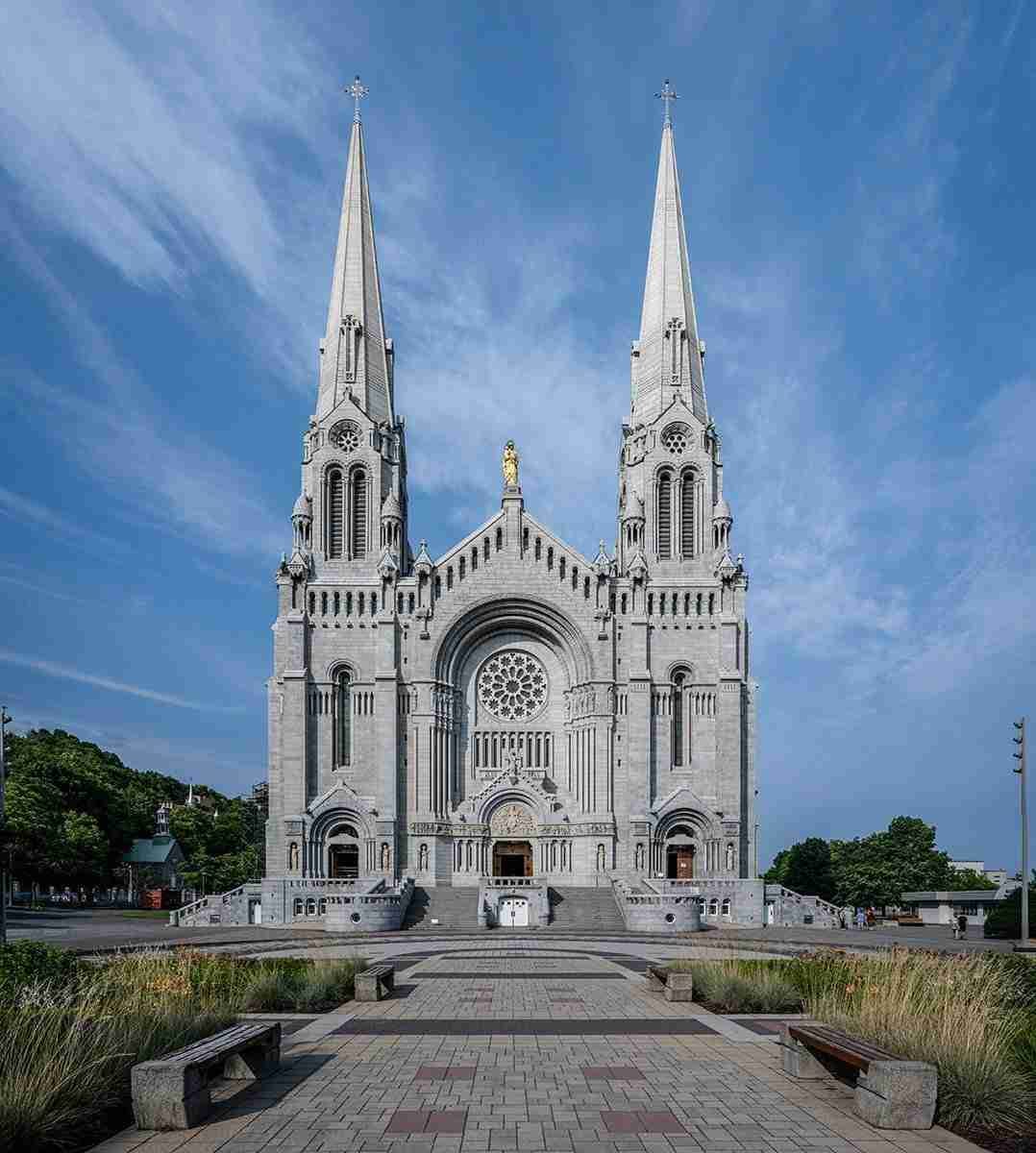
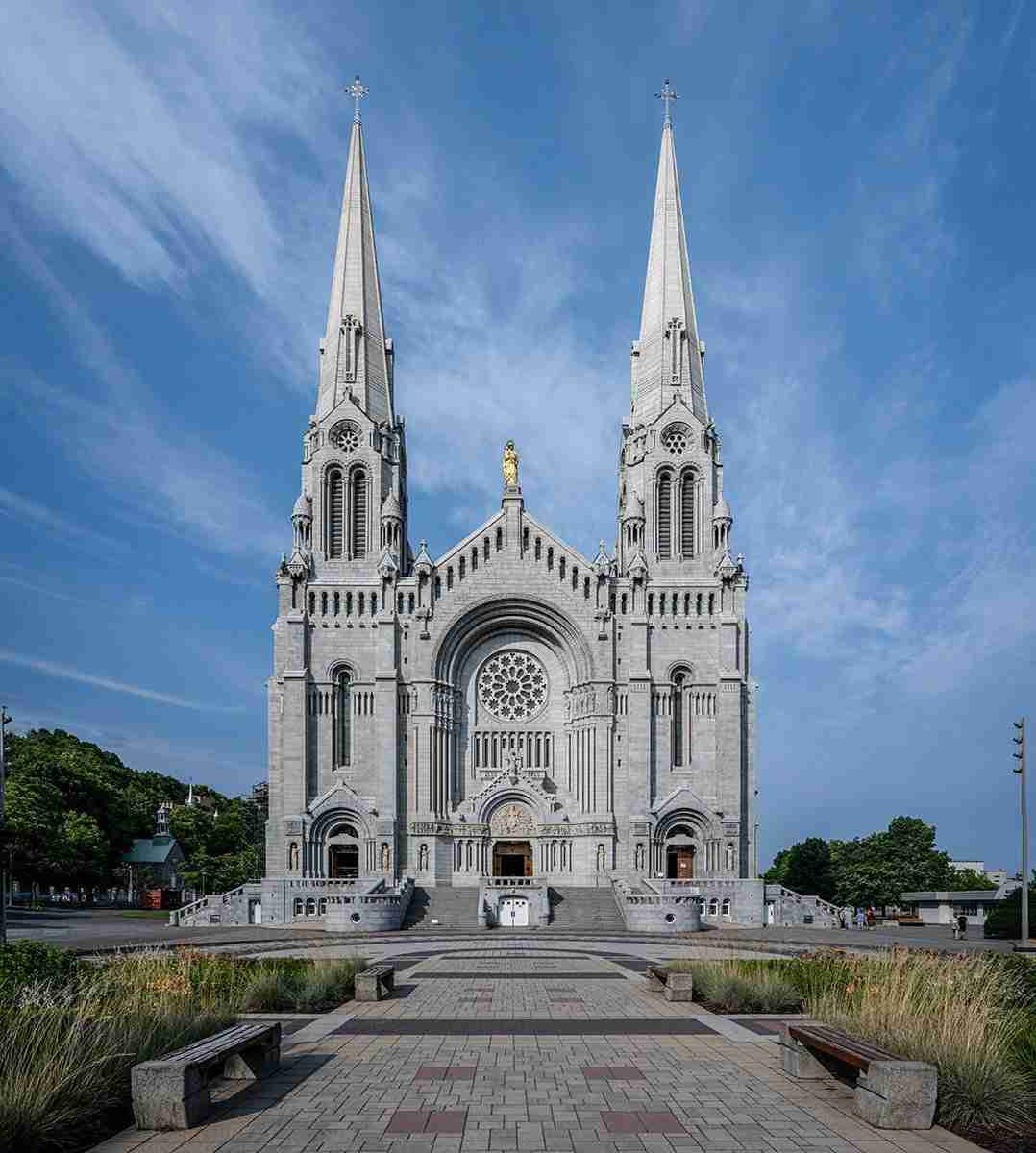
The Basilica of Sainte-Anne-de-Beaupré is one of the five national shrines of Canada and a true photographic treasure located along the northern shore of the St. Lawrence River in Quebec. With its towering twin spires, intricate mosaics, arched walkways, and richly adorned interiors, this Neo-Romanesque cathedral is not only a center of Catholic pilgrimage but also an architectural masterpiece. Founded in the 17th century and reconstructed in the early 20th century, the basilica combines monumental stonework with delicate craftsmanship across every surface. The grandeur of the structure, both inside and out, offers a rewarding challenge to photographers seeking to capture reverence, symmetry, and atmospheric detail. Whether viewed from afar with the Laurentian hills behind it, or studied from within under golden mosaic domes, Sainte-Anne-de-Beaupré presents endless opportunities for architectural and narrative photography.
Best Photography Opportunities
• West facade with twin spires and rose window symmetry
The basilica's front-facing facade is one of its most commanding photographic elements. Its twin spires soar above the plaza, flanking a large rose window and an array of sculpted reliefs. From the central plaza directly in front, you can frame a symmetrical wide-angle composition that captures the full height and width of the structure. This location works especially well at sunset, when golden hour light warms the limestone exterior and casts long shadows across the cathedral's vertical features. On cloudy days, the overcast sky adds a soft, diffused backdrop that emphasizes the stone's texture and shadowed carvings.
• Interior nave and vaulted ceiling compositions
Inside the basilica, the central nave stretches toward the altar in a display of grandeur. The vaulted ceilings are richly painted and adorned with detailed mosaics, with side chapels along both aisles offering varied light and color. Photographers should position themselves centrally beneath the rear arch to capture the entire length of the nave in a single shot, using a wide-angle lens and tripod to stabilize for long exposure. Look upward to frame the repeating arches and ceiling mosaics, or shift slightly off-center for a more dynamic composition that plays with perspective. The light filtering through stained glass windows adds warmth and colored highlights throughout the space.
• Mosaic ceiling domes and sculptural chapels
The smaller side chapels each contain their own artistic identity, with sculpted altars, colorful tilework, and devotional statuary. These intimate spaces are ideal for tighter compositions that explore detail and religious symbolism. Use a fast prime lens to isolate the play of light across carved stone or gold leaf. Shooting at f/2.8 or wider creates pleasing subject separation while maintaining natural light. The domes above certain sections of the basilica are covered in elaborate mosaic designs, best captured from directly below using a wide-angle lens to highlight the geometry and spiritual storytelling encoded in the artwork.
• Exterior colonnade and surrounding statues
Outside the basilica, the front plaza and perimeter walkways offer beautifully balanced compositions between architecture and sculpture. Statues of saints line the walkway leading to the main entrance, and fountains offer reflective surfaces for early morning or twilight photography. Positioning yourself with a foreground statue or floral bed provides visual depth when shooting back toward the basilica, and in spring or summer the flowerbeds add vibrant color contrast to the neutral stone. The surrounding grounds allow for framed compositions through arches and walkways that add dimension to otherwise symmetrical scenes.
• Distant vantage points across the river or hills
The basilica's hilltop location and height allow for stunning environmental compositions from a distance. From Route 138 or from the riverbank south of the shrine, you can compress the basilica against the surrounding town or hills using a telephoto lens. These long-range views are especially effective in autumn when the Laurentians behind the church are ablaze with color. Early morning mist or post-storm skies also lend atmosphere to these frames, enhancing the solemnity and grandeur of the building as it rises out of the valley below.
Best Time to Visit
The basilica offers distinct photographic opportunities throughout the year, with light and weather conditions shaping the mood and structure of every frame. Spring is a time of renewal when surrounding trees and flowerbeds begin to bloom, softening the basilica's grand form with color and natural contrast. Early morning is best for interior shooting during quieter visitor hours, and for capturing mist rising from the river beyond.
Summer offers the longest golden hours and the richest ambient light, particularly in the late afternoon when the sun lights the west-facing facade directly. These conditions also create ideal conditions for shadow studies and highlight the building's extensive relief work. While the basilica receives more foot traffic in summer, early weekday mornings provide clear space for tripod work and controlled compositions.
Autumn is arguably the most dramatic time to photograph Sainte-Anne-de-Beaupré. The changing leaves in the surrounding hills produce a warm, saturated palette that complements the basilica's stone and gold accents. Skies tend to be dynamic—ideal for including cloud forms and directional lighting in wide landscape views. Interior mosaics glow particularly well under softer ambient light, allowing for even exposure across darker chapels and vaulted spaces.
Winter transforms the basilica into a solemn, snow-draped monument. Snow lines the rooftops, carves shadows into the staircases, and outlines the statues. The stillness of this season lends itself to long exposures, moody lighting, and monochromatic color schemes. Interior shooting in winter is especially rewarding during early and late daylight hours, when side light filters through stained glass and casts delicate patterns across the floor.
How to Get There
The Basilica of Sainte-Anne-de-Beaupré is located in the town of the same name along Route 138 (Avenue Royale), about a 30- to 40-minute drive northeast of Quebec City. From downtown Quebec City, take Autoroute 440 east, which merges into Route 138. Follow signs for Sainte-Anne-de-Beaupré, and the basilica is clearly visible from the road as you enter the town.
There is a large parking area adjacent to the church, with overflow lots during high-traffic pilgrimage periods. Public restrooms, cafes, and shops are available in the immediate area. The basilica itself is fully accessible, with ramps and walkways around the grounds and entryways. Interior access is typically open during daylight hours, though tripods may be restricted during services or peak tourist times. Visit mid-week for the quietest shooting experience, and check local calendars to avoid large festival days unless you're aiming to document the crowds and energy of pilgrimage.
Recommended Photography Gear
A wide-angle zoom lens (16–35mm) is the foundation for both interior and exterior photography, allowing for sweeping views of the nave, vaults, and twin spires. A mid-range zoom (24–70mm) offers additional flexibility for detail work on facades, chapels, and mosaics, and is particularly useful for isolating architectural relationships at mid-distance.
A tripod is essential for interior photography, especially in lower light areas where handheld exposures would require high ISO. Longer exposures allow for careful framing and the preservation of subtle mosaic detail and stained glass color. A fast prime (35mm or 50mm) is ideal for intimate handheld work in chapels or where space is limited and discretion is required.
A circular polarizer helps manage window reflections and enriches exterior skies when photographing the basilica from the plaza or road. For distant compositions across the river or from hilltops, a telephoto lens (70–200mm) is recommended to compress the structure against background landscapes or to isolate the spires from surrounding structures. In winter, bring weather protection for your gear and extra batteries, as the open riverside setting can be cold and windy.
Nearby Photography Locations
• Montmorency Falls
Located 15 minutes west, this 83-meter-high waterfall offers dramatic vertical compositions, suspension bridge views, and long exposure opportunities. Ideal for pairing natural grandeur with architectural elegance.
This pastoral island across the river offers heritage farms, vineyard landscapes, and shoreline views back toward the mainland. Early morning mist and late evening light are ideal for layered compositions and rural scenes.
A deep gorge and waterfall system with suspension bridges, forested cliffs, and dynamic water movement. Provides strong contrast to the basilica's stillness and is a great site for motion-based landscape photography.
Just northeast of the basilica, this protected area features marshes, migratory bird habitat, and boardwalks that allow for intimate nature photography and broad river scenes with low light and atmospheric haze.
A short drive southwest, Old Quebec offers some of the province's most compelling urban heritage photography. Its stone streets, historic cathedrals, and hilltop vantage points pair beautifully with a visit to Sainte-Anne-de-Beaupré.
The Basilica of Sainte-Anne-de-Beaupré offers photographers a unique blend of sacred history and architectural precision. Every angle—whether it's a soaring spire, a quiet chapel corner, or a sculpture-lit corridor—offers another chance to tell the story of faith made stone. With the changing seasons and subtle light of Quebec's river valley, this basilica remains a location worth visiting again and again, each time revealing something new.
Comments
Loading comments…