
Blvd Robert-Bourassa, Montreal: Urban Lines, Light Trails, and Public Art in Motion
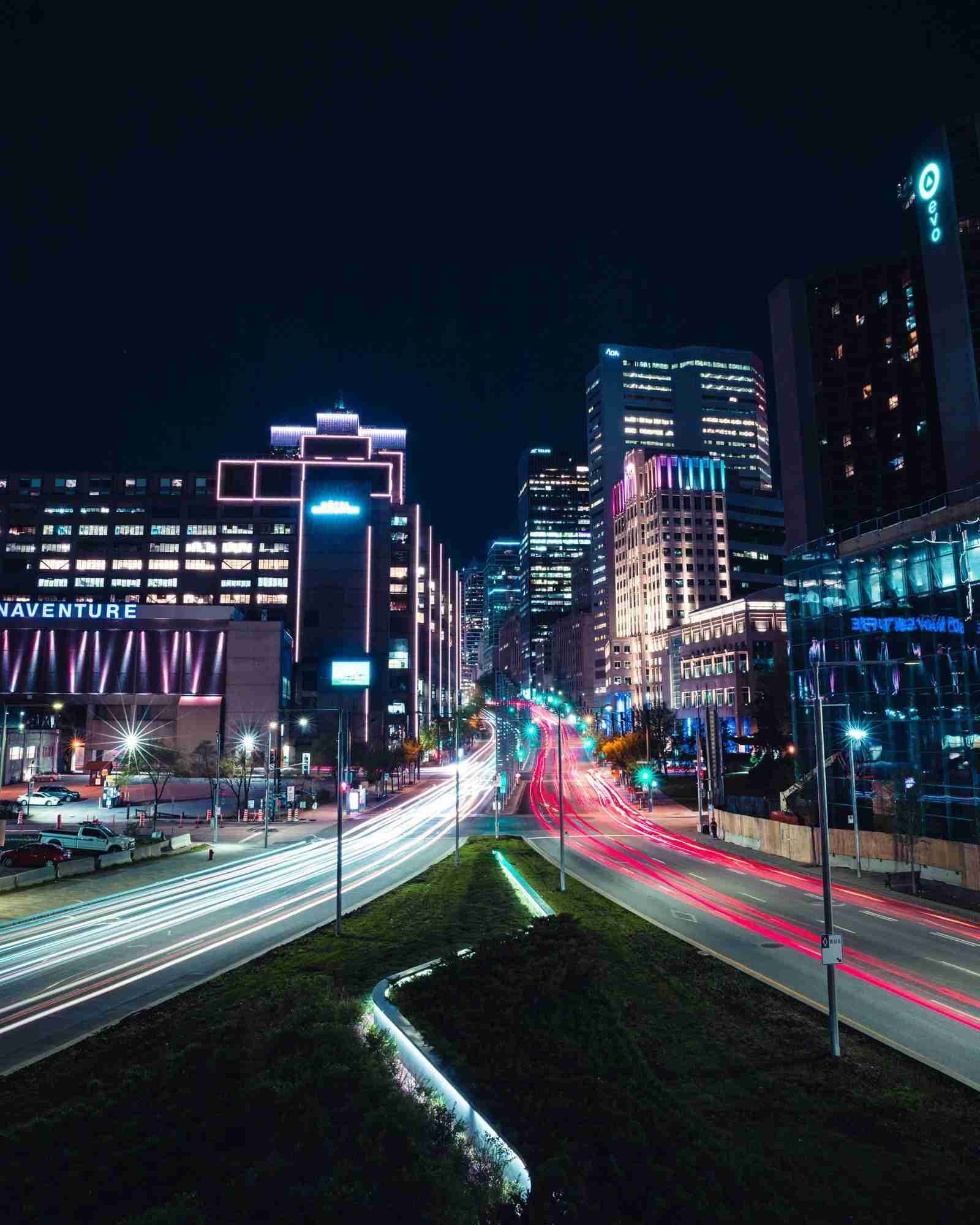
Blvd Robert-Bourassa is more than just a major artery of downtown Montreal—it's a dynamic photo environment that fuses urban speed with creative stillness. What sets this boulevard apart is the narrow green space that runs like a spine between its eight busy lanes, lined with curated public art, pedestrian paths, and a surprising tranquility at the heart of the rush. For photographers, this location presents an exceptional mix of street energy, symmetrical compositions, architectural perspective, and—most of all—long-exposure light trail opportunities. As daylight fades and headlights begin to blur, Robert-Bourassa becomes one of Montreal's most visually engaging linear corridors.
Best Photography Opportunities
• Light Trail Photography from the Center Green
Position yourself in the raised median park that divides the northbound and southbound lanes of Robert-Bourassa. At night, this strip becomes a unique observational deck, with traffic streaming past on either side and the downtown towers framing the view. Set up a tripod low to the ground and use a wide-angle lens (16–35mm) to capture not only light trails but also the spatial drama of the boulevard. Experiment with various exposure times—from 10 seconds for sharp trails to 30 seconds or more to let multiple vehicles layer into your frame. Golden hour transitions into blue hour provide the richest ambient light, and adding a variable ND filter lets you play with motion blur even earlier in the evening. Use parked vehicles, medians, or benches in the foreground to anchor your composition and provide a sense of scale to the streaking light.
• Symmetrical Urban Compositions with Green Space Contrast
The boulevard's center park creates a natural dividing line that lends itself to architectural symmetry. Use it to draw clean, central compositions that guide the eye straight through the scene. Early mornings offer soft lighting and minimal foot traffic, ideal for wide shots with long vanishing points. A 50mm prime lens offers a classic, undistorted perspective, perfect for balancing background structures with human elements. Shoot low to include ground textures like stone pavers or lines of planted grass, or elevate your position slightly from a park bench or low stair to compress the symmetry into stronger perspective lines. When shadows are long, they fall symmetrically as well—use this to your advantage for layered light patterns.
• Public Art Installations and Sculptural Interaction
The public art installations scattered through the median offer strong graphic forms, negative space, and opportunities for minimalism or layered urban storytelling. Try shooting through the gaps in a sculpture to frame a moving cyclist or distant skyline. A 24–70mm zoom allows you to move fluidly from contextual scenes that include buildings and traffic to tight abstractions of color and texture. Visit during different times of day—midday light produces hard-edged shadows that enhance the sculptural form, while late afternoon sun creates warm highlights that emphasize the materiality of the art. Consider revisiting during winter when snow outlines the sculptures and simplifies the palette to pure geometry.
• Dynamic Street-Level Perspective of Downtown Movement
From intersections like Robert-Bourassa and René-Lévesque, crouch low with a 16–35mm lens and point your camera up to capture the converging verticals of the surrounding towers. Pedestrian crossings, traffic movement, and urban bustle unfold across multiple planes—combine a fast shutter for a sharp, cinematic street moment, or drag the shutter slightly to create motion blur in the lower third of the frame while buildings remain crisp. You can also shoot from across the street using a longer focal length (70–200mm) to compress the scene and show layers of motion—vehicles passing in opposite directions, pedestrians weaving through crosswalks, and streetcars reflecting city lights. Evening rush hour adds maximum density to these layers.
• Evening Street Portraits with Motion and Mood
As daylight fades, Blvd Robert-Bourassa transforms into a corridor of reflected neon and ambient glow, perfect for handheld night portraits. Seek out strong backlights from storefronts or use the headlights of stopped cars to rim-light your subject. A fast prime lens (f/1.4 or f/1.8) lets you shoot wide open and isolate your subject even at low ISO. Use traffic and architectural elements as visual counterpoints—have your subject lean against an art installation while light trails blur behind them, or capture a walking portrait mid-frame with passing lights in the background. Rain or recent snow dramatically enhances these images by reflecting available light off the pavement. Shooting handheld at 1/125s or higher helps avoid motion blur while still embracing the nighttime mood.
Best Time to Visit
Blvd Robert-Bourassa is a year-round photographic resource, with its character evolving as daylight, seasons, and city life cycle through different moods. The ideal time for photography depends largely on your stylistic focus. For calm, symmetrical compositions and soft golden light on the modern facades, arrive shortly after sunrise—particularly in spring and fall when the sun's lower angle casts long shadows across the street's symmetrical green corridor. Morning light tends to be warmer and directional, emphasizing glass reflections and bringing out the architectural lines that define the boulevard.
Midday introduces higher contrast and more intense pedestrian traffic, which can serve well for dynamic street photography or shadow play across sculptures and walkways. If you're aiming for minimalism or abstract work, this is a good time to isolate geometric forms created by light and structure. Late afternoon light, especially in the cooler months, provides a golden hue that works wonderfully with the park's art installations, adding color warmth to otherwise neutral city tones.
Blue hour—from approximately 20 minutes after sunset through the onset of night—is the most visually rich window for long exposure photography. Light trails are most pronounced between 7:30 p.m. and 10:00 p.m. on weekdays, when vehicle flow is steady and predictable. Shoot west-facing to capture residual sky glow balancing against the artificial lighting. During rain or light snow, reflections on pavement enhance every exposure, multiplying colors and extending vertical lines downward.
In winter, the street takes on a different tone altogether. Steam rising from grates, snow accumulating in sculptural recesses, and early sunset lighting all combine to deliver a more dramatic, cinematic version of the space. Dress warmly and be prepared for shorter shooting windows due to the cold and limited natural light. Fall is also excellent, as trees along the center strip transition into fiery color, and the ambient tone of the city cools just enough to contrast with warm building lights.
How to Get There
Blvd Robert-Bourassa runs north-south through downtown Montreal, beginning near the riverfront and extending well past the Ville-Marie Expressway. The most photographically rich stretch is between René-Lévesque Boulevard and Place Ville Marie. The location is extremely transit-accessible: Bonaventure and Square-Victoria-OACI Metro stations are both within walking distance, and nearly a dozen city bus lines pass nearby. If driving, paid street parking is available on nearby side streets, and underground garages are located under Place Ville Marie and at World Trade Centre Montreal.
There's no cost to photograph here—this is public urban space—but tripods may attract attention if you're setting up in busier intersections or median areas. Always respect pedestrian right of way, and use caution when stepping onto or near roadway islands. Many photographers choose to shoot handheld or with small tabletop tripods to remain nimble.
Gear for City Light and Urban Contrast
Photographing Blvd Robert-Bourassa's varied visual language—ranging from light trails to architectural symmetry—requires a well-curated gear setup that balances flexibility with portability. Begin with a fast-aperture standard zoom, such as a 24–70mm f/2.8, which can cover everything from wide compositions of art installations to medium-length street portraits. Pair this with a 16–35mm wide-angle lens for capturing urban canyon perspectives, overhead building convergences, and expansive scenes across the center green space. A 70–200mm telephoto is optional but valuable if you plan to shoot compression effects from intersections or elevated crosswalks.
Low-light capability is essential for evening sessions, so pack at least one fast prime lens—either a 50mm f/1.8 for general use or an 85mm f/1.4 for stylized night portraiture and subject isolation against ambient city lights. A tripod is mandatory for long-exposure work. Choose a lightweight carbon-fiber model with a secure locking mechanism that can deploy quickly in tight spaces like medians or sidewalks. Make sure your tripod has a ball head or geared head for precise compositional adjustments, especially for light trails and symmetry work.
Filters play an important role here: a 3-stop or variable ND filter allows for longer exposures even when light lingers at dusk, while a circular polarizer helps reduce reflections on building glass and wet pavement. Carry multiple batteries—long exposures, cold weather, and continuous backscreen use drain them quickly—and bring microfiber cloths to handle lens cleaning after encounters with city dust, steam vents, or snow spray. A remote shutter release or intervalometer is highly recommended for avoiding vibration in critical long-exposure setups.
Consider wearing dark, non-reflective clothing if you're shooting through glass surfaces or working near reflective installations. For mobility, use a belt system or modular sling that allows quick access to lenses without needing to stop and unpack. If you intend to shoot across several lighting conditions—from golden hour to deep night—bring a small LED panel or flashlight to help check focus, settings, or gear in low light. Finally, if you plan to incorporate audio or mixed media, the area's manageable background noise levels make it viable for video capture as well.
Nearby Photography Locations
: Just adjacent to the boulevard, this plaza offers modern sculpture, angular light patterns, and rooftop views that deliver outstanding skyline and symmetry shots.
: A short walk south, this mix of heritage buildings, tram lines, and public seating creates layered compositions and rich environmental storytelling during golden hour.
: Multiple entry points to Montreal's underground pedestrian network are along Robert-Bourassa. These transitions between light and dark spaces make for dramatic architectural and human-interest shots.
: Shooting back down the boulevard from this elevated crossing gives you clean views of the street's full stretch, perfect for rush hour time-lapses or long-lens compression shots.
: A 10-minute walk south connects you to cobblestone streets, waterfront promenades, and 19th-century buildings—ideal for architectural and environmental contrast with the boulevard's modern edge.
Blvd Robert-Bourassa is one of Montreal's richest urban photo corridors, offering more than just traffic shots. It's a street where motion, design, and human presence converge across hours and seasons. With patience and the right tools, every corner and crossing has a frame waiting to be composed.
Comments
Loading comments…