
Waterfall at Parc de la rivière Beauport, Quebec: Geologic Texture and Cascading Motion in the City's Backyard
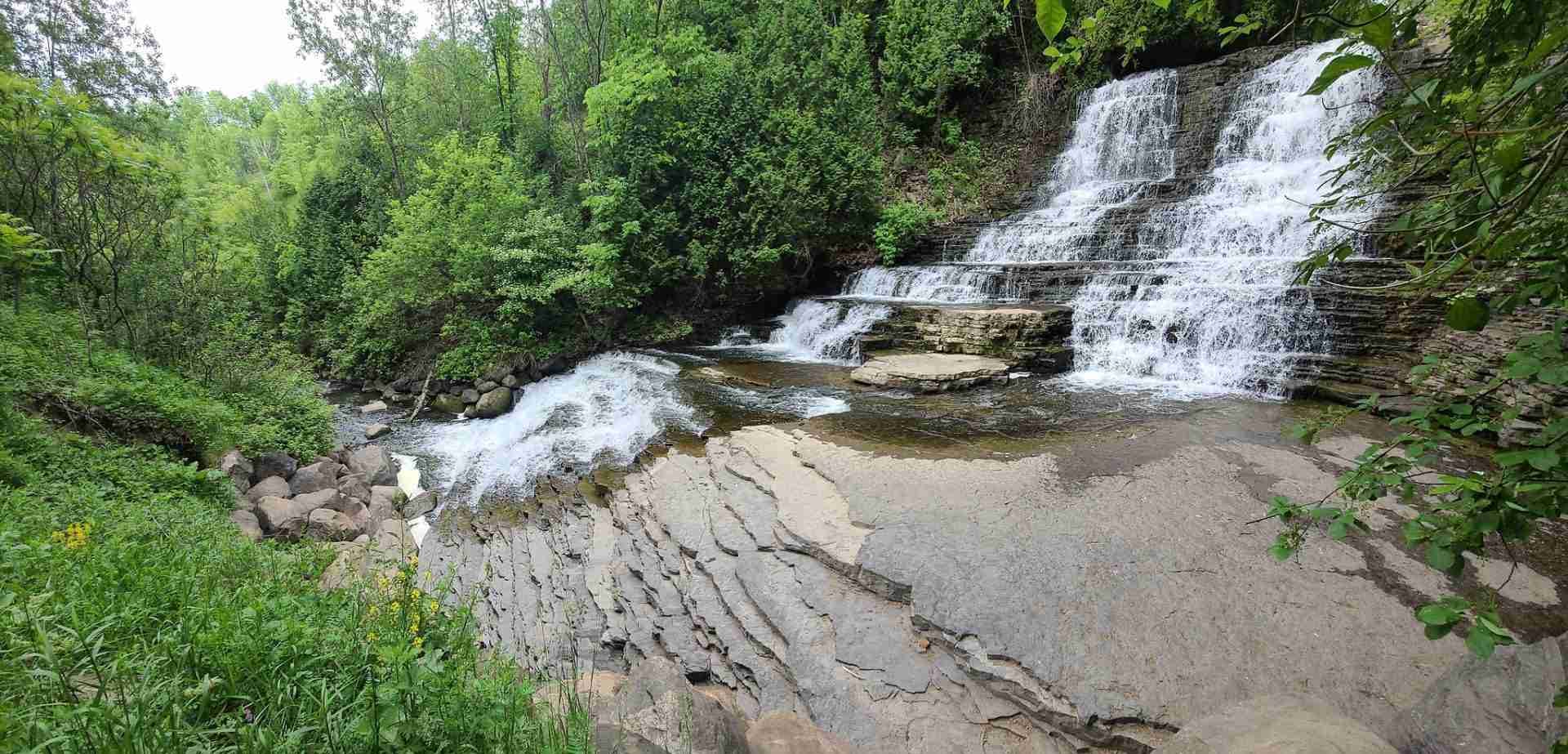
Situated in Beauport, Quebec, the Waterfall at Parc de la rivière Beauport presents a unique spectacle. The waterfall cascades down successive layers of shale, which over time, have eroded into a fascinating washboard-like pattern. This natural formation adds a striking texture to any photograph, highlighting the raw beauty of geologic processes. Besides the intriguing formations, the cascade offers myriad opportunities to capture the dynamism of falling water—from frozen droplets in high shutter speed to silky streams with longer exposures. Surrounding vegetation can add a lush frame to your shot or offer a contrasting color palette, especially during the fall season. Remember, the area around waterfalls can be slippery, so tread carefully when setting up your shot.
Best Photography Opportunities
• Geometric Shale Layers at Low Flow
In periods of reduced water flow, the shale shelves that define this cascade become more visible, revealing intricate step-like formations that almost resemble manmade structures. Use a wide-angle lens (16–35mm) to emphasize the rhythm and repetition in the rock formations, positioning yourself at a low angle to accentuate foreground texture. Overcast conditions bring out tonal variations in the wet stone, while sidelight at golden hour adds definition to each ridge. These formations allow you to construct compositions that are both abstract and geological in tone. Take time to walk both upstream and downstream to find alternate angles that compress the textures into diagonal lines or symmetrical layers—each variation shifts the visual rhythm and compositional balance dramatically.
• Long Exposure Water Curtains
During moderate to high flow, the waterfall creates elegant sheets of whitewater over the stepped surface. A neutral density filter is essential here—allowing for exposures between 2 to 10 seconds to transform chaotic splashes into smooth, veil-like streams. Position your tripod on the downstream rocks or on the wooden viewing platforms for a clear angle. Use a mid-range focal length (35–70mm) to control background distractions while focusing attention on the cascade itself. Moss-covered rocks and fallen leaves often enhance the composition in spring and fall. Framing the falling water with arching branches or lichen-covered boulders can create natural vignettes that draw the eye toward the cascade.
• Autumn Color Contrast
Fall brings a dramatic shift in palette. The dense foliage that surrounds the park bursts into reds, oranges, and yellows, making the dark shale and white water stand out with even more clarity. A polarizing filter will help manage glare from wet surfaces and enhance saturation in the leaves. Walk upstream and downstream to find natural frames of overhanging branches or riverbank brush that lead the viewer's eye into the frame. Overcast skies or misty mornings further enhance the moody ambiance. During peak color, consider using a telephoto lens to isolate layers of warm foliage stacked against the cold tones of the stone and water—a combination that reads well both in color and black-and-white.
• Macro and Detail Studies
Beyond wide and mid-range compositions, this site rewards photographers who explore closely. Water droplets clinging to leaves, frothy bubbles forming in eddies, and the ridged lines of erosion on the shale offer endless opportunities for texture-focused work. Bring a macro lens or use extension tubes with a standard prime. A diffuser helps when shooting in contrasty light, and a small ground cloth or knee pads make working close to the earth much more comfortable. Don't overlook leaf veins, moss colonies, or frozen dew—these micro-landscapes often capture the essence of the location in ways that sweeping shots cannot. Use focus stacking for razor-sharp depth when the subject calls for high precision.
• Winter Freeze and Ice Formations
In deep winter, the cascade often freezes into a cathedral of ice columns and crystalline fans. The contrast between the blue-white ice and the remaining visible stone creates a powerful visual tension. Use a 70–200mm lens to isolate specific patterns or shoot wide for a full-scene capture with snow-laden trees providing scale. Timing is key—visit during a cold snap after a recent flow to ensure well-formed structures. Morning light is best for directional highlights on the ice. Be mindful of subtle reflections and color tints that can appear in the ice from nearby elements—trees, sky, and even the photographer's clothing can influence color balance. Shooting from slightly elevated positions can help reduce background clutter and allow the ice structures to read as graphic, sculptural elements.
Best Time to Visit
The waterfall is photographically rewarding in every season, with each offering a unique aesthetic. Spring brings high water volume and fresh green growth—ideal for long exposure shots and lush framing elements. Early morning sessions are best for catching soft sidelight and avoiding wind that could blur foliage. In summer, water flow moderates, revealing more of the underlying shale texture. It's a great time for exploring geometric compositions, especially during blue hour or golden hour light.
Autumn is arguably the most colorful season. From late September to mid-October, fall foliage adds a vibrant backdrop to the dark stone and whitewater, especially after rain. The light is often clearer and more directional in the fall, perfect for enhancing detail. In winter, cold conditions freeze the falls into intricate ice formations—offering stark, high-contrast scenes best captured in the early morning when light rakes across the landscape. Late winter also introduces melting elements, creating dualities of flowing and frozen water within one frame.
Avoid harsh midday sun unless using ND filters and planning to process for high dynamic range. Cloudy days are excellent for avoiding blowout highlights and for capturing nuanced textures. Morning visits are ideal year-round for both light quality and lower foot traffic.
How to Get There
Parc de la rivière Beauport is located in the borough of Beauport, just northeast of central Quebec City. To reach the waterfall, enter the park from Boulevard des Chutes and follow the well-marked paths to the cascade area. There are parking facilities near the main entrance and no admission fee is charged for access. The walk to the waterfall is short and manageable, though uneven terrain around the rocks calls for sturdy footwear. Wooden viewing platforms are available for safer shooting angles, and several unpaved paths lead to alternative vantage points.
Photographers should use caution around wet rocks and icy surfaces, especially in spring and winter. Carry a small towel or chamois cloth to dry off gear and shoes as needed, and protect your camera from spray using a rain cover or weather-sealed housing.
Recommended Gear for Waterfall Texture and Seasonal Color
For this location, a tripod is essential for long exposures and for stabilizing shots in low light. A wide-angle zoom (16–35mm) gives you the ability to capture the full breadth of the waterfall and its surroundings. Pair it with a standard zoom (24–70mm) for compositional flexibility and a macro lens if you want to isolate natural textures and close-up water interaction.
ND filters—especially 3, 6, and 10-stop varieties—are critical for controlling shutter speed during daylight hours. A circular polarizer will cut glare off the wet rock and water surface while also enhancing color in the foliage. Bring lens cloths or anti-fog wipes, especially during cold or misty conditions. For handheld shooting near water, image stabilization can help but isn't a substitute for careful composition and exposure control.
Footwear should be waterproof with solid tread, and trekking poles may be useful in winter or spring. A small waterproof mat or collapsible stool helps if you're planning extended low-angle setups. Don't forget a rain cover for your camera, spare batteries (cold weather can drain them quickly), and a microfiber towel for drying off gear.
Nearby Photography Locations
• Montmorency Falls
: Just a 10-minute drive away, these are Quebec's tallest waterfalls and offer spectacular views from both above and below. Long exposures, aerial compositions from the bridge, and seasonal lighting changes make this a versatile photo destination.
: This nearby island offers sweeping views of the St. Lawrence River, with charming farmland, historic buildings, and ridge-top vistas ideal for wide-angle landscapes.
: Located along the riverfront, this area provides flat, open views of the water and distant bridges. Visit at sunrise for soft pastels or after storms for dramatic skies and birdlife.
: East of Beauport, this corridor features rolling hills, rustic barns, and panoramic river overlooks. It's particularly appealing in autumn when the landscape erupts with color.
: Just 15 minutes away, the historic center offers cobbled streets, 17th-century architecture, and tight urban compositions that contrast beautifully with the natural flow of the Beauport cascade.
Parc de la rivière Beauport's waterfall combines the kinetic energy of falling water with the graphic structure of eroded rock. It's a place where natural forces are both visible and ever-changing—a dynamic subject for any photographer seeking movement, pattern, and seasonal expression.
Comments
Loading comments…