

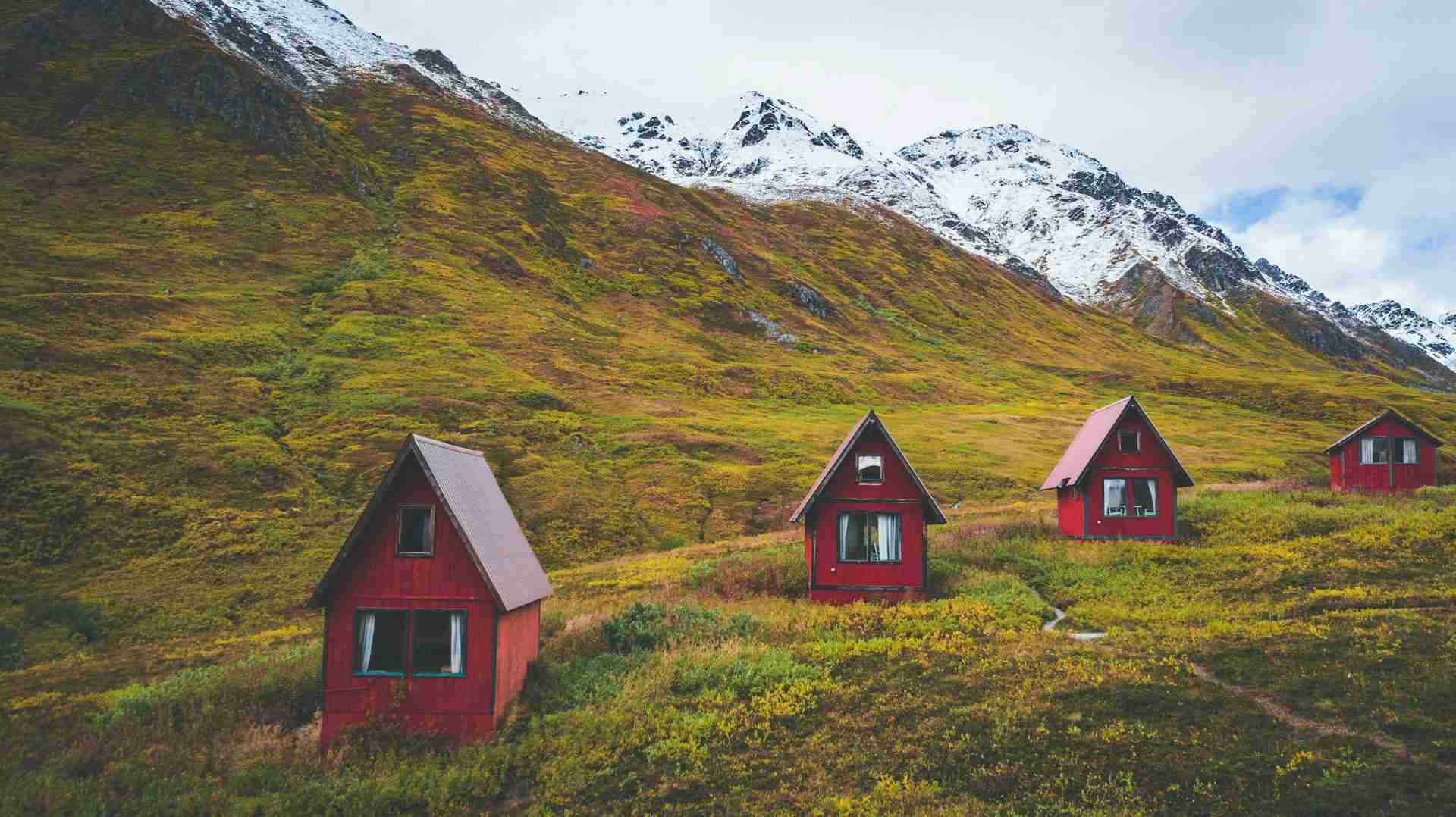
Hatcher Pass is one of those places in Alaska where you don't have to work too hard to feel like you're deep in the landscape. Just outside Willow, the road winds up into a broad alpine area with rolling tundra, sharp ridge lines, and old mining remnants scattered across the hills. It's a location that feels big in every direction, but at the same time, it's easy to access compared to a lot of Alaska. What makes it especially enjoyable for photography is the variety. You can shoot wide mountain views, smaller details in the tundra, or even old structures like Independence Mine, all within a relatively short distance. It's the kind of place where you can spend a full day moving slowly and still feel like you've only scratched the surface.
Best Photography Opportunities
• Alpine Valley Landscapes
One of the main draws of Hatcher Pass is the wide open alpine terrain that stretches out in all directions. Rolling hills, distant peaks, and layered ridge lines give you a lot to work with when building a composition. From higher viewpoints along the road or nearby trails, you can look out across the valleys and capture that sense of scale that Alaska does so well. Including a bit of foreground tundra or rock helps anchor the image and keeps it from feeling too empty. The light can shift quickly across the landscape, so it's worth spending time watching how shadows move over the hills. These wide scenes are where Hatcher Pass really stands out.
• Independence Mine Structures
The remains of Independence Mine add a completely different subject into the mix. Weathered buildings, old equipment, and wooden structures sit against the backdrop of the mountains. These elements give you a chance to create images that combine history and landscape in the same frame. You can shoot them as standalone subjects or include the surrounding terrain to give them more context. The contrast between the man made structures and the natural environment works really well visually. It's also a good spot to slow down and look for smaller compositions rather than just shooting wide.
• Drone Views Over the Pass
Drone photography works incredibly well here because of how open the landscape is. From above, you can really see how the ridge lines, valleys, and roads weave through the terrain. The patterns in the tundra and the shape of the mountains become much more obvious from the air. You can also capture the scale of the area in a way that's harder to show from ground level. Early or late in the day tends to give you the best results, with softer light and longer shadows adding depth. As always, be mindful of weather and local regulations before flying.
• Tundra Details and Seasonal Color
It's easy to focus on the big views here, but the ground level details are just as interesting. The tundra is full of textures, small plants, and subtle color shifts, especially in late summer and fall. Reds, yellows, and greens mix together in a way that can create really strong foreground elements. Getting lower to the ground and focusing on these details can give you a completely different type of image. It also helps add variety to your overall set. Sometimes the smaller scenes end up being the most memorable.
• Changing Weather
Weather in Hatcher Pass can change quickly, and that's actually a good thing for photography. Clouds moving through the peaks can create layers and depth that you won't get on a clear day. Distant mountains can fade into the background while closer ridges stay more defined. This kind of layering adds a lot of atmosphere to your images. It's worth waiting a bit at a viewpoint to see how the scene evolves. Conditions that seem flat at first can turn into something much more interesting with a little patience.
Best Time to Visit
Late summer into early fall is one of the best times to photograph Hatcher Pass. The tundra begins to change color, adding reds and yellows across the landscape that make the scene feel more vibrant. The weather is also a bit more stable compared to earlier in the season.
Early morning and late evening are the most rewarding times of day. The lower angle of the sun creates softer light and longer shadows that help define the terrain. Midday can still work, but the light tends to be flatter and less interesting across the wide open landscape.
Weather plays a big role here, so partly cloudy conditions are often ideal. Moving clouds can add depth and help break up the sky, which makes a big difference in such an open environment.
How to Get There
Hatcher Pass is located near Willow, Alaska, and is accessible by road via Hatcher Pass Road. The drive itself is part of the experience, with several pull offs and viewpoints along the way where you can stop and photograph.
During the summer months, the road is typically open and accessible to most vehicles. In winter, access can be limited depending on snow conditions, and parts of the road may be closed. It's always worth checking current conditions before heading out.
There is no general fee to access the pass itself, but Independence Mine State Historical Park does have a fee for entry. Parking is available at several points along the road and near the main areas of interest.
Recommended Photography Gear
A 24 to 70 millimeter lens is a great starting point here and will cover most of what you need. It works well for both wide landscapes and mid range compositions.
A 70 to 200 millimeter lens is highly recommended for this location. It allows you to compress mountain layers and isolate sections of the landscape that might otherwise feel too spread out.
A tripod is useful, especially if you're shooting in lower light or waiting for changing conditions. It also helps when you want to take your time refining compositions.
Because you can access many viewpoints by car, you have a bit more flexibility with gear compared to hiking locations, but it's still worth keeping things manageable.
Nearby Photography Locations
• Independence Mine State Historical Park
This area sits right within Hatcher Pass and offers a concentrated collection of historic mining buildings. The structures are spread across the hillside, which gives you multiple angles to work with. It's a great place to combine history and landscape in the same shoot.
Located near the top of the pass, Summit Lake offers calm water surrounded by alpine terrain. On still days, you can get clean reflections of the surrounding hills. It's a quieter spot that works well for more minimal compositions.
A short hike from Independence Mine leads to Gold Cord Lake, a small alpine lake tucked into the mountains. The water is often still, and the surrounding terrain creates a more enclosed and intimate scene. It's a good contrast to the wide open views of the pass.
• Archangel Valley
This valley offers access to more rugged terrain, with steeper mountains and less developed viewpoints. It's a good option if you want to move beyond roadside photography and explore a bit more. The landscape here feels a bit wilder and less structured.
• Willow Creek Area
Flowing through parts of Hatcher Pass, Willow Creek provides opportunities for photographing moving water, rocks, and smaller landscape details. It's a nice way to add variety to your shoot, especially if you've been focusing on wide mountain views.
Comments
Loading comments…