
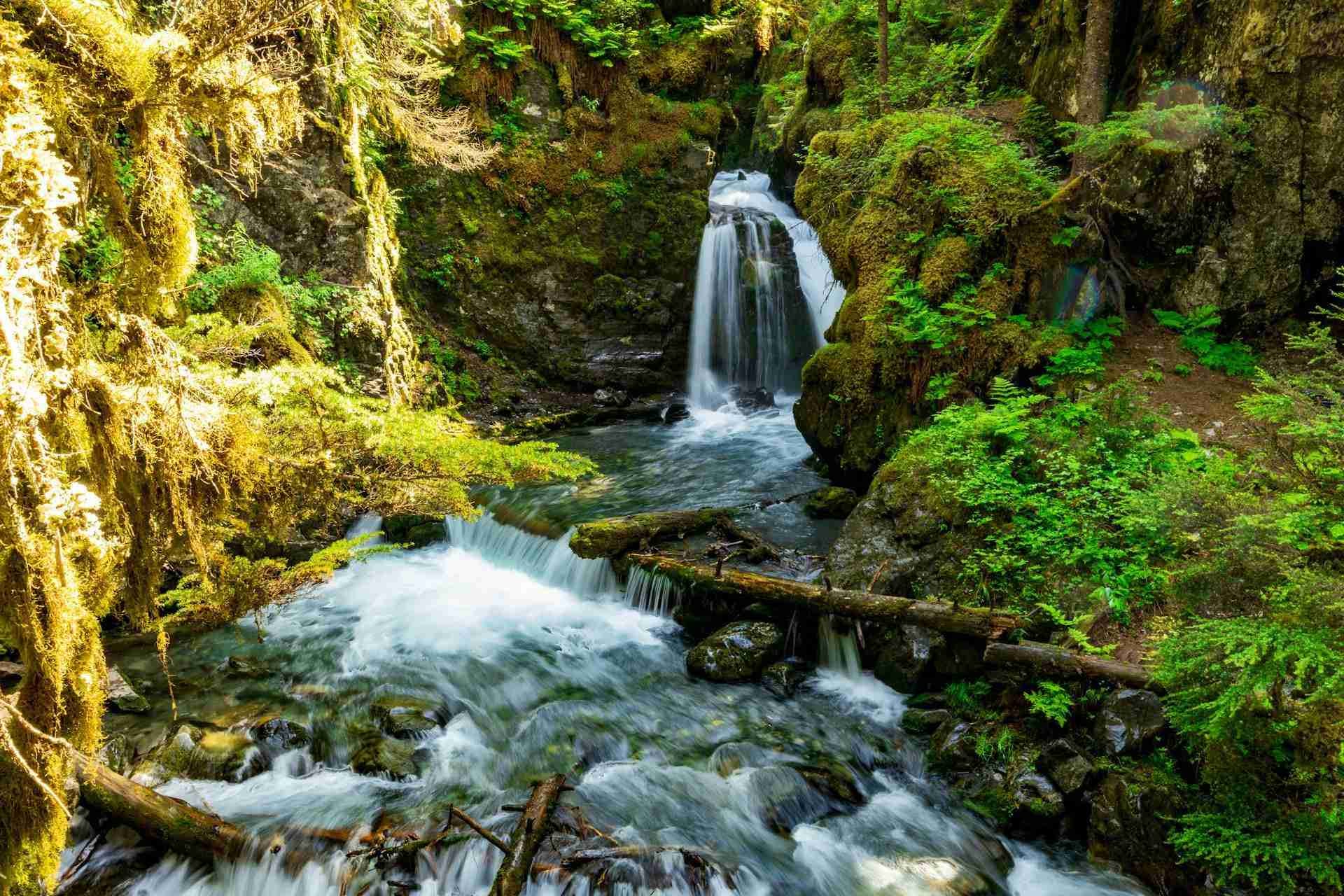
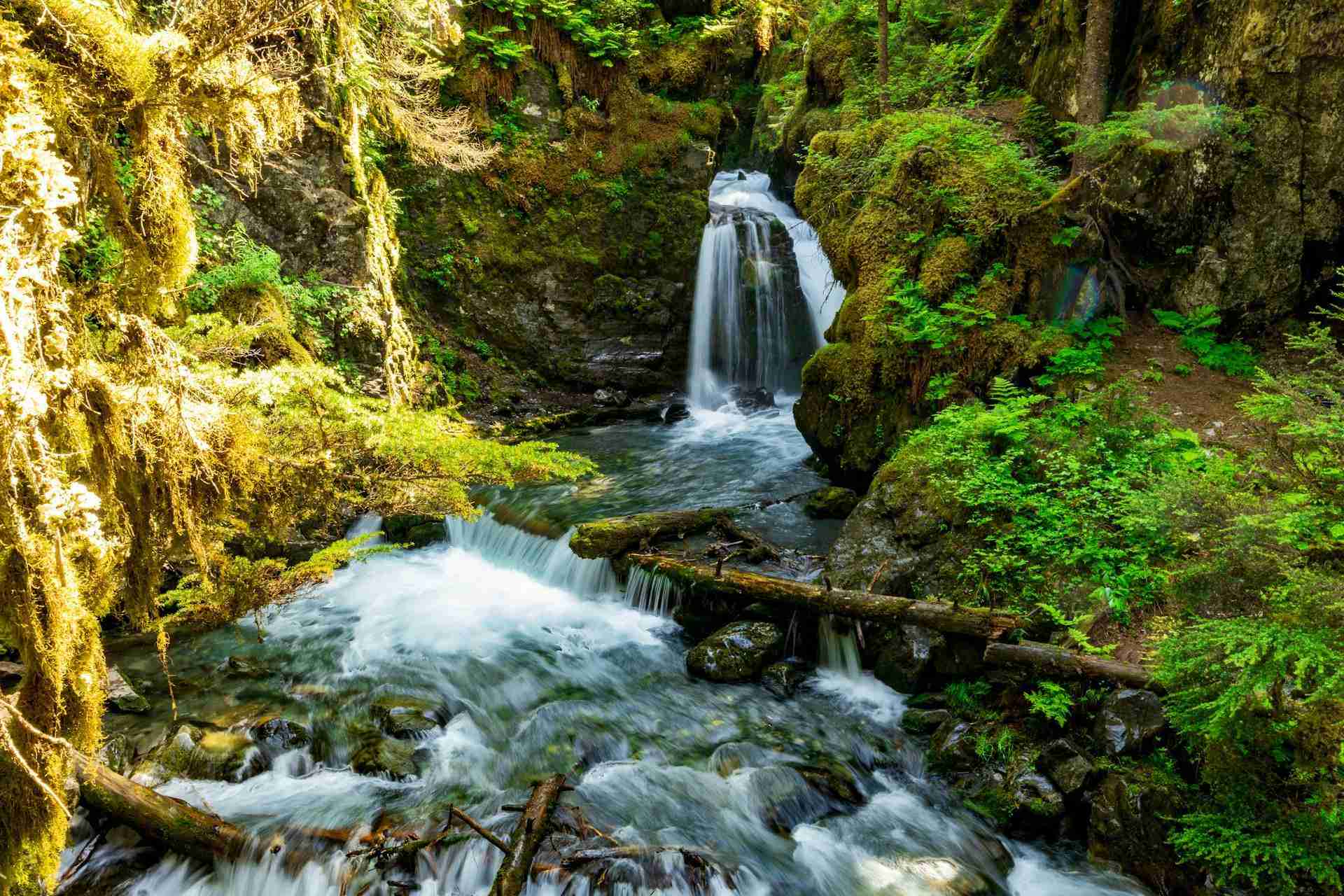
Virgin Creek Falls is a hidden waterfall in the forested hills above Girdwood, a small mountain town about 40 minutes south of Anchorage. Surrounded by moss-covered rocks, ferns, and towering evergreens, the falls flow down a short but powerful drop into a narrow gorge. The sound of rushing water fills the air, and soft light filters through the trees, giving the entire area a quiet, almost enclosed feel. It is a small space, but every corner is packed with textures and layers, making it ideal for close compositions and long exposures. Virgin Creek Falls may not be big, but it offers the kind of natural setting where you can slow down and focus on your technique, lighting, and creative framing without needing to venture far into the backcountry.
Best Photography Opportunities
• Long Exposures of the Main Cascade
The central draw here is the waterfall itself, which drops sharply over a mossy ledge into a rocky pool below. It is not a tall fall, but the flow is steady year-round and works beautifully for long exposure photography. With a tripod and neutral density filter, you can slow the shutter to smooth out the water and create contrast between the motion and the stillness of the rocks and foliage. Shoot from down near the base for an upward angle that emphasizes the height, or frame wider from a mid-level vantage point to include the surrounding trees. The light is usually soft and diffused thanks to the forest canopy, which helps you retain detail in both highlights and shadows.
• Moss, Ferns, and Forest Texture Shots
The forest around the falls is dense, green, and rich with texture. Moss covers nearly every surface—rocks, logs, and even the tree trunks—while ferns and low plants fill the undergrowth. These elements make great subjects for tight compositions, especially when the ground is damp and the greens are most vibrant. Use a macro lens or shoot with a wide aperture to isolate details in the moss or the spiral of a single fern. Overcast skies are ideal here, as they help eliminate harsh contrast and bring out subtle tones in the vegetation. You can spend a lot of time in just a few square feet if you are focused on finding patterns and textures.
• Upstream Compositions with Leading Lines
Looking upstream from the base of the falls, Virgin Creek winds back through the forest with rocks and tree roots creating a natural path for the eye. These lines are great for leading your viewer into the frame. A wide-angle lens allows you to exaggerate the curve of the stream and make the scene feel deeper. Try positioning yourself low to the ground so the rocks in the foreground fill the bottom of the frame and pull the viewer toward the waterfall. This setup works well in low light and is a strong option if you want something different from the typical head-on waterfall shot.
• Autumn Color and Water Contrast
In early October, the forest starts to change color, with yellow birch leaves and a few splashes of orange showing up between the green fir and spruce. Fallen leaves gather on the rocks and along the stream's edge, adding extra color to the scene. This is one of the best times to shoot here because the leaves create color contrast against the dark wet stones and flowing water. Use a polarizing filter to reduce glare and deepen the tones in the wet surfaces. You can frame shots tightly to focus on leaf patterns or go wider to include the canopy above.
• Snow and Ice in Winter
Virgin Creek Falls is also accessible in winter, though the trail can be icy and the rocks dangerously slick. If you are prepared for the cold and have the right gear, the falls can look stunning with snow-covered boulders and ice forming along the stream. Water continues to flow, which creates a contrast between the motion and the frozen surroundings. Keep your exposures short enough to avoid motion blur if the water is partially frozen, or lean into long exposures for a more stylized effect. Be cautious around the edges, as footing is often unstable in winter, but the scenes can be beautifully quiet and clean after a fresh snowfall.
Best Time to Visit
Virgin Creek Falls can be photographed all year, but each season brings something different. Spring and early summer offer the highest water flow, thanks to snowmelt, and the forest comes to life with bright green growth. The light tends to be soft in the mornings and early evenings, especially when clouds drift through the Girdwood valley. These are the best times for low contrast and longer exposures. Midday light is filtered by the dense trees, but glare can still be a challenge without filters.
Fall is a favorite time for many photographers because the colors start to change and the crowds thin out. The yellow and gold tones in the leaves bring warmth to your shots, and the lower angle of the sun adds depth. By late October, snow may start to show up, especially on the ground around the falls. Winter is beautiful but tricky. The trail can be icy, and light levels drop quickly during short days. If you plan a winter shoot, bring microspikes and be prepared for cold weather conditions. The best lighting in all seasons is generally found early in the morning or on overcast days, which help control contrast and make the greens and browns of the forest more saturated.
How to Get There
Virgin Creek Falls is located at the edge of Girdwood, Alaska, a small town about 40 miles southeast of Anchorage. From Anchorage, take the Seward Highway south along Turnagain Arm. Once in Girdwood, turn onto Timberline Drive and follow it to the end. There is no official parking lot, but you can park along the side of the road, taking care not to block driveways or private property. From there, it is just a short hike along the Virgin Creek Falls Trail.
The trail is easy to follow but can be muddy and slippery, especially after rain or during spring thaw. There are no fees or permits required to access the area, but it is a local favorite, so be respectful of noise and foot traffic. The trailhead is near homes, and the path itself is compact and narrow, so arrive early if you want to shoot without interruption. Because it is such a short hike, you can easily carry a full kit and take your time setting up once you reach the falls.
Recommended Photography Gear
Virgin Creek Falls is a spot where slower, careful photography pays off, and your gear should match that style. A sturdy tripod is essential for long exposures, especially if you are planning to shoot the waterfall or low light forest scenes. A wide-angle lens is useful for capturing the whole scene, including the stream and surrounding trees, while a mid-range zoom like a 24 to 70 millimeter lens gives you flexibility to reframe without moving around too much on the slippery rocks.
Bring a circular polarizer to help manage glare on the water and wet stones, and a neutral density filter if you want to use longer shutter speeds for smoothing the falls. A macro lens or close-up filter is a great addition for texture shots of moss, ferns, and leaves. Waterproof boots and a rain cover for your camera are smart choices, since much of the area around the creek is wet or muddy. In winter, pack microspikes for your boots and hand warmers for your batteries.
Light changes quickly in the forest, so it helps to have a headlamp or small flashlight if you are shooting early or late in the day. A remote shutter release is also useful to keep your camera steady during longer exposures. This is not a place where you need to carry heavy telephoto lenses, but it does reward attention to detail and patience. Even a small, lightweight kit can produce great results here if you spend time exploring angles and working with the light.
Nearby Photography Locations
This popular trail starts from near the Alyeska Resort and winds through lush forest with boardwalks, bridges, and smaller streams that are ideal for forest photography. In summer, the trail is full of green textures and light shafts filtering through the trees. During fall, yellow leaves cover the path and water crossings.
For higher elevation views, the tram takes you up the side of Mount Alyeska with panoramic views of Turnagain Arm and the Chugach Mountains. The top is a great place for wide-angle mountain shots and long views down into the valley, especially during sunrise or sunset when the light stretches across the peaks.
• Twenty Mile River Valley
Located just south of Girdwood along the Seward Highway, this wide valley offers braided river channels, views of distant glaciers, and quiet gravel bars perfect for landscape photography. It is best in early morning when fog hangs low and the river reflects the sky.
A short drive south brings you to Portage Lake, where you can photograph floating ice, calm water, and distant mountain reflections. The lake is especially moody in spring and fall, and the surrounding area offers multiple pullouts and short trails for shooting from different angles.
On the way to Girdwood from Anchorage, Bird Point is a coastal overlook where you can shoot dramatic views of Turnagain Arm, especially during high tide when the bore tide rolls in. The wooden platforms give a clear view out over the water, and sunsets here often light up the entire sky.
Virgin Creek Falls may be small, but it delivers big when it comes to detail, light, and natural beauty. It is one of those places that rewards patience and close observation more than grand vistas. Whether you are spending a quiet morning working with long exposures or returning in winter to shoot ice and snow, the falls offer something worth coming back to.
Comments
Loading comments…