
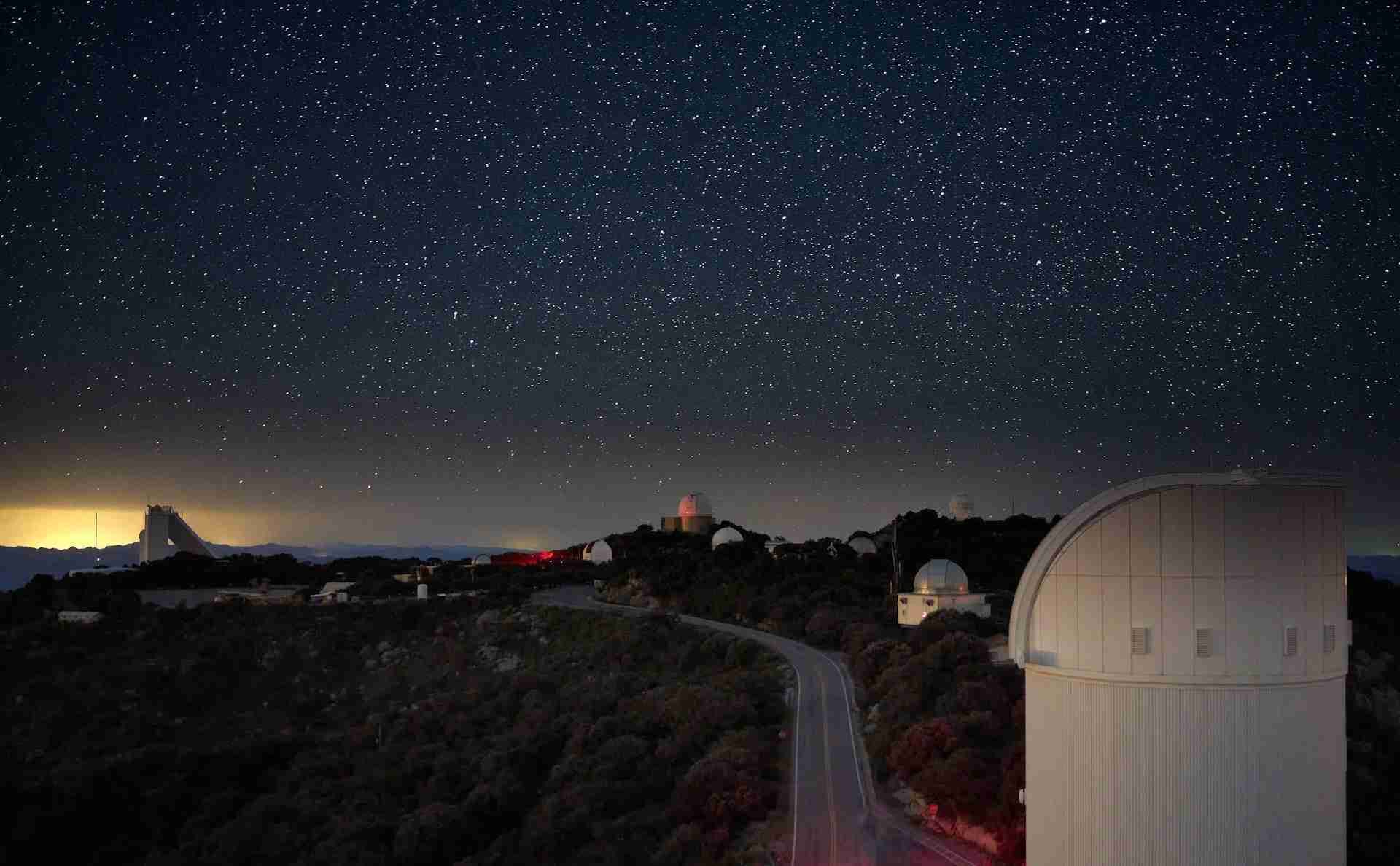
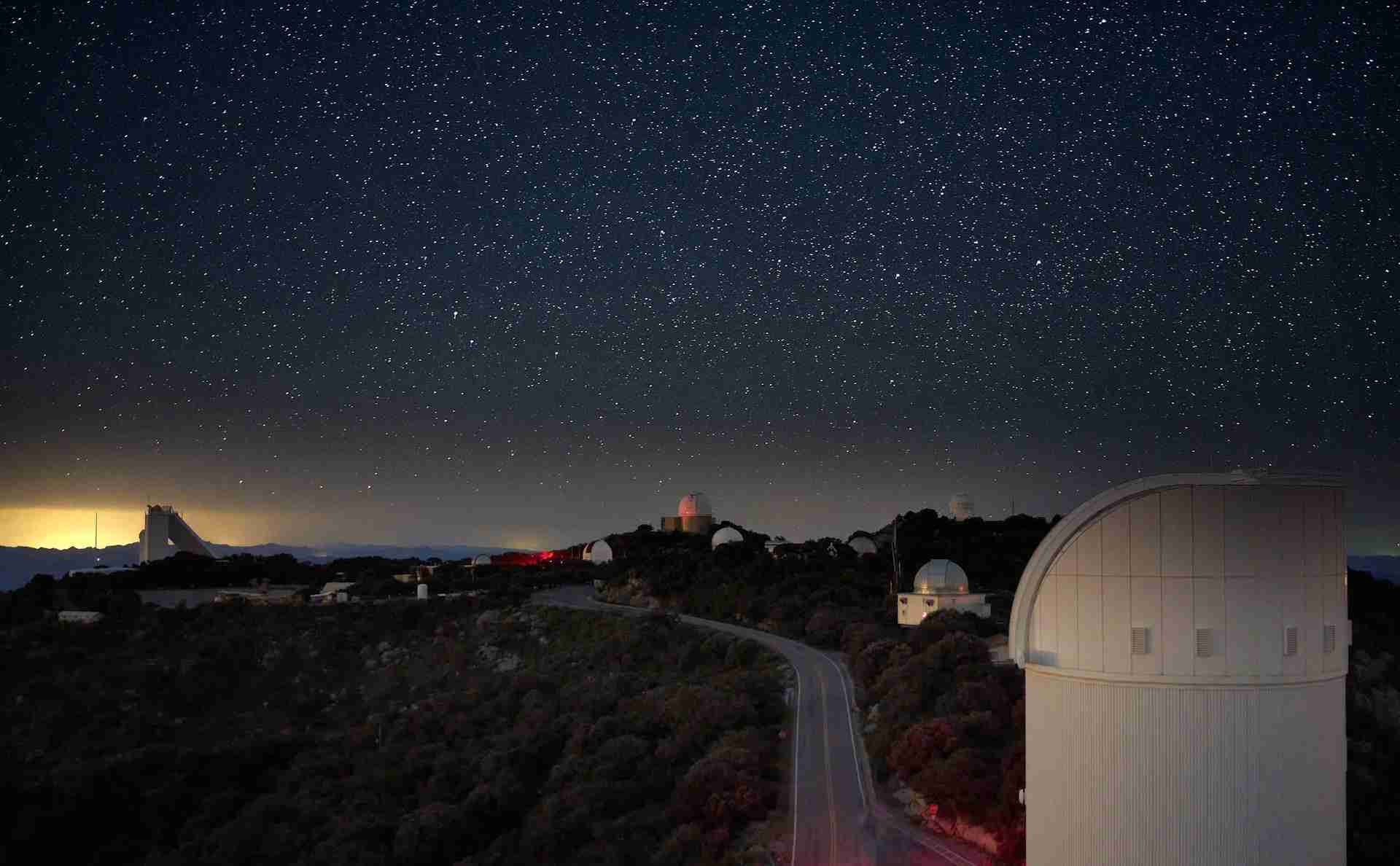
Set high on the Quinlan Mountains of the Sonoran Desert, Kitt Peak National Observatory offers one of the most striking intersections of science, architecture, and landscape in the American Southwest. Located west of Tucson, the observatory complex spreads across a high desert ridge with expansive views over saguaro-studded valleys and distant ranges. What makes Kitt Peak especially appealing to photographers is the contrast between the futuristic domes and the timeless desert terrain. White observatory structures rise from cactus-dotted slopes, their geometric forms gleaming against deep blue skies by day and starlit skies by night. From sweeping wide-angle landscapes to detailed architectural and night sky compositions, the location provides rich subject matter across multiple genres, all within a dramatically isolated setting.
Best Photography Opportunities
• Wide-Angle Domescape with Desert Foreground
One of the most visually satisfying compositions is a wide view of the observatory domes rising above the desert slope, framed with native vegetation in the foreground. Shooting just before sunset, when the domes catch warm light and shadows stretch across the hillside, brings out the curve and texture of the structures. Use a wide-angle lens to include barrel cactus, yucca, or saguaro in the foreground, anchoring the frame with a sense of place. Golden hour light softens the scene while enhancing tonal contrast between the desert plants and bright observatory surfaces. Try varying your position to keep man-made paths and barriers out of frame while maintaining a clean horizon line.
• Isolated Dome Portraits with Minimalist Sky
Several of the telescopes, including the 4-meter Mayall Telescope, stand alone against the sky and work beautifully in minimalist compositions. These images benefit from either early morning sidelight or a backdrop of dramatic clouds. Use a telephoto lens to compress the background and focus attention on form and detail. Keep compositions clean by using a low angle and waiting for clear separations between domes, railings, and horizon features. Shooting in black and white can further highlight the sculptural quality of the dome shapes against the open sky.
• Night Sky Photography and Milky Way Alignment
With one of the darkest accessible skies in the continental United States, Kitt Peak is a premier location for night photography. Long exposure compositions featuring the Milky Way arcing over the domes are possible during much of the year, especially between April and September. Scout locations during daylight to plan safe, stable setups near the observatory paths. Use a wide, fast lens and a sturdy tripod to capture star detail while maintaining sharpness in foreground elements. Light pollution is minimal, but be mindful of any ambient facility lighting and avoid casting your own with flashlights or screens.
• Details of Domes, Equipment, and Texture
Up close, the domes reveal layers of detail including metal seams, venting structures, and reflective surfaces. These tight compositions benefit from overcast or diffused light that prevents glare. A standard or short telephoto lens allows you to isolate curves, shadows, and structural intersections. In the mid-morning hours, side lighting adds depth to repeated forms and riveted textures. Try abstracting the domes by excluding context and focusing solely on geometric intersections and tonal transitions. A polarizer can help manage reflections on white surfaces, but use caution to avoid banding in the sky at wide angles.
• Panoramic Landscape Views from the Ridge
Beyond the observatory structures themselves, Kitt Peak offers panoramic views across southern Arizona, particularly to the east and north. These long-distance landscapes are ideal for early morning sessions when warm light rakes across the valleys, highlighting layered ridgelines and low desert vegetation. A telephoto lens allows you to compress these landforms and include the faint silhouettes of other peaks along the horizon. For expansive desert skies and fast-moving weather systems, consider multi-shot panoramas stitched in post-processing to preserve sharpness and resolution.
Best Time to Visit
The clearest skies and best light conditions occur from late autumn through early spring, when humidity is low and the desert atmosphere produces exceptional clarity. Winter offers the best combination of long blue hour transitions, crisp air, and fewer visitors, while also minimizing the risk of heat distortion during telephoto work.
Summer can provide dramatic monsoon skies in the afternoon, with fast-moving clouds, lightning storms, and rich desert color. However, access may be limited due to weather hazards or safety closures. Early morning shoots in summer are still possible and benefit from still air and bold light angles. Spring is excellent for wildflower and cactus bloom, adding subtle foreground color to wide scenes.
Night photography is best between April and September when the core of the Milky Way is visible during early night hours. Plan your shoot around the new moon phase for the darkest skies and the best star visibility. Wind can pick up in the evenings, so prepare for long exposures by stabilizing your tripod and gear carefully.
How to Get There
Kitt Peak National Observatory is located about 55 miles southwest of Tucson. From the city, take AZ-86 west and then turn south onto AZ-386, a winding mountain road that climbs approximately 12 miles to the summit. The road is paved and accessible by most vehicles, but the final stretch includes tight curves and steep grades, so caution is recommended, particularly during monsoon season or winter weather.
The observatory is open to the public during designated hours, with parking available near the visitor center. Photographers can explore outdoor areas on self-guided visits, but interior access to telescope domes is limited and often requires a guided tour. There is no entrance fee for outdoor photography, though the site may close temporarily for maintenance or special research activity.
Tripods are permitted on outdoor walkways and platforms. Night access is only available through specific programs or events, so plan ahead if you intend to shoot after dark. Always check the observatory's official website for current access status, safety notices, and hours of operation before making the drive.
Recommended Photography Gear
A wide-angle lens between 14 and 35 millimeters is essential for capturing the domes in context with the sky or surrounding desert. A fast prime lens is useful for night photography, especially for Milky Way or star trail compositions. A mid-range zoom provides flexibility for isolating domes or capturing ridge-level landscapes with changing focal lengths.
A sturdy tripod is mandatory for both low-light architectural work and long exposures at night. Bring a cable release or use the camera's timer to avoid vibration. A polarizing filter can enhance sky contrast and remove glare on white dome surfaces, but should be used carefully to avoid uneven effects when shooting wide. A lens cloth and air blower are useful for cleaning dust that accumulates in desert environments.
If you plan to shoot late or during colder seasons, bring extra batteries and a headlamp with a red light setting to preserve night vision. A backpack with hydration storage is essential for daytime hikes or longer sessions under the sun. Use a smartphone app or tracker to plan Milky Way alignment or identify celestial targets for night shooting.
Nearby Photography Locations
Located to the southwest, this protected desert landscape is filled with unusual cacti and volcanic formations. Sunrise and sunset provide beautiful color on the desert floor, and spring wildflowers often appear after wet winters.
Just west of Tucson, this area offers rolling desert hills and classic saguaro silhouettes against wide-open skies. Golden hour light here is especially warm, and the park remains accessible throughout most of the year.
A historic whitewashed Spanish mission with rich architectural detail and desert backdrops. Ideal for soft morning or blue hour photography, especially in black and white or with subdued desert color grading.
Not far from Kitt Peak, this section of the national park offers expansive cactus fields, desert trails, and panoramic views of the Tucson basin. Storm clouds and summer light can turn these scenes into layered, dramatic compositions.
Visible from Kitt Peak, this sacred Tohono O'odham site features rugged granite formations and high desert ridges. It is remote and requires more planning but offers unmatched isolation and dramatic topography for experienced landscape shooters.
Kitt Peak National Observatory offers a unique visual language that blends science, geometry, and desert minimalism. Whether capturing domes under starlight or framing wide views of the Sonoran landscape, the location invites photographers to work with both precision and creativity in an environment that feels timeless yet forward-looking.
Comments
Loading comments…