
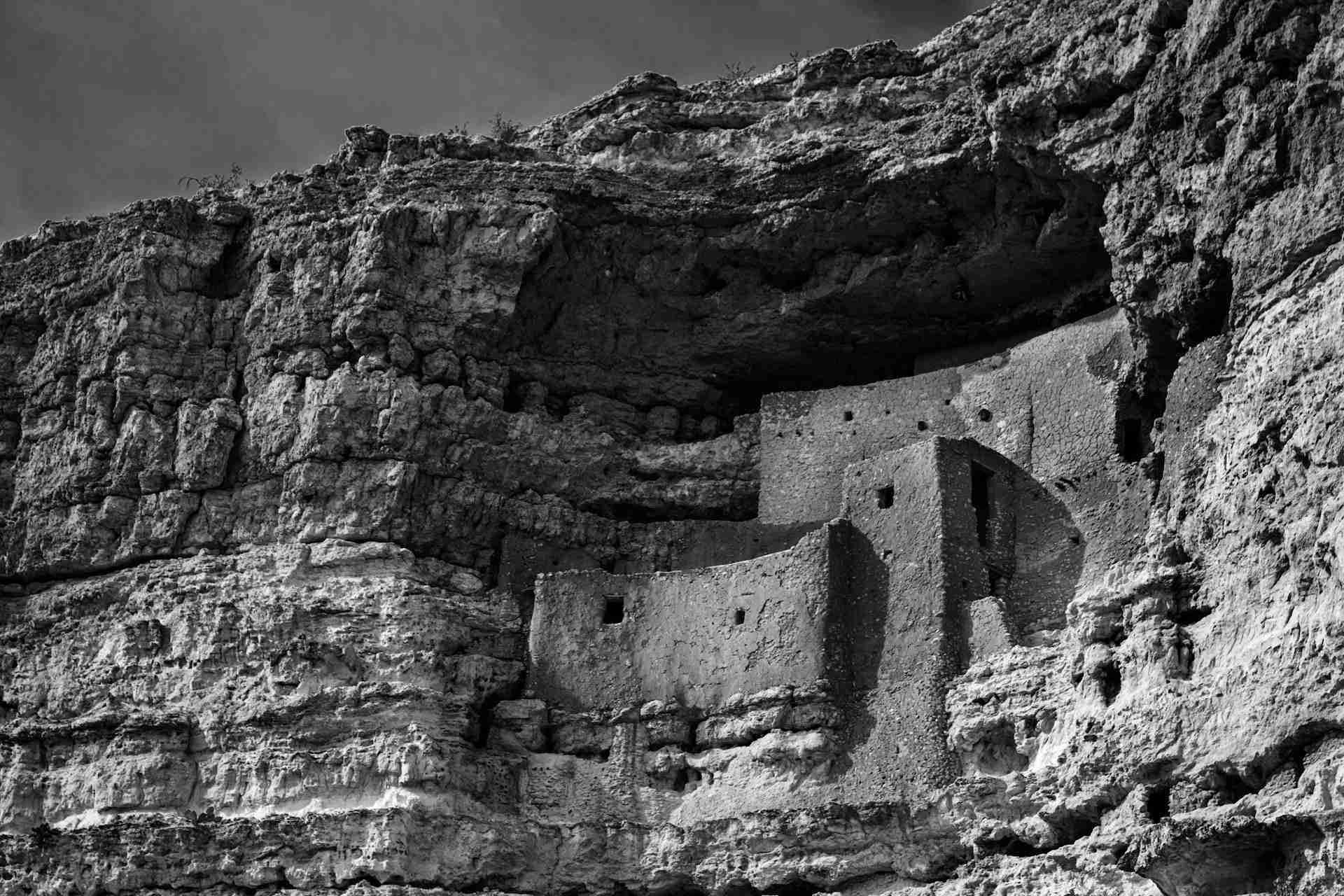
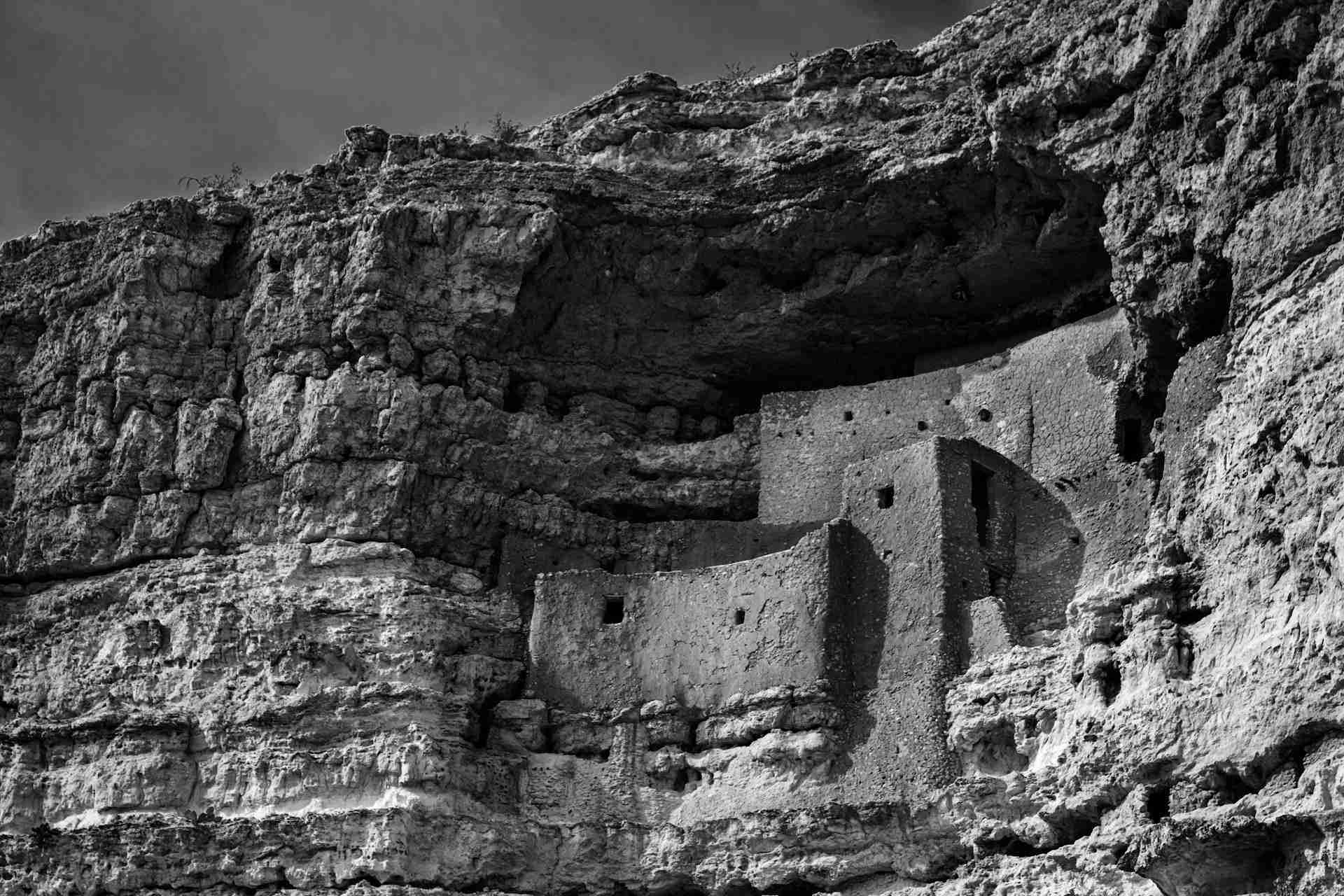
Montezuma Castle is built directly into a limestone cliff in Arizona's Verde Valley, its structure blending with the rock face in a way that makes it feel more discovered than designed. Despite the name, it has no connection to Montezuma himself; instead, it was built and used by the Sinagua people over 600 years ago. The structure sits tucked beneath an overhang in the cliff wall, well-preserved and protected from weather. For photographers, the value lies in how light moves across the rock and the way you can frame the cliff dwelling within its natural surroundings. You won't get close to the interior, but the monument's position in the landscape creates opportunities for wide contextual shots, compressed frames from below, and close-ups of texture, shape, and shadow across the cliff face.
Best Photography Opportunities
• Full Cliff Dwelling with Foreground Trees
The most well-known view of Montezuma Castle is also the most photographable. From the main walkway, you can frame the entire cliff dwelling set into the rock face with trees or shrubs in the foreground for added depth. This wide shot works best in the morning, when sunlight starts to reach the cliff but hasn't yet created hard contrast. Use a standard zoom lens to balance scale and keep the castle centered while letting the vegetation act as a natural frame. Overcast conditions also work well here, allowing the soft tan and beige tones of the stone to show without deep shadows.
• Compressed Cliff Patterns with a Telephoto Lens
Use a longer lens to isolate parts of the structure and the layers of limestone surrounding it. The cliff wall features subtle color variation and erosion patterns that echo the lines of the dwelling itself. Shoot tight to fill the frame with texture, including parts of the windows, alcoves, or natural rock shapes around the dwelling. This kind of shot works especially well during late morning or early evening, when the low sun brings out the detail and casts soft edge shadows across the rock face.
• Shadow and Structure Under the Overhang
The natural overhang that protects Montezuma Castle creates strong contrast and shadow, especially when light moves in from an angle. Use this to your advantage by shooting during golden hour when the contrast between the lit wall and the shaded structure adds depth to the scene. A polarizer can help bring out subtle color in the rock, especially when shooting from a lower angle upward. Tripods are not always necessary here, but they can help you slow down and precisely frame your subject.
• Framing Through Trees and Seasonal Color
The trail that leads through the site is lined with sycamores, cottonwoods, and desert shrubs that change through the seasons. These can be used as natural framing elements when photographing the cliff dwelling from a distance. In autumn, leaves turn yellow and orange, giving a pop of color in front of the neutral cliff. In spring, fresh greens add contrast. Use a wide or mid-range lens to balance the foreground elements with the distant cliff, and shoot with a wide aperture if you want to separate the subject from its frame.
• Texture Studies in Rock and Ruins
While you cannot access the castle itself, the surrounding cliffs and trail areas offer strong detail opportunities. Look for patterns in erosion, roots against stone, or plant life growing in cracks along the cliff. These tighter shots work best under soft light when shadows are minimal and texture is easier to isolate. A macro or short telephoto lens lets you pick out clean patterns without distracting background. This is also a good chance to shift into a slower rhythm and study the environment through abstract or pattern-based composition.
Best Time to Visit
Montezuma Castle photographs best from mid-fall through early spring, when the air is clear and the low sun helps define the cliff's texture without flattening the scene. Mornings offer the most balanced light, with sun slowly moving across the canyon and illuminating the dwelling without casting harsh downward shadows. Late afternoon is also workable, especially for detail shots and low-angle light across the cliff face.
Summer light is intense and often overhead, which can make it harder to expose both shadowed and sunlit portions of the scene. The surrounding vegetation is less colorful during this time, and midday heat can make long sessions uncomfortable. Winter mornings are quiet, cool, and often bring the clearest skies, which work well for sky-heavy compositions and long-lens shots. Autumn offers the best combination of clean air, soft light, and color contrast in the trees that line the trail.
How to Get There
Montezuma Castle National Monument is located just off Interstate 17 near Camp Verde, Arizona. From Phoenix, it's about a 90-minute drive north. Exit at 289 and follow Montezuma Castle Road east until you reach the entrance station. There is a designated parking area, and the trail to the viewing area is short, paved, and flat, making it easy to carry gear or use a rolling camera bag.
Access to the site requires a valid park pass or entry fee, though prices may vary seasonally. The visitor area is open daily, except major holidays, and includes shaded benches, restrooms, and interpretive signs. The main viewing areas are fenced but offer unobstructed views of the cliff and structure from multiple angles. Tripods are allowed, though you may want to work quickly or off to the side during busy hours to avoid blocking foot traffic.
Recommended Photography Gear
A 24–70mm zoom lens is the most useful choice for shooting wide scenes, contextual views, and general walking shots along the trail. Pair it with a 70–200mm lens for tighter compositions and detailed framing of the cliff dwelling or surrounding rock formations. A wide-angle lens can help you work closer to the base of the cliff and capture foreground elements against the structure, though distortion control becomes important here due to the strong vertical lines in the rock.
A circular polarizer is useful for managing glare off the pale limestone and boosting contrast in the sky or tree cover. A tripod is helpful if you are shooting long exposures, waiting for changing light, or working with precision at low ISO. Bring a small backpack to keep gear manageable on the short walk. Sunscreen, water, and a lens cloth are useful extras, especially during dry or dusty conditions.
Nearby Photography Locations
Just ten minutes away, this natural limestone sinkhole offers striking reflections, curved cliff walls, and a contrasting environment filled with lush plant life and desert stone. The footpath circles the water, offering multiple angles and soft light early in the day.
Located downstream, this area features a shallow creek, cottonwood trees, and wide open light. It's great for shooting reflections, filtered forest scenes, and low-angle water movement during golden hour. Spring and autumn provide the best colors and conditions.
West of Camp Verde, this hilltop ruin offers elevated views across the Verde River and surrounding desert. It is an excellent companion site for photographers interested in structure, texture, and how ancient dwellings interact with the landscape.
A short drive north, this park delivers red sandstone formations, high desert color, and open light. It is ideal for longer photo sessions with varied terrain, from river banks to ridge views. Sunrise and sunset offer dramatic light across the rocks and sky.
Located near Cottonwood, this site has desert trails, water features, and wildlife that vary with the seasons. The ponds reflect sky and tree line beautifully in the early morning, and the area is large enough for exploring quiet compositions away from crowds.
While you cannot walk through Montezuma Castle itself, the space around it offers plenty of room to work. The cliff face, structure, and trees give you the pieces. The light, timing, and choice of angle let you decide how to bring them together. With careful framing and an eye for contrast and form, this quiet historical site becomes more than just a monument. It becomes a layered subject waiting to be built into something solid.
Comments
Loading comments…