
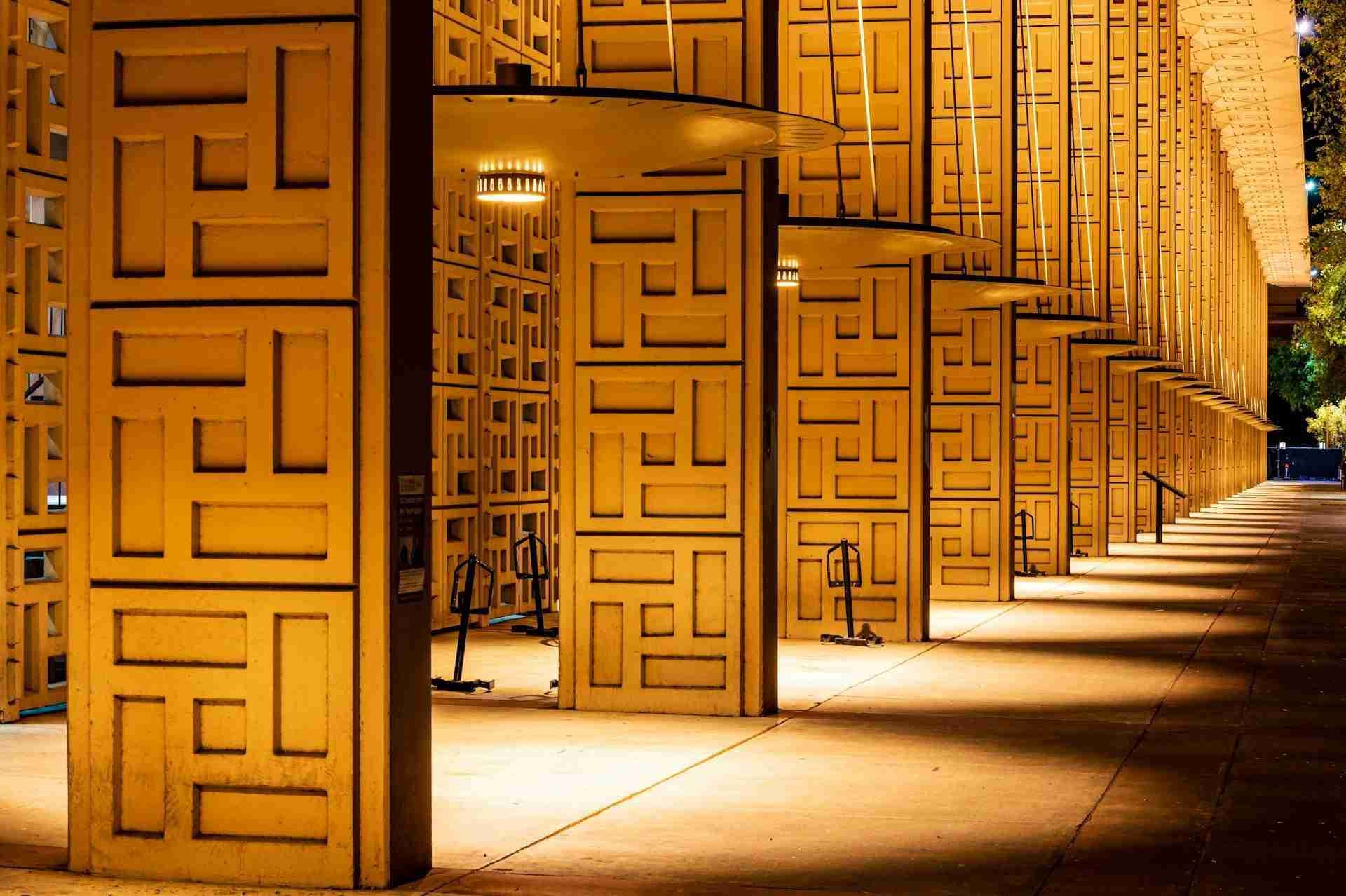
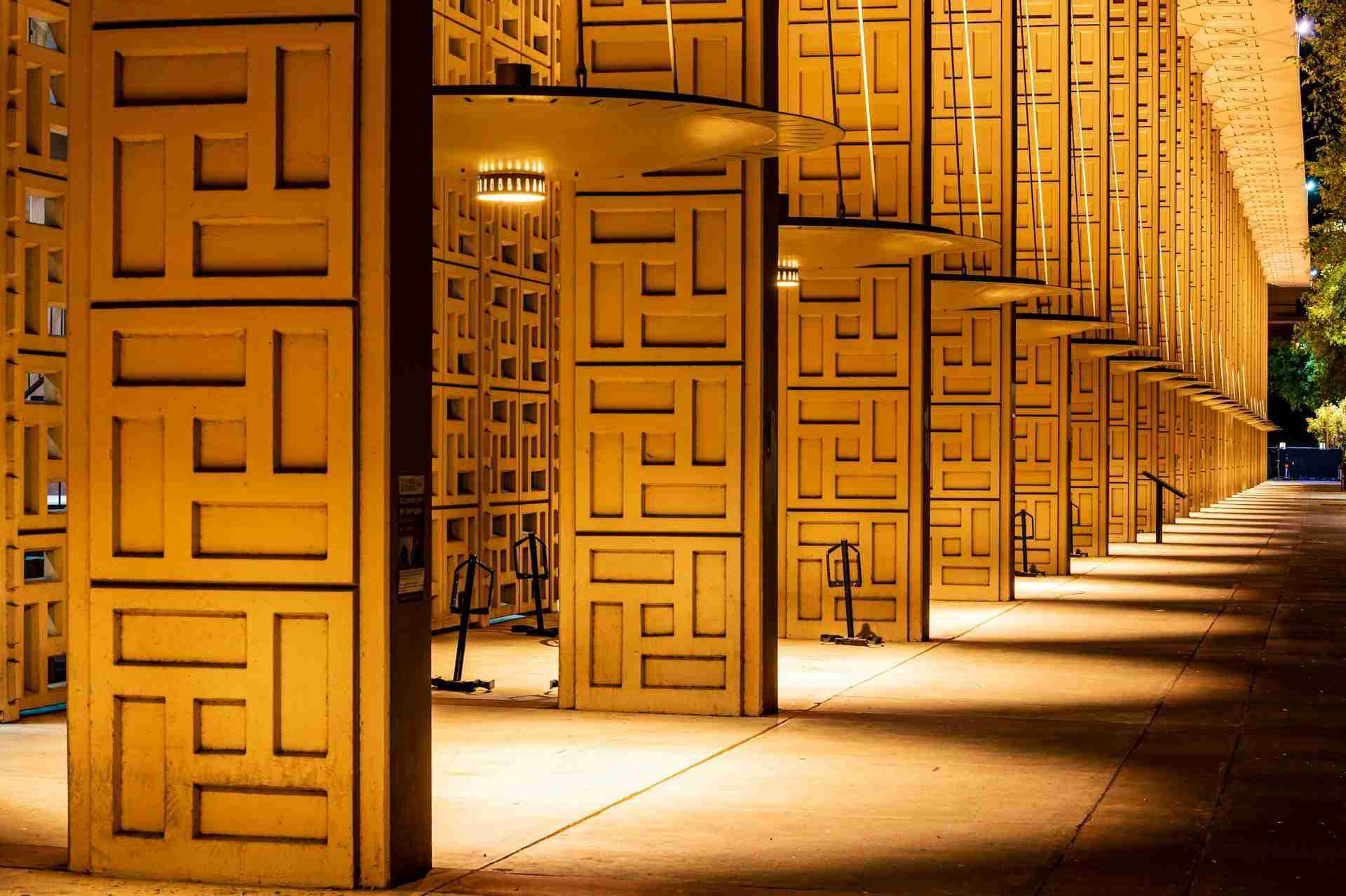
Tucked into the heart of Stanford University's medical campus along Cooper Lane, the Alway Building is an understated but photogenic example of mid-century institutional architecture. Designed with utility and clean geometry in mind, it sits at the crossroads of function and form—making it a compelling subject for photographers drawn to minimalist structure, repeating lines, and the subtle textures of concrete, glass, and light. While it may not be as famous as other Silicon Valley landmarks, the Alway Building offers moments of quiet visual rhythm, especially in the early morning or late afternoon when shadows stretch across its modernist facade.
Best Photography Opportunities
• Facade Symmetry and Repeating Windows
: The front face of the Alway Building features a pattern of evenly spaced windows and reinforced concrete framing that creates a strong sense of rhythm and order. These elements lend themselves to flat, head-on compositions that emphasize symmetry and repetition. Try using a tilt-shift lens to correct vertical lines and isolate the building's formal geometry, or shoot from a low angle to exaggerate scale and converge the grid upward. The tonal contrast between shadowed recesses and sunlit vertical elements can be enhanced in post-processing for high-impact monochrome results.
• Abstract Angles and Architectural Details
: The building's corners, stairwells, and support columns offer bold lines and layered perspectives that suit abstract or fine-art architectural photography. Frame diagonal compositions that play with light, negative space, and structural balance. This part of the building rewards exploration—look for overlooked pockets of detail such as exposed beams, ventilation grilles, and corner joints that highlight the architectural pragmatism of mid-century institutional design. On partly cloudy days, shifting shadows across the angles create dynamic contrast and strong leading lines.
• Light and Shadow Play on Walkways
: Around the building, covered walkways and exterior staircases offer excellent opportunities to capture dynamic contrast. In the morning and evening, sunlight streams through architectural gaps, creating crisp shadows and leading lines. These patterns shift rapidly as the sun moves, providing a changing canvas throughout the day. For the best results, scout the location and return when the sun is just low enough to angle clean beams of light across the corridors or pavement. Silhouettes, repeated columns, and the layering of light can make even utilitarian walkways look cinematic.
• Reflections in Adjacent Glass Structures
: The nearby Lucile Packard Children's Hospital and other modern buildings often reflect the Alway Building's rigid grid, blending it with sky, trees, and movement. Use reflections creatively for layered compositions that contrast the solid geometry of Alway with the fluidity of natural elements or passing people. This can be especially effective during blue hour or just after rain, when glass surfaces glow and mirrored details are heightened. Try isolating part of the reflection with a shallow depth of field or combining both the building and its echo in a wider urban frame.
• Human Scale and Daily Routine
: While often quiet, the area around Alway sees a steady stream of students, medical staff, and researchers moving between buildings. Incorporating figures into your shots—whether as scale references, silhouettes, or focal points—adds life and narrative to a setting that can otherwise feel quite formal and structured. Position yourself near a staircase or a corner where people naturally pass through, and use a slower shutter speed to create motion blur for a more dynamic image. Alternatively, wait for a single figure to walk into a clean frame for a minimalist editorial-style capture.
Best Time to Visit
Early morning and late afternoon are ideal for photographing the Alway Building, especially when warm sunlight skims the surface of its concrete panels and casts long shadows across the pavement and facade. The low sun brings texture and contrast to the building's details, turning plain surfaces into subjects rich with tonal variety.
Overcast days work particularly well for flat compositions and detail shots, softening harsh contrasts and allowing you to explore symmetry and form without distraction. Weekends and early weekday mornings are best for capturing the space with minimal foot traffic, though occasional movement adds useful context when timed intentionally.
In spring and autumn, the campus environment is especially photogenic with nearby trees adding seasonal color and filtered light. While the building itself remains visually neutral, these surrounding elements enhance the overall scene and provide more creative framing options.
How to Get There
The Alway Building is located on the Stanford University medical campus in Palo Alto, California, specifically along Cooper Lane between Campus Drive West and Quarry Road. If you're arriving by car, visitor parking is available at the nearby Pasteur Visitor Garage or along Roth Way. From there, it's a short walk to the building through a landscaped medical complex.
For those using public transit, Stanford's free Marguerite Shuttle connects the main campus and hospital area with Palo Alto Caltrain Station. The shuttle stops just a few minutes' walk from the building. While the exterior is publicly accessible, interior access is restricted to those with authorized credentials, so plan your shoot with outdoor angles in mind.
Photography is generally permitted in public campus areas, but as always, be respectful of staff, patients, and medical privacy—especially when working near hospital buildings or pathways with high foot traffic.
Exploring the Alway Building and the Surrounding Area
The wider Stanford medical and university campus offers a variety of architectural and environmental subjects for photographers. A short walk from the Alway Building brings you to green spaces, sculpture gardens, and a mix of historic and modern academic architecture. The contrast between Brutalist elements, postmodern glass, and traditional red-tile rooftops makes for diverse architectural photography in a compact area.
Nearby palm-lined avenues and oak-shaded courtyards offer softer counterpoints to the Alway Building's rigidity, while the subtle topography of the campus can be used to create dynamic angles and framing. Between lectures and shift changes, the surrounding space comes alive with movement—providing opportunities for candid, street-style photography with a distinctly academic rhythm.
Nearby Photography Locations
: Just a 10-minute walk across campus, this iconic landmark offers both exterior compositions and elevated views over the entire Stanford landscape. Its classic silhouette pairs well with wide-angle golden hour shots or minimalist compositions in hazy light.
: Located near Palm Drive, this museum space blends formal garden symmetry with large-scale sculptures and classical building lines. Ideal for combining art and architecture in a single frame.
: A standout example of Romanesque architecture, this ornate structure sits at the heart of the main quad and provides intricate detail, vibrant mosaic work, and symmetry that complements the clean lines of the Alway Building.
: A lesser-known gem near the Mausoleum, this collection of succulents and desert plants contrasts sharply with the structural lines of nearby buildings. It's perfect for soft light and macro work.
: For a wider contextual view of the Stanford campus and the broader Palo Alto landscape, the Dish walking trail offers high vantage points ideal for capturing skyline and terrain at sunset.
While the Alway Building may appear utilitarian at first glance, its balance of precision, symmetry, and integration with the surrounding academic landscape gives it a unique visual strength. For photographers drawn to clean lines, subtle texture, and the interplay of space and purpose, it's a rewarding subject that fits neatly within Stanford's quiet architectural narrative.
Comments
Loading comments…