
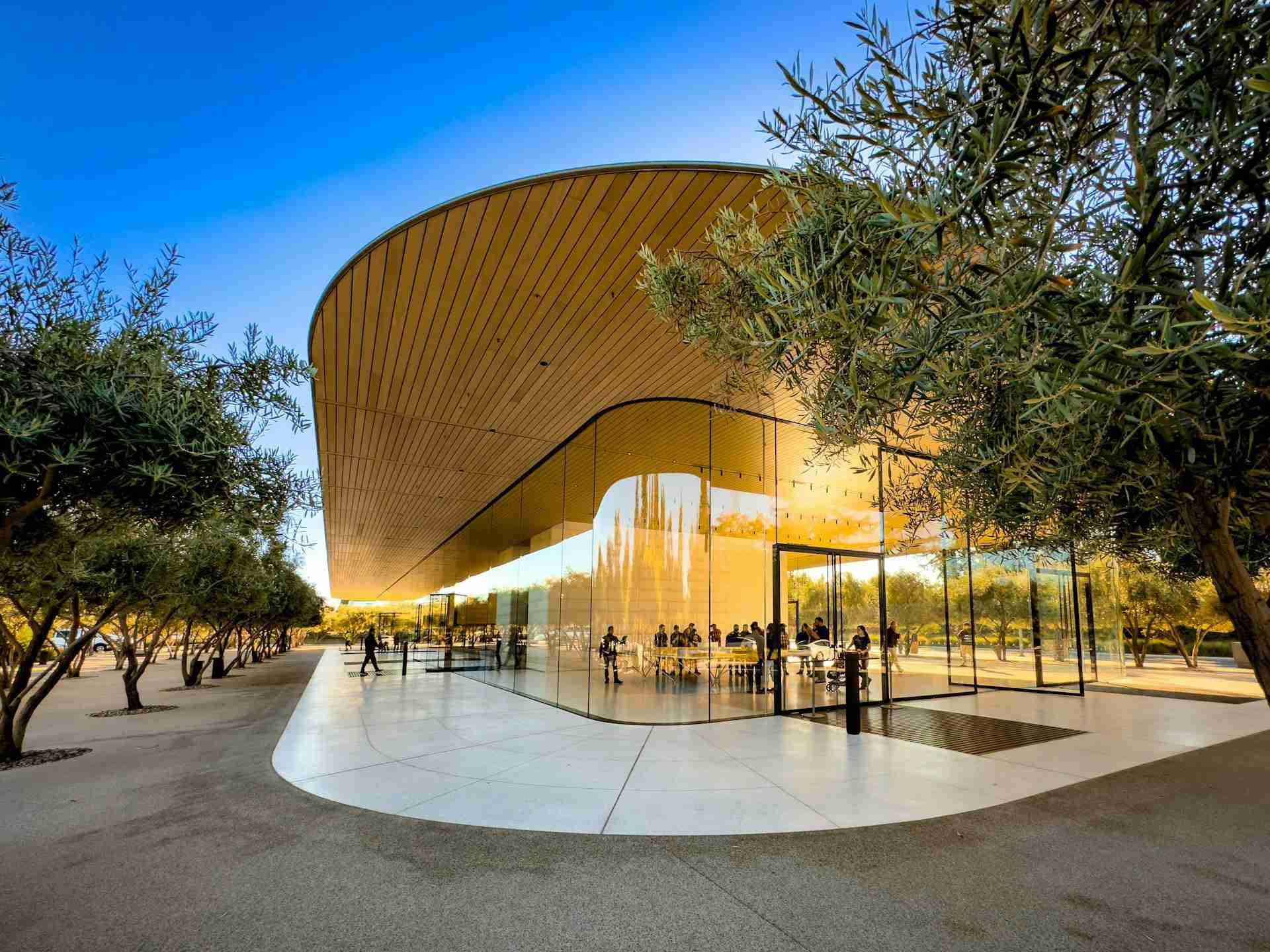
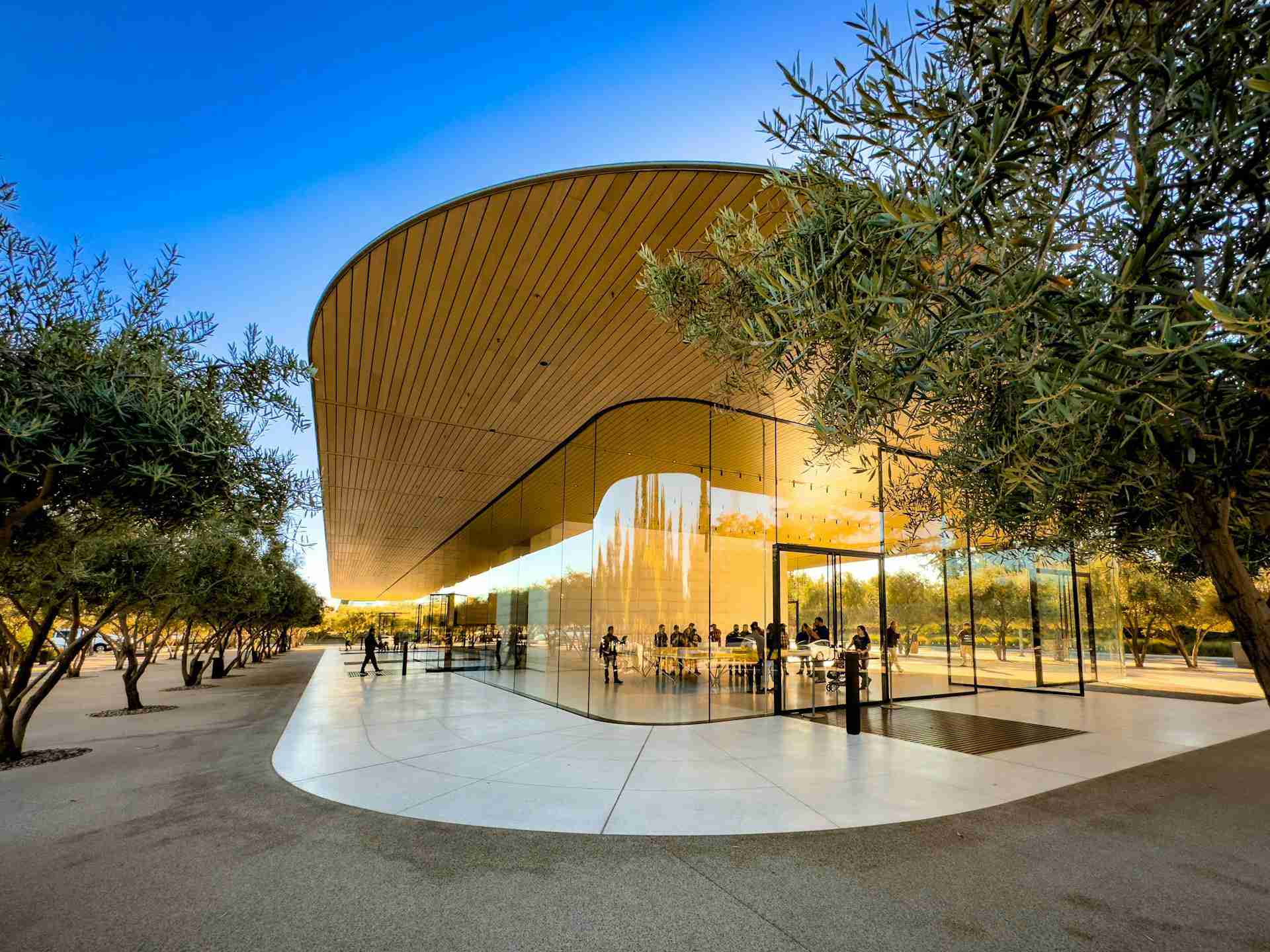
The Apple Park Visitor Center in Cupertino is more than just a tech retail location. It is a polished architectural space designed to showcase the same visual clarity and simplicity that defines Apple's product line. The building itself is low and unassuming at first glance, but its open layout, seamless glass walls, and curved carbon fiber roof provide photographers with an ideal environment for capturing light, symmetry, and movement. The surrounding plaza and sculpted olive trees give the site a modern yet natural balance, while the rooftop terrace offers views of the main Apple Park ring building across the street. It is a compact but layered location that rewards attention to form and careful framing.
Best Photography Opportunities
• Glass Architecture and Reflections
The structure's transparent walls give you the opportunity to photograph both the interior and exterior in the same composition. Depending on time of day, the glass acts as a mirror or a frame, offering subtle reflections of visitors, trees, and sky. This interaction between space and surface makes for strong layered images and works well with a wide or standard lens. Clean lines and natural light dominate the interior, which is bright throughout the day due to the full height windows. Shooting just before sunset adds warmth and side light that plays across the floor and product tables.
• Curved Roof and Minimalist Lines
The carbon fiber roof appears to float above the building, supported only by the walls of glass. From certain angles, especially when photographed from a low position, it becomes a clean horizontal line that contrasts with the vertical trees and hills behind it. The curve is subtle but distinct, and the precision of the structure rewards centered compositions. Early morning or late afternoon are ideal times to shoot, as the shadows fall longer and emphasize the depth of the overhang. This minimalism makes it perfect for monochrome treatments or color images that emphasize shadow and highlight.
• Sculpted Trees and Outdoor Seating
The olive trees around the visitor center have been pruned and arranged in a way that complements the building's simplicity. These trees introduce organic forms into the geometry of the space and serve as a soft contrast to the glass and stone. You can use them as foreground elements to create layered compositions or shoot directly upward through the branches for patterns against the sky. The outdoor seating and gravel surfaces offer additional texture, especially when dappled light filters through the leaves.
• Rooftop Terrace
The terrace above the visitor center offers a clean view across to Apple Park's circular headquarters, though the main building is partially obscured by trees. While not ideal for wide architectural shots of the campus, the terrace provides a controlled environment for photographing lines, light, and passing people. It is also a good place to shoot abstracts or simplified compositions with light bouncing off the smooth surfaces. Tripods are not allowed inside, but handheld shooting works well in this open space.
• Visitors and Interaction with Space
Including people in your compositions helps show scale and brings energy to the otherwise structured environment. The way visitors move through the space, interact with products, or pass along the curved paths outside creates natural moments worth capturing. Shooting candidly works best here, especially in the softer light of early morning or late day when the shadows stretch across the smooth floors. A standard zoom lens helps you remain flexible while maintaining distance.
Best Time to Visit
Late afternoon is the best time to photograph the Apple Park Visitor Center, especially during golden hour when the glass picks up warm reflections and the low sun adds side light to the building's edges. The olive trees cast long shadows that change the feel of the exterior plaza as the light moves. Early morning also provides quiet and soft light, especially on overcast days when reflections are more subtle and even.
The site can be photographed year round, but the light quality in spring and fall tends to be the most balanced. Weekdays are usually less busy, giving you more freedom to shoot without foot traffic. Weather is typically clear, but some winter mornings offer low fog that brings softer contrast to the trees and surrounding hills.
How to Get There
The visitor center is located on North Tantau Avenue, just off Interstate 280 in Cupertino. It is easy to reach by car with available public parking nearby, and it is also accessible by public transit from other areas of Silicon Valley. The building is open to the public, and photography is allowed throughout the outdoor spaces and inside the main showroom. Tripods and large gear bags may draw attention from staff, so it is best to travel light and shoot handheld when inside.
Recommended Photography Gear
A wide angle lens is essential for capturing the full structure and interior reflections. A standard zoom is perfect for switching between wide compositions and tighter shots of detail or people. A polarizing filter can help manage reflections on the glass, though results vary depending on your angle. If you plan to shoot during low light, bring a fast lens, as tripods are not permitted indoors. A lens cloth is useful for managing glare and fingerprints if you are shooting through glass. Because the location is compact, it helps to keep your setup lightweight and minimal so you can move easily between interior and exterior frames.
Nearby Photography Locations
Just minutes away, this pedestrian bridge spans Interstate 280 and is ideal for long exposure traffic shots, especially at twilight. The clean curve of its steel arches complements the architectural tone of the area.
This shaded trail system offers a quieter, natural contrast to the structured design of Apple Park. Tree lined paths, seasonal changes, and soft side light make it ideal for nature photography close to the city.
• Rancho San Antonio Preserve
A short drive west brings you into oak-covered hills, open meadows, and scenic ridgelines with views across the valley. It is an excellent location for golden hour landscape photography and early morning mist.
• Los Altos Civic Center and Library Plaza
This small but well designed space includes fountains, modern architecture, and tree cover. It works well for architectural details and candid street photography.
• Downtown Mountain View
A lively nearby district that contrasts well with the precision of Apple Park, with restaurants, storefronts, and people moving through well-lit evening scenes. It is best visited after shooting the visitor center at sunset.
The Apple Park Visitor Center is a compact but rewarding location for photographers who enjoy minimalism, structure, and the way light moves across carefully designed space. It invites you to slow down, frame deliberately, and observe the interaction between people and the environment without distraction. For those who like to work with glass, line, and soft transitions of light, it is one of the best spots in the area to explore quiet visual storytelling.
Comments
Loading comments…