
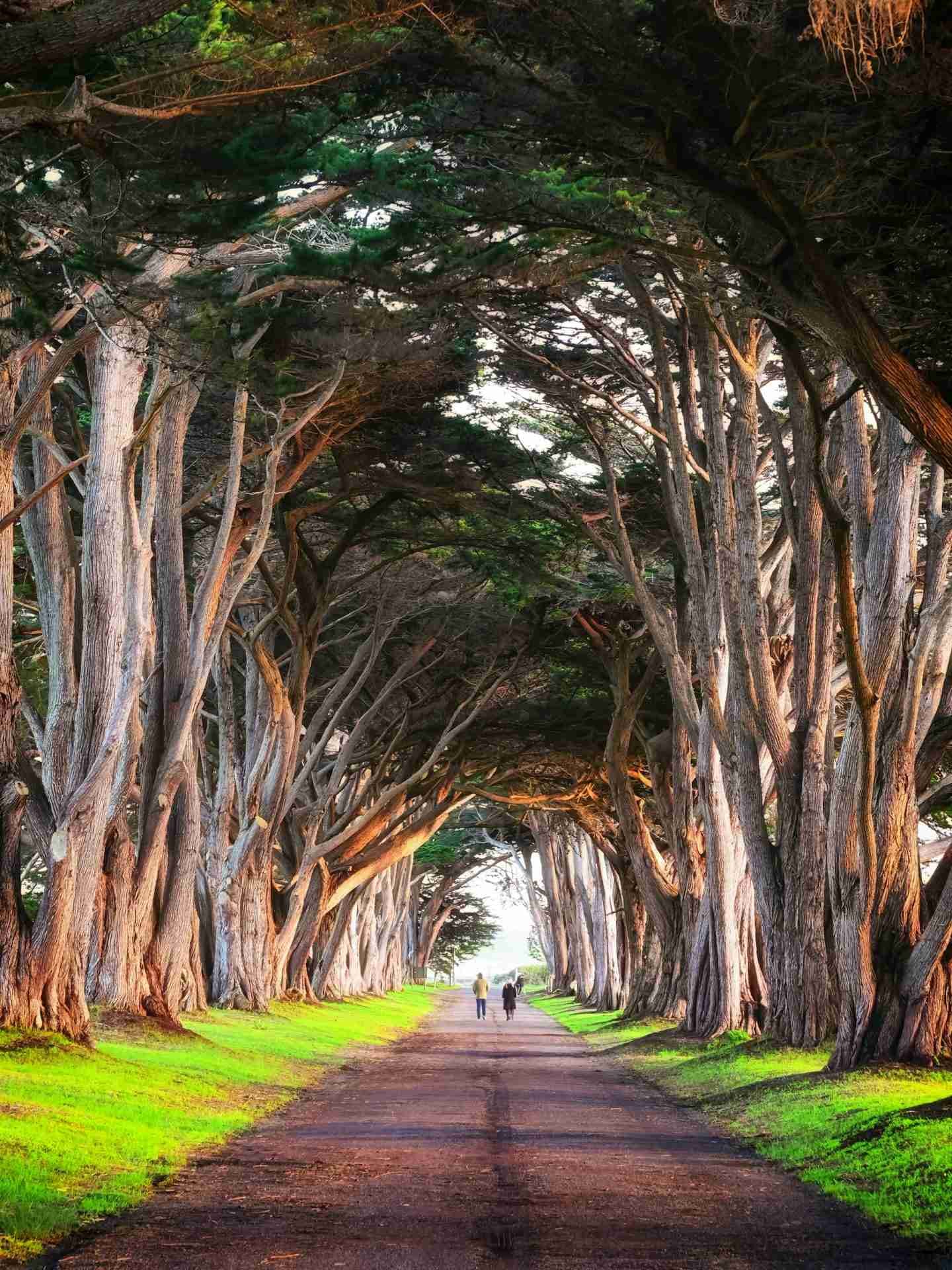
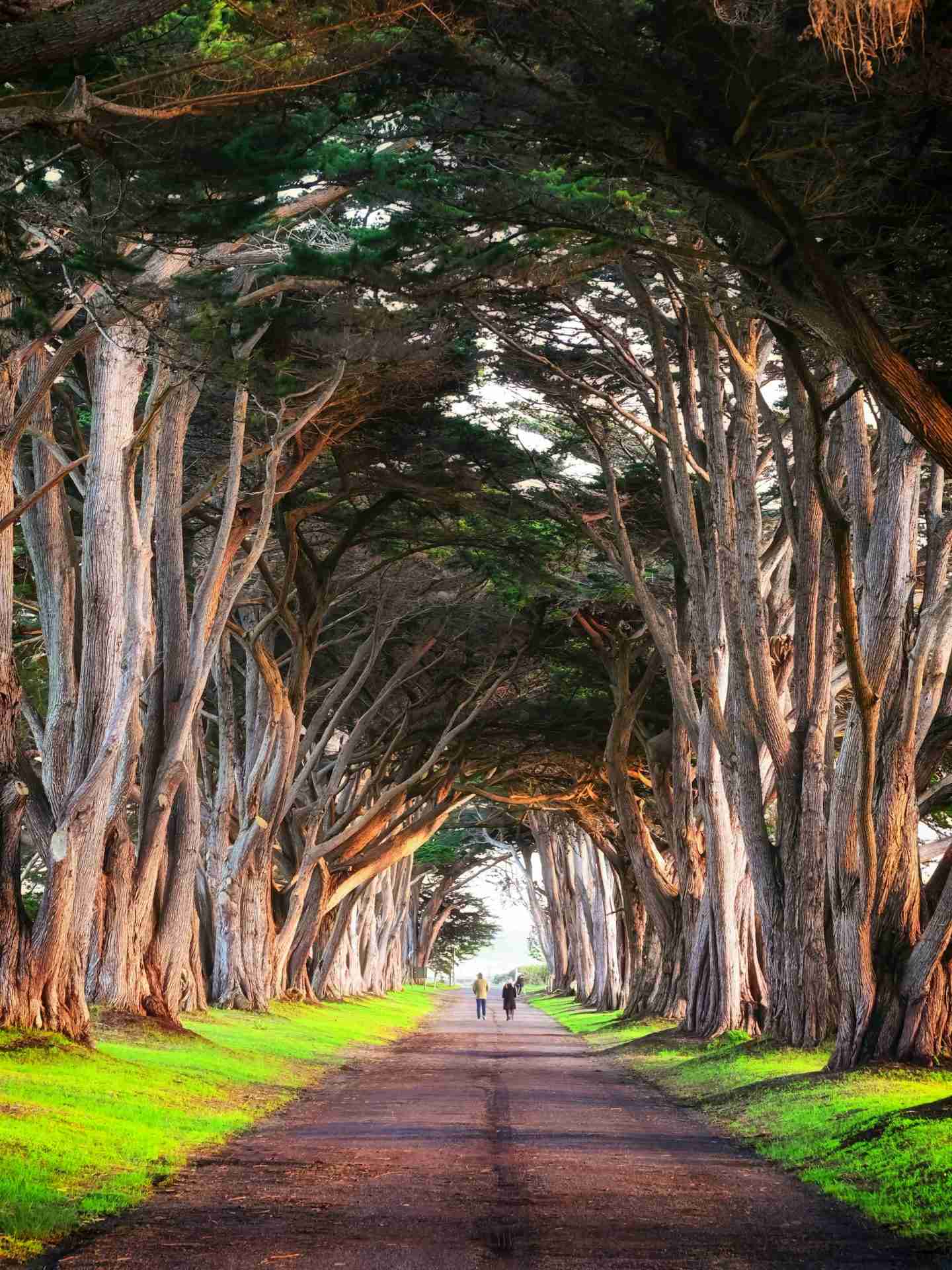
Stretching quietly along a rural road in Point Reyes National Seashore, the Cypress Tree Tunnel is a corridor of Monterey cypress trees that arch overhead like cathedral vaults. This short, straight lane leads to a historic radio station at its end, but it is the tunnel itself that draws photographers. The trees reach and weave above the road, forming a perfect frame of shadow, light, and structure. With morning mist, soft light, and a central vanishing point, the scene feels timeless and peaceful. It is one of the most rewarding locations in Northern California for those who enjoy working with symmetry, texture, and subtle shifts in natural light.
Best Photography Opportunities
• Centered Symmetry with Long Focal Length
The most classic composition is a straight on, centered shot looking down the full length of the tunnel. Use a medium to long lens between 70 and 135mm to compress the tree trunks and emphasize the lines that draw the eye toward the building at the far end. This setup works best during early morning hours when the sun is low and the light filters softly through the branches. If the air is humid or foggy, the tunnel takes on a layered look with depth that builds gently into the distance. A tripod helps with fine tuning the alignment and ensures clean verticals throughout the frame.
• Low Angles for Scale and Structure
Positioning your camera closer to the ground allows the road to lead strongly into the frame while emphasizing the height of the trees above. This approach works well with a wide angle lens, capturing the full reach of the branches and the patterns in the bark. Early or late in the day, when shadows stretch across the lane, adds more visual rhythm to the image. Low angles also reveal imperfections in the road surface, which can serve as foreground texture if carefully composed.
• Side Views with Shadow and Light Contrast
Rather than shooting straight down the tunnel, step to the side and photograph across it. This allows you to capture the density of the tree trunks, the texture of their bark, and how the branches overlap in organic patterns. These images tend to be quieter and more about mood than symmetry. Overcast skies are ideal here, as they reduce harsh shadows and help bring out fine detail in the bark and leaves. A polarizing filter can reduce glare and help separate the foliage from the background.
• Detail Studies of Bark, Branches, and Light Patches
When conditions are not ideal for wide compositions, shift your attention to close up elements within the tunnel. The cypress bark is deeply textured, and in places, the branches knot and twist in sculptural ways. Light patches on the ground or tree trunks provide abstract subjects when isolated with a short telephoto lens. These detail studies are often most effective on misty or cloudy mornings when contrast is low and the textures come forward.
• Including Human Scale for Depth and Narrative
Adding a person walking or standing at the far end of the tunnel helps give the scene scale and brings in a sense of narrative. Use a longer lens to compress the distance and place the figure small within the frame. Neutral clothing works best to keep attention on the tunnel itself. Early morning is again the best time for this shot, as it keeps foot traffic light and allows for clean backgrounds.
Best Time to Visit
The Cypress Tree Tunnel is most photogenic in the early morning, especially when fog or mist settles along the coast. While the tunnel does not face directly east, it opens toward the southeast, which allows soft diagonal light to filter in from the front right side shortly after sunrise. This angled morning light highlights the texture of the cypress bark and adds depth to the branches above. On foggy days, the light is even more diffused, creating layers of depth through the tunnel and soft transitions between highlight and shadow. Overcast conditions are also excellent for detail work, minimizing contrast and allowing more flexibility in exposure. Afternoon light tends to come from behind the tunnel and creates flatter compositions. Weekdays are usually quieter, and arriving before 8 AM gives you the best chance for uninterrupted frames without parked cars or foot traffic.
Recommended Photography Gear
Bring a tripod for precise framing and long exposures, especially in low light or fog. A mid range zoom, such as a 24 to 70mm lens, covers most wide and environmental compositions, while a 70 to 200mm lens is perfect for compression shots and isolating subjects within the tunnel. A polarizer is helpful for managing glare on leaves and bark, and a lens cloth is essential in damp or misty conditions. A remote shutter or timer can be useful for long exposures without camera shake. If you plan to include yourself in the frame, consider bringing a lightweight stand in object for test focus and framing. Dress in neutral tones if stepping into the scene.
Nearby Photography Locations
Perched above the Pacific on a dramatic cliff, this historic lighthouse offers stunning coastal views, rugged wave action, and strong leading lines. The best time to shoot is just before sunset when the light brushes the cliffs and waves crash below.
Known for its sea stacks and sculpted bluffs, Drakes Beach provides strong foregrounds and dramatic skies, especially during winter storms. A wide lens is essential here, and low tide reveals patterns in the sand that work well in minimalist compositions.
Located near Tomales Point, this area is excellent for wildlife photography. The elk are often visible in open terrain, especially in the morning. Long lenses are necessary, and the trail also offers coastal views for landscape shots.
This long, curved beach is backed by dunes and open sky, making it ideal for seascapes and silhouettes. It is especially photogenic at low tide when reflections stretch across the wet sand.
Leading through shaded forests and open meadows, this trail offers woodland photography opportunities with dappled light and occasional wildlife. It is best in spring when wildflowers bloom and streams run clearly.
Comments
Loading comments…