
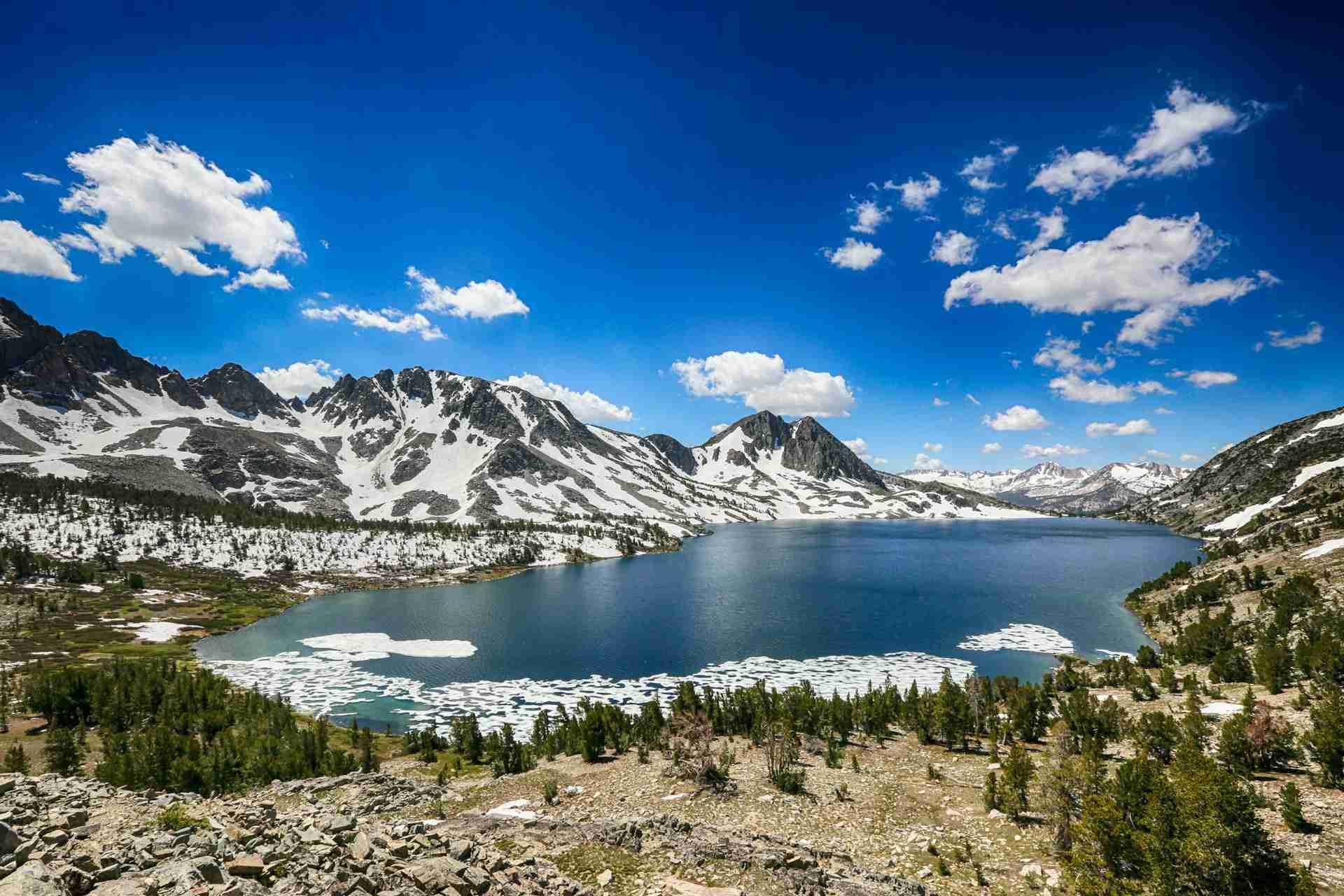
Duck Lake sits high in the Sierra Nevada backcountry, surrounded by broken ridgelines, alpine rock, and long stretches of quiet sky. It's a broad, open lake with deep blue water that reflects surrounding granite slopes and shifting cloud layers. The shoreline varies between sharp boulders and smoother sections of open dirt and grass, making it possible to set up along different angles depending on the light and wind. The elevation and remoteness give the lake a cleaner atmosphere, with stronger contrast at sunrise and slower tonal shifts in late evening. For photographers willing to make the hike, Duck Lake delivers a clear mix of reflection, scale, and texture that holds together across conditions.
Best Photography Opportunities
Eastern Shore Framing Toward the Ridge
From the eastern side of Duck Lake, you can frame west across the surface with the ridgeline layered above the far shore. This direction works best at sunrise when the light starts to fill the upper slopes before touching the water. A wide-angle lens between 16 and 35 millimeters allows you to include textured foreground such as rocks, tufts of grass, or trail segments while keeping the background clean and simple. On clear days, the lake takes on strong color gradients, especially in the early hours when the sky transitions from blue to gold. This is a strong position for symmetry and low-angle reflections, especially in still air.
Northwest Corner with Detail in Shadow and Light
The northwest side of the lake offers a rougher edge with larger stones and more variation in shoreline elevation. This spot is ideal for mid-range work using a 24 to 70 millimeter lens, focusing on transitions between sunlit and shaded sections of the ridge. During late afternoon, the west-facing walls catch sidelight while the water holds darker, deeper tones. Framing across these contrasts creates separation between elements and helps guide the eye through the scene. Cloud buildup is common later in the day, which can help balance exposures and bring added tone into the sky.
Overhead Perspective from Duck Pass Trail Ridge
Before dropping down to the lake, the trail climbs a high ridge where you can see the full shape of Duck Lake from above. This is one of the strongest panoramic positions for documenting the setting in full, with the lake, the valley behind it, and distant ridges all visible. A longer lens around 70 to 200 millimeters allows you to compress layers, especially if you are working in early morning or during fall when air clarity is strongest. Try multiple focal lengths to compare how the scene holds up across different levels of compression. Including trail curves or switchbacks in the frame can add structure to the lower foreground.
Surface and Sky During Calm Midday
While midday light can flatten most locations, Duck Lake holds its shape due to the clarity of the water and the brightness of surrounding rock. In windless conditions, the surface reflects the clouds directly above, creating patterns that shift slowly and mirror the sky. These reflections work well with a polarizer, which can be rotated to increase or reduce the amount of surface glare depending on the angle. Shoot handheld or use a light tripod, and stay close to the shore for best results. A 35 millimeter prime or moderate zoom gives enough reach to balance detail without isolating the frame too tightly.
Twilight and Night Photography Across Still Water
If you stay into the evening or plan an overnight trip, Duck Lake becomes a strong night photography location with open skies, minimal light pollution, and clean mountain air. Once the sun is down, use longer exposures from stable ground to pull in both the stars and the darker edge of the ridgeline. The water often stays calm past sunset, making it easier to include reflections in longer frames. A tripod is necessary along with a fast wide-angle lens and a remote shutter or timer. Watch your footing near the waterline and plan your position early, as the ground cools quickly after dark.
Best Time to Visit
Duck Lake is best accessed between late June and mid-October when the trail is clear of snow and weather is more predictable. Early summer brings strong meltwater flow through nearby creeks and patches of snow along the upper trail. This is a good time for clean air and vibrant color, with cooler temperatures and fewer hikers. Sunrise light tends to be calm and clear during this season, while late afternoon brings more contrast and possible cloud development.
August and September provide the most stable access with dry trail conditions and warmer mornings. These months are especially useful for long exposure work and night photography due to lower winds and steady skies. Fall color is limited to low scrub and distant hills, but the clarity of the air increases, making the ridgelines appear sharper and more defined. October can bring early snow, and access may be limited depending on conditions.
The lake sits above 10,000 feet, so be prepared for colder temperatures at any time of year, especially before sunrise or after sunset. Light shifts quickly in the morning and evening due to the high ridges on either side, so plan your setup early if you want to catch direct light across the water.
How to Get There
To reach Duck Lake, begin at the Duck Pass Trailhead located behind the Coldwater Campground near Mammoth Lakes. The trailhead is accessed by driving along Lake Mary Road and turning off on Coldwater Creek Road, which ends in a large parking area near the trail sign. From there, the hike to Duck Lake is approximately 5.5 miles one way, with steady elevation gain and switchbacks leading past smaller lakes like Arrowhead and Barney Lake.
There is no fee to access the trail, though you may need a wilderness permit for overnight stays. Day hikers do not require a permit. The trail is well-marked and popular in summer, with steady foot traffic early in the day and fewer visitors later in the afternoon. Bring plenty of water, as there is no reliable filtration point beyond the midway section of the trail. The final section before the lake is exposed and may be windy, so carry layers and be prepared for sudden weather changes.
Recommended Photography Gear
A light but stable tripod is essential for long exposures at sunrise, sunset, or after dark. A wide-angle lens such as a 16 to 35 millimeter is useful for shoreline work and overhead scenes. A 24 to 70 millimeter zoom helps manage mid-range scenes with depth, while a 70 to 200 millimeter telephoto is useful for compressed ridgelines, distant detail, or elevated frames from the trail above.
Use a circular polarizer for reflection control and a neutral density filter for slowing shutter speeds during daylight. If you are photographing water motion or cloud movement, a three to six stop ND filter provides enough exposure length without overcomplicating the frame. Bring lens cloths, extra batteries, and protective covers for sudden wind or rain. Pack light but be thorough, as the hike is moderate and weather can shift quickly. A dry sack or insert helps protect gear during stream crossings or along wet shoreline sections.
Nearby Photography Locations
Reached along the same trail, this smaller lake provides cleaner foreground access and more tree cover, which helps with scale and reflection in calm air. Best shot in the morning before the light crests the ridge.
Arrowhead Lake
A short spur from the main trail, this spot offers a still, dark water surface and granite edge, useful for isolation or minimal compositions. The view here is compact but holds well in soft light.
Accessible from nearby roads or side trails, these lakes provide elevated views across the Mammoth Lakes basin with early light on distant ridges. Useful for sunrise work or long lens studies.
Close to the trailhead, this small alpine lake offers forest edges and clean water color, often better suited for late afternoon or evening compositions when the light angles in from the west.
This longer route runs high above the lakes and offers panoramic views across the whole basin, especially strong in clear weather. Best used with a telephoto lens to isolate shapes and distant details.
Duck Lake rewards photographers who are willing to carry gear into higher ground and work with changing light. The openness of the landscape, combined with the steady shape of the shoreline and ridges, makes it a location where careful framing and patience produce lasting results. Whether you are building a set of long exposures or gathering simple, clear moments of water and sky, the lake holds steady through the light and season.
Comments
Loading comments…