
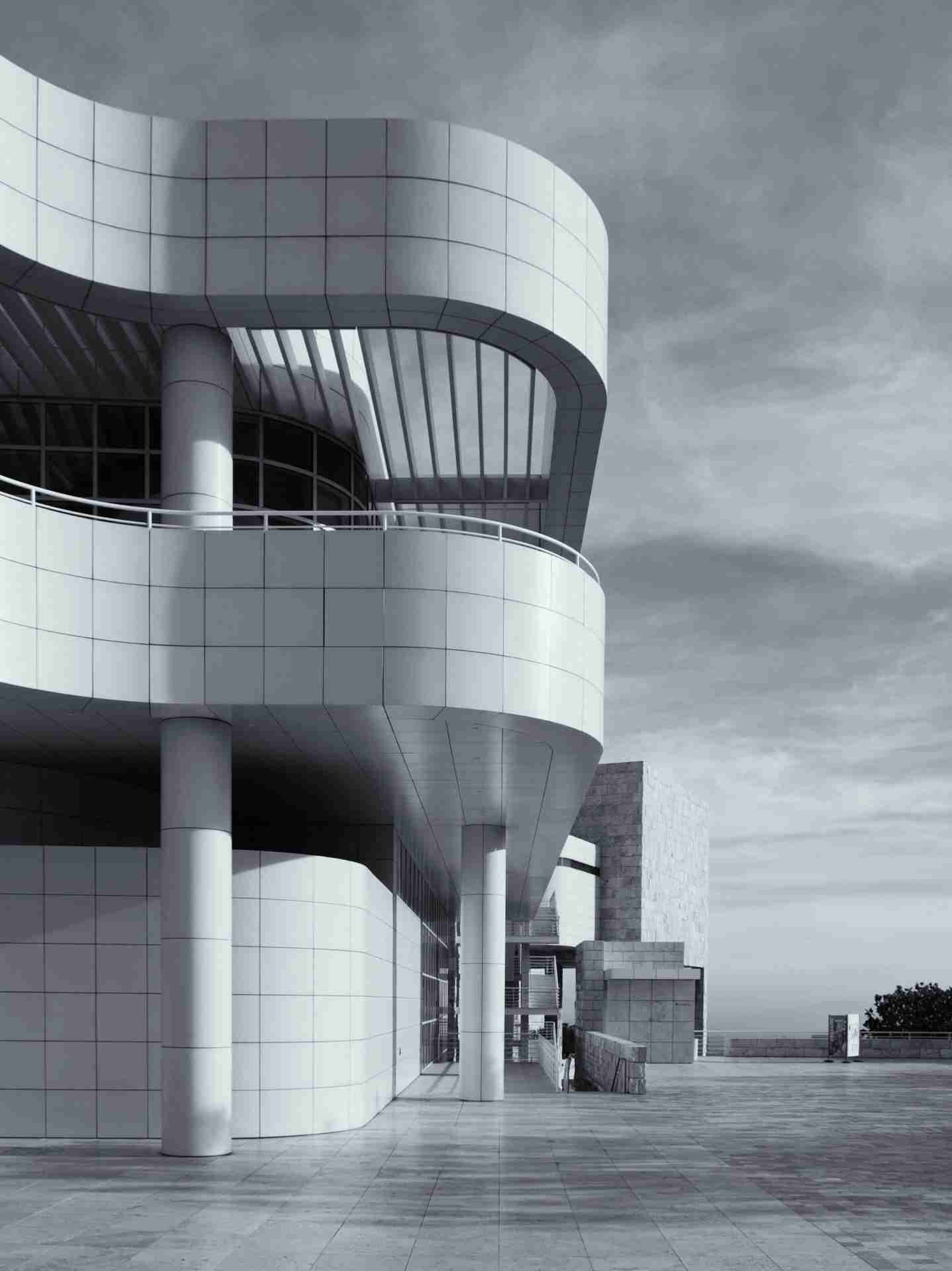
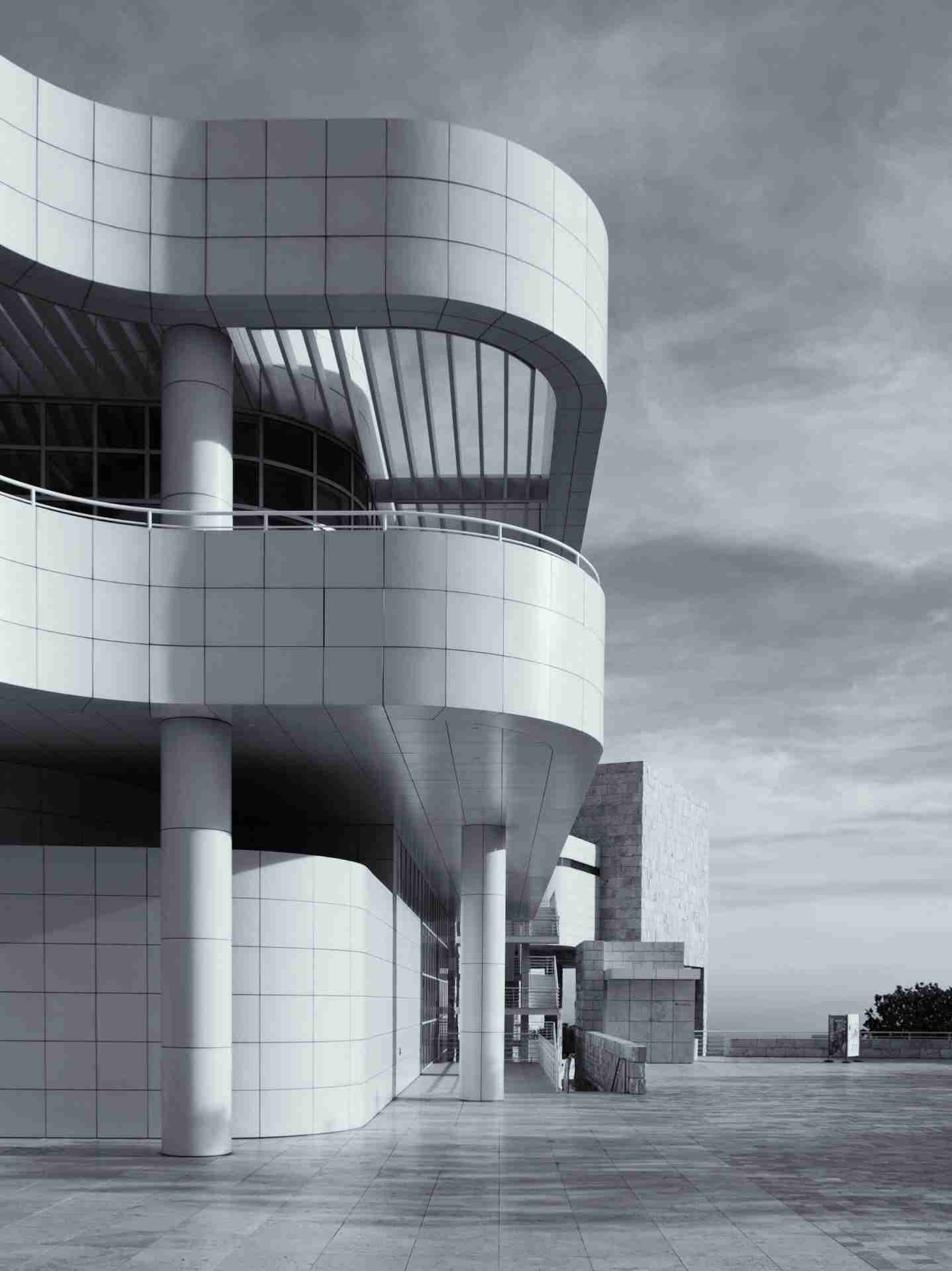
Set atop a hill in Brentwood, The Getty Center is a masterclass in architectural photography, light manipulation, and curated scenery. Designed by Richard Meier, the center's gleaming travertine-clad structures and grid-like modernism are matched only by its sweeping views of Los Angeles and the Pacific Ocean. It is one of the few places in Southern California where art, architecture, landscape, and panoramic cityscapes converge into a unified visual experience. The contrast of sharp lines, open courtyards, sculptural gardens, and ever-changing natural light makes the Getty a dynamic location for photographers seeking both minimalism and grandeur in a single frame.
Best Photography Opportunities
• Modern Architectural Lines and Symmetry
: The Getty's design is a geometric study in light and form. The buildings feature rectilinear patterns, pale travertine surfaces, and carefully calculated angles that lend themselves to highly structured compositions. These elements allow photographers to work with symmetry, negative space, and deep shadows created by overhangs and colonnades. Shooting from a low angle with a wide-angle lens allows the converging lines of columns and staircases to lead into the frame, creating a sense of depth and scale. The contrast between sunlit and shaded planes, especially during late morning or mid-afternoon, enhances the clarity and dimensionality of these images.
• Central Garden from Elevated Walkways
: The Robert Irwin-designed Central Garden is one of the Getty's most compelling organic counterpoints to the rigid architecture surrounding it. From the higher terraces, you can capture the full spiral design of the azalea maze, framed by neatly trimmed lawns and layered flowerbeds. These elevated views allow you to emphasize shape and pattern, making the garden appear as a living sculpture. A mid-range zoom is ideal for compressing perspective while still capturing the full breadth of the scene. For soft color and even contrast, visit mid-morning when the sun is high enough to light the garden evenly without introducing harsh shadows.
• Framing with Architectural Cutouts and Shadows
: Throughout the Getty, walls, columns, and breezeways create natural frames that highlight internal views, garden scenes, or distant landscapes. Positioning your subject inside one of these frames—be it a solitary tree, a passerby, or a fountain—adds compositional structure and narrative focus to your images. Shadows cast by the building's grids and railings become graphic elements in their own right, often resembling abstract art when shot with strong sunlight. These opportunities are best captured with a lens that allows for precision framing and minimal distortion—ideally something in the 35–50mm range.
• Panoramic City Views and Sunset Silhouettes
: The western terraces of the Getty offer exceptional views stretching across Los Angeles to the Pacific. On clear days, you can capture downtown skyscrapers, the Hollywood Hills, and even Catalina Island. As the sun drops, the entire cityscape is bathed in golden light, and the clean lines of the Getty's exterior become dramatic silhouettes against a glowing sky. Use a telephoto lens to compress the skyline or isolate architectural curves against layered color gradients. Winter often delivers the clearest conditions, and sunset views can be enhanced by slight elevation changes on the pathways that trace the outer edge of the museum.
• Detail Shots of Sculptures and Water Features
: Beyond the grand perspectives, the Getty is rich with texture and form in its smaller elements—bronze sculptures, gently cascading fountains, rippled water basins, and intricately cut stone. These subjects benefit from tight framing and shallow depth of field to isolate their material qualities. Shooting in late afternoon when the light rakes across these surfaces helps reveal fine textures in stone and metal. Reflections in shallow pools can add an impressionistic touch, and the dynamic between natural elements and clean architectural backgrounds makes for compelling juxtaposition in close-up compositions.
Best Time to Visit
The Getty is photogenic year-round, but the quality of light and visibility shifts dramatically with the seasons. Winter through early spring (November to March) typically offers the clearest atmospheric conditions for long-distance views across Los Angeles. After a rainstorm, smog dissipates and the visibility from the terraces can be extraordinary—perfect for sweeping cityscapes and skyline detail.
In spring and early summer, the gardens are at their most vibrant, and the consistent daylight allows for long, productive shoots throughout the day. Morning hours are ideal for architectural photography, as light falls directionally across the eastern-facing buildings and courtyards. Midday can be productive for elevated shots over the Central Garden or when shadow-free compositions are desired.
Summer brings bright, hard light that emphasizes contrast and edges, which can be creatively useful for abstract or black-and-white photography. However, haze from smog can reduce distant clarity. Sunset light during this time tends to linger longer, painting the stone facades in soft peach tones that evolve into pink and violet across the horizon.
Fall offers a gentle return to softer light and less-crowded conditions, making it one of the most underrated times to photograph the site. Because the Getty closes shortly after sunset, arriving mid-afternoon gives you the most access to golden hour tones and cooling shadows across its signature lines.
How to Get There
The Getty Center is located at 1200 Getty Center Drive in Los Angeles, just off the 405 Freeway in the Brentwood neighborhood. Visitors must park in the designated structure at the base of the hill and ride the Getty Center Tram to the museum's main campus. The tram is a brief, scenic ride that glides silently uphill, providing early photo opportunities even before reaching the main site.
The parking structure is expansive but can fill quickly on weekends or during special exhibitions, so arriving early is recommended. Access to the Getty Center's museum and gardens is free, though parking carries a fee. The entire facility is ADA-compliant, and all public spaces are walkable, with numerous elevators, ramps, and rest areas.
Tripods are generally allowed on the outdoor grounds but not inside the museum galleries. Security staff may restrict gear use if it obstructs public paths or is used in high-traffic areas. Compact tripods or monopods are less likely to attract attention and are a smart alternative if you plan to move fluidly between interior and exterior locations.
Recommended Photography Gear
A wide-angle zoom (16–35mm) is indispensable for architectural photography at the Getty. It allows you to fully capture the curvature of stairs, expansive walls, and the drama of open courtyards with sky overhead. For tighter compositions and sculptural garden shots, a mid-range zoom (24–70mm) offers versatility and excellent control over framing and perspective without distortion.
A telephoto lens (70–200mm) is particularly useful for compressing distant skyline views, isolating architectural details, or capturing visitors and sculptures against graphic backgrounds. It also excels during golden hour for drawing out layers of light and shadow across the outer terraces and city views.
A polarizing filter is helpful for reducing glare on glass surfaces and enhancing the colors of sky, foliage, and water reflections in the gardens. ND filters can be used around the fountains or reflecting pools if you want to experiment with long exposures to blur moving water.
Because most of the photography here is done handheld while walking the expansive grounds, a comfortable camera strap or sling is recommended. A microfiber cloth or lens wipes are useful for clearing coastal haze or handling dusty surfaces. While tripods are useful during golden hour or in the less-trafficked corners of the terraces, a compact, travel-friendly version is best to ensure mobility and compliance with on-site policies.
Nearby Photography Locations
: Just minutes away, the UCLA campus features a mix of classic Collegiate Gothic buildings and contemporary architecture. The Franklin D. Murphy Sculpture Garden is a quiet, tree-lined space with modernist works, ideal for minimalist compositions and soft light portraits.
• Santa Monica Pier and Palisades Bluffs
: A 20-minute drive west takes you to the Pacific, where the Santa Monica Pier provides color, motion, and light. Long exposures at sunset or early morning beach scenes pair well with tighter architectural sets shot at the Getty earlier in the day.
: Running along the ridgeline north of the Getty, Mulholland Drive provides elevated, cinematic views over the LA basin. At golden hour or twilight, these overlooks offer rich color, glowing lights, and layered city silhouettes—especially dramatic after a storm or on a clear winter day.
• Walt Disney Concert Hall and The Broad
: Downtown LA's cultural core offers striking modern architecture with dynamic curves, mirrored surfaces, and constantly shifting reflections. These locations provide a visual contrast to the orderly symmetry of the Getty and work well as an urban extension to the day's shoot.
: For a natural setting with city views, Runyon Canyon offers hiking trails and elevated lookouts where you can capture sunrise or sunset light falling across the skyline. It's especially useful for environmental portraits or layered landscapes that blend nature and the built environment.
The Getty Center rewards patience, movement, and observation. It's a place where the interaction of natural light, architectural precision, and artistic detail create endless photographic potential. Whether you're documenting its structure, drawing out quiet moments in the gardens, or watching the sun descend over the Los Angeles skyline, the Getty delivers images that are thoughtful, deliberate, and deeply textured.
Comments
Loading comments…