
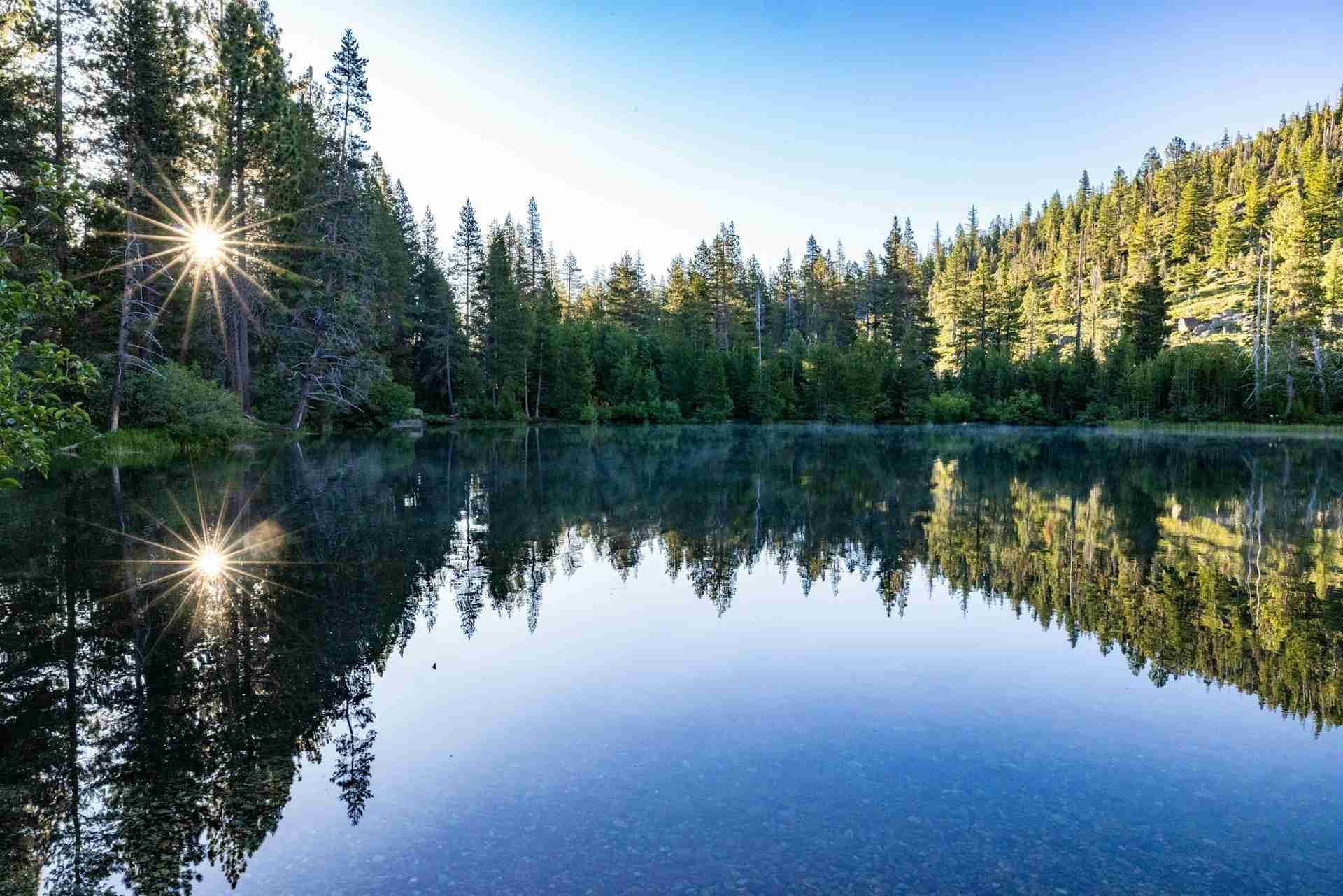
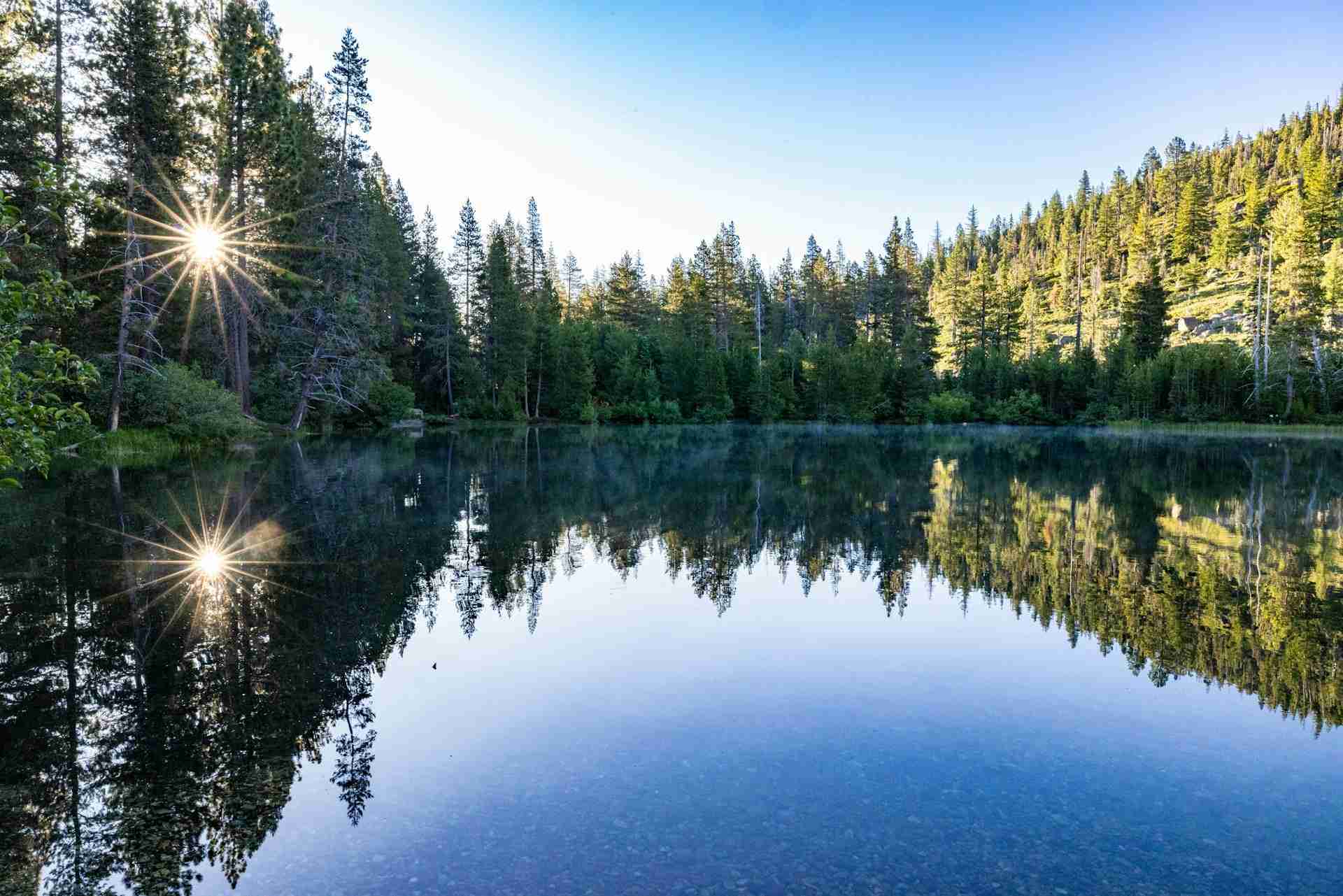
Lower Sardine Lake is one of those rare alpine gems where the scenery feels like it was made with photographers in mind. Tucked into California's Sierra County at the base of the Sierra Buttes, this compact glacial lake offers crystal-clear reflections, steep granite cliffs, and peaceful surroundings that make it feel far removed from the more crowded corners of the Tahoe region. The lake's surface often lies completely still in the morning, acting like a mirror for the sharp rock spires that rise dramatically above. Whether you're after wide-angle landscapes, macro details along the shoreline, or long-exposure shots at dusk, Lower Sardine Lake delivers a varied and rewarding shoot in a setting that doesn't demand a backcountry expedition to reach. It's a location where natural drama meets accessibility, and that's a rare combination for any serious landscape photographer.
Best Photography Opportunities
• Morning Reflections Across the Water
Photographing Lower Sardine Lake at sunrise is all about timing and patience. The air tends to be completely still early in the morning, which means the lake turns into a flawless mirror reflecting the towering Sierra Buttes. This makes for incredible symmetry in wide-angle shots, especially when low light warms up the granite and casts subtle shadows down the cliffs. Composing from the southern shoreline allows you to capture both foreground interest—such as lake grass or driftwood—and the mirrored ridgeline beyond. Bracketing your exposures here is recommended, especially when shooting toward the rising sun, to manage contrast between bright skies and shaded rocks.
• Sunset Light on the Sierra Buttes
In the final hour of daylight, the sun drops low enough to wash the Buttes in soft, golden tones. The rocks glow with warm highlights, and the surrounding forest drops into gentle shadow, adding natural contrast that is easy to work with in-camera. Shooting from the western side of the lake allows you to backlight the water while maintaining texture in the granite above. If there are light clouds in the sky, the color palette can shift into pink and magenta hues, especially in late summer. Bring a longer lens to compress the ridgeline if you want a tighter, more dramatic composition without losing the mood of the scene.
• Alpine Wildflowers and Textural Details
In early summer, the area around the lake becomes dotted with wildflowers, from purple lupine to bright orange paintbrush. These blooms offer opportunities to create layered compositions, especially when used as a foreground element against the granite peaks. A wide-angle lens with a close focusing distance will help you balance sharpness across the frame. You'll also find texture-rich details like gnarled tree stumps, granite boulders, and mossy patches near the water's edge—perfect for photographers interested in more intimate landscapes. Conditions vary year to year depending on snowmelt, but generally late June into early July is the most productive window for floral shots.
• Long Exposure and Soft Water Movement
While the lake itself is often still, small inlets and outflow creeks provide moving water that's well-suited to long exposures. Using a neutral density filter, you can blur the motion of water flowing over rocks or gently lapping against the shoreline. These compositions add a more dynamic quality to your landscape work and can be a great contrast to the sharp lines of the surrounding cliffs. The early morning and twilight hours provide the best conditions for this style, as contrast is lower and the sky retains detail. Keep an eye out for submerged stones near the shoreline—they can add layers of depth when captured beneath silky water.
• Night Sky and Milky Way Photography
Because it sits far from major towns and highways, Lower Sardine Lake offers relatively dark skies that are great for astrophotography during the summer months. From late June to early September, the Milky Way is well-positioned to stretch above the Buttes from the southern horizon. Planning your composition around moon phases and galactic alignment can yield dramatic nightscapes with clean reflections and silhouetted peaks. A wide-angle lens with a fast aperture is essential here, and you'll want to scout your framing during daylight to avoid surprises in the dark. This is also a place where a foreground light source, like a low-level LED panel, can be used subtly to enhance nearby rocks or shoreline features without overpowering the scene.
Best Time to Visit
The most productive photographic window at Lower Sardine Lake spans from late May through early October, when road access is open and the area sheds its winter coat. Early summer—especially mid to late June—offers a unique mix of snow remnants on the Buttes and the first bursts of wildflower color along the shoreline. These cooler weeks can produce excellent contrast in your compositions, with white snow patches clinging to jagged peaks under soft morning light. July and August tend to bring drier, more stable conditions, making them ideal for night photography, especially if you're targeting Milky Way alignments or star reflections in the lake's still surface.
August can also deliver some of the best sunsets, thanks to occasional high-altitude haze or scattered clouds that catch warm light. Morning shoots in summer are best scheduled before 8 a.m. when the wind hasn't yet disturbed the water's surface, and the first sunrays gently backlight the Buttes without washing out your foreground. By early fall, in late September and early October, the surrounding vegetation takes on golden tones, especially the low-growing brush and willow lining the lake. These changes add texture and subtle warmth to your shots without the distraction of bright summer greens. Though beautiful, fall visits should be planned with shorter daylight hours in mind, and by mid-October, temperatures drop quickly after sunset. Winter photography here is rare and largely limited to those with snow access experience, as Sardine Lake Road is closed and covered with snow for much of the season.
How to Get There
Lower Sardine Lake is located off Gold Lake Highway in the Lakes Basin area of Tahoe National Forest, about 70 miles northwest of Truckee. From Highway 89 near Graeagle, follow Gold Lake Highway for roughly 7 miles until you reach Sardine Lake Road. This narrow, paved road leads to the Lower Sardine Lake parking area, which is located near a small boat launch and the Sardine Lake Resort. The lake is only a short walk from the lot, making it highly accessible for photographers carrying heavier gear or tripods. There are no long trails to hike unless you want to continue up to Upper Sardine Lake, which requires a moderate walk. The area does not require a permit or entrance fee for day use, though the resort does control some of the shoreline and access points, so be respectful of private property. The road is seasonal and typically closed from November to late May due to snow.
Recommended Photography Gear
Photographers heading to Lower Sardine Lake should bring gear suited to both grand landscapes and fine detail. A wide-angle lens in the 14 to 24 millimeter range is ideal for capturing the full scope of the Sierra Buttes reflected in the lake, especially at sunrise when symmetrical compositions are most compelling. For maximum sharpness and flexibility, a tripod is essential—not only for low-light shooting but also for careful composition and bracketing exposures. A circular polarizer will come in handy when shooting during the day to reduce surface glare and deepen sky contrast, but use it carefully to avoid uneven sky tones in wide scenes.
A telephoto lens, ideally between 70 and 200 millimeters, is helpful for compressing the Buttes or isolating ridgeline textures under changing light. This range also works well for picking out small clusters of wildflowers or framing light patterns on the lake's surface. Neutral density filters are a strong asset at Lower Sardine, especially if you want to smooth out flowing water or add motion to low wind ripples without waiting for golden hour. A 6- or 10-stop filter allows for flexible long exposure shooting even in full daylight. For night photographers, a fast prime lens—something in the f/1.4 to f/2.8 range—will be crucial for capturing clean Milky Way shots with minimal noise. A remote shutter release or intervalometer helps reduce vibration and allows for longer exposures or timelapse sequences. Don't forget warm clothing and gloves even in summer, especially if you plan to be out before dawn or after sunset. Waterproof boots or gaiters are also smart additions, as the best shoreline vantage points often require stepping into wet or marshy ground.
Nearby Photography Locations
Just south of Lower Sardine Lake, Gold Lake offers a completely different photographic atmosphere with its larger surface area and multiple coves. It's particularly striking at sunrise when light filters over the eastern ridge, and scattered granite boulders along the shore provide excellent foreground anchors. Paddle access also opens up new shooting angles from the water itself.
Only a short drive from Lower Sardine Lake, Frazier Falls is a steep, cascading waterfall that drops nearly 180 feet over sheer volcanic rock. The paved trail to the viewing platform makes it accessible, and the best time to shoot is late spring through early summer when snowmelt fuels the strongest flow. The contrast between moving water and static cliff faces is perfect for experimenting with longer exposures.
Reached via a short uphill trail, Upper Sardine Lake is quieter and more rugged than its lower counterpart. The Buttes appear even more imposing from this higher angle, and the lack of development allows for cleaner compositions. It's a worthwhile stop for photographers seeking a different angle on the same dramatic peaks.
For a challenge and a big reward, the hike to the Sierra Buttes Fire Lookout gives you sweeping views across the Northern Sierra. The metal stairs leading to the lookout itself create a strong visual element for storytelling or adventure-focused images. Sunrise and sunset from the top are spectacular, especially when low clouds roll through the lower valleys.
Tucked away and less frequented than the more popular lakes in the area, Salmon Lake offers calm water, dense forest, and fewer visitors. Early morning mist on the water and reflected pines make for a peaceful composition, while the granite shoreline and isolated coves provide plenty of variety for framing.
Lower Sardine Lake is more than just a pretty alpine lake; it's a compact, high-impact location that gives photographers plenty to work with, whether you're chasing reflections, experimenting with long exposures, or capturing the mood of dusk across mountain stone. With easy access, changing conditions, and surrounding locations that expand your shooting potential, it's the kind of place that earns repeat visits across seasons.
Comments
Loading comments…