
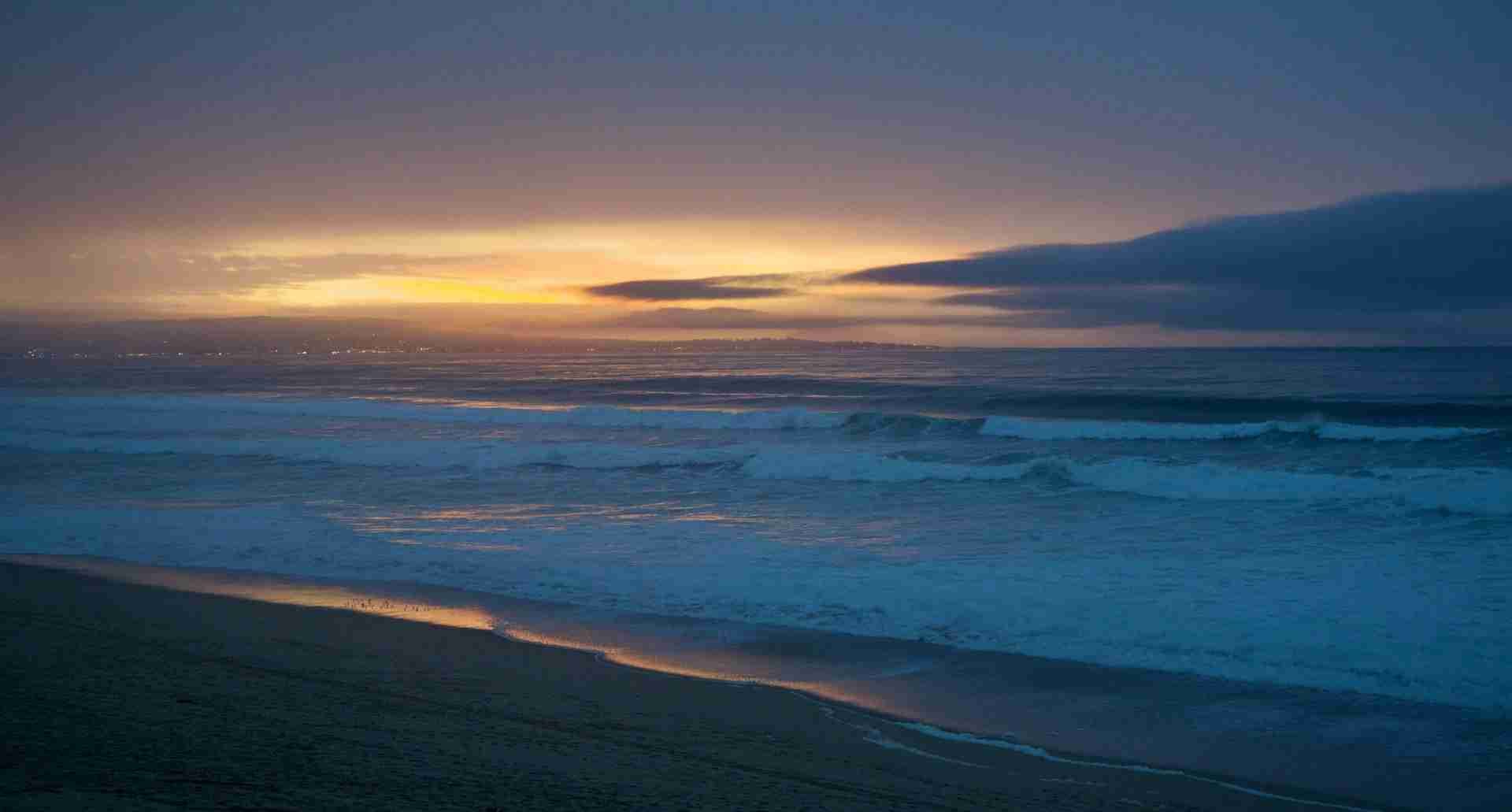
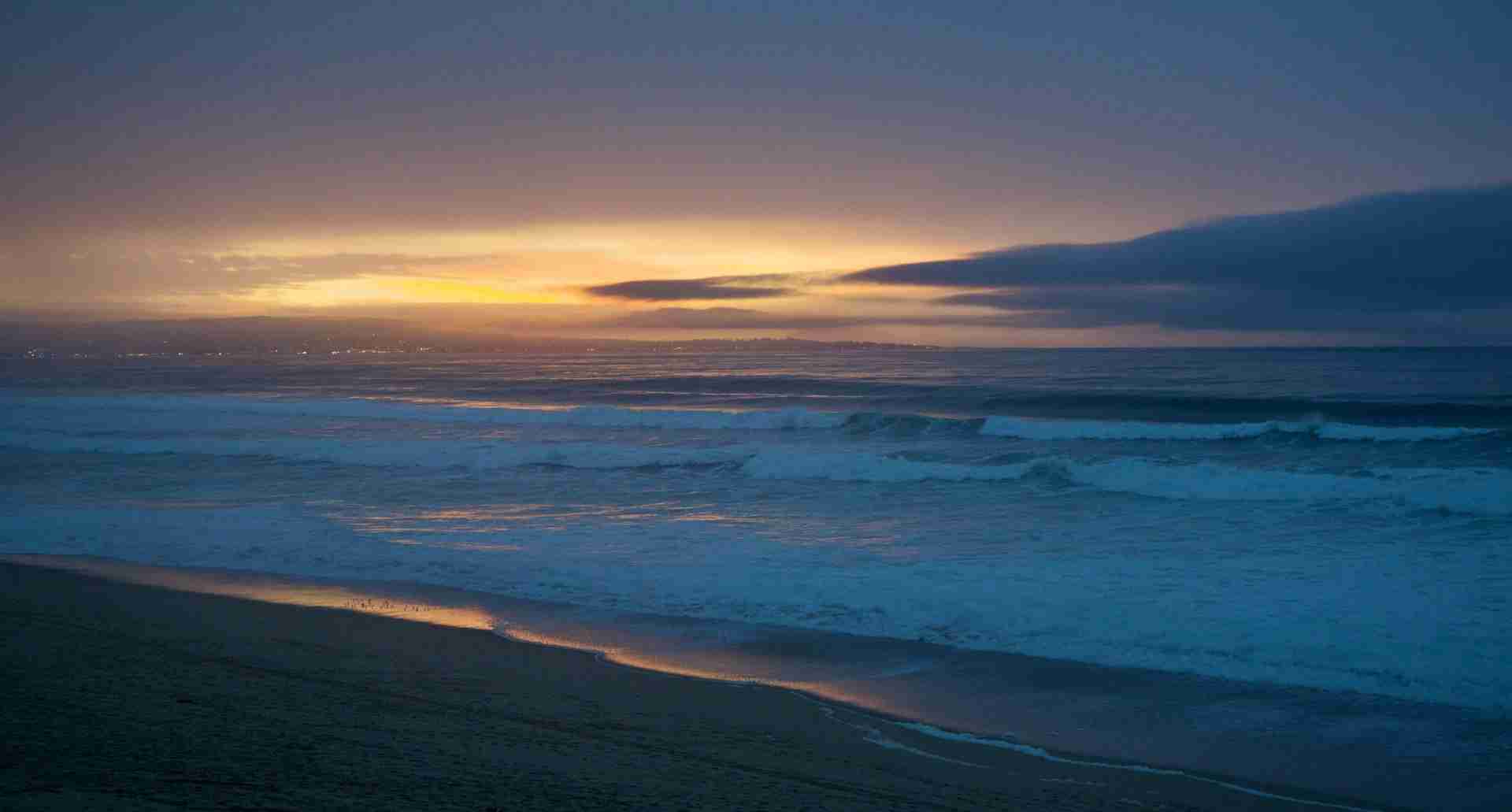
Located along California's Central Coast just north of Monterey, Marina State Beach is a sweeping expanse of golden sand dunes, crashing surf, and expansive sky. Unlike the more developed stretches to the south, Marina offers a rawer, wind-shaped coastal environment that feels open, untamed, and elemental. Long known for its strong winds and dramatic sunsets, this beach rewards photographers with seascapes of motion and mood—from minimalist dune curves to explosive wave patterns and fiery sky transitions. With its wide spatial scale and shifting textures, it's a location that invites slow observation and dynamic composition in equal measure.
Best Photography Opportunities
• Dune formations at golden hour
The coastal dunes at Marina are among the tallest and most visually compelling in the region. As the sun drops low in the west, its warm side lighting sculpts ridges, furrows, and wind-shaped grasses with extraordinary definition. These dunes are an ideal subject for both minimalist compositions and complex scenes using sweeping diagonals and curved leading lines. Photographers should explore the elevated dunes northeast of the main beach access point—these offer a broad view toward the ocean and allow framing that incorporates layered sand ridges with sky gradients above. Early evening is also when subtle shadows form behind grass clusters, providing natural contrast that works particularly well in monochrome.
• Wave motion and long exposure surf
Marina's open ocean exposure brings consistently energetic wave action. These waves break close to shore and often create frothy, fast-moving patterns as they rush up and down the wide beach. This is perfect for long-exposure photography. With the right timing and technique, you can convert these aggressive swells into soft, mist-like textures that contrast beautifully with hard sand or driftwood in the foreground. Experiment with shutter speeds between 1/2 and 3 seconds depending on wave speed and desired smoothness. At high tide, backwash patterns around rocks or debris can create dynamic circular flows when captured with the correct timing.
• Minimalist shoreline compositions
The immense scale and relative emptiness of Marina's beach make it ideal for minimalist imagery. After the tide recedes, a thin film of water can turn the flat beach into a mirror that reflects soft sky tones. At this time, the lack of human interference means single objects—a lone gull, a footprint, a piece of kelp—can command the frame. These images often benefit from a mid-range lens (35mm or 50mm), which allows clean compositional framing without distortion while remaining agile for shifting angles. Working with a neutral or overcast sky further simplifies the palette and emphasizes form over color.
• Sunset color and cloud layering
One of Marina's strongest photographic draws is its predictably clear view to the western horizon. On many evenings, especially from late fall through spring, high cirrus or altocumulus clouds catch and reflect post-sunset light in fiery oranges, reds, and purples. Because the beach is so open, these skies can fill your entire frame—perfect for dramatic wide-angle compositions. Use the surf line, dune ridges, or backlit grass clumps as grounding elements. Sunset light often peaks 10–20 minutes after the sun has dipped below the horizon, so stay through twilight for the richest tones and sky gradients.
• Aerial and elevated perspectives
While the beach itself is flat and open, the surrounding dunes provide natural elevation that is ideal for higher perspective shooting. Climbing to the crest of the taller dunes (using designated access paths to protect the fragile ecosystem) reveals striking dune geometry, layered patterns, and broader views of Monterey Bay. These vantage points work well for telephoto compression, especially with strong horizontal cloud bands or mist-laced air over the surf. When fog banks roll in from the water, the dunes can appear to rise out of the haze like islands—an excellent subject for long-lens minimalism.
Best Time to Visit
Marina State Beach is photographable in all seasons, but each brings different moods and lighting conditions that distinctly affect image-making potential. Winter and early spring, from December through March, deliver the most photogenic skies. Storm systems and maritime air create layered clouds, low sun angles, and frequent mist that enhance both color and contrast. These are the best months for sunset compositions with depth and drama, as well as low-tide mirror scenes under a glowing sky.
Late spring through summer, spanning April to August, is typically defined by the Central Coast's marine layer. Mornings often begin in dense fog, which may linger until midday or later. While this may obscure sun and color, it's excellent for soft, tonal imagery of the dunes and shoreline. Low-contrast light wraps sand and grass in subtle gradients, and visibility drops just enough to simplify the background—ideal conditions for abstract and minimalist frames.
Autumn, particularly September through early November, offers a near-perfect mix of clarity, calm air, and golden light. Offshore winds tend to keep the air clean and the surf manageable. Sunset colors become richer again, and the beach is less frequented by tourists. The warm light and lower sun angles pair beautifully with the longer shadows across the dunes, making this season one of the most versatile for all photographic styles.
Wind is a near-constant factor here, regardless of season. It picks up strongest in the afternoon and early evening. While challenging, it can be used creatively—blowing sand, moving grasses, and wind-carved ridges all add motion or mood if timed and exposed correctly.
How to Get There
Marina State Beach is located at the western terminus of Reservation Road in Marina, California. From Highway 1, take the Reservation Road exit and follow it west through the town until you reach the signed entrance to the park. The main parking lot provides easy access to both the dunes and the beach itself and includes restroom facilities and informational signage.
Once parked, you can access the beach via a short trail system that passes through protected dunes. Please stay on marked paths to avoid damaging this delicate ecosystem. From the beach access point, it's easy to walk north or south along the shore to find more isolated locations for composition. For the best dune shots, explore the paths leading north from the lot toward higher elevations.
The park is open daily from sunrise to sunset. A day-use fee is collected at the entrance. Drone use is prohibited, and leashed dogs are permitted only in certain areas—check current regulations if photographing wildlife or looking for animal tracks. Be prepared for fast-changing conditions and limited shade. Cell service is generally strong, but always check tides and weather forecasts in advance.
Recommended Photography Gear
Marina's exposure to wind, salt spray, and blowing sand makes gear selection and preparation essential. A weather-sealed camera body is strongly recommended. A wide-angle zoom such as a 16–35mm is invaluable for dune curves, wide sky compositions, and low-perspective sunset scenes. A mid-range zoom (24–70mm) gives flexibility when moving between surf textures and minimalist framing on the flats. A telephoto lens (70–200mm) allows compression of dune layers, shooting through haze, and isolating motion in grass or surf.
A solid tripod with wide stance is essential for long exposures and sharp compositions in gusty conditions. Bring a sand-proof tripod bag or a way to anchor your setup in wind. Neutral density filters in the 6- to 10-stop range allow control over wave motion and cloud blur. A circular polarizer helps tame glare from wet sand or enhances sky contrast during golden hour.
Additional essentials include lens hoods, microfiber cloths, and a rain cover or plastic sleeve to protect gear during blowing sand events. Keep backup batteries and cards in sealed, padded cases. A lightweight pack with internal dividers will help you change lenses without exposing gear to the elements.
Wear hiking shoes with ankle support for climbing dunes, and pack layers to manage shifting coastal temperatures and gusts. A headlamp or small flashlight is helpful if you stay into twilight—especially if you're navigating out over dunes in fading light.
Nearby Photography Locations
Located just a few miles south, Fort Ord Dunes offers higher elevation dune ridges and a more natural, undeveloped stretch of coast. Boardwalks lead through dune grass and wildflowers, and the beach provides clean sightlines for long exposure surf photography. Ideal in early morning or late evening light when shadows add contrast to the sandy topography.
A short drive south brings you to Monterey's busier coast, where you can photograph piers, commercial fishing boats, and sea life around the wharf. It's best for documentary-style or human-environment compositions, especially at dawn when the harbor lights fade into early sky color.
Inland from Moss Landing, Elkhorn Slough is a tidal estuary teeming with birdlife, sea otters, and calm water scenes. This is an excellent spot for early morning wildlife photography, reflection studies, and layered wetland scenes. Ideal conditions are found just after sunrise on windless days.
Located about 40 minutes south, Point Lobos offers dramatic rock outcroppings, coves, and crashing surf—making it a strong contrast to the minimal openness of Marina. Ideal for wave action studies, coastal cliffs, and compressed seascapes at sunset or during moody weather.
Further south along Highway 1, Garrapata offers a more rugged stretch of coastline with steep cliffs, crashing waves, and seasonal wildflowers. Coastal trails and pullouts allow access to elevated views and foreground-rich compositions. It's especially powerful under fast-moving clouds or during winter storms, when sea spray and cliff light combine to dramatic effect.
Marina State Beach rewards those who slow down, watch the light, and respond to subtle shifts in weather and terrain. It's not a location of spectacle, but one of space—where sand moves with wind, skies stretch without end, and each frame becomes a study in balance, motion, and restraint. For photographers drawn to minimalism, atmosphere, and the quiet poetry of coastal light, Marina is one of California's most evocative and generous beaches.
Comments
Loading comments…