
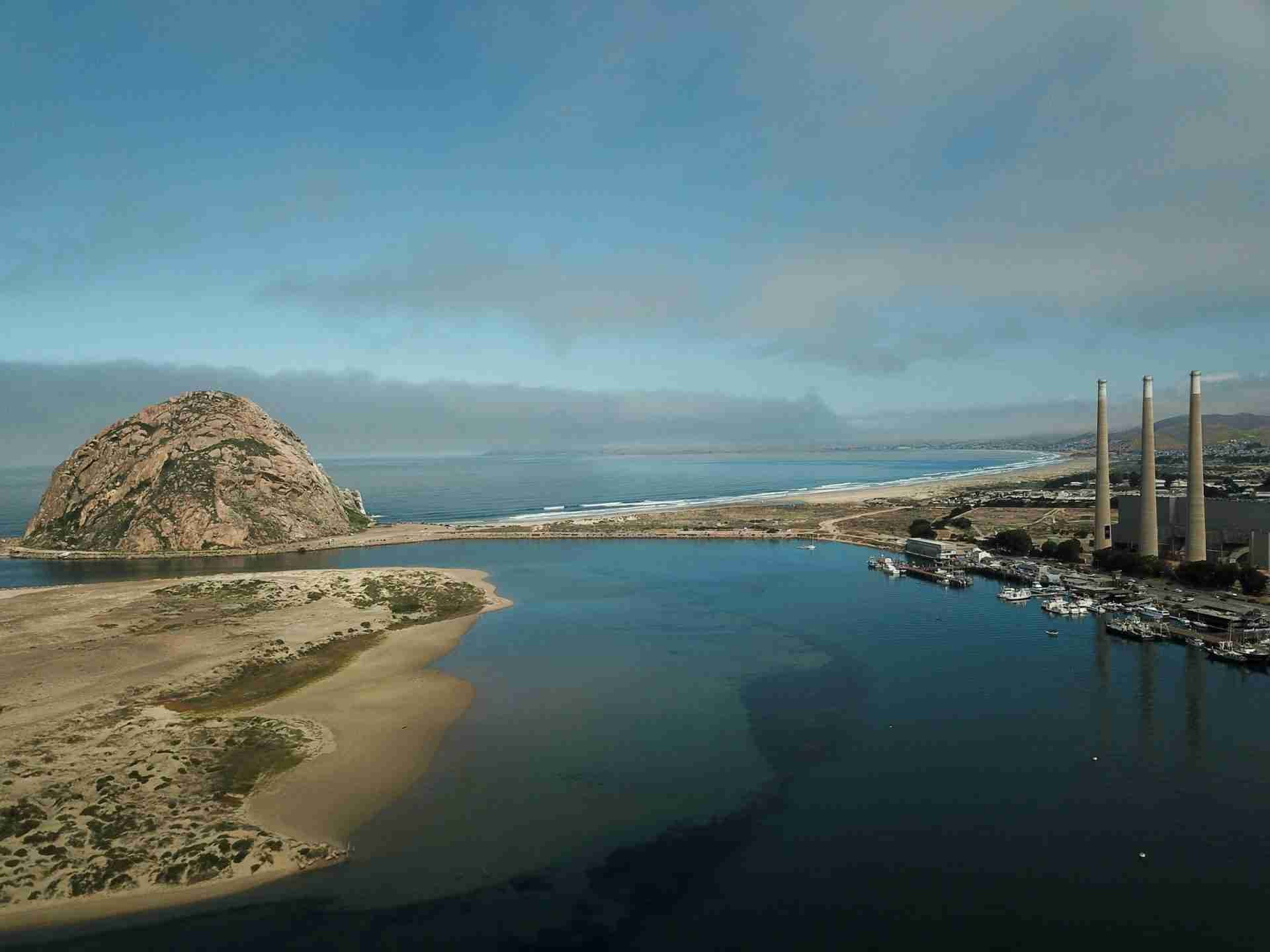
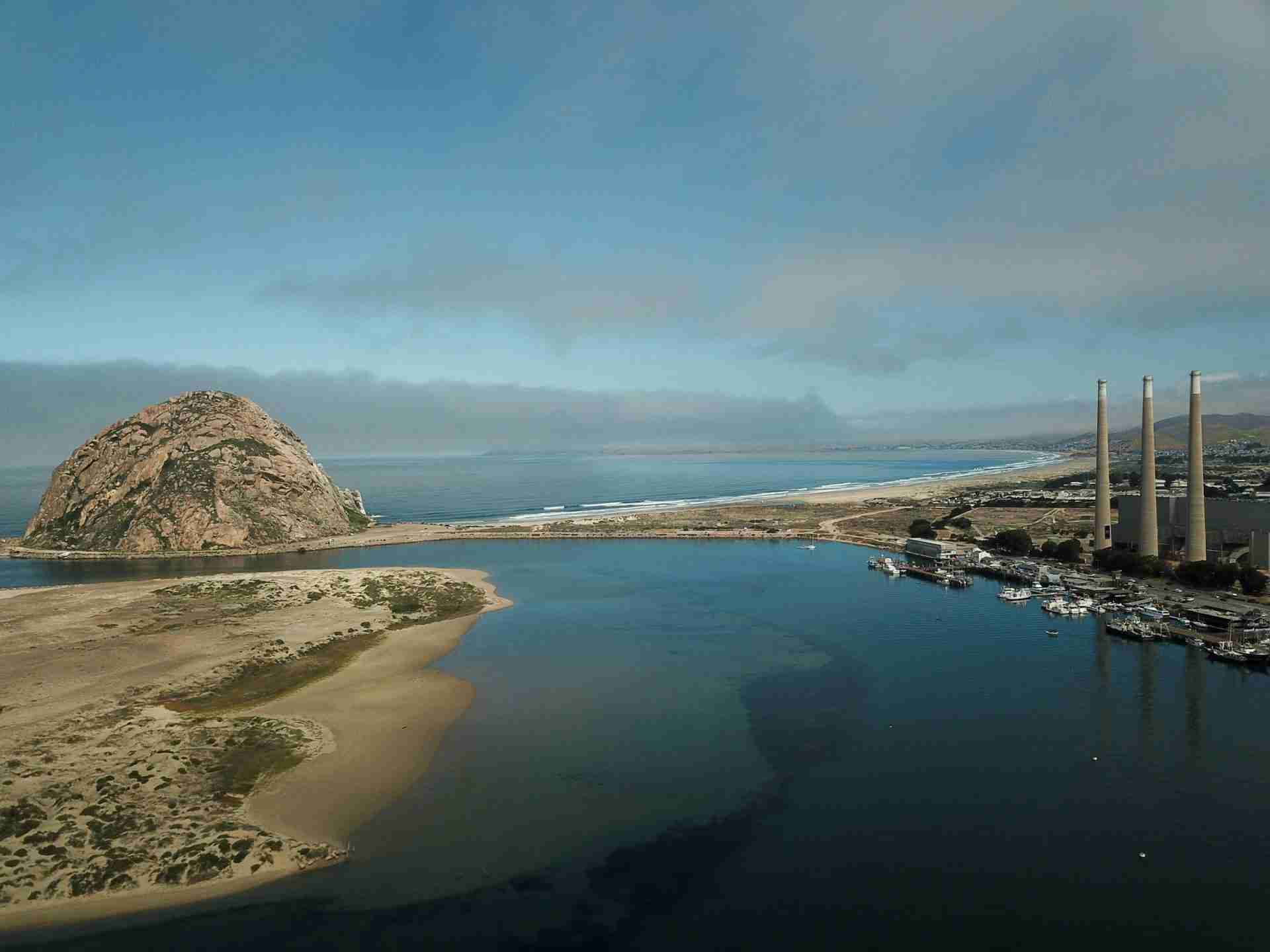
Morro Bay on California's Central Coast is best known for the massive volcanic plug known as Morro Rock, but just inland from the shoreline, the three towering smokestacks of the former power plant create a surprisingly compelling visual contrast. While not traditionally beautiful, these stacks have become a kind of unofficial landmark. Their vertical lines cut sharply against the low, rounded form of Morro Rock and the wide horizontal layers of sea and sky. For photographers, this juxtaposition of industrial shape and natural landscape offers unique shooting opportunities. The area provides multiple angles to explore these contrasts, from beach level compositions to elevated viewpoints across the bay.
Best Photography Opportunities
• Layered Compositions from Across the Harbor
One of the strongest visual relationships is between the power plant stacks and Morro Rock when viewed from across the harbor. From vantage points near the Embarcadero or the marina walkways, you can frame the vertical stacks rising behind boats, docks, and the calm waters of the inlet. A standard to short telephoto lens between 50 and 100mm works well to compress the elements slightly and maintain a natural balance. Early morning is ideal, when the water is still and reflections are clean. Fog and low cloud layers also work well here, muting the color and emphasizing shape.
• Black and White Studies in Fog
The stacks lend themselves well to black and white photography, especially in fog or marine haze. On gray days, contrast drops and the scene takes on a more graphic, tonal quality. The smokestacks can be framed alone or with Morro Rock as a heavy counterweight in the composition. Use a longer lens to simplify the background and focus on geometry. These are quiet, low-contrast images that rely on line and mass rather than color, and they pair well with water textures or empty sky.
• Industrial Detail from the Plant Perimeter
Though the power plant is no longer operational, parts of the structure remain accessible from public sidewalks and parking areas nearby. The base of the stacks, fence lines, and surrounding buildings provide interesting textures and color blocks that work well for urban-style detail photography. A wide or standard lens lets you get close and play with perspective distortion, especially if shooting up toward the tops of the towers. These images often work best in hard light, when shadows create sharp angles and add energy to the frame.
• Golden Hour Reflections from Bayside Locations
In the hour before sunset, light reflects off the bay and casts warm color across the side of the plant and surrounding buildings. From shoreline areas looking west, you can catch this light falling across the scene while still keeping the stacks silhouetted or softly lit. A polarizer helps manage glare on the water, and a tripod gives stability for slower shutter speeds as the light fades. Boats, seabirds, or kayakers can be used as small moving elements to animate the frame.
• Minimalist Silhouettes at Dusk
As the sun drops behind Morro Rock, the light fades quickly and the stacks become clean silhouettes against the residual sky glow. These images are strongest when the sky holds color but the land has gone into shadow. Use a longer focal length to tighten the frame and expose for the brightest part of the sky, allowing the structures to go completely black. A small aperture can help produce starburst effects from lingering light sources or boats with navigation lights.
Best Time to Visit
Morro Bay experiences relatively mild weather year round, but conditions shift dramatically by time of day. Mornings often bring fog or low cloud layers that lift slowly, giving opportunities for layered, moody compositions. Midday can be bright and flat, though the haze can soften the light and make detail shots easier to manage. Sunset is the most dynamic time, especially when the sky catches color behind Morro Rock and the stacks begin to silhouette. Winter months bring a higher chance of clear evening light, while spring and summer tend to produce more haze and fog. Wind can be strong in the afternoons, so earlier visits offer better conditions for long exposures or stable tripod work.
How to Get There
The smokestacks are located in the heart of Morro Bay, just inland from the Embarcadero and harbor. They are easily reached by car, with public parking available near the marina and waterfront. The plant area itself is no longer active but remains fenced off, so photography is done from public sidewalks and nearby lots. Walking paths run along the harbor and up toward viewpoints that allow for elevated perspectives. Access is flat and easy, with no need for hiking or off-road travel. There is no fee to access the area, and the site is open throughout the day and evening.
Recommended Photography Gear
A standard zoom lens is ideal for flexibility, letting you move between medium views of the stacks and wider harbor scenes. A telephoto lens in the 70 to 200mm range is helpful for compressing layers and isolating subjects against the sky or Morro Rock. A tripod is useful for long exposures or low light shooting at sunrise and sunset. Consider bringing a polarizer to manage glare off the water and a lens cloth to keep glass clean in salt heavy air. Foggy mornings and misty evenings can challenge autofocus, so manual focusing may be useful for critical shots. A weather resistant bag or cover is a smart addition when working close to the water.
Nearby Photography Locations
The massive volcanic rock that defines the bay is a subject in its own right. It can be photographed from the beach with breaking waves, distant surfers, or in close-up from the causeway that leads to its base.
• Embarcadero Waterfront
A mix of docks, fishing boats, and restaurants line the harbor, offering street photography, detail shots, and colorful reflections. The working character of the harbor gives strong material for documentary-style compositions.
A short drive inland, this nature preserve is home to ancient oak groves with twisting branches and shaded trails. Ideal for forest studies, diffused light, and more contemplative shooting away from the coast.
Further south, this stretch of coast has dramatic cliffs, wild surf, and sea-carved formations. It's an excellent complement to the industrial geometry of Morro Bay and works well for wide natural landscapes.
North of Cayucos, this quieter area features tide pools, rocky outcrops, and open views of the sea. It offers a more minimal and unspoiled alternative for seascape compositions.
Comments
Loading comments…