
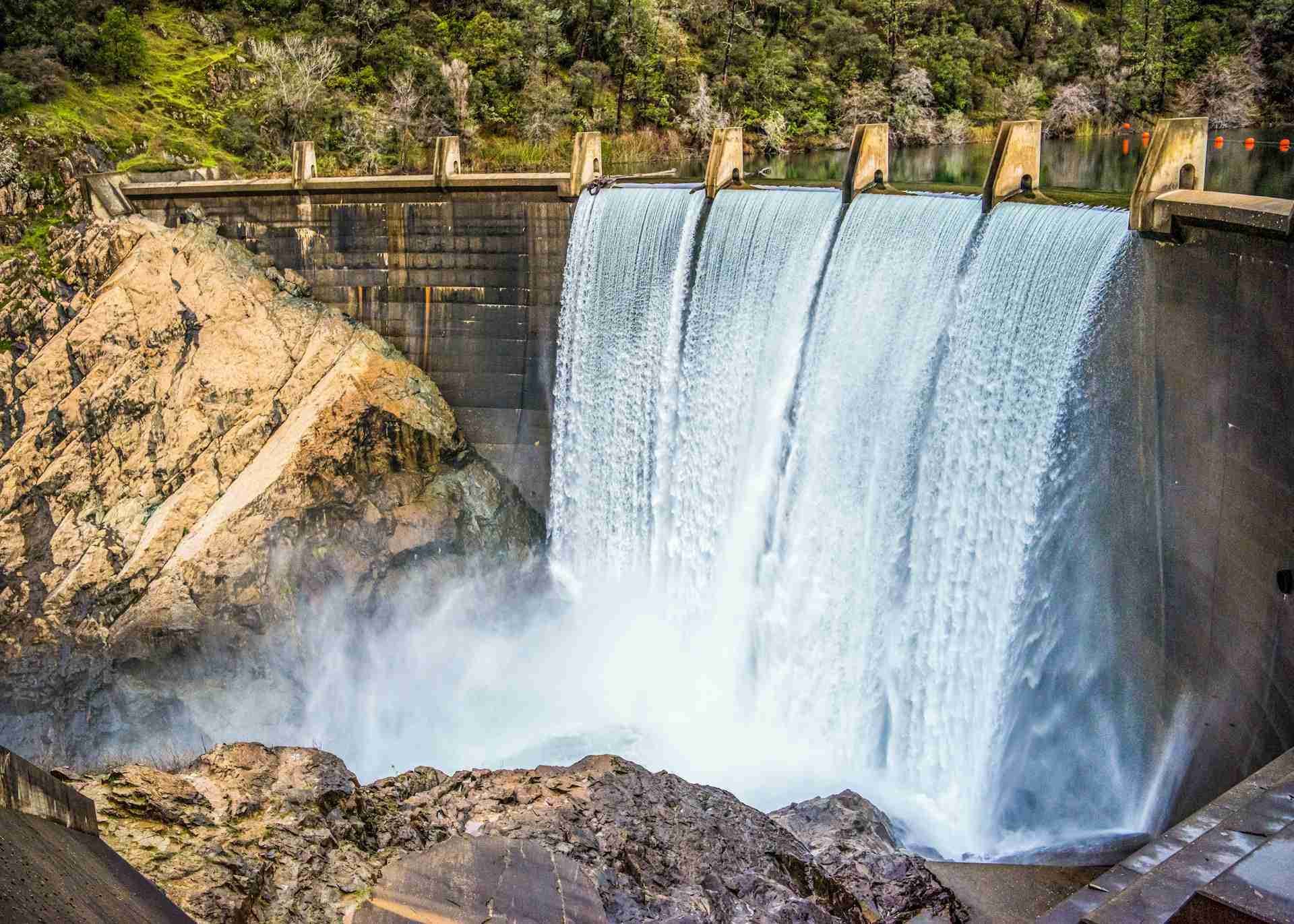
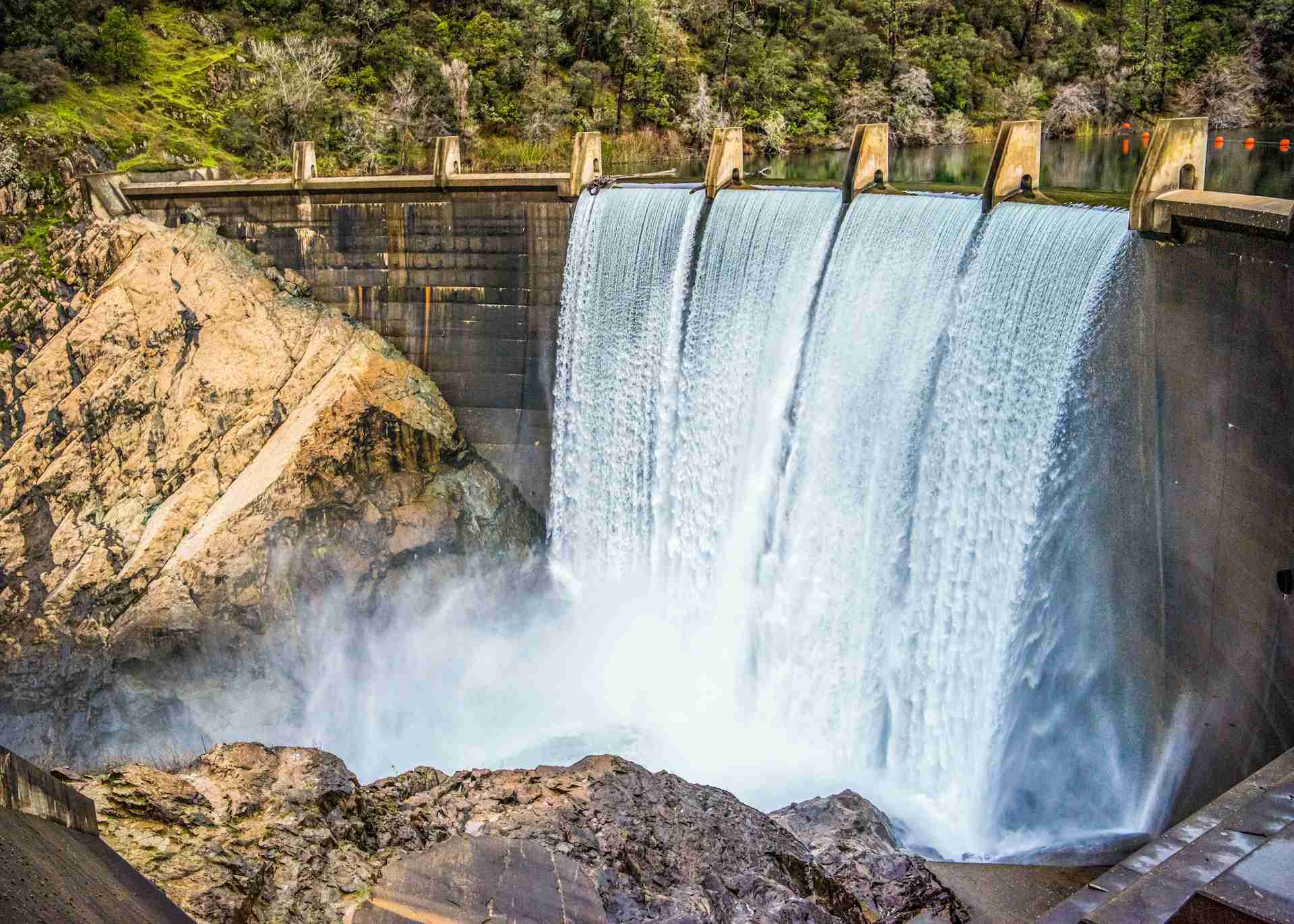
North Fork Dam offers a clean and structured setting for photographing water flow, concrete form, and soft natural reflection. The dam's long, symmetrical curve produces a steady spillway that maintains motion year-round, creating a sheet of water that reads well in both fast shutter and long exposure work. Below the dam, the North Fork American River stretches through a narrow canyon, framed by pine and oak forest that rises up on either side. The surrounding landscape has enough wildness to contrast the engineered geometry of the dam, making it a useful site for combining natural and human-made forms in frame. Access is simple, and the scene responds well to changes in light, water flow, and season.
Best Photography Opportunities
Direct View of the Spillway from the Lake Clementine Trail
The most straightforward view of North Fork Dam comes from a short segment of the Lake Clementine Trail, where the full face of the spillway is visible from a slightly elevated angle. This location gives you a stable position for framing the long drop of water, with balanced light in both the foreground and background during early morning. Use a tripod and a neutral density filter to control motion in the water while maintaining texture in the concrete. A 24 to 70 millimeter lens works well here, allowing you to frame either tight on the spill or include more of the surrounding canyon for context. This spot is often in shade early in the day, helping to reduce contrast between sky and surface.
Side Angle with Vegetation and Structure
Farther down the trail, you can shoot the dam from a lower angle that includes shoreline vegetation and exposed rock in the foreground. This is a strong option for photographers interested in combining engineered elements with natural forms, particularly in softer light. A wide-angle lens helps anchor the dam within the frame while foreground detail adds depth and a sense of scale. Overcast conditions are best for managing exposure and keeping tone consistent across materials. This is also a good position for working with a polarizer to reduce glare on wet surfaces or bring out tone in the sky and water.
Reflections on Calm Water Below the Dam
The river just below the dam often holds reflections of the concrete face and surrounding trees, especially during early morning or windless late afternoon. Use a moderate zoom to frame across the water at low angles, keeping your horizon level and composition clean. This is a location where timing is critical, as even light wind will break the reflection and shift the focus of the frame. Including shoreline rocks or small branches in the foreground can help hold the image and give the reflection more structure. A three-stop ND filter may be useful for subtle motion blur without losing sharpness in the mirrored forms.
Spillway Detail and Surface Texture
For more abstract work, focus tightly on sections of the dam face where water interacts with the concrete lip or slides across the slope. These compositions benefit from long focal lengths and mid-range apertures, allowing you to isolate the water texture and work with line and rhythm. Early light or overcast skies help avoid harsh highlights. This angle also works well in black and white, especially when the water carries strong contrast between light and shadow. Keep your shutter speed above one second to create smooth motion while maintaining separation between water and wall.
Seasonal Flow and Foreground Change Along the Riverbank
The area below the dam changes visibly between seasons, with spring bringing higher flow, denser mist, and greener growth along the riverbanks. Fall introduces more exposed rock, dry brush, and a warmer color palette. Use a 24 to 105 millimeter lens to adapt to the scene as it shifts, framing both wider environmental shots and tighter details in the same session. These changes make the location worth revisiting several times through the year. Subtle shifts in lighting and surface condition can turn familiar frames into something new with only small adjustments in perspective.
Best Time to Visit
North Fork Dam and the surrounding Lake Clementine area can be photographed year-round, though spring and fall tend to offer the best conditions. In spring, high water flow from snowmelt increases the volume and consistency of the spillway, producing stronger lines and more dynamic motion. Mist often rises from the base of the dam in the early hours, catching light and giving added depth to wide frames.
Summer brings more consistent weather and longer shooting windows but also more visitors on the trail. Light tends to be harsh by mid-morning, so early starts are important. Fall offers warmer tone in the landscape and clearer air, with lower water levels revealing more of the concrete face and surrounding structure. Winter visits are possible, though trails may be slippery and light less predictable due to frequent fog or overcast skies.
Early morning is best for even exposure and quiet conditions. Afternoon light often falls unevenly across the canyon, creating hot spots and deep shadows that are harder to balance in frame. Cloudy days are especially useful when working with longer exposures or detail shots.
How to Get There
North Fork Dam is located in the Auburn State Recreation Area, just northeast of downtown Auburn, California. The most direct access is via Lake Clementine Road, which turns off from Foresthill Road shortly after crossing the Foresthill Bridge. Follow Lake Clementine Road downhill as it winds through the canyon. The road is paved but narrow and seasonal, and it ends at the Lake Clementine Day Use Area directly beneath the dam. There is a parking area right at the base, offering immediate access to the spillway and riverbank without the need to hike.
Alternatively, photographers can still approach the dam on foot from the Lake Clementine Trail, which begins at the Auburn Confluence area and offers higher views of the spillway. This trail is around 1.5 miles one way and offers different angles along the way, but it is not required to reach the dam itself.
There is typically a vehicle fee for day use during the main season, and the access road may be gated during winter or after heavy rain. Check conditions in advance and arrive early on weekends, as the parking lot fills quickly during peak months. The area is managed as part of the California State Parks system and is open to photography with no restrictions for personal or tripod use.
Recommended Photography Gear
Bring a sturdy tripod for long exposure work along the spillway and riverbank. A wide-angle lens between 16 and 35 millimeters will be useful for environmental compositions and working with foreground structure. A 24 to 70 millimeter zoom covers most general needs for framing the dam, trail, and surrounding textures. For tighter detail work on water flow or structural lines, use a 70 to 200 millimeter lens.
A circular polarizer helps control reflection on water and bring out tone in the surrounding rock and foliage. Neutral density filters between three and six stops are recommended for spillway shots and flowing river scenes. A lens cloth is essential due to mist and occasional wind near the base of the dam. Comfortable walking shoes and layered clothing are helpful, as temperatures can change quickly in the canyon. Use a lightweight pack to carry your gear while keeping hands free on the trail.
Nearby Photography Locations
One of the highest bridges in the United States, this structure offers clean lines, bold geometry, and long views across the canyon. Strong in early morning when the light moves through the valley below.
Where the North and Middle Forks of the American River meet, this location offers river curves, gravel banks, and tree-lined edges. Best for low-angle river compositions and reflection work in soft light.
Located west of Auburn, this park features a series of small waterfalls, bridges, and rolling terrain. Spring is the most productive season, though the trail system allows for varied shots all year.
An old rail bridge along the Western States Trail, offering rustic structure and textured foreground elements. Framing works well in early or late light with the river below providing separation.
This riverside beach sits just upstream from the dam and offers clean, open views of the lake surface framed by steep canyon walls and light forest. It is best photographed in the morning before wind disturbs the water, and it works well for wide shots with foreground detail such as gravel, driftwood, or reflections. The light here is even and soft early in the day, with minimal shadow disruption.
North Fork Dam gives photographers a strong balance of motion, shape, and natural frame. With easy access and reliable flow, it is a practical location for building studies of water and structure without needing remote travel or heavy gear. Return visits across different seasons reveal subtle shifts in form and tone, making it a location that holds visual strength across time.
Comments
Loading comments…