
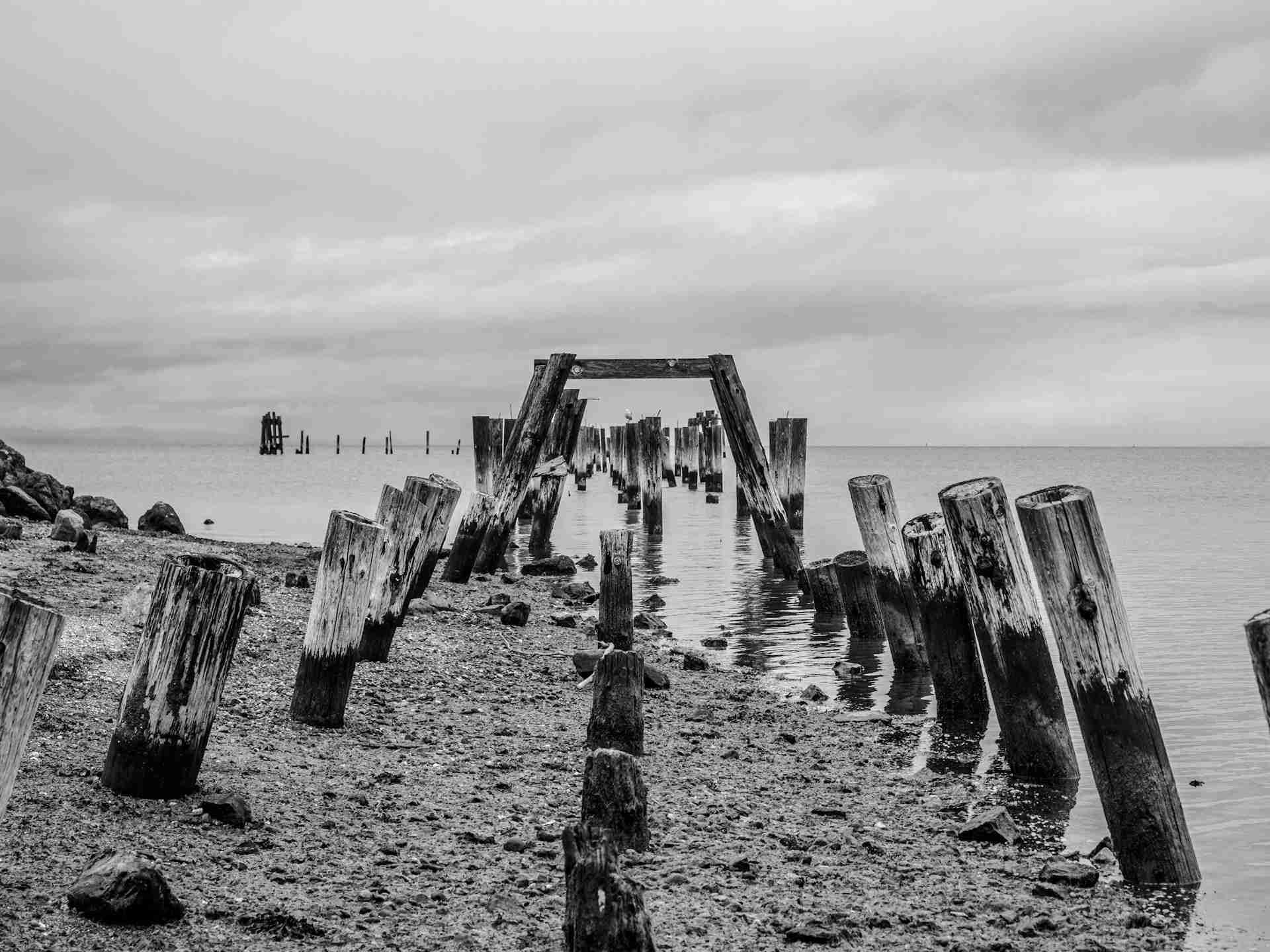
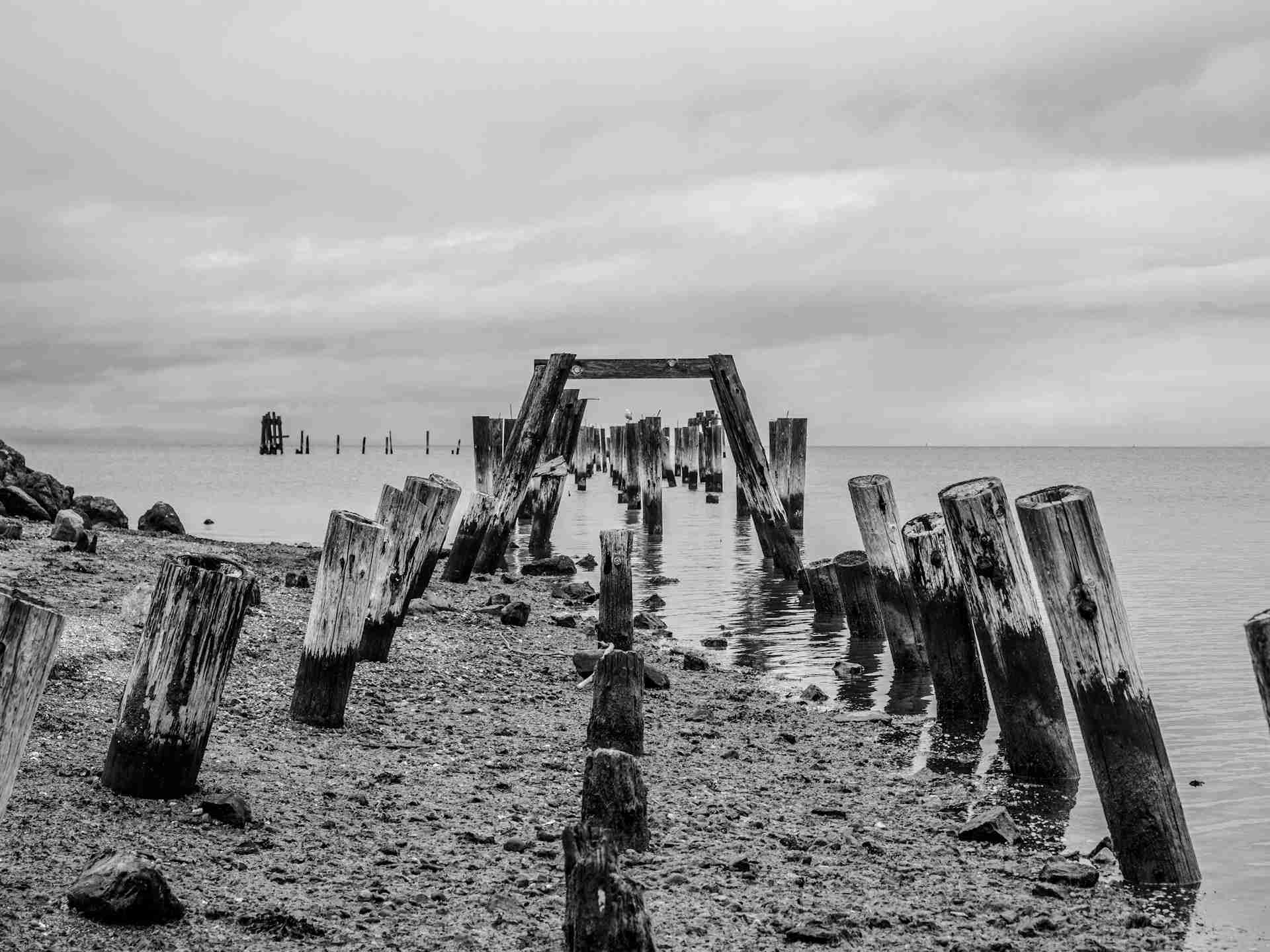
At the northern edge of Richmond, California, Point Pinole Regional Shoreline offers a quiet, open space on the edge of the Bay. Tucked at the park's far end, the old abandoned pier stands as a forgotten structure slowly sinking into the water. Once used for dynamite transport during the area's industrial past, the pier is now broken in places, with uneven wooden planks, missing railings, and a skeletal frame that stretches into the Bay. For photographers, the appeal is in its shape, solitude, and rhythm. It's a place where still water, soft sky, and strong structure line up to create long, patient compositions. The walk to reach it is part of the experience, and the surrounding shoreline offers just as much reward if you take the time to look.
Best Photography Opportunities
• Leading Lines into the Bay
The pier extends straight into the water, making it a perfect subject for centered compositions that use the lines of the structure to draw the eye into the frame. From the beginning of the pier, shoot low and straight down the middle to emphasize the repeating posts and weathered planks that narrow toward the horizon. On overcast days, this scene becomes clean and graphic, with soft contrast between the dark wood and the pale sky. A long exposure can simplify the water into a smooth surface, making the structure feel suspended in space. This shot works best with a wide-angle lens and a tripod placed low to the ground.
• Side Profile of the Collapsing Structure
As the pier deteriorates, sections of it are no longer accessible but still visible from the shoreline to the north. These side views let you capture the broken posts and warped angles that show how time has reshaped the original form. Frame from the edge of the beach or a slight rise in the trail to get a full view of the structure without obstruction. A medium telephoto lens helps compress the lines of the pier and isolate it against the open water behind. Early morning light brings warm color to the wood and casts long shadows that highlight its uneven surface.
• Close-Ups of Texture and Decay
Get in close on the wooden railings, rusted bolts, and cracked planks to build a series of detail shots that tell the story of the pier's age. These images work well on overcast days when light is flat and evenly spread across surfaces. Use a standard zoom or macro lens to capture grain in the wood, lichen on posts, or peeling paint along the structure. These frames are best composed at a slight angle to bring depth to the image and separate the subject from the background. Including shallow depth of field can help guide the viewer's focus and simplify the scene.
• Reflections and Color Shift at Golden Hour
If the tide is in and the water is still, parts of the pier will reflect softly onto the Bay. During the golden hour, the low sun lights the structure from the side, warming the tones of the wood and creating color contrast with the blue-gray water. Position yourself slightly to the north or south of the pier to catch these reflections at an angle, and use a polarizing filter to either enhance or reduce the glare depending on the effect you're after. These scenes work best with a tripod and slow shutter speed, especially if you're blending exposures to hold detail in both sky and water.
• Minimal Silhouettes at Twilight
After sunset, the pier becomes a dark shape against the fading light of the sky. This is one of the best times to shoot long exposures with subtle color in the background and clean lines across the surface of the water. Frame the structure off-center for a more open composition, or shoot from further back to include the shoreline or distant refinery lights across the bay. These twilight scenes benefit from a slower, more methodical approach and reward photographers who are comfortable working with low light and balancing exposure manually.
Best Time to Visit
The best times to photograph the old pier are early in the morning or during the last hour of daylight. Morning typically offers calm water, fewer people, and a soft, even light that works well for both wide and detail shots. Fog is common along this stretch of the Bay, and it can add mood and softness to the scene, especially when paired with the weathered look of the pier.
Golden hour in the evening brings directional light that warms the wood and adds contrast to shadows and textures. The pier faces west into the bay, so sunsets can be dramatic if conditions are right. In winter, sunsets tend to be cleaner and more colorful due to lower humidity, while summer evenings often bring softer, hazier tones.
Tide levels change the scene as well. Low tide reveals more of the pier's supports and debris below, while high tide allows for stronger reflections. Check tide tables before visiting if you want a specific effect in your frame. Wind can pick up in the afternoon, so for still water and longer exposures, morning remains the better bet.
How to Get There
Point Pinole Regional Shoreline is located in Richmond, California, and managed by the East Bay Regional Park District. From Interstate 80, take the Richmond Parkway exit and follow signs to Atlas Road, then continue west to the main entrance on Giant Highway. Parking is available at the main lot near the Point Pinole staging area. From there, it is about a one-and-a-half mile walk to the pier via the main paved trail or the narrower shoreline trail.
There are no entrance fees to access the park or the pier. The trail is flat and easy, suitable for rolling camera bags or carrying gear in a backpack. Allow enough time to walk in, especially if you're shooting at sunrise or sunset, since the pier is not visible from the parking area. Bicycles are allowed, and you can also take a small park shuttle during operating hours, though it does not run during early morning or late evening.
Recommended Photography Gear
A wide-angle lens in the 16–35mm range is ideal for framing the length of the pier and capturing large reflections. A 24–70mm zoom gives you flexibility for both scene-setting shots and medium close-ups. A 70–200mm lens is useful if you plan to shoot from the shore and want to compress the lines of the structure or isolate broken details from a distance.
Bring a sturdy tripod for long exposures, especially around golden hour or blue hour when light is low. A circular polarizer is useful when shooting reflections and can help control sky contrast. A 6-stop or 10-stop ND filter allows for smooth water effects in daylight, particularly if you are shooting minimal scenes with clean surfaces. Wear sturdy shoes, especially if you plan to explore around the base of the structure during low tide, where rocks and sand can be uneven or slippery.
Nearby Photography Locations
The trail leading to the pier includes views of eucalyptus groves, marshes, and wide-open shoreline. These scenes work well in soft light, with curved trails and tree silhouettes adding structure to wide compositions. Early morning fog adds depth and quiet mood.
A short drive south, this small shoreline park faces west toward the Richmond–San Rafael Bridge. It offers a clean view of the bridge in silhouette at sunset, with rocks and driftwood in the foreground that help frame longer compositions.
• Richmond-San Rafael Bridge Viewpoint
From several points along Western Drive, you can photograph the bridge with boats or low fog passing underneath. Long exposures here work best at twilight, especially with lights reflecting across the water and clouds forming soft streaks overhead.
• Brooks Island from Ferry Point
Ferry Point provides a clear view of Brooks Island and the central Bay. This is a good location for wide, open water compositions and strong sunsets. It also works well for layering silhouettes of ships, shorelines, and clouds.
• Craneway Pavilion and Marina Bay
Closer to central Richmond, the Craneway Pavilion offers industrial textures and open water views facing west. The wide paved area around the marina is ideal for sunset photography, with sailboats and piers reflecting in calm water.
The old pier at Point Pinole is the kind of place that rewards stillness and time. You don't have to move fast or cover a lot of ground. The structure holds its shape and mood from every angle, and with the right light and tide, it gives back more than you expect. Whether you're framing long lines into the Bay or pulling close on a rusted bolt, this forgotten piece of shoreline tells its story clearly.
Comments
Loading comments…