
Steel Letters and Changing Light in Downtown San Diego
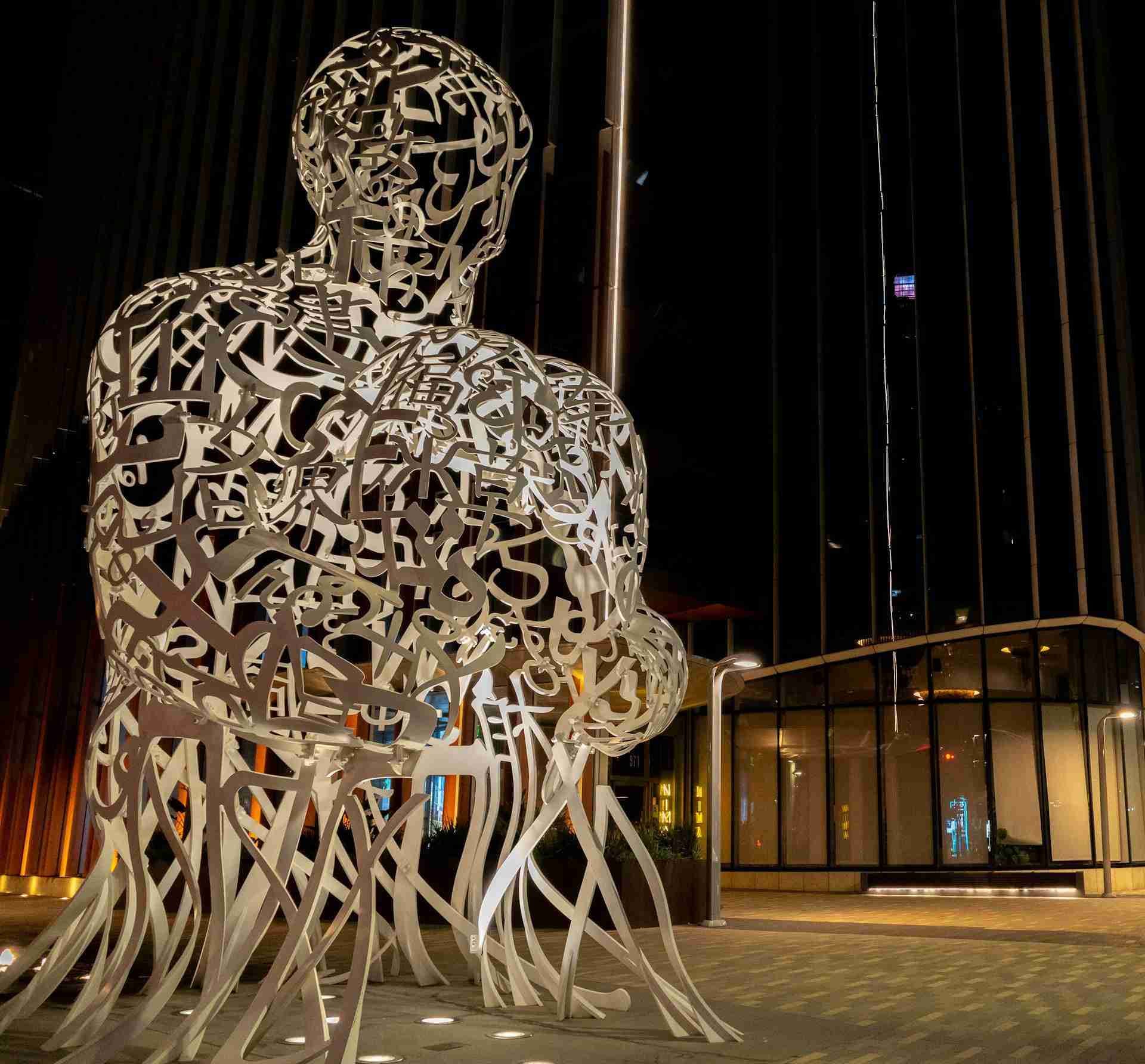
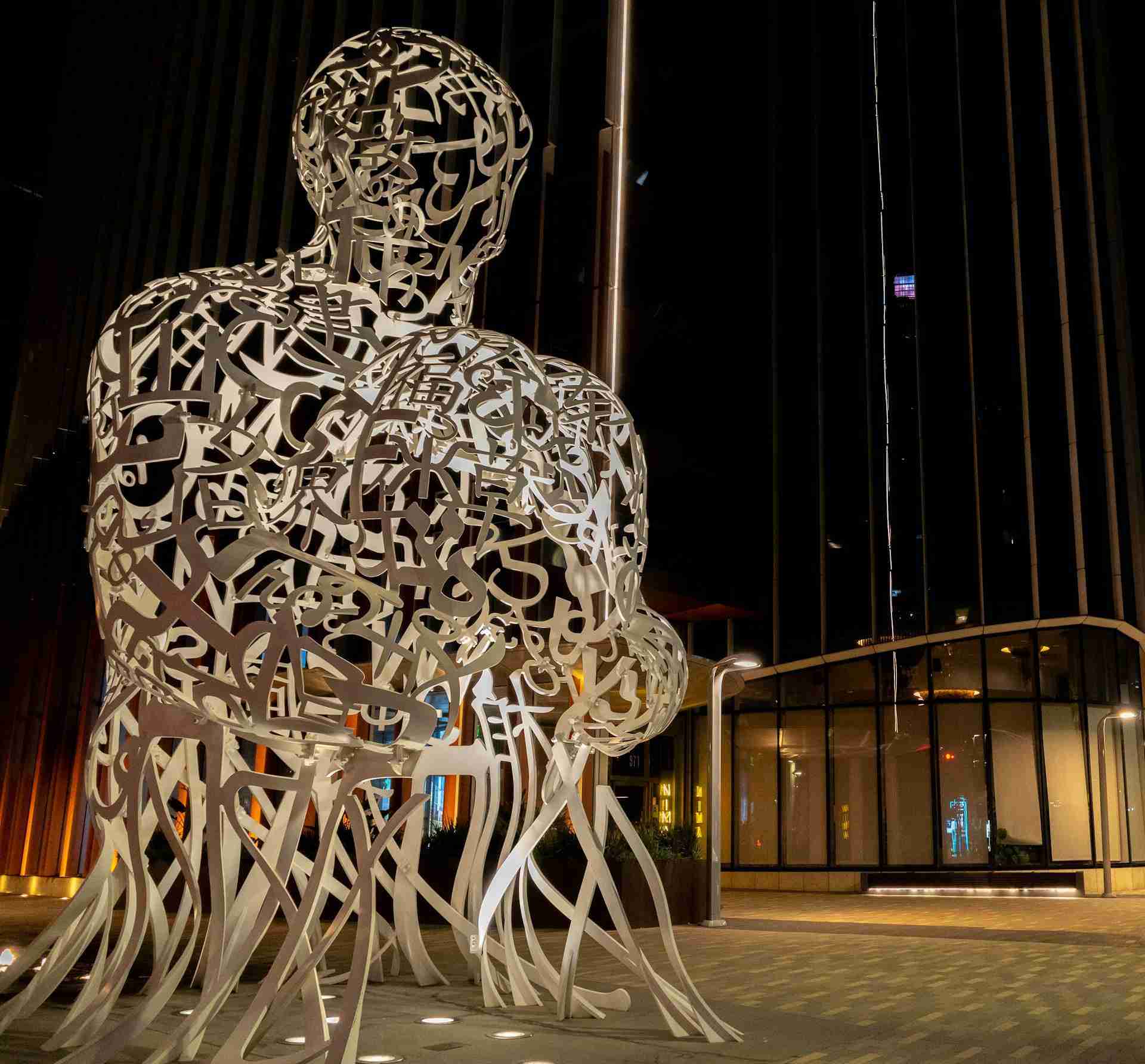
The Pacific Soul sculpture by Jaume Plensa rises quietly at the busy downtown intersection of Pacific Highway and West Broadway in San Diego. Built from stainless steel letters that form a seated human figure, the piece brings a sense of openness and stillness to one of the city's most trafficked corners. Though only a block from the harbor, the sculpture is firmly situated in an urban environment surrounded by civic buildings, palm-lined sidewalks, and steady pedestrian movement. Its transparent form allows changing light to pass through, while the surrounding architecture creates opportunities for shadow play and reflected surfaces. For photographers, it offers a dynamic subject where public art meets downtown geometry, best explored during moments of quiet light and shifting sky.
Best Photography Opportunities
• Golden Hour Light from the Harbor Side
Because the sculpture faces west, late afternoon and golden hour provide ideal backlighting. The hollow lattice of letters filters light and casts detailed shadows on the ground and nearby surfaces. As the sun lowers, the figure gains contrast and separation from the background. Use a wide-angle lens to incorporate the setting sun or a tighter frame to isolate light as it passes through the interior. Shooting low from the sidewalk creates a cleaner sky and simplifies the background. Bracketing exposures is useful here if the sun is in-frame, especially to preserve midtones within the sculpture.
• Balanced Front Views with Street-Level Framing
The sculpture's seated posture creates a natural symmetry when viewed from the front. This angle allows the figure to be placed cleanly within the street corridor, with buildings and palm trees offering compositional balance. Early morning light softly fills the face and front-facing forms, especially in the hour after sunrise. A 35 to 70 millimeter focal length gives enough range to adjust for surrounding structures while maintaining a natural perspective. Watch for foot traffic and parked vehicles, which can either add scale or require careful framing.
• Close-Up Studies of Letter Patterns and Texture
At close range, the steel letters become the focus. Each curve, overlap, and junction forms abstract shapes that change depending on light direction. These areas respond well to side light in late afternoon, when shadows begin to carve through the lattice. A short telephoto or macro lens lets you isolate repeating forms or frame small sections where internal and external light meet. These shots are especially effective in black and white, where texture and shape carry the image without reliance on sky or color.
• Reflected Surfaces and Urban Contrast
Because of its downtown setting, Pacific Soul is often mirrored in nearby windows, car panels, or polished stone. These reflections are brief and unpredictable but can create layered compositions with movement and depth. A polarizer can help control glare without eliminating all reflected elements. These images benefit from fast adjustments and handheld shooting, as they often rely on shifting light or passing traffic. They are best captured during midday when reflections are most active.
• Evening Illumination and Low-Light Composition
After sunset, the sculpture is lit from below, which sends a soft glow through its interior and outlines the figure against the darker surroundings. These conditions are ideal for long exposure photography. Use a tripod and narrow aperture to control highlights and maintain sharpness throughout the frame. Night photography here often works best when the background is kept minimal. Try to avoid overhead streetlights or traffic light spill by adjusting your angle or lens position.
Best Time to Visit
The sculpture can be photographed at any time of year, but the quality of light and activity level varies throughout the day. Early morning is the quietest time, with soft light and fewer pedestrians. This is a good opportunity for static compositions and close work without interruption. Late afternoon through sunset offers the best color and shadow detail, especially for shooting the sculpture's full form.
Golden hour light from the west aligns well with the sculpture's placement, giving strong backlight and contrast. These conditions last longer during the winter months when the sun stays lower and the air is clearer. Overcast days work well for detail work and texture studies, as they reduce shadow harshness and allow for even exposure across the surface.
Night photography is possible year-round. The sculpture's built-in lighting is subtle and consistent. Winter evenings provide a longer window for blue hour and more comfortable shooting with a tripod. Summer nights tend to be busier and require more patience when waiting for clear frames.
How to Get There
The Pacific Soul sculpture is located at the intersection of Pacific Highway and West Broadway in downtown San Diego. It is not on the waterfront but sits one block inland, directly across from the San Diego County Administration Center and near the Santa Fe Depot. The sculpture occupies a wide public sidewalk with full pedestrian access on all sides.
Street parking is available nearby, and several paid lots are within a short walking distance. The area is also served by the San Diego Trolley and multiple city bus lines. No permits are needed for non-commercial photography, and tripods are permitted as long as they do not obstruct public walkways. Because the sculpture is in a busy area, it is best to plan your visit for early morning or late evening when foot traffic is lighter. Drone photography is not permitted due to dense nearby structures and controlled airspace.
Recommended Photography Gear
A wide-angle lens between 16 and 35 millimeters is ideal for full-body compositions and low-angle shots that emphasize the sculpture's height and openness. A mid-range zoom in the 24 to 70 millimeter range provides flexibility for both distance and detail. A telephoto or macro lens is useful for abstract studies and working tight around the lettering.
Bring a tripod for sunset and night photography. A circular polarizer can reduce surface glare and enhance sky color but should be adjusted carefully to avoid uneven exposure in wide frames. A remote shutter release helps keep images clean during long exposures, and a lens cloth is essential for managing salt spray and dust near the coast.
Use a low-profile gear setup if working in busy periods, and be ready to adjust quickly. Neutral clothing and non-reflective surfaces are helpful if you plan to appear in your frame or work close to mirrored surfaces. Protective rain covers for your camera and backpack are useful in winter or early morning sessions.
Nearby Photography Locations
Directly across the street, this space includes fountains, palm lines, and distant skyline views. It works well at sunrise and sunset and offers a broad view of the harbor.
The nearby train station features arches, stonework, and tiled details that contrast with the clean modern lines of the sculpture. Morning light strikes the facade at an angle and brings out detail in the stone.
A short walk south, this decommissioned aircraft carrier provides industrial texture and large-scale subjects. The hull, deck lines, and dock surroundings offer a visual shift from the sculpture's softer shape.
This coastal shopping and walking area includes piers, open water views, and distant skyline frames. Sunset is the best time to shoot, especially if there are clouds for texture in the sky.
• Broadway Pier and Harbor Drive Walkway
Both locations offer views back toward the city and over the harbor. These are excellent spots for twilight photography, long exposures, and incorporating urban light trails.
The Pacific Soul sculpture is a versatile subject. Its transparency and scale allow photographers to interpret it through light, form, and space. With careful timing and attention to light quality, this corner of downtown San Diego becomes a place for structured, thoughtful photography. Whether you are building abstract compositions or framing the sculpture against the city sky, there is always another angle worth exploring.
Comments
Loading comments…