
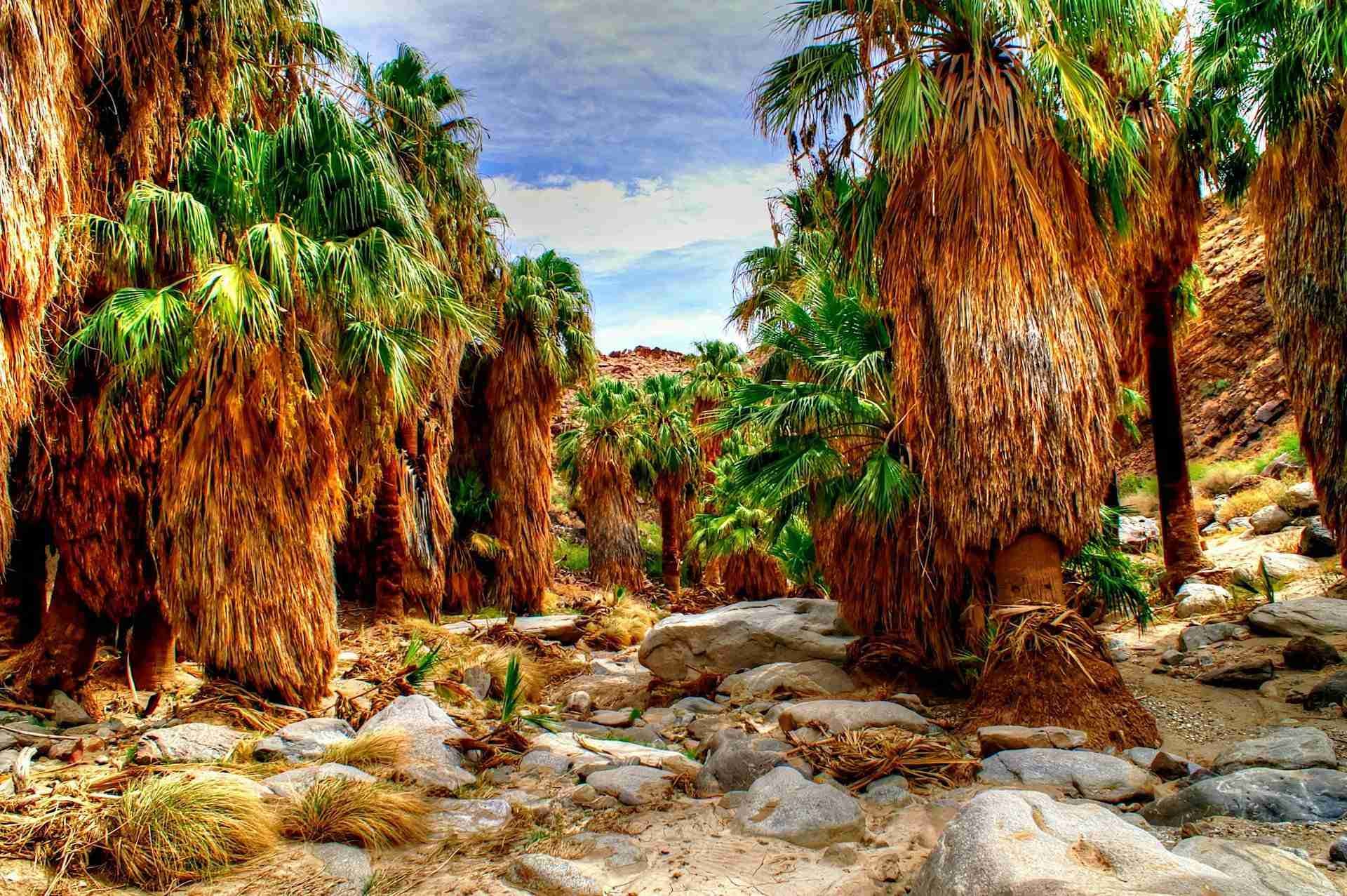
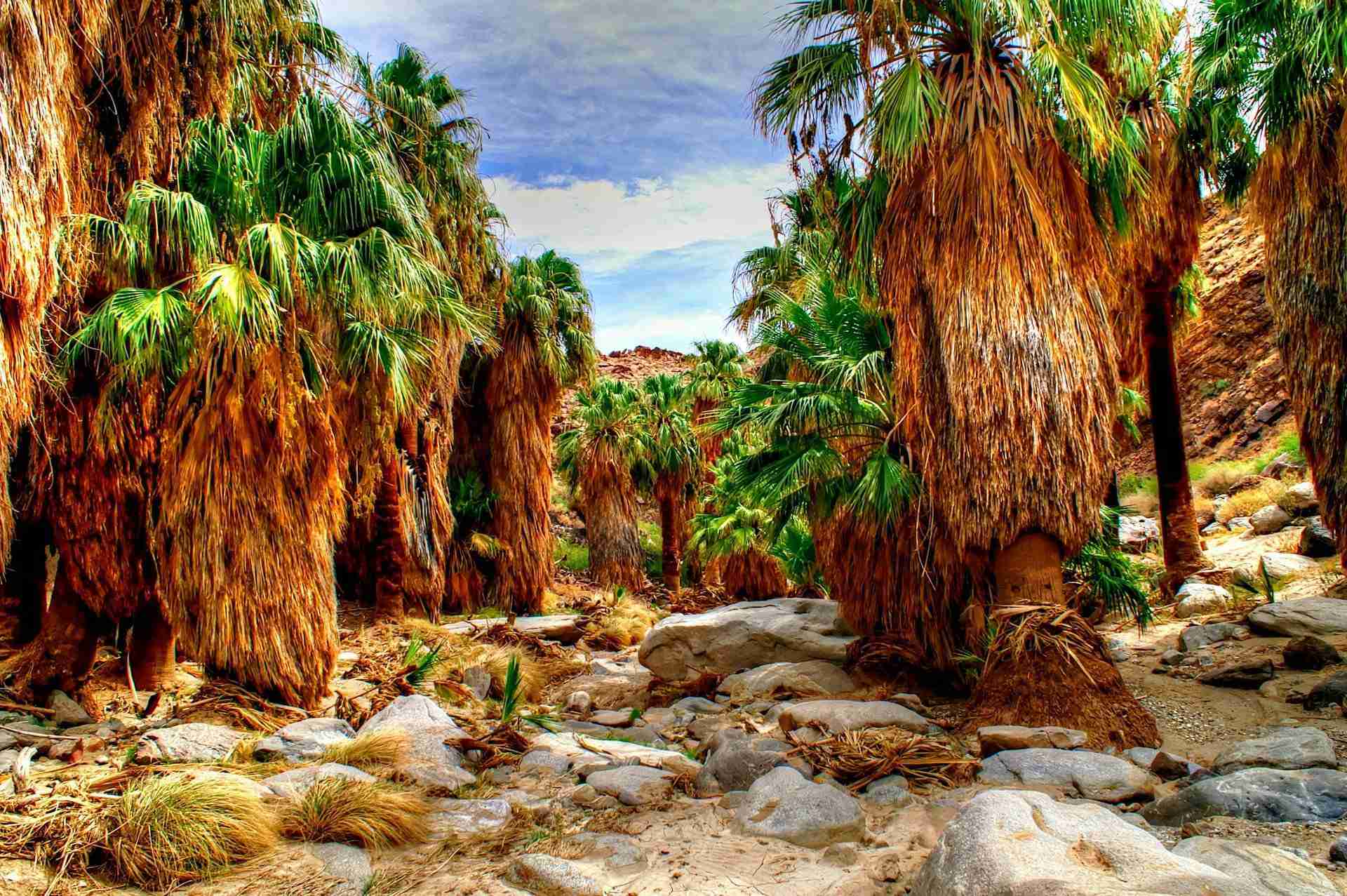
Tucked within the rugged terrain of the Agua Caliente Band of Cahuilla Indians Reservation, Palm Canyon is a lush ribbon of California fan palms winding through the arid, rocky canyons of the San Jacinto Mountains. Accessible via the Palm Canyon Trail just minutes from downtown Palm Springs, this 15-mile-long canyon is home to the largest native palm oasis in North America. Towering palms, sun-dappled boulders, and the occasional trickling stream create an extraordinary contrast between desert austerity and oasis abundance. For photographers, Palm Canyon delivers an immersive experience where light, texture, and life intersect in stunning natural harmony.
Best Photography Opportunities
• Golden Hour Light Filtering Through the Fan Palms
Early morning and late afternoon are the most magical times to photograph the canyon. As the sun rises or sets over the ridgelines, it filters through the thick canopy of native Washingtonia filifera, casting dramatic beams of light and long, sculptural shadows. A 35mm or 50mm lens captures both the towering palms and the textures of their fibrous trunks.
• Desert-Oasis Contrast from Canyon Overlooks
From the higher elevations of the Palm Canyon Trail, you can frame sweeping views of the dense palm grove set against barren canyon walls and distant desert beyond. These compositions work best with a wide-angle lens during sunrise or sunset, when soft side light brings out the sculpted topography and warm earth tones.
• Reflections and Stream Details Along the Oasis Floor
Seasonal water flow creates mirror-like pools and narrow trickles along the canyon floor. These are perfect for close-up compositions that contrast green fronds with red rocks and flowing water. Overcast conditions or shaded midday light offer excellent control of highlights and reflections for macro and detail-focused work.
• Abstracts and Textures of Palm Trunks and Skins
The frond-covered trunks of mature fan palms are rich with pattern and form. Close-up shots reveal vertical lines, spiral textures, and shadow play—ideal for minimalist or black-and-white interpretations. Look for fallen fronds, dried streambeds, or root systems for natural studies in structure and decay.
• Environmental Portraits and Silhouettes
The towering palms and canyon walls provide a dramatic backdrop for human subjects. Position figures walking along the trail, dwarfed by the palms, for scale. At sunrise or sunset, place subjects between the lens and the sun to create bold silhouettes framed by the canyon opening.
Best Time to Visit
Palm Canyon is photogenic throughout the year, but the experience and photographic potential vary with the seasons. From late autumn through early spring (October to March), temperatures are cooler, and the canyon's stream often flows reliably, bringing reflections, wildlife, and vibrant color to the oasis floor. This is the best time for long hikes, deeper trail exploration, and photographing the full contrast between arid and lush.
In early spring (February–April), wildflowers bloom along the upper trail sections and around boulders, adding bursts of yellow, purple, and red to wider compositions. Fresh palm growth also adds vibrant green to the mid-canopy layers, contrasting with older brown fronds.
Summer (May–September) brings extreme heat—often over 100°F (38°C)—making midday photography uncomfortable and even dangerous. If visiting during this time, shoot at sunrise or near sunset, when the heat is manageable, and the light is soft and golden. Early morning also provides the best chance to capture wildlife such as lizards, birds, or bighorn sheep near the canyon rim.
Light in the canyon shifts rapidly throughout the day. Morning brings sidelight from the east, while late afternoon sun filters through the palms with warm, directional glow. Midday is best avoided unless working specifically with high-contrast black-and-white or shooting within the shaded oasis floor.
How to Get There
Palm Canyon is located within the Indian Canyons area of Palm Springs, about 15 minutes south of downtown. Follow South Palm Canyon Drive to the Indian Canyons entrance. A daily access fee is required, which helps support the preservation of the land under stewardship of the Agua Caliente Band of Cahuilla Indians.
From the entrance station, a paved road leads to the Palm Canyon Trading Post, which serves as the primary trailhead. Parking is available nearby, and restrooms, water, and trail maps are available at the visitor area.
The Palm Canyon Trail begins here and quickly descends into the oasis. Trails are well-maintained and range from short loops to long out-and-back treks. Be prepared with plenty of water, especially during warmer months. Tripods are permitted, though the trail can be narrow in places—travel light and compact where possible.
Photography drones are prohibited without prior tribal permission, so aerial shots should be planned accordingly. Respect signage and cultural heritage guidelines, especially near sensitive archaeological or ceremonial areas.
Exploring the Surrounding Area
Beyond the main palm grove, the upper canyon trails offer rugged boulder fields, ancient bedrock mortars, and exposed desert ridgelines. These provide dramatic contrast to the shady oasis and reward photographers with shifting vistas and unique compositions at every turn.
Side canyons like Andreas Canyon and Murray Canyon (both within the Indian Canyons area) offer their own palm-lined streams, rock formations, and elevated trails—ideal for a full-day photography itinerary. These smaller canyons tend to be quieter and offer more intimate compositions of water, shade, and native flora.
Higher on the ridges, desert flora such as barrel cactus, creosote bush, and ocotillo make excellent subjects, especially when backlit at dawn or dusk. These plants add height and structure to desert foregrounds, especially when shooting wide toward the surrounding hills.
Nearby Photography Locations
Just northwest of Indian Canyons, this dramatic gorge features a seasonal waterfall and polished rock formations. Best visited in spring when water is flowing, and light enters the canyon at midday.
Take the Palm Springs Aerial Tramway to high alpine terrain, offering panoramic views, subalpine forests, and granite peaks—a dramatic change from the desert below. Sunset from here can be spectacular.
Less than an hour's drive, this otherworldly landscape features surreal rock formations and twisted Joshua trees. Ideal for night sky photography, dramatic sunset light, and minimalist desert studies.
• Moorten Botanical Garden
A compact but rich cactus and succulent garden near downtown Palm Springs—great for macro work and abstract botanical compositions with strong desert character.
Mid-century modern facades, pastel colors, and vintage signs provide a street-style contrast to your desert shoot—especially effective in early morning light or soft evening glow.
Palm Canyon is where the desert breathes—where water, shade, and life emerge unexpectedly from rock and heat. For photographers, it's a space of contrasts: lush yet dry, shaded yet sunlit, intimate yet vast. Whether you're capturing the soft glow of morning light through a palm canopy or the stark geometry of fan fronds against a blue sky, Palm Canyon offers a dynamic, soulful experience at the heart of California's desert heritage.
Comments
Loading comments…