
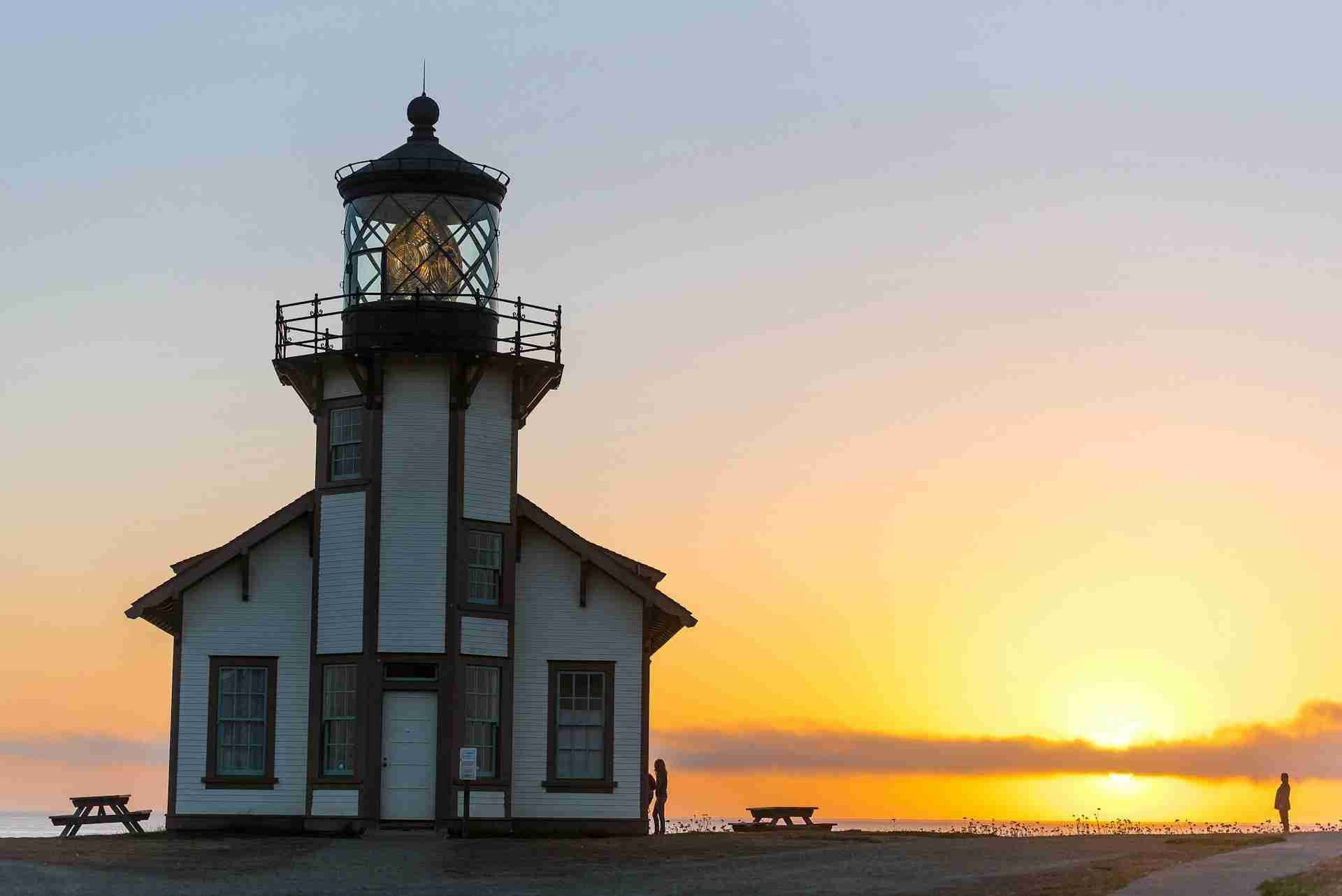
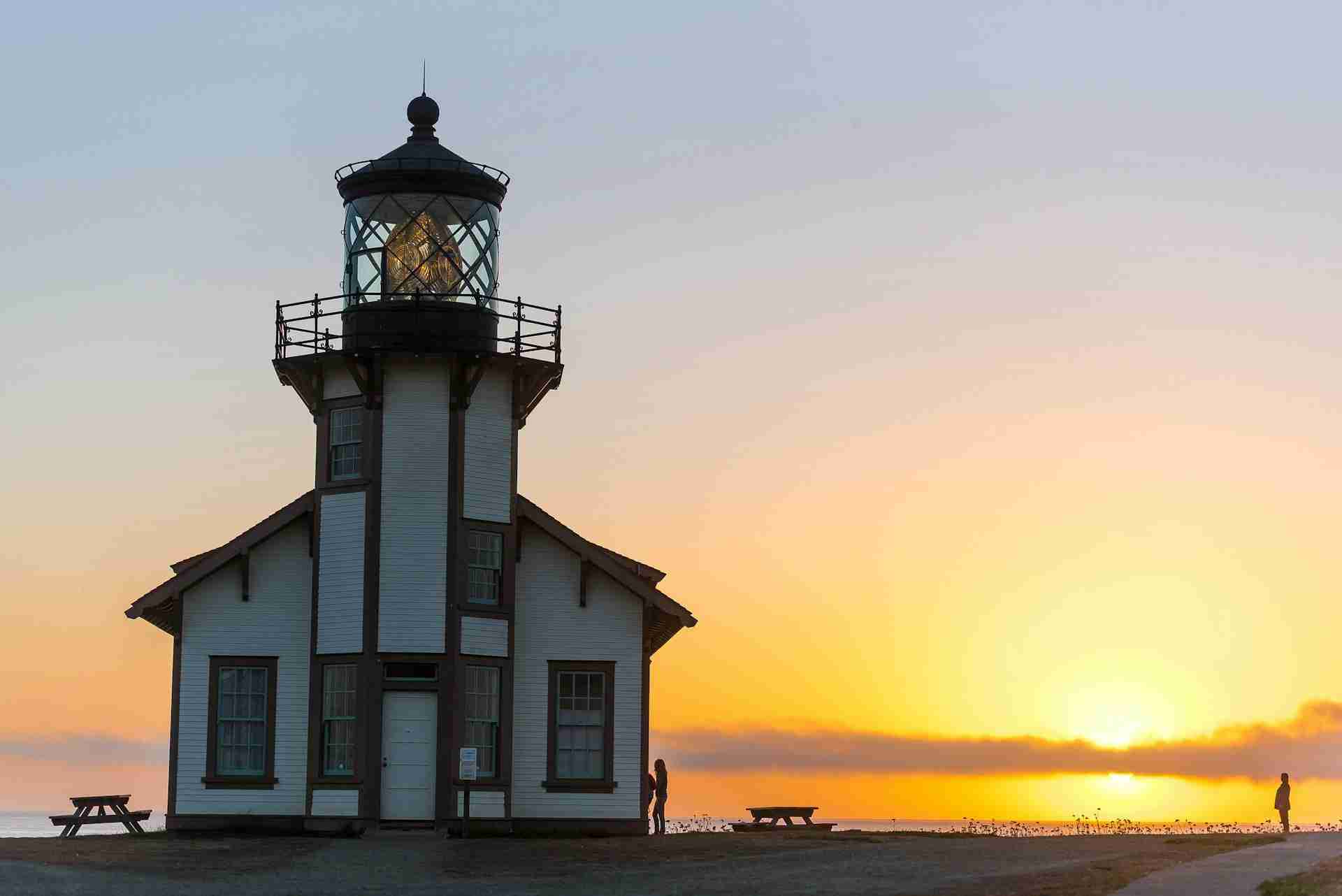
Set along the rugged cliffs of Northern California's Mendocino Coast, Point Cabrillo Lighthouse stands not only as a beacon to passing ships but also as a magnetic subject for photographers. Built in 1909 and still in operation today, the lighthouse sits on a grassy headland above the crashing Pacific, surrounded by windswept cypress, wildflowers, and exposed rock formations. Its squat, red-roofed structure contrasts with the vast seascape behind it, making it an ideal focal point for coastal compositions. The site offers multiple perspectives, from cliffside drama to quiet inland scenes, and rewards photographers who can adapt to changing fog, wind, and light. Whether you're working with long exposures, golden hour landscapes, or more intimate architectural studies, Point Cabrillo provides rich material in a compact and easily accessible setting.
Best Photography Opportunities
• Cliffside Wide Angles with Ocean Backdrop
The most striking compositions of Point Cabrillo come from the bluffs to the north and south, where the lighthouse can be framed against the endless Pacific. Shooting from these angles with a wide-angle lens allows you to include the grassy foreground, the lighthouse itself, and the layered blues of ocean and sky. During golden hour, the low sunlight rakes across the terrain, emphasizing textures in the grass and highlighting the red roof of the lighthouse. The key here is balance—composing so that the lighthouse doesn't dominate the frame, but serves as a visual anchor in a broader seascape. On days with low fog rolling in from the water, the scene takes on a diffused, moody look that softens contrasts and adds atmosphere without relying on dramatic skies.
• Long Exposures of Waves and Rocky Coastline
The coastline near Point Cabrillo features jagged rocks and wave-swept inlets that are well suited to long exposure work. By using a neutral density filter and a stable tripod, you can stretch shutter speeds and create soft, milky water around the dark stone outcrops. These types of images work best during overcast days or after the sun has dropped below the horizon, when contrast is lower and tonal transitions are more subtle. Compositions that include both water movement and the silhouette of the lighthouse benefit from this technique, especially when framed from lower elevation paths closer to the cliffs. The dynamic interplay of structure, sea, and sky gives these images lasting visual interest.
• Architectural Details of the Lighthouse and Outbuildings
Up close, Point Cabrillo Lighthouse reveals a range of textures and details that suit tighter compositions. Wooden siding, aged paint, and maritime fixtures around the lantern room and support buildings offer strong subjects for storytelling images. With the right lens—something in the 35mm to 85mm range—you can isolate weathered surfaces or frame reflections in the lighthouse windows. Early morning light works particularly well here, as it grazes across the eastern-facing walls and brings out the warmth in the structure's colors. These tighter shots are useful for balancing out a broader photo set, providing context and detail to complement the sweeping landscape images.
• Sunset from the Southern Trail
A dirt path running along the southern cliffs of the preserve offers one of the best vantages for capturing the sun dropping into the Pacific behind the lighthouse. This area remains fairly open, making it easier to set up a tripod and move around for alternate compositions without losing your foreground. As the sun lowers, the lighthouse begins to cast a long shadow across the grass, which can be used to lead the eye through the frame. Wide compositions benefit from including some of the coastal vegetation in the foreground, while tighter crops can isolate the glowing lantern room as it begins to shine. The key to this shot is staying until after sunset, when pastel tones settle over the scene and the beacon becomes visibly active.
• Foggy Mornings and Low Contrast Drama
One of the defining weather features of the Mendocino Coast is the frequent presence of morning fog, particularly during the summer months. While this limits direct sunlight, it opens the door to an entirely different type of image—soft, muted scenes with quiet mood. On these days, the lighthouse can appear as a lonely sentinel, half-obscured by mist, which creates opportunities for minimalist compositions. Use a lens that handles contrast well, and meter carefully to retain detail in both the whites of the building and the surrounding sky. Fog simplifies the scene, removing distractions and focusing attention on form and structure.
Best Time to Visit
Photographers will find that Point Cabrillo delivers different kinds of images depending on the time of year and time of day. Spring, from March through May, is an excellent season to visit. The headlands bloom with wildflowers, and the light remains soft and golden for longer periods, especially during early morning and late afternoon. Fog is less consistent in spring but often appears in the early hours before clearing mid-morning. Summer brings heavier and more persistent fog along with dry, golden grasses that can work well as foreground texture, though clear sunsets are less frequent.
Autumn tends to be the clearest season, especially in September and October, when coastal skies are often cloudless and the air feels cleaner. This is a great time for high-contrast work and strong sunset silhouettes. Winter, while less predictable, brings dynamic skies, heavier surf, and dramatic weather—ideal for long exposures and moodier compositions. For golden hour, the lighthouse catches beautiful sidelight during late afternoon into sunset, while sunrise is better suited for architectural close-ups and shots facing inland, where the low sun illuminates the back of the structure. For fog, arrive early in the morning, particularly during June and July, and wait patiently for conditions to shift.
How to Get There
Point Cabrillo Lighthouse is located just north of Mendocino, California, within the Point Cabrillo Light Station State Historic Park. From Highway 1, turn west onto Point Cabrillo Drive, about midway between the towns of Mendocino and Fort Bragg. A small signed turnoff leads to the park entrance, where there is a parking area for visitors. From the parking lot, it's a roughly half-mile walk along a paved path to the lighthouse. The walk is flat and easy, with side trails that lead to bluff overlooks and other vantage points. There are no access fees to visit the park, and tripods are allowed throughout the area.
The grounds around the lighthouse include several restored buildings, grassy trails, and open viewpoints that are ideal for setting up shots in multiple directions. Photographers arriving for sunrise or sunset should plan to arrive early and bring a flashlight or headlamp, as the trail is not lit. Winds can pick up sharply near the edge of the cliffs, so a stable tripod and weighted bag are helpful for long exposures. Drone use is restricted within the park boundaries, and any aerial photography must comply with both park and FAA regulations.
Recommended Photography Gear
The range of photographic conditions at Point Cabrillo makes it worth bringing a kit that can handle changing light, ocean spray, and rapid shifts in weather. A full-frame camera or high-quality APS-C body paired with weather sealing is ideal, particularly when fog or wind is present. A wide-angle lens, such as a 16–35mm, will allow you to capture the expansive coastline and sky, while a mid-range zoom like a 24–70mm offers the flexibility to move between environmental portraits of the lighthouse and tighter compositions of the surrounding cliffs and vegetation.
For detail work, a fast prime lens in the 50mm or 85mm range is useful, especially in soft morning light when shadows and textures are more subtle. A circular polarizer can reduce glare off wet rock surfaces and help deepen the sky on clear days. For long exposures, bring a strong ND filter and a heavy-duty tripod to anchor your setup in coastal winds. Lens cloths and a rain cover will help protect gear from mist and salt spray. If you plan to shoot past sunset, don't forget extra batteries and a headlamp for safe navigation back to the parking area.
Nearby Photography Locations
Just a short drive north, Glass Beach offers tide pools, colorful sea glass fragments, and dramatic coastal rock formations. This location is especially good at low tide, when more of the shoreline is accessible, and overcast conditions help reveal the texture and color of the sea glass without harsh highlights. The broken coastline makes for strong foregrounds and interesting leading lines into the Pacific.
Located just south of Point Cabrillo, this park features dramatic sea cliffs, natural arches, and panoramic views of the open ocean. Photographers can shoot the sunrise hitting the cliffs from the east or capture golden hour light on the town of Mendocino itself, which rests on a bluff just beyond. The area is large and varied enough to merit multiple visits throughout the day.
This striking arched bridge spans a narrow cove surrounded by cliffs and forest. A trail beneath the bridge leads to a secluded beach, where long exposures of wave action and bridge reflections are particularly effective. Above the cove, several viewpoints allow for strong graphic compositions of the bridge's curves framed by forest and sea.
Famous for its marine terraces and ecological diversity, Jug Handle offers forest-meets-coast compositions along its Bluff Trail. The trail offers elevated views of crashing waves and rocky points below, and is a great place for shooting during late afternoon when the sun begins to warm the cliffs and grasslands. It's also far less crowded than other locations nearby.
Where the Big River meets the Pacific just south of Mendocino, this area provides a calm waterway for reflections and wildlife photography. Fog often lingers along the estuary in the early morning, creating opportunities for quiet, still compositions with layered mist and mirrored tree lines. It's also a reliable spot for capturing local birdlife in more controlled light.
The appeal of Point Cabrillo Lighthouse lies not in extreme isolation or towering cliffs but in its ability to anchor a constantly changing coastal environment. With every shift in weather or light, the balance between land, sea, and structure evolves into something new. It's a location that rewards patience and observation, where the subtleties of California's north coast meet the visual discipline of thoughtful landscape work.
Comments
Loading comments…