
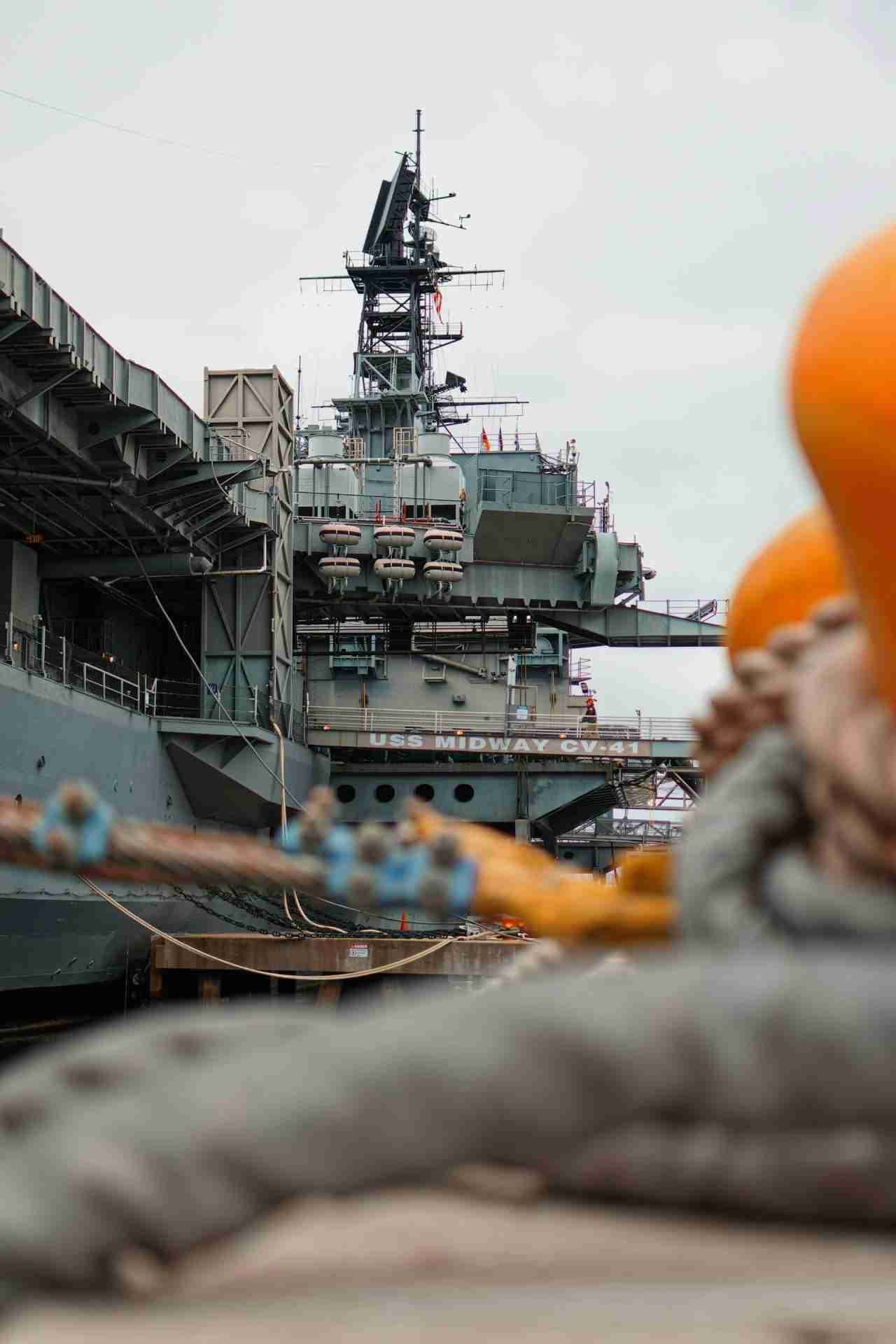
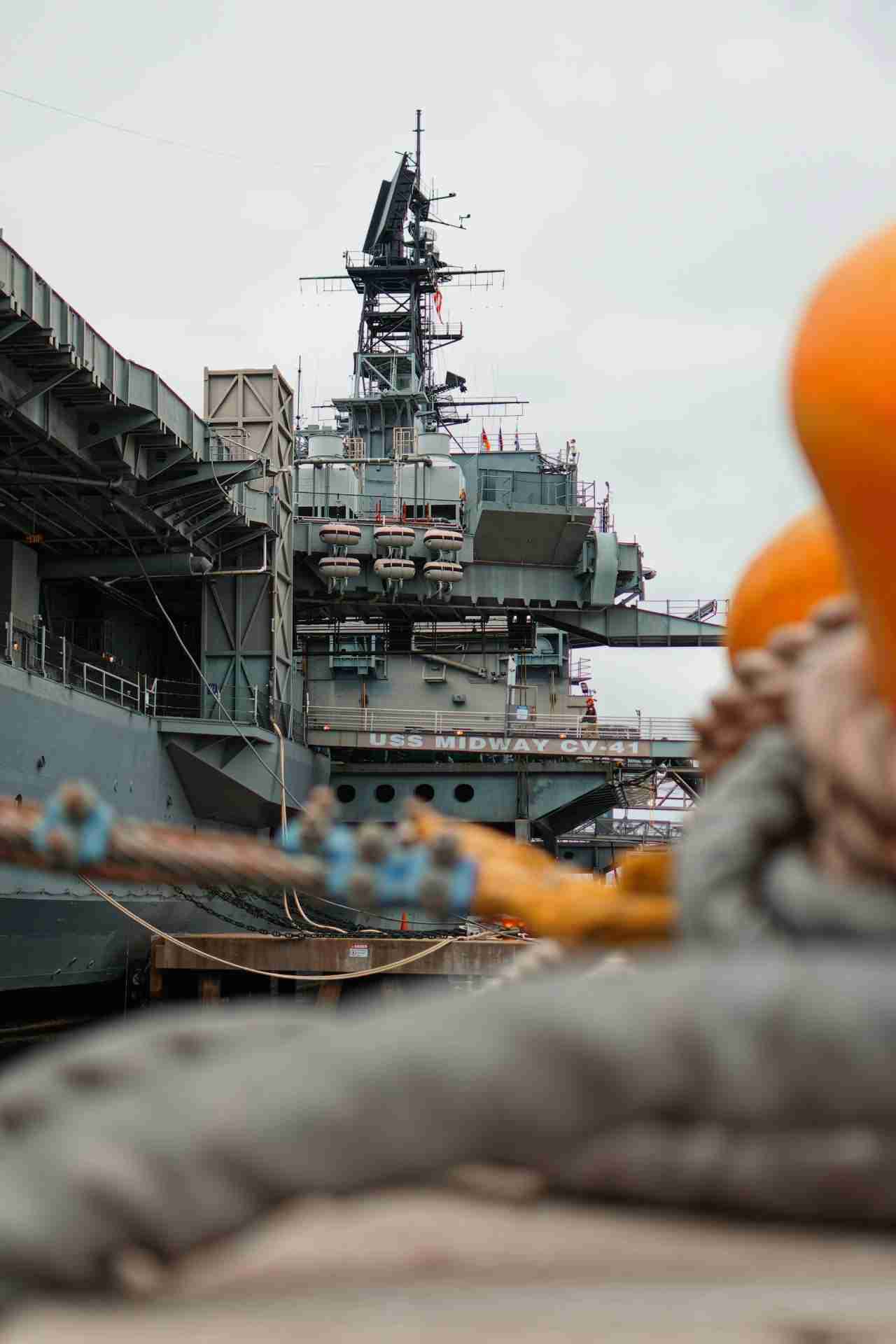
The USS Midway Museum, moored permanently along San Diego's Embarcadero, offers photographers a chance to explore one of the most photogenic naval vessels in the United States. This decommissioned aircraft carrier sits just off the waterfront, its massive hull reflecting in the bay and its upper decks towering over the surrounding marina. The ship itself presents a study in form, scale, and industrial design, but what makes it especially rewarding to photograph is how it interacts with light, weather, and the city around it. Morning mist, golden-hour reflections, and evening illumination all offer distinct looks. Whether you're after gritty textures, clean silhouettes, or wide waterfront compositions, the USS Midway is a strong subject for photographers seeking bold lines and maritime history in a dynamic urban setting.
Best Photography Opportunities
• North Harbor Drive Waterfront Views
From the public walkway along North Harbor Drive, you can shoot the full length of the carrier as it stretches toward the water. This angle emphasizes the Midway's size and clean lines while incorporating the reflective surface of the bay. Sunrise offers soft light on the port side of the ship, while late afternoon begins to light up the surrounding buildings and sky. A 24 to 70 millimeter lens allows you to balance the ship with foreground elements like railing or water texture, while a wider lens lets you exaggerate perspective from the edge of the promenade. Overcast days help reduce harsh contrast and let you focus on surface detail across the hull and deck.
• Broadside Compositions from Tuna Harbor Park
To photograph the full width of the ship, walk south to Tuna Harbor Park where the carrier's length is on display against the city skyline. This position allows you to frame the vessel broadside, especially effective in the early morning when the light is clean and the water still. Use a wide-angle lens from the park's edge to include docked boats or reflections, or switch to a telephoto to compress the ship's form against downtown structures. This angle works well in every season but is strongest on days with clear skies or scattered cloud patterns that reflect in the water. Including pedestrians or nearby boats in the foreground can add a sense of scale and human context to your composition.
• Close-Up Deck and Aircraft Details
If you enter the museum and walk the flight deck, there are plenty of opportunities for close-up shots of historical aircraft, textures, and mechanical components. The light changes rapidly throughout the day across the deck, especially as shadows fall from the control tower and planes. Side lighting in late afternoon brings out surface details in the metal and rubber, while overcast conditions offer more even exposure for color and form. A short telephoto or standard prime lens is ideal for isolating textures like rivets, chipped paint, and signage. Tripods are not permitted on the deck, so plan to shoot handheld or with image stabilization enabled.
• Twilight Long Exposures from the Pier or Marina
As the sun sets and the city begins to glow, the USS Midway is lit with subtle illumination that outlines its shape against the harbor. This is the perfect time for long exposures, especially from the marina just south of the ship where water motion adds softness to the foreground. A tripod and neutral density filter allow you to shoot longer than standard blue-hour windows, pulling more color from the sky and softening ripples in the bay. Reflections from the dock and nearby lights create layering effects that give the ship a sense of depth and atmosphere. Use a wide frame to include city lights or zoom in to focus on the tower and upper deck features.
• Overhead Angles from Nearby Rooftops or Parking Garages
A few nearby hotels and public parking garages offer elevated views where the full scale of the carrier can be seen from above. These views are best photographed in the morning when the deck is fully lit and the background remains soft. An overhead perspective gives the ship context within the city grid, showing how its size compares to surrounding structures. A telephoto lens helps manage compression and lets you work with tighter crops that highlight the deck layout and aircraft placement. Make sure to confirm access policies before shooting from rooftops or upper-level lots.
Best Time to Visit
The USS Midway can be photographed year-round, but lighting conditions shift depending on the season and time of day. Morning light is best for shooting the ship's port side from North Harbor Drive and nearby park areas, with softer contrast and cleaner shadows across the hull. Winter mornings provide clearer skies and cooler tones, while spring and fall introduce clouds and shifting atmospheres that add visual depth.
Sunset is ideal for images that include reflections, skyline color, and ambient lighting on the ship itself. From the water's edge, you can capture the warm glow on the Midway's upper structures just before artificial lighting begins to take over. Blue hour lasts longer in winter, giving you more flexibility with long exposures and movement-based frames. Overcast conditions are useful for shooting surface detail, color studies, and tightly composed close-ups with less contrast.
The museum is busiest midday and on weekends, so early mornings or weekday evenings offer better chances for working uninterrupted. If photographing from within the museum, plan to enter early and work through the deck before crowds arrive.
How to Get There
The USS Midway Museum is located at 910 North Harbor Drive, along San Diego's Embarcadero waterfront. It is easily accessible from Interstate 5 by exiting at Front Street and following signs toward the harbor. Paid parking lots are located next to the museum, and street parking is available along North Harbor Drive. Public transit options, including bus and trolley lines, stop within walking distance of the site.
The waterfront promenade offers full public access to the surrounding area with no fees required for photographing the ship from outside. A ticket is required to enter the museum and access the flight deck. Tripods are allowed outside on public walkways, but not inside the museum. Drone use is prohibited in the immediate area due to controlled airspace and proximity to city buildings and naval installations. Always check museum rules if planning to bring larger gear or work with more complex setups inside the deck area.
Recommended Photography Gear
A wide-angle lens between 16 and 35 millimeters is ideal for environmental compositions that include the full ship or surrounding harbor. A mid-range zoom in the 24 to 70 millimeter range helps frame tighter views of the ship with skyline elements or foreground details. For close-up work on deck or capturing features from across the water, a 70 to 200 millimeter lens gives the reach and isolation needed to highlight texture and shape.
A sturdy tripod is essential for low-light and blue hour shooting, particularly from the marina or promenade where long exposures enhance the reflective surfaces. A polarizing filter can help manage water glare and sky contrast but should be used carefully to avoid uneven tones in wide-angle frames. Bring a lens cloth to manage sea spray or fog buildup near the waterline. If you plan to shoot handheld on deck, opt for fast lenses or increase ISO to maintain sharpness in variable light.
Keep your setup lightweight and portable if working in or around crowds. A neutral backpack or side sling makes it easier to move between vantage points without drawing attention. For those working outside into the evening, extra batteries and a flashlight will help you manage your gear and settings as light fades.
Nearby Photography Locations
A few minutes south of the museum, this waterfront area offers clean skyline views with the USS Midway entering the frame from the side. It is an excellent location for golden hour and blue hour frames with reflections and sky color.
Directly across from the museum, this pier gives you open views of the front and side of the ship. It is a great place to experiment with low angles, long exposures, or skyline framing.
This park lies just south of the carrier and provides one of the best views of the full side of the ship. Morning light here is perfect for capturing the structure against the soft sky and city beyond.
Located slightly farther away, this park allows for wider compositions with the bridge, ships, and skyline layered together. Use this spot for sunset shots that combine color and structure in broader scenes.
Following the harbor north or south from the Midway, you'll find endless angles, light shifts, and reflections that include both the ship and surrounding architecture. It is a productive area for urban landscape photography.
The USS Midway Museum remains one of the most reliable and rewarding urban subjects in San Diego. Its strong lines, changing light, and layered surroundings create endless opportunities for photographers who enjoy structure, texture, and coastal city energy. Whether working close with details or wide across the harbor, the ship brings balance and power to every frame.
Comments
Loading comments…