
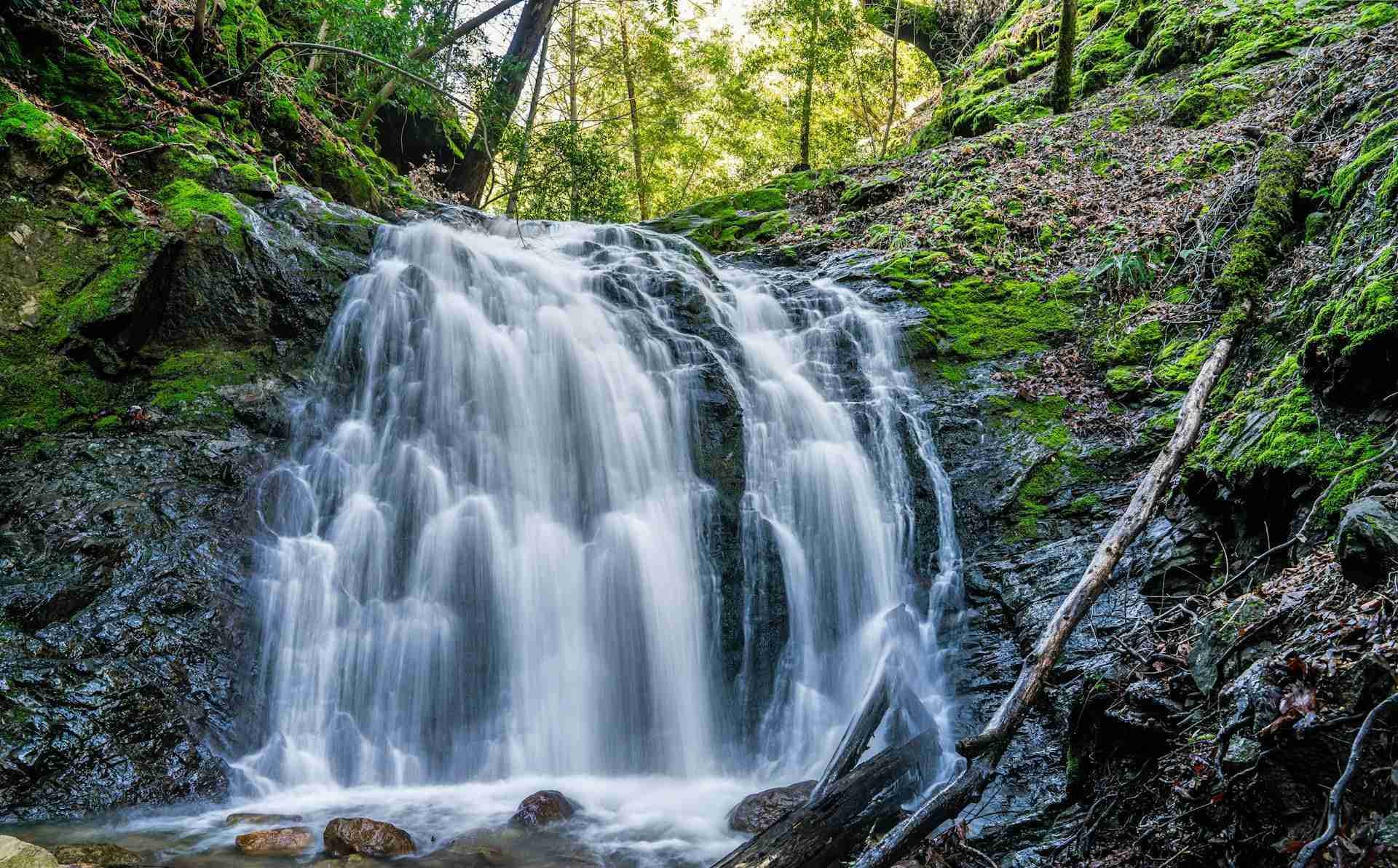
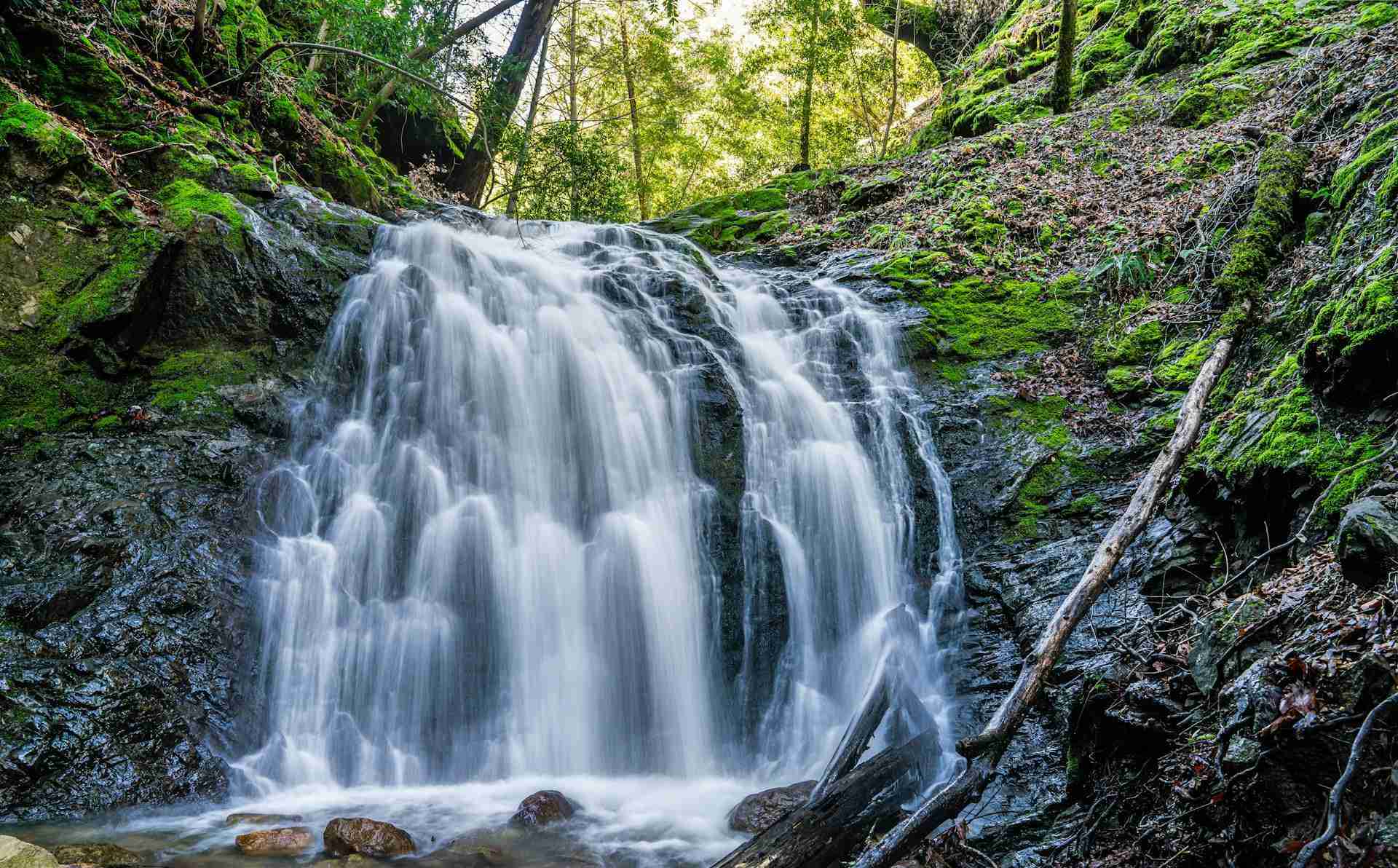
Hidden in the eastern foothills of the Santa Cruz Mountains, Uvas Canyon County Park is one of the Bay Area's most rewarding places for photographers who love waterfalls. At its heart is Uvas Falls, a tiered cascade that flows year-round but comes alive in winter and spring when the rains swell the creek. The surrounding forest of sycamore, bay laurel, and madrone shelters the canyon in cool shade, with moss-covered rocks and ferns completing the woodland scene. What sets Uvas Canyon apart from many other waterfall spots is that it offers not just one cascade but several, all within a compact network of trails. For photographers, this means variety within a short distance: you can move from wide shots of Uvas Falls to intimate studies of mossy stones or leaf-filled pools without ever straying far from the trailhead. It is a location that balances accessibility with depth, ideal for both beginners and experienced landscape photographers who want to build a full day's work from a relatively small area.
Best Photography Opportunities
• Uvas Falls
The park's central waterfall is a tiered drop that rewards both wide and tight compositions. A wide-angle lens allows you to capture the full cascade framed by mossy rock walls, while a telephoto can pick out individual tiers or the flow of water into still pools. Long exposures with a tripod transform the waterfall into ribbons of light, while faster shutter speeds preserve the texture of splashes against stone. Light filtering through the canopy keeps the scene soft and balanced, making it possible to work even in the middle of the day. At peak flow in late winter or spring, Uvas Falls delivers some of the most dramatic compositions in the park.
• Creek Beds and Pools
The creek that flows through the canyon provides as many photographic opportunities as the falls themselves. Smaller cascades ripple over rounded stones, creating perfect conditions for long exposures. Pools often collect drifting leaves in autumn, and with the right shutter speed, they form swirling patterns of colour. A polariser is particularly valuable here, reducing glare on wet rocks and enriching the tones of both water and foliage. Working along the creek allows you to capture quiet, intimate scenes that complement the grandeur of the larger falls.
• Forest Interiors and Textures
Beyond the water, the canyon forest is filled with details worth photographing. Towering sycamores lean over the trail, while moss and ferns cling to rocks and tree trunks. Macro lenses reveal textures in bark and lichen, and after rain, every surface glistens with droplets that catch the light. The variety of vegetation makes it easy to frame smaller compositions that reflect the mood of the forest itself, especially in soft light. These detail shots pair well with broader waterfall images, helping to tell the story of the canyon as a whole.
• Other Waterfalls on the Loop
The Waterfall Loop Trail connects several cascades beyond Uvas Falls, including Basin Falls, Black Rock Falls, and Triple Falls. Each has its own character: Basin Falls with its graceful flow into a shallow pool, Black Rock Falls tumbling dramatically against dark stone, and Triple Falls dropping in multiple stages. This variety gives you the chance to explore different compositions without leaving the loop trail. Photographing multiple waterfalls in one session adds breadth to your portfolio and makes the park especially rewarding to revisit in different seasons.
• Seasonal Shifts in the Canyon
Each season changes the look and feel of Uvas Canyon. Winter brings strong water flow and wet, saturated colours throughout the forest. Spring adds wildflowers and bright new growth to the scene. Summer may reduce the volume of water, but it enhances opportunities for capturing textures in stone and light filtering through leaves. Autumn, with golden tones from the maples, frames the waterfalls in warm colour and fills pools with drifting leaves. These shifts mean that Uvas Canyon never looks the same twice, and every visit brings new photographic material.
• Rain and Soft Light
Overcast or rainy conditions are among the most rewarding times to photograph in Uvas Canyon. Rain deepens the greens of moss and ferns, while mist softens the edges of the ravine. Diffused light prevents glare and blown highlights on water, making exposures easier to balance. Though it means working with rain gear, the results are photographs with richer colour and greater mood than you will find on bright days.
Best Time to Visit
The most photogenic season at Uvas Canyon is winter through spring, when rainfall feeds the creeks and waterfalls. Peak flow generally occurs between January and April, making this the best time for powerful cascades. Spring also brings the forest to life with lush greenery and wildflowers. Summer reduces water levels, but the forest canopy provides shelter from harsh light and offers opportunities to focus on textures and forest detail. Autumn is quieter and more subdued, with golden leaves adding warmth to compositions and gentle flows creating subtle subjects.
Mornings are often the most rewarding time of day, with soft light filtering through the canopy and fewer visitors on the trails. Midday can be managed successfully because the forest canopy diffuses direct sun, though glare on water is more likely. Overcast days are ideal for photographing waterfalls, as they provide even light and saturated colours. Immediately after rain, the canyon is at its most vibrant, with glistening foliage and intensified tones.
How to Get There
Uvas Canyon County Park is located near Morgan Hill, California, about an hour south of San Jose. From U.S. Highway 101, you can reach the park by taking Bailey Avenue or Cochrane Road to Uvas Road, and then following Croy Road to its end. The road winds through rural hills before reaching the canyon. Parking is available at the trailhead, but reservations are required for day use, which helps limit crowding.
The Waterfall Loop Trail begins directly from the parking lot and leads to Uvas Falls in less than half a mile. The trail is well maintained and relatively gentle, though it can be muddy or slippery after rain. The full loop, which includes several additional waterfalls, is just over a mile in length, making it a short but very productive route for photographers. Facilities at the trailhead include restrooms and picnic tables, but no food or water is sold within the park. Cell service is limited in the canyon, so plan accordingly before arrival.
Recommended Photography Gear
For waterfall photography, a tripod is essential to capture long exposures. A wide-angle lens will allow you to frame full cascades along with their mossy surroundings, while a mid-range zoom such as a 24 to 70 millimetre lens is useful for tighter compositions and balanced shots that combine forest and water. A telephoto lens is helpful for isolating individual tiers of Uvas Falls or for capturing details in smaller cascades. A circular polariser is one of the most important tools here, cutting glare on wet rocks and enhancing colours. Neutral density filters allow you to extend shutter speeds even in brighter conditions.
A macro lens or close-focusing zoom expands your opportunities with details such as ferns, moss, and water droplets. Waterproof covers for camera gear are strongly advised in rainy months, and microfiber cloths should always be on hand to wipe spray from lenses. Sturdy hiking shoes with good grip are necessary, as trails near waterfalls can be slick. Since the trail is short, carrying a full kit is feasible, but a well-organised backpack will make moving between cascades easier.
Nearby Photography Locations
Northwest in the Santa Cruz Mountains, Castle Rock offers dramatic sandstone outcrops, mossy forest, and foggy ridge views. Its combination of wide vistas and intimate forest scenes makes it a strong complement to Uvas Canyon.
Though recovering from fire, Big Basin remains a destination for towering redwoods and forest detail. Its mix of old-growth stumps, regrowth, and waterfalls offers photographers a blend of resilience and beauty.
East of Morgan Hill, this large park is known for its rolling hills, oak woodlands, and seasonal wildflowers. Its expansive landscapes provide a counterpoint to the intimate canyon scenes at Uvas.
Closer to San Jose, Almaden Quicksilver blends natural scenery with mining history. Ruins, rusting equipment, and oak-dotted hillsides create opportunities for both landscape and historical photography.
This smaller park south of San Jose offers wide grassy hills with excellent sunset views. In spring, wildflower blooms add colour, while in summer the golden hills create striking contrasts against the sky.
Uvas Canyon's waterfall trails reward photographers who enjoy both the drama of flowing water and the subtleties of forest detail. The short, accessible loop allows you to capture multiple cascades in a single outing, while seasonal changes ensure the park always offers something new. Whether you visit during winter rains, spring bloom, or the quieter months of summer and autumn, Uvas Canyon delivers images that capture the quiet rhythm of water and stone in California's hidden canyons.
Comments
Loading comments…