
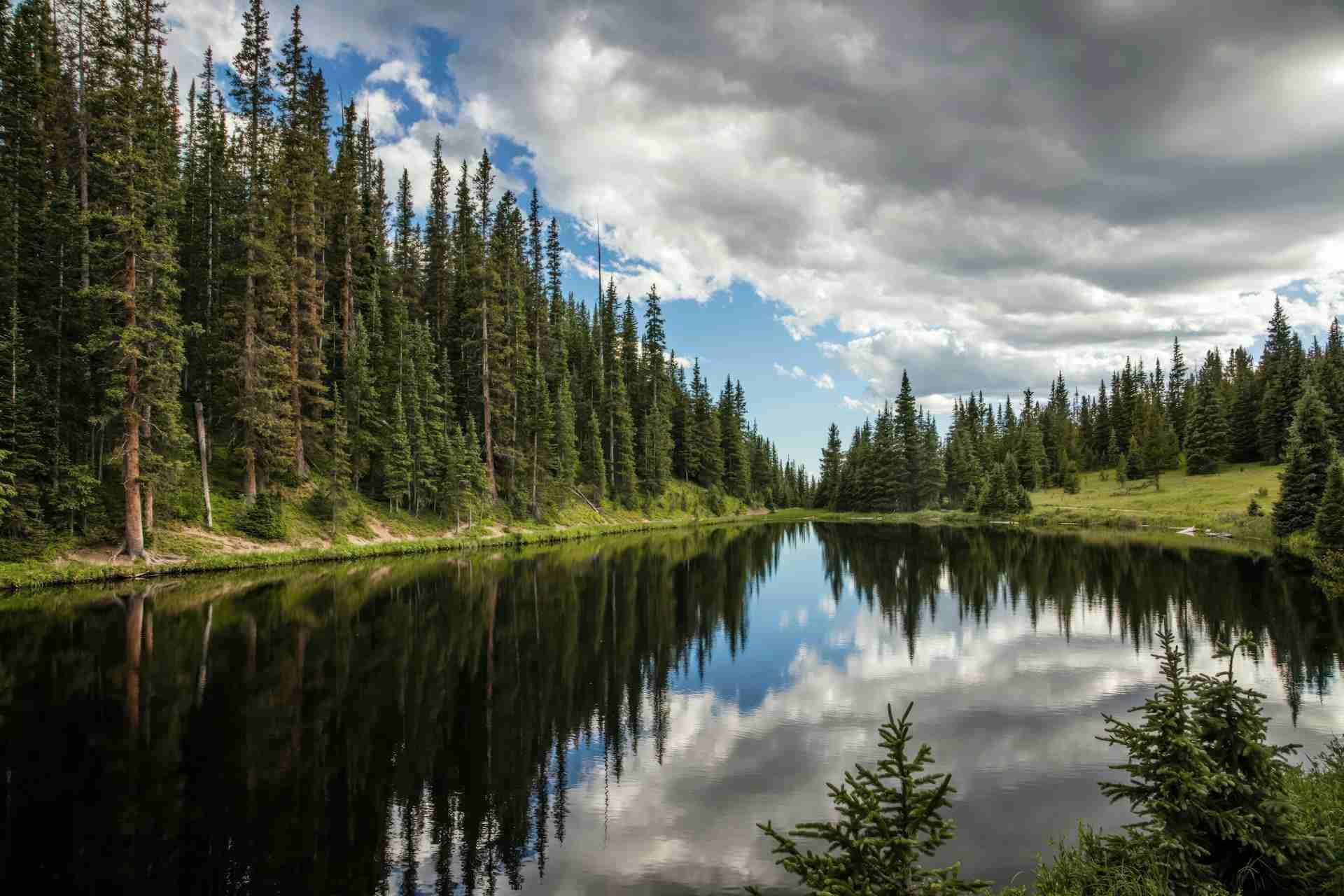
Tucked into a quiet pocket on the western side of Rocky Mountain National Park, Lake Irene is an easy-to-miss alpine lake that delivers more than its size suggests. At just over 10,600 feet in elevation, this small body of water is framed by thick pine forest, low meadows, and distant mountain ridgelines that soften into blue layers with the right light. What makes Lake Irene especially rewarding for photographers is the combination of reflection-friendly water, walkable shoreline, and filtered alpine light that shifts by the minute. It's a rare location in the park that requires minimal hiking while still offering composition options across seasons and lighting conditions. Whether you're working with long exposures at dawn, summer greenery, or early snowfall in the fall, the lake's calm surface and quiet surroundings give photographers space to slow down and refine each shot.
Best Photography Opportunities
• Morning Reflections with Mountain Backdrop
The best-known view at Lake Irene comes during early morning when the water is still and the light is low and clean. Looking across the lake, you can frame forested slopes and distant ridges reflecting almost perfectly in the water. A wide-angle lens allows you to include foreground elements like grasses or fallen logs near the shoreline. The key to this shot is timing—arrive well before the sun breaks over the treetops to catch the most subtle color and clarity in the reflection. On clear days, the blue of the sky and the green of the trees create clean color separation. On foggy mornings, the mood softens into pale tones and texture-driven compositions.
• Low-Angle Compositions along the Water's Edge
Because the lake is easily accessible, it's possible to work right from the shoreline with a tripod set low to the ground. This angle works well for highlighting still water in the foreground while allowing the eye to move back toward the forest wall or distant peaks. Reflected light from clouds often adds subtle color variation to the surface of the lake. This is also a good approach when the water is not perfectly still, as slight motion adds a painterly quality without overwhelming the composition. Shoot with a polarizer to manage glare or remove it completely to capture reflections more clearly, depending on the day's light.
• Late Day Light across the Clearing
In the afternoon, especially from midsummer into fall, the clearing around the lake catches warm light that slips through the trees from the west. While this side-lighting does not reach all the way across the water, it adds golden edges to the grass and tree trunks, especially near the trailhead. This is a good time for tighter compositions using a midrange zoom, focusing on the contrast between warm light and the cool tones of shadowed trees. You can also frame shots from behind the trees for a layered look that feels more immersive and natural.
• Winter and Early Snowfall Scenes
In late fall or early winter, the area around Lake Irene can see snow even while other areas of the park remain dry. Snow-covered pine branches and the lake's dark water make for strong contrast, especially when overcast skies keep the tones soft and even. If the lake has started to freeze, surface textures and ice patterns can become a subject on their own. Use a longer lens to isolate these details or create compressed layers with snow, water, and forest. Be prepared to walk slowly and look for compositions that work in low contrast, as winter shooting here is more about shape and balance than color.
• Detail Work in the Forest Bordering the Lake
Just beyond the lake, small footpaths lead into stands of spruce and fir where light filters down in patches. This is a quiet area for macro work or soft telephoto scenes of bark, undergrowth, or branches holding morning frost. In the fall, the forest floor gathers golden needles and fallen leaves that glow under even minimal light. These shots work best handheld with a fast lens to maintain flexibility and adapt to whatever you find along the way. Including these smaller scenes adds variety to a photo set that would otherwise be dominated by open water.
Best Time to Visit
Lake Irene is typically accessible from late June through early October, depending on snowfall and road conditions on Trail Ridge Road. The best time for reflection shots and open-water photography is July through September when the lake is fully thawed and mornings are calm. During these months, arrive early for mirror-like surfaces and light that gradually builds along the treeline. The lake sits in a shallow basin, so it avoids strong wind on most mornings, which makes it more reliable than larger alpine lakes for clean reflections.
Fall offers a narrower but rewarding window. Early snow can arrive as soon as late September, and by mid-October, access may be closed if snowpack becomes too heavy on the road. During this shoulder season, the light is lower in the sky throughout the day, and the mix of green conifers and occasional golden underbrush makes for balanced, textured scenes. Midday light is workable because of the surrounding trees, which help diffuse direct sun. Winter access is typically not possible unless you are prepared for backcountry travel, and the lake itself is snow-covered and frozen for much of the colder season.
How to Get There
Lake Irene is located along Trail Ridge Road on the west side of Rocky Mountain National Park, roughly 25 minutes from the Grand Lake entrance. From the entrance station, follow Trail Ridge Road as it climbs into the alpine zone. The turnoff for Lake Irene is clearly marked and includes a small parking lot with direct access to a short loop trail. There is no extended hike required; the lake is less than a five-minute walk from the parking area along a well-maintained trail.
There are no additional entrance fees beyond the park admission. Parking can fill up during peak summer mornings, so it is best to arrive early, particularly if you're aiming for calm water and clean morning light. Tripods are allowed, and the site offers enough space to work comfortably without crowding. Drone use is prohibited in all areas of Rocky Mountain National Park. Wildlife is sometimes present around the lake, especially elk or small mammals near the forest edge, so keep your distance and use a longer lens if you plan to include animal subjects.
Recommended Photography Gear
A solid landscape kit will cover everything you need for Lake Irene. A full-frame or APS-C camera body with good dynamic range will handle the mix of shadow and reflection that comes with shooting around water. A wide-angle lens, such as a 16 to 35 millimeter, is ideal for capturing the full span of the lake with mountain or forest backgrounds. A midrange zoom in the 24 to 70 millimeter range is useful for working the shoreline and composing tighter landscape frames with cleaner lines and stronger subject separation.
A polarizer can help manage surface reflections or boost contrast in the sky and trees, depending on your shooting angle. For long exposures, especially in low light or when softening moving water, a sturdy tripod and a variable ND filter will give you flexibility. A lens cloth or microfiber towel is helpful for keeping glass dry during early morning shoots when condensation can build up quickly. If you're planning to explore the surrounding forest trails, consider carrying a lightweight telephoto lens or a fast prime for detail work without adding too much weight. Always bring layers and extra batteries, as temperatures at this elevation can drop quickly even during summer mornings.
Nearby Photography Locations
• Milner Pass and Poudre Lake
Just a short drive from Lake Irene, Milner Pass offers reflections across Poudre Lake and wide views of the Continental Divide. In the morning, the lake is often glassy and the surrounding peaks catch warm light early. A small stone bridge and trail markers provide scale and structure for wide compositions or more detailed shots at the water's edge.
This high-elevation turnout looks east across the Kawuneeche Valley and offers excellent conditions for long-lens landscapes, especially in early fall. The valley floor often fills with low fog, and the layers of mountain ridges stretch deep into the distance. It's an ideal spot for sunrise when soft light sweeps across the hills.
• Kawuneeche Valley Trailheads
The valley below Lake Irene includes several trailheads where open meadows, stands of aspen, and wildlife are easily accessible. In the fall, the aspen glow in warm light during both morning and evening, and elk are often visible in the clearings. These areas are especially rewarding for telephoto compositions and layered horizontal frames.
Located near Grand Lake, this short trail leads to a powerful waterfall and a fast-moving stream that flows through rock outcroppings and pine forest. Long exposures here work well, especially in early morning when contrast is lower. The trail also offers some elevation gain for views back toward the town and lake.
• Trail Ridge Road Scenic Pullouts
Driving east from Lake Irene, you'll pass numerous pullouts with views across the alpine tundra and down into distant valleys. These spots change character with the weather and time of day, offering wide views that work best with telephoto compression or stitched panoramas. They are especially dramatic in late afternoon when cloud shadows sweep across the land.
Lake Irene may not be the most dramatic or well-known lake in Rocky Mountain National Park, but its quiet setting and reliable light make it one of the best places to slow down and focus on building strong, clean compositions. It is accessible without being crowded, scenic without being overwhelming, and varied enough to reward return visits in different seasons. For photographers who value calm conditions and subtle transitions in light and texture, Lake Irene is a location that always gives you something to work with.
Comments
Loading comments…