
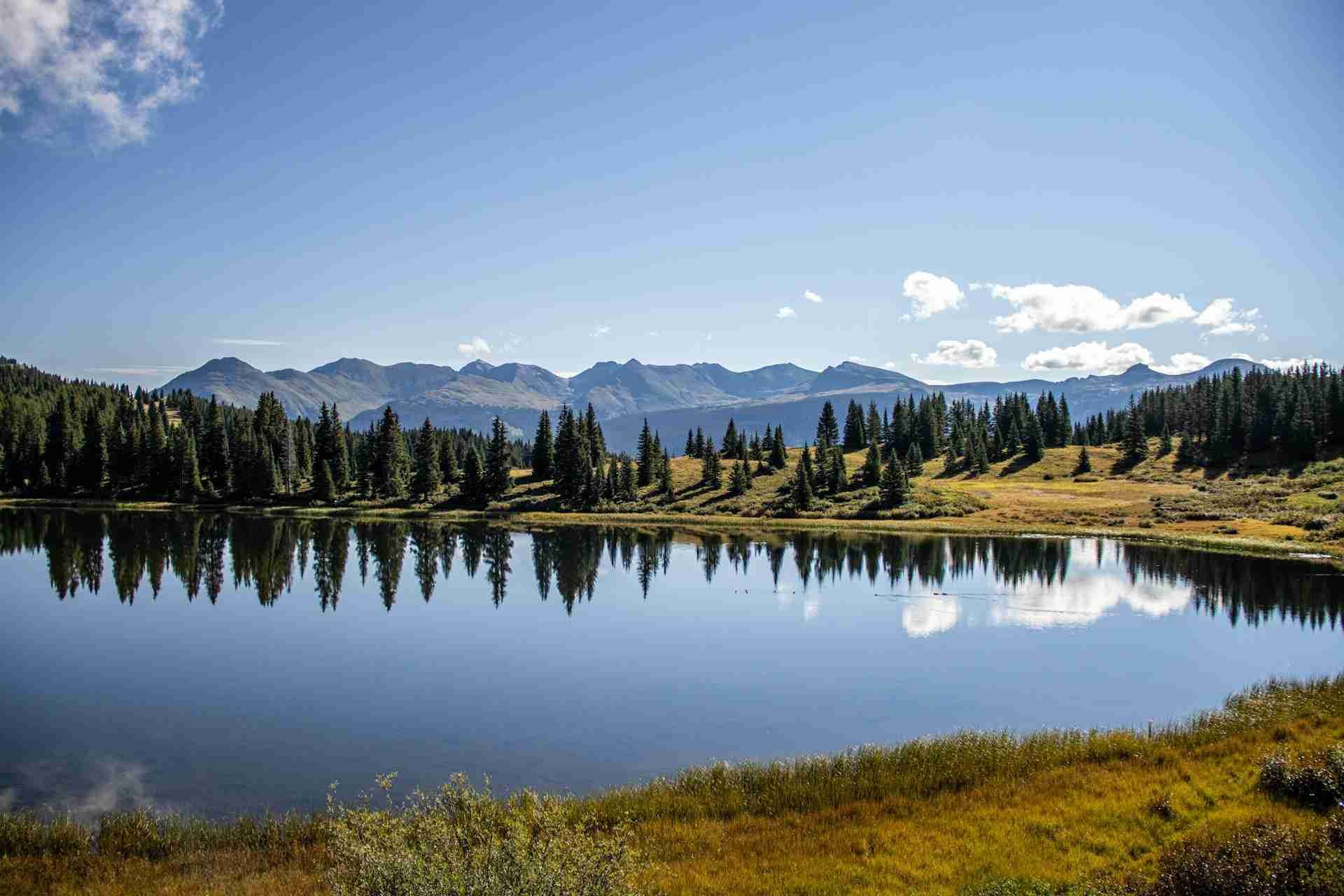
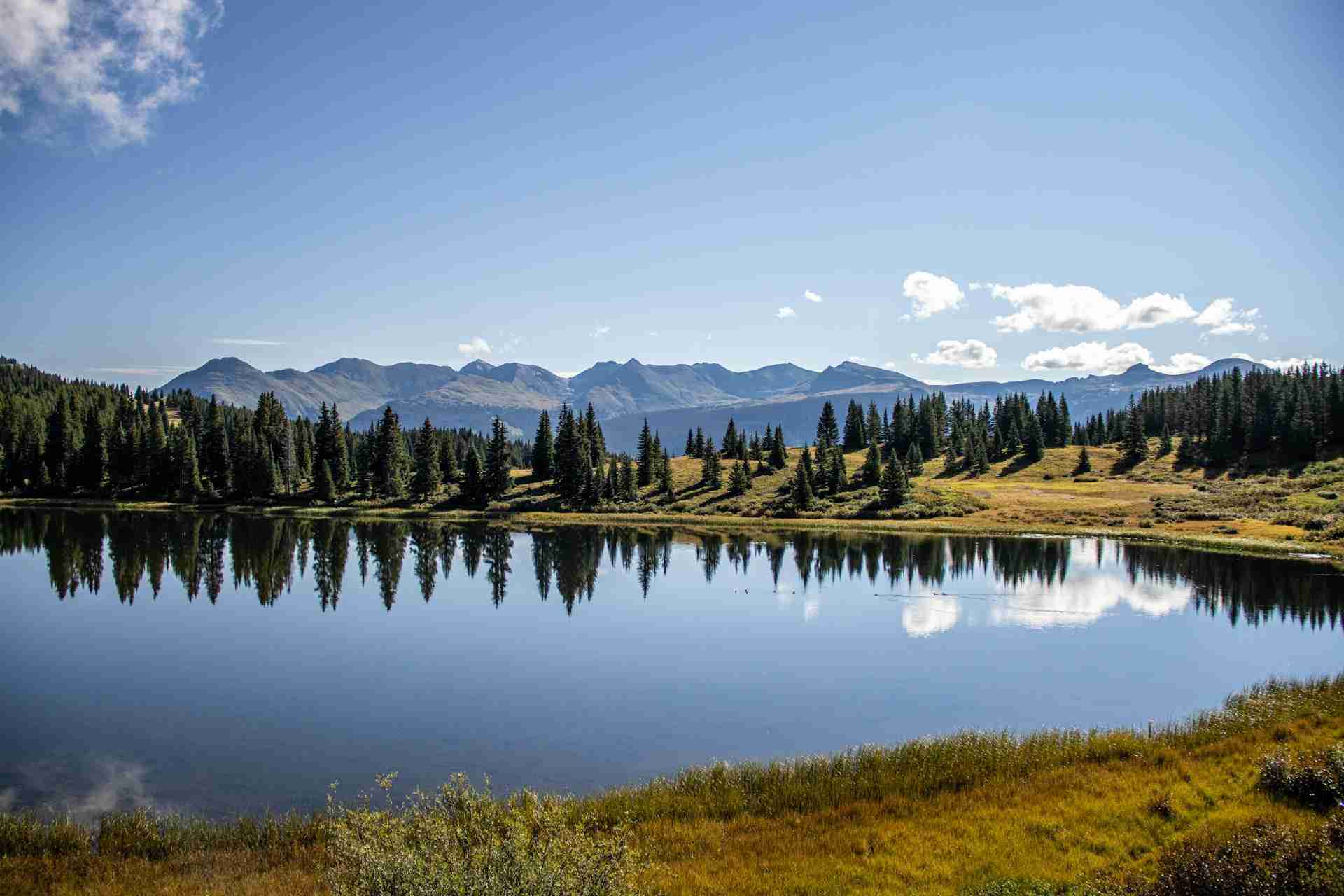
Perched at 10,500 feet in the heart of Colorado's San Juan Mountains, Molas Lake is a crystalline alpine jewel set against a backdrop of dramatic ridgelines and vast sky. Just off the Million Dollar Highway near Silverton, this small but photogenic lake is surrounded by some of the most rugged and colorful terrain in the state. With easy access, mirror-like reflections, and clear views toward the Needle Mountains and the Grenadiers, Molas Lake offers a compelling combination of convenience and compositional richness. Whether shrouded in morning mist, illuminated by alpine glow, or reflecting a star-strewn sky, Molas Lake rewards landscape photographers with classic high-country drama at every hour and in every season.
Best Photography Opportunities
• Sunrise Reflections Facing the Grenadiers
The primary composition at Molas Lake faces east toward the Grenadier Range, with golden first light catching the peaks and reflecting on the lake's often windless surface. This alignment works particularly well in summer and early fall, when the sun rises far enough south to light the granite ridgelines at an angle. A wide-angle lens allows you to include foreground grasses, rocks, or shoreline detail, especially near the southern edge of the lake. When clouds gather behind the range, layered skies mirror beautifully in the lake's calm water, creating symmetrical compositions rich in contrast and texture.
• Evening Light from the North Shore
At sunset, the view from the north shore looking southwest toward the Twilight Peaks and over the water is rich with warm light and pastel color. While the sun itself sets behind the nearby ridgelines, the side lighting casts golden hues on the surrounding trees and shoreline vegetation. This is an excellent time to photograph with a 24–70mm lens, isolating trees or boulders on the water's edge, or to shoot wider frames with a gradient of lake, forest, and sky. In fall, aspens along the lake shore catch fire in orange and yellow, and their reflection doubles the drama.
• Morning Fog and Glassy Water
On summer mornings, cold air over the warm lake often produces low fog and mist—ideal conditions for minimalist, moody compositions. Shooting with a medium telephoto lens helps isolate pockets of mist rising off the lake surface or drifting between the trees along the western shore. Using a tripod for long exposures of 2 to 5 seconds enhances the ethereal feel, especially when mist blurs the horizon and simplifies the scene into soft gradients of color and form. Look for lone trees, rocks, or kayakers appearing briefly in the fog—these subjects add human scale and narrative contrast.
• Autumn Shoreline Detail and Aspen Reflections
Late September through early October transforms Molas Lake into a painter's palette of saturated foliage. The shoreline becomes a composition of bright aspen, red willow, and golden grasses. Wide compositions benefit from low-angle light, while a telephoto lens can compress the shoreline with its colorful trees reflected on the water. Overcast days during this season are excellent for saturated, detail-rich images without harsh shadows. Photographers should explore both the main lakeside and the adjacent wetland areas near the inlet for intimate scenes and abstract color studies.
• Night Sky Over the Water
With minimal light pollution and a clear eastern view, Molas Lake is ideal for astrophotography. From May through September, the Milky Way rises over the Grenadiers and can be reflected in the lake when conditions are calm. Composing with a wide, fast lens and including foreground elements like rocks or silhouetted trees enhances depth. Moonless nights produce the best starlight visibility, but partial moonlight can be used creatively to illuminate foregrounds without overpowering the stars. Bring warm clothing—temperatures drop rapidly after dark, even in summer.
Best Time to Visit
Molas Lake is accessible and photogenic from late spring through late autumn, with each season offering distinct advantages. June and early July provide snowcapped peaks, fresh alpine grasses, and early wildflowers. Morning fog is most frequent during this period, and the lake remains full from spring runoff, making reflections especially expansive. Clear skies dominate in early summer, allowing sunrise and night photographers long, predictable windows of still air and clean light.
August and September offer more dynamic weather, with monsoon clouds building in the afternoons. This results in dramatic lighting conditions, fast-moving storms, and vivid sunsets—ideal for photographers who embrace changing skies. Late September is prime for fall color, as aspens along the lake and across the surrounding hillsides turn vibrant yellow and orange. Cooler nights in this season lead to better reflections and higher air clarity.
By mid-October, the lake area begins to transition toward winter. The surrounding peaks may be dusted with snow, and overnight frost creates unique ground textures. While Molas Lake is open into the fall, snowstorms may arrive unexpectedly—check weather conditions and road status before traveling.
Winter access is limited due to heavy snowfall and the seasonal closure of some parts of the Million Dollar Highway. However, for photographers with backcountry gear or snowshoes, the area transforms into a high-alpine snowscape of open sky and pure white ground—ideal for black-and-white or minimalist photography.
How to Get There
Molas Lake is located just off U.S. Highway 550 between Silverton and Durango, Colorado. From Silverton, drive approximately 6 miles south on the Million Dollar Highway to the well-marked Molas Lake Park entrance. The lake is managed by the Town of Silverton, and a small day-use fee may apply for vehicle access during the operating season (generally June through early October).
From the entrance, a paved road leads to parking areas along the lake shore, with numerous pullouts for short walks and compositions. Photographers interested in more remote or elevated views can hike up nearby Molas Pass or along the Colorado Trail, which begins just across the highway. The terrain is open and forgiving, but elevation is high, and even short exertions can be strenuous. Bring plenty of water, and be prepared for rapid weather shifts, especially in late summer and fall.
Facilities at the lake include restrooms, picnic areas, and a campground. Cell signal is intermittent but generally available near the highway. The lake is open to non-motorized boating and fishing, so occasional kayakers or anglers can become part of the composition or may require patience during still-reflection sessions.
Recommended Photography Gear
Given the range of compositional styles and alpine weather conditions, a well-balanced kit is essential at Molas Lake. A full-frame mirrorless or DSLR camera with good dynamic range will help handle both high-contrast sunrise reflections and low-light astrophotography. A wide-angle zoom (16–35mm or equivalent) is ideal for lake reflections and big-sky compositions. A mid-range zoom (24–70mm or 24–105mm) gives flexibility for shoreline detail, mid-ground forest, and weather transitions. A 70–200mm telephoto adds value for mountain compression, fog isolations, and shoreline foliage studies.
A sturdy tripod is mandatory for long exposures, reflections, and night photography. Choose one with a reliable ball head and leg locks that can be adjusted on rocky or uneven ground. A circular polarizer is useful for enhancing sky contrast and reducing glare, especially when working around midday or capturing through water. Graduated neutral density filters help balance bright skies with shadowed shoreline and peak reflections at sunrise.
Extra batteries are essential, especially at high elevation and in cold conditions. Carry microfiber cloths and a lens hood to manage spray, mist, or flare. A waterproof or weather-resistant backpack is ideal, as the terrain around the lake includes tall grasses, damp areas, and slick rocks near the water. If planning for night photography, include a headlamp with a red light setting to preserve night vision.
Nearby Photography Locations
Located just 2 miles south on Highway 550, Andrews Lake is smaller and quieter but offers similar reflection potential, especially with wildflowers in July. The shoreline is often glassy in the early morning and framed by pine and spruce, creating clean, intimate compositions.
Just above Molas Lake, this high saddle provides sweeping views of the San Juan Mountains and the Animas River Valley below. It's especially dramatic at sunrise or sunset when backlight defines the ridgelines, and low fog gathers in the valley. Excellent for panoramic stitching and telephoto compression.
A 15-minute drive north brings you to the trailhead for one of Colorado's most revered alpine basins. While the hike is strenuous, the trail passes waterfalls, wildflower meadows, and eventually leads to Ice Lake and Island Lake—both breathtaking, glacially fed pools surrounded by towering spires.
• Silverton Town and Narrow Gauge Railroad
The historic town of Silverton itself is full of photographic opportunities, from Victorian architecture and mining-era ruins to the narrow gauge railroad as it winds through the mountains. It's especially photogenic in soft afternoon light or under fresh snow.
Molas Lake distills the grandeur of the San Juans into a perfectly scaled, photographable landscape. It offers a complete visual experience—dramatic peaks, alpine reflections, changing light, and an intimacy with the terrain that invites quiet observation. For landscape photographers seeking to capture the heart of Colorado's high country with both ease and artistry, this lake is a perfect starting point—and one worth revisiting every season.
Comments
Loading comments…