
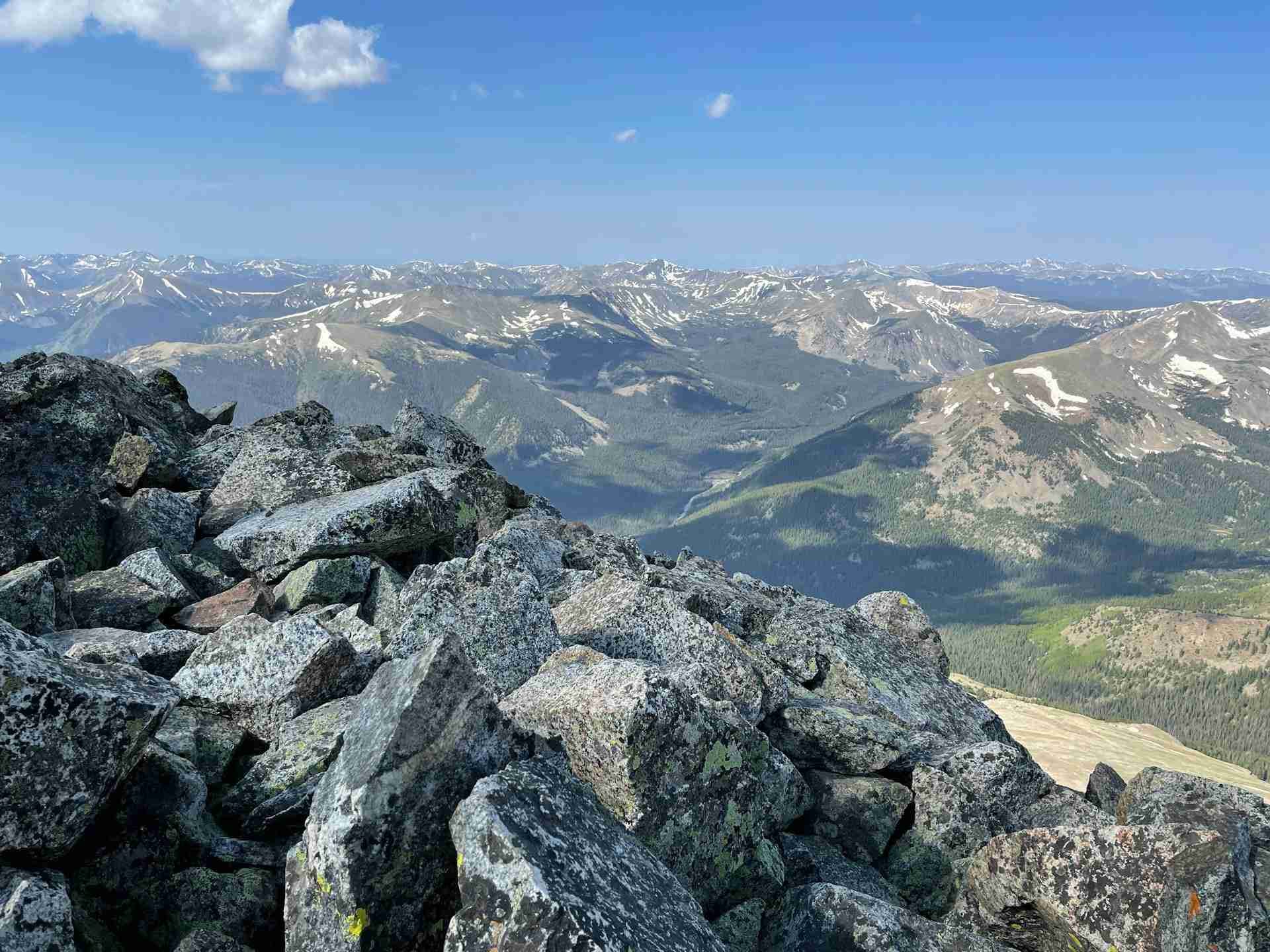
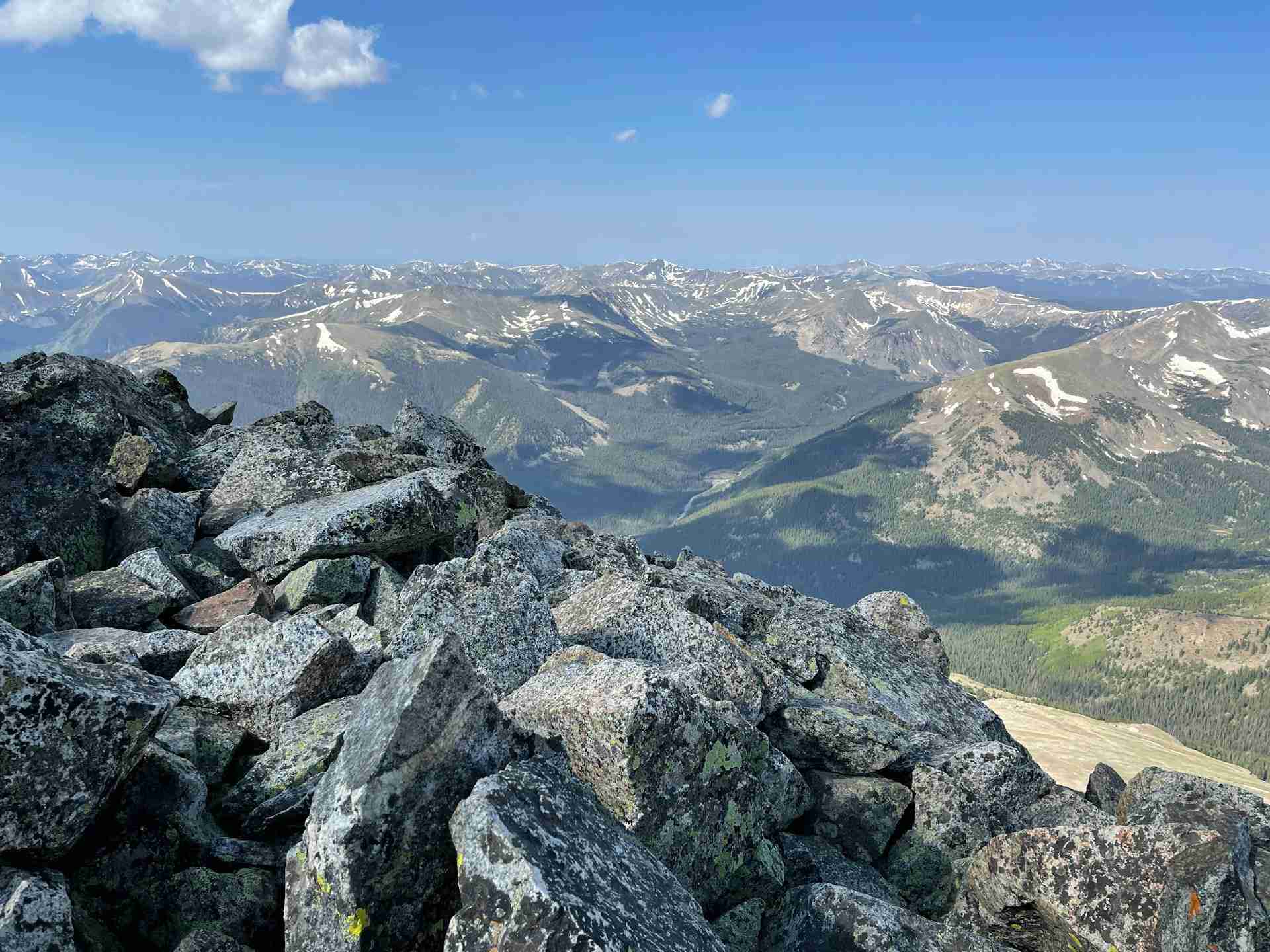
Standing at 14,200 feet, Mount Yale is one of the most visually commanding Fourteeners in Colorado's Sawatch Range. Named after Yale University and part of the Collegiate Peaks Wilderness, the mountain rises in a striking pyramid above the Arkansas River Valley near Buena Vista. With its rugged flanks, prominent ridgelines, and sweeping views of surrounding alpine basins, Mount Yale offers photographers the chance to capture raw altitude, changing weather, and the grandeur of Colorado's high country. From dramatic summit perspectives to reflective valley compositions, this peak offers an alpine landscape defined by clarity, contrast, and elemental beauty.
Best Photography Opportunities
• Sunrise from the Upper Slopes
For the most dramatic mountain light, begin your hike well before dawn and reach the alpine tundra or upper saddle in time for sunrise. From these elevations, golden light first strikes Mount Princeton and the distant ranges to the south before slowly illuminating Mount Yale's own ridgelines. A wide-angle lens captures the golden alpenglow on rocks, tundra, and clouds, while including silhouetted peaks in the distance. The shifting light provides opportunities for bracketing and HDR exposure blending to preserve both subtle sky color and shadowed terrain.
• Summit Panorama of the Collegiate Peaks
The summit of Mount Yale offers one of the most expansive views in central Colorado. From the top, you can photograph a 360-degree panorama that includes Mount Harvard to the north, Mount Princeton to the south, and the Arkansas Valley far below. Clear mornings yield crystalline air and deep visibility, making it ideal for stitching multi-frame panoramas with a wide or mid-range lens. Telephoto work from the summit also reveals layered ridges, distant peaks, and the repeating geometry of the Rockies under changing light.
• Wildflower Basins in Early Summer
From late June through mid-July, the alpine meadows along the ascent trail erupt in color. Paintbrush, columbine, and alpine avens scatter the basin floor with contrasting reds, purples, and yellows. These scenes are best shot at dawn or dusk, when side lighting adds depth to each bloom. Use a wide lens at a low angle to include wildflowers in the foreground, with Mount Yale's ridgeline towering above. A shallow aperture (f/2.8 to f/4) allows for selective focus on single blossoms, while deeper fields (f/11–f/16) preserve sharpness across the frame.
• Storm Light on the Ridgeline
The Sawatch Range is known for sudden weather changes, especially in midsummer. As storms roll in during the afternoon, dramatic lighting conditions develop along the exposed ridgelines of Mount Yale. Dark clouds behind sunlit peaks, or light shafts piercing through overcast skies, create dynamic compositions with high emotional impact. A mid-telephoto lens helps isolate these contrasts in light and texture, especially when shooting from just below the summit or along the main ridge trail.
• Forest and Trail Compositions at Lower Elevations
The Denny Creek Trailhead begins in dense conifer forest, with stream crossings, fallen logs, and dappled morning light creating scenes of quiet, layered beauty. These areas are perfect for vertical compositions using natural leading lines from trail curves and creekbeds. In autumn, the aspen groves near the trailhead turn gold, providing contrast with the evergreen pines and granite boulders. Early morning or soft overcast light enhances color saturation and minimizes harsh shadows under the canopy.
Best Time to Visit
Mount Yale is best photographed between late June and early October, when trail access is clear of snow and the weather is most stable. Early summer, particularly from late June through mid-July, brings peak wildflower bloom and lingering snow patches high on the slopes, adding visual interest and color contrast. During this period, morning light is crisp and the atmosphere is usually calm until midday.
August offers consistent weather and clearer air but begins to see the green fade to alpine gold, especially at higher elevations. The monsoon season in late July through mid-August brings afternoon thunderstorms that can create dramatic skies and lighting but require caution and early starts to avoid lightning risk on exposed terrain.
September and early October deliver cool, dry conditions and some of the best visibility of the year. Aspen groves near the base turn vibrant gold, and snow may begin to dust the higher slopes, adding contrast to sunrise scenes. This period is ideal for low-angle golden light and moody, high-contrast compositions.
Winter access to Mount Yale is possible for experienced mountaineers and backcountry photographers, but deep snow, avalanche terrain, and extreme cold make it a serious undertaking. For most, the mountain is best enjoyed and photographed in the snow-free months, with pre-dawn hikes and golden hour descents yielding the most rewarding images.
How to Get There
Mount Yale is accessed from the Denny Creek Trailhead, located off County Road 306 west of Buena Vista, Colorado. From downtown Buena Vista, follow Main Street west (CR 306) for 12 miles toward Cottonwood Pass. The Denny Creek parking area is on the right and is well-marked. The lot fills early during peak season, especially on weekends, so photographers aiming for sunrise light should plan to arrive by 4:00–5:00 a.m.
The standard route to the summit follows the Mount Yale Trail, a 9.5-mile round trip with approximately 4,300 feet of elevation gain. The trail is well-maintained but strenuous, climbing through forest, meadow, and alpine tundra before ascending a steep ridgeline to the summit. Hiking poles, layered clothing, and adequate food and water are essential.
No permits are currently required for day hiking or photography, though visitors are expected to follow Leave No Trace principles. There are no facilities at the trailhead beyond basic restrooms. Cell service is limited in the upper basin—download offline maps and bring a GPS device or navigation app if hiking pre-dawn.
Recommended Photography Gear
Mount Yale requires a lightweight but capable kit that can handle rapidly changing weather, rugged elevation, and long hours on the trail. A mirrorless or DSLR body with excellent dynamic range and low-light performance is ideal. A wide-angle zoom (16–35mm or equivalent) is crucial for foreground-rich compositions and summit vistas. A 24–70mm or 24–105mm lens offers flexibility for everything from trail scenes to compression shots on ridgelines. A 70–200mm telephoto is valuable for isolating peaks, capturing cloud light, or framing hikers within the vast alpine terrain.
A carbon-fiber tripod provides stability for long exposures, panoramas, and sunrise work, while remaining light enough for alpine carry. A polarizing filter is essential for cutting glare, enhancing sky contrast, and deepening foliage tones—especially helpful for wildflower and autumn compositions. Graduated ND filters are useful for balancing sky and ground at golden hour, though exposure blending in post-processing can also work well.
Bring microfiber cloths, a lens hood, and a waterproof cover for sudden weather shifts. Extra batteries and memory cards should be kept insulated from cold. If you plan to shoot before sunrise or after sunset, pack a headlamp with red-light mode for navigating without ruining your night vision. Use a lightweight hiking pack with chest and waist straps to stabilize your gear over rugged sections of trail.
Nearby Photography Locations
Just west of Mount Yale, Cottonwood Pass provides panoramic views of the Sawatch and Gunnison Ranges. It's accessible by vehicle and ideal for sunrise or sunset work, with winding roads, dramatic clouds, and wide alpine meadows as foregrounds.
• Mount Princeton Hot Springs and Valley Overlook
South of Mount Yale, the slopes of Mount Princeton rise steeply from the Arkansas River Valley. From scenic pullouts or nearby trails, photographers can capture the vertical rise of the peaks against golden light or stormy skies, particularly in autumn.
North of Buena Vista, this mellow hike winds through dense forest to a pair of alpine lakes below Mount Columbia and Mount Harvard. Reflections, wildflowers, and peak backdrops offer excellent compositions in all seasons, especially during fall color.
• Twin Lakes and Independence Pass
A short drive north, the Twin Lakes area offers mirror-like water, mountain backdrops, and long light at both ends of the day. Independence Pass, further up, delivers high-alpine vistas and wildflowers in mid-summer, along with access to lesser-known peaks and ridgelines.
Mount Yale rewards the committed photographer with unmatched views and varied terrain—where each hour of the hike reveals a new scene carved by wind, time, and altitude. Whether standing on the summit in predawn silence or framing wildflowers beneath towering granite, this Fourteener offers a dynamic and intimate look into the heart of Colorado's alpine wilderness.
Comments
Loading comments…