
![Plains Geometry: Photographing the Pawnee Buttes in Colorado’s High Prairie Rising starkly from the windswept grasslands of northeastern Colorado, the […]](https://storage.googleapis.com/pixeo-blog.firebasestorage.app/article-images/wp-import/featured-131743.jpg)
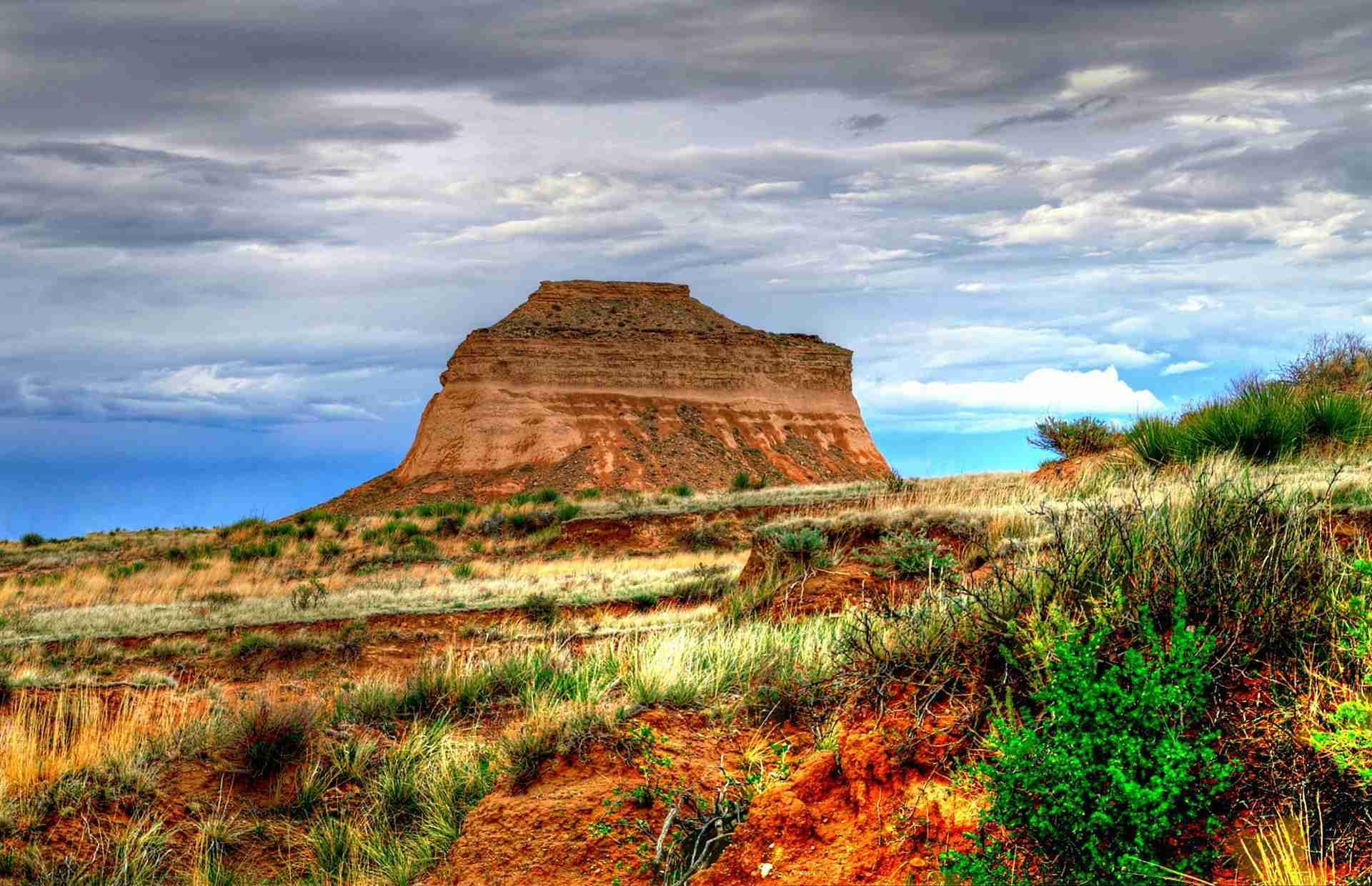
Rising starkly from the windswept grasslands of northeastern Colorado, the Pawnee Buttes are twin towers of erosion-sculpted rock that anchor one of the state's most visually unique and geologically rich landscapes. Located in the Pawnee National Grassland, these two buttes stand as silent monoliths above a sea of prairie, offering minimalist compositions, long leading lines, and dramatic interplay between open sky and sculpted land. For photographers accustomed to alpine drama or forested complexity, the Pawnee Buttes present a refreshing change: clean forms, expansive space, and powerful light transitions across an ancient and wide-open terrain.
Best Photography Opportunities
• Sunrise Light on the West Butte
The western of the two buttes is most photogenic at sunrise, when the first warm light strikes its striated sandstone face and casts long, cool shadows across the surrounding plains. This is the best time for detail-rich exposures that capture the butte's weathered textures and sedimentary bands. A telephoto lens (70–200mm) compresses the flat foreground with the butte rising in near-perfect isolation, while a wide-angle lens at low angle lets you incorporate wind-carved ridges or animal trails as leading lines. Including grasses or yucca in the foreground, particularly in spring when they're in bloom, adds scale and texture.
• Evening Backlight and Silhouettes
Sunset behind the buttes creates excellent opportunities for silhouette compositions, with the formations rendered in crisp black against a pastel sky. Shooting from the east side, photographers can use a longer lens to isolate the buttes with the setting sun flaring at their edges. Dust kicked up by afternoon winds can create light diffusion that softens the sky and glows behind the structures, producing ethereal atmospheric effects. Positioning at a mid-distance—using grasses or fence lines to anchor the frame—helps balance sky and foreground.
• Stormlight and High Plains Drama
One of the Pawnee Buttes' most compelling visual attributes is their ability to stand out dramatically against fast-moving weather. Thunderstorms in late spring and summer sweep in from the west and can create otherworldly conditions where dark skies contrast vividly with sunlit grasslands. Under these conditions, both buttes become centerpieces of high-drama landscape photography. A polarizing filter intensifies cloud detail, while a wide dynamic range or bracketed exposures preserve shadow detail in the buttes themselves. Watch for rain curtains or lightning over the horizon—these brief windows deliver some of the most cinematic imagery in the region.
• Foreground Elements and Prairie Flora
The surrounding grassland is more than a backdrop—it's a vital part of the composition. During late spring and early summer, the prairie comes alive with wildflowers, especially yucca, purple coneflower, and western wallflower. A low-angle wide shot placing these elements in the foreground, with the buttes on the horizon line, builds visual depth and natural symmetry. Isolated rocks, sun-bleached fence posts, or cattle trails can also be incorporated as subtle visual guides across the frame. Overcast days soften shadows and allow the eye to move across these elements without distraction from harsh highlights.
• Night Photography and the Milky Way
The isolation and near-absence of light pollution at Pawnee Buttes make them ideal for night photography. From April to September, the Milky Way arches above the horizon and can be composed directly above or behind the buttes. Including a human figure with headlamp or lantern near the base of a butte adds scale and interest without overwhelming the scene. Use a fast wide lens (14–24mm f/2.8 or faster) and stack exposures for optimal noise control. The buttes' silhouettes stand out crisply under starlight, and a moonlit foreground can be captured in a separate frame for blending.
Best Time to Visit
Late spring through early summer (May to early July) offers the richest combination of wildflower bloom, active skies, and accessible trails. Morning light is clean and directional, while evenings often bring dramatic weather systems that roll in from the Rockies. Sunrise occurs around 5:30–6:00 a.m. during this period, so early starts are essential for optimal light and solitude. Temperatures are mild, with mornings often cool and dry—ideal for long hours in the field.
Autumn (late September through early November) offers clearer skies, golden grass tones, and softer afternoon light. The landscape turns from green to muted earth tones, emphasizing the buttes' form and texture. Wind tends to be gentler during autumn, making long exposures more feasible. However, shorter daylight hours mean planning ahead to maximize time on location.
Summer can be rewarding for storm photography but comes with extreme heat and aggressive winds. Midday light is often harsh, so plan for dawn and dusk sessions. Late afternoon storm cells may form rapidly, so check weather forecasts carefully before venturing far from your vehicle.
Winter is stark and often frigid, with snow cover providing high contrast against the buttes' tan rock. Snow is sporadic but transforms the area into a black-and-white study of shape and light. Access roads may be impassable after heavy snowfall, and amenities are extremely limited—only experienced winter photographers with proper preparation should attempt it.
How to Get There
The Pawnee Buttes are located in the northeastern corner of Colorado within the Pawnee National Grassland, about 40 miles northeast of Greeley. From Denver, the drive takes approximately 2.5 hours via I-76 east to CO-14, then north on Weld County roads. The final approach is via a series of unpaved roads—County Road 107 north and County Road 110 east—leading to the trailhead parking lot near the Buttes Trailhead. These roads are well-graded but become difficult or impassable after rain due to mud and flooding.
From the trailhead, the hike to the first butte is just over 1.5 miles one-way and relatively flat, though exposed to full sun and wind. The second butte is accessible via informal trails and open land navigation, but there are no marked paths or water sources. It's critical to bring sufficient water, sun protection, and printed or downloaded maps, as there is no cell service in the area. Facilities are nonexistent—no restrooms, shade structures, or signage beyond the trailhead kiosk.
Photographers should arrive well before sunrise or stay after sunset, and consider scouting the day before to familiarize with trail access and composition points. Vehicle access is safest in dry weather and with high-clearance vehicles, though standard sedans can manage in good conditions with caution.
Recommended Photography Gear
Given the open terrain, variable weather, and emphasis on both wide and compressed perspectives, a thoughtfully curated kit is essential. A full-frame camera with strong dynamic range and weather sealing is ideal, particularly when photographing under dramatic light or changing sky conditions. A wide-angle zoom (16–35mm) is a workhorse lens here, especially for including foreground flora and capturing the vastness of the prairie sky.
A 24–70mm lens offers flexibility for midrange work and walkaround compositions, especially when working with human subjects or storytelling frames. A 70–200mm or longer telephoto lens is critical for compressing the buttes against distant storm systems or the rising moon. For night photography, a fast wide-angle prime (14mm or 20mm f/1.8) will help keep exposures short while maintaining clarity in the stars.
A sturdy tripod with good wind resistance is non-negotiable. The open prairie is susceptible to strong gusts at any time of day. Use a tripod with a hook for extra weight or sandbagging. A remote shutter release or intervalometer helps with bracketing, long exposures, and night stacking. Circular polarizers are useful for cutting glare and enhancing sky contrast, while neutral density filters support long-exposure work during daylight cloud movement.
Bring plenty of lens cloths and weatherproof covers for both gear and bag—dust and wind are constant factors. A headlamp for early starts or night sessions is crucial, and always carry a power bank or spare batteries, as long exposures and heat can drain power quickly. Most importantly, bring ample water, sun protection, and a physical map. Cell service is highly unreliable throughout the area.
Nearby Photography Locations
Located southeast of the Buttes, Chalk Bluffs features rugged white cliffs and narrow ravines cut by erosion—perfect for layered compositions and low-angle golden light. This area is also a designated raptor nesting zone, offering opportunities for wildlife and environmental storytelling, especially during spring.
Located near Briggsdale, this grassland park features cottonwood groves, prairie wildflowers, and more accessible hiking loops. While less dramatic than the Buttes, the area is excellent for macro work, wildlife photography, and birdwatching in the golden hours of dawn and dusk.
• Weld County Road 390 Vistas
The drive to the Buttes is itself a photo journey—CR 390 and the surrounding roads offer panoramic views of the buttes from a distance, often framed by old barns, windmills, and fencelines. These rural elements add narrative layers to traditional landscapes, particularly in morning side light or silhouetted against stormy skies.
• Northern Pawnee Grasslands Overlooks
Farther north along unpaved roads, expansive overlooks offer uninterrupted views of the plains and sky, perfect for minimalist photography or panoramic landscape studies. Few visitors make it this far, so it's an ideal place for solitude, silence, and undistracted shooting.
Photographing the Pawnee Buttes is an exercise in light, scale, and restraint. There are no dramatic waterfalls or alpine crags here—only space, form, and a sky that seems to go on forever. For those who take the time to observe the way wind shapes grass, or how storm clouds illuminate stone, these buttes become more than landmarks—they become symbols of a stillness that is vanishing from the modern world.
Comments
Loading comments…