
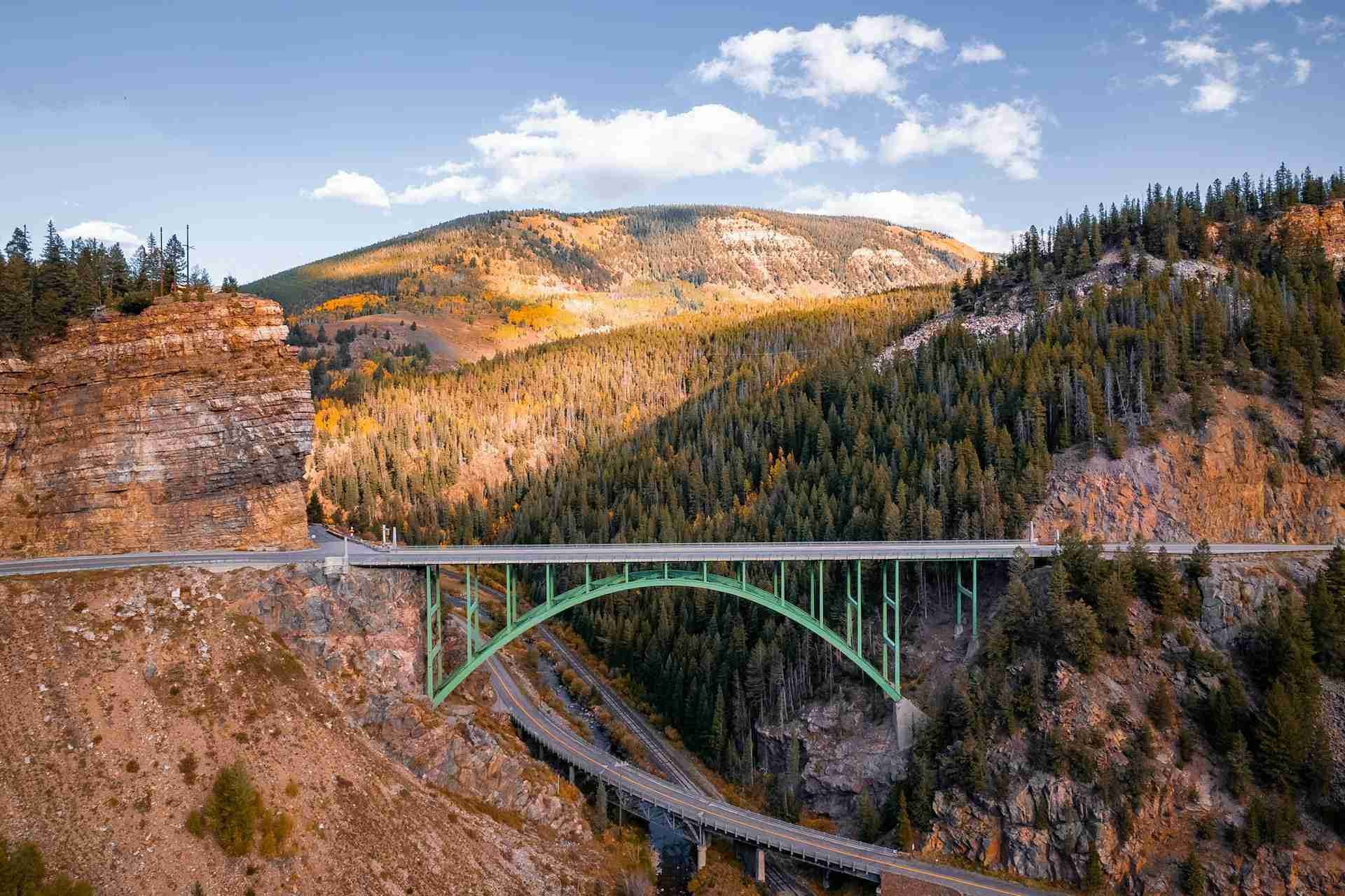
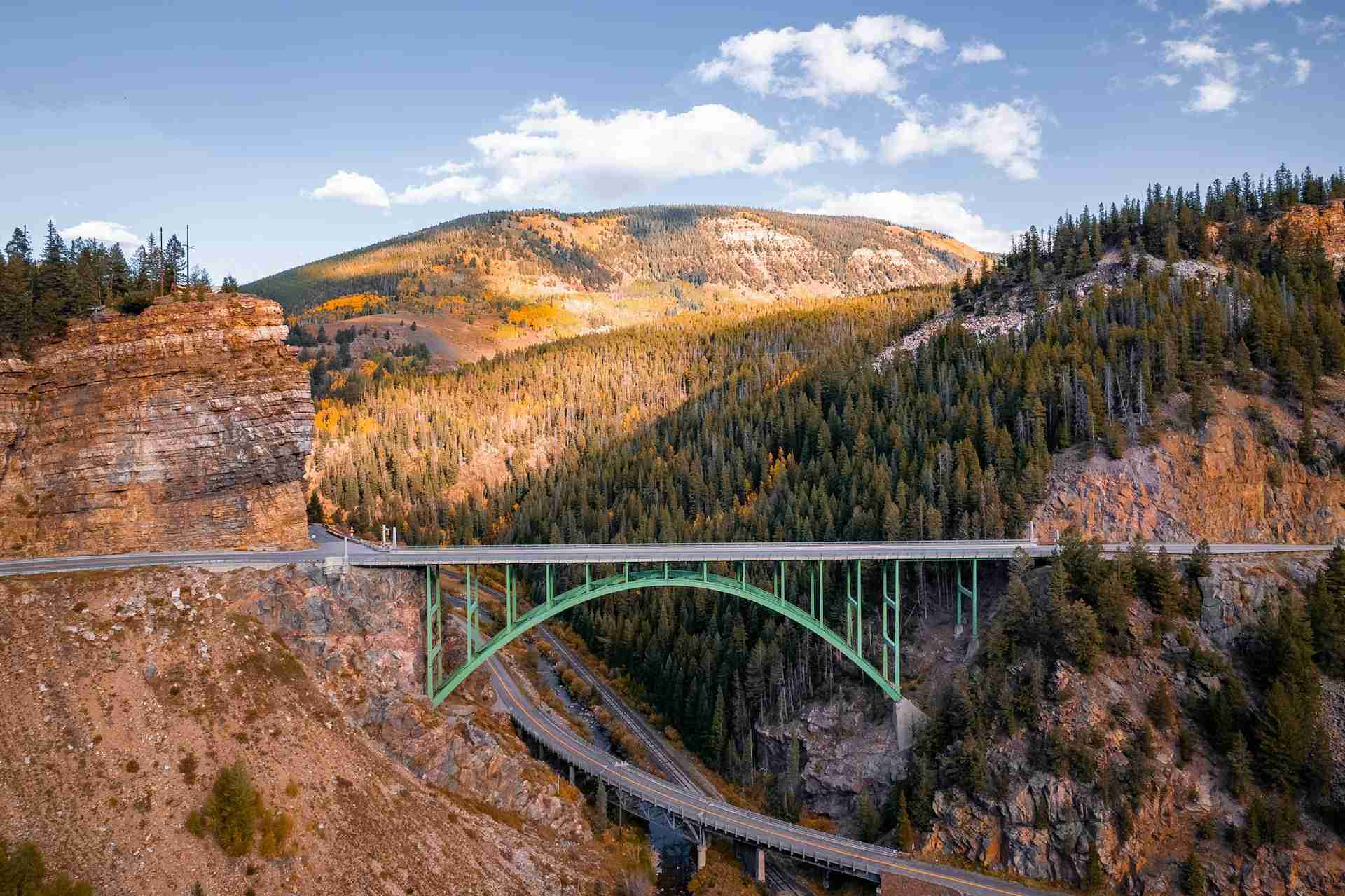
Tucked within the rugged terrain of Eagle County, the Red Cliff Bridge offers one of Colorado's most striking feats of engineering, gracefully spanning the Eagle River amidst a canvas of alpine forest. When viewed from the Green Bridge Overlook, this emerald-painted steel arch takes on cinematic presence, hovering high above a dramatic canyon backdrop. The contrast between human-built structure and untamed landscape creates a rare visual harmony, drawing photographers year-round. Whether capturing the bridge amid golden aspen, under snowy skies, or backlit against the mountain sunset, this overlook presents a dynamic subject adaptable to countless compositional approaches.
Best Photography Opportunities
• Grand elevation portrait of Red Cliff Bridge
From the Green Bridge Overlook, photographers are treated to a commanding view of the Red Cliff Bridge in its entirety, framed by pine-covered slopes and the distant Sawatch Range. Using a telephoto or mid-range zoom lens, you can compress the bridge against the valley to emphasize its scale and architectural complexity. Morning light strikes the east-facing side with golden precision, casting soft shadows beneath the arch and across the surrounding terrain. For broader context, a wide-angle lens allows you to incorporate the overlook's rocky foreground and the dramatic river gorge below, highlighting the sheer verticality and isolated grandeur of the scene. Exploring different heights and positions at the overlook can yield diverse angles that reveal new relationships between structure and landscape.
• Twilight color transitions with alpine backdrop
As sunset gives way to twilight, the sky behind the bridge often ignites in pink, violet, and orange hues, especially in late summer and early autumn. Using a tripod and long exposure, capture the gradual shift in ambient light as it reflects off the bridge's green trusses and the surrounding granite walls. The overlook's elevation provides an unobstructed horizon that enhances the drama of this alpine spectacle. Consider bracketing your exposures to preserve sky detail while balancing the darker bridge silhouette. Framing the bridge in the lower third of the image and allowing the vastness of the sky to dominate can evoke a powerful contrast between human structure and natural atmosphere.
• Seasonal atmosphere with snow or golden aspens
Autumn brings a tapestry of color as aspen groves across the canyon turn gold, providing a perfect natural frame for the green steel structure. In winter, snow clings to the bridge's lattice and outlines the ridgelines, creating striking monochrome compositions filled with high-contrast textures. Use a polarizing filter to reduce glare and heighten the contrast between bridge elements and natural tones. Telephoto shots from across the valley can isolate the bridge amidst a forested sea of color or white, while wider compositions capture the full interplay of nature and structure. Spring and early summer add fresh greenery and flowing snowmelt creeks that provide lively context around the canyon.
• Architectural detail of the bridge trusses
For those interested in geometric precision and structural form, the bridge's steel trusses provide ample material for abstract compositions. From various points along the overlook and nearby trails, use a mid-range or telephoto lens to focus on the symmetry, angles, and repeating patterns of the arch and crossbeams. Shooting during golden hour softens the metallic surface and casts interesting linear shadows along the frame. Try isolating portions of the truss against the sky, forested background, or even clouds to highlight contrast in form and material. These tighter studies are ideal for turning engineering into art, emphasizing structure and rhythm over setting.
• Dynamic weather and mountain light
This region is known for fast-changing weather patterns that can add mood and texture to your images. Low clouds slipping through the valley, afternoon thunderstorms, or fresh snowfall can dramatically transform the scene. Keep your gear ready to adapt quickly, as sudden sunlight piercing through mist or cloud breaks can spotlight the bridge against a moody backdrop. Long lenses are helpful for isolating pockets of light or distant atmospheric effects. Shooting during or just after weather shifts can yield your most dramatic and unexpected images. This unpredictability is part of what makes the overlook such a compelling location—no two visits offer the same light or sky.
Best Time to Visit
Red Cliff Bridge is photographically rewarding throughout the year, but each season brings distinct advantages. Autumn is a prime time, as golden aspens contrast vividly with the bridge's green steelwork and the deep evergreens of the surrounding forest. September and early October often feature crisp air, vibrant foliage, and dramatic skies that lend both color and clarity to compositions. The light during these weeks is especially flattering, with low sun angles stretching golden shadows across the valley.
Winter transforms the landscape into a stark, elegant canvas where the bridge stands out in bold relief against snow-dusted trees and mountains. Sunrise and sunset are particularly rich with pink and blue tones reflecting off snowfields and river ice, enhancing the graphical qualities of the structure. Spring introduces dynamic contrast with melting snowbanks, running water, and budding greenery. Summer offers the clearest skies, the lushest greenery, and the most flexible shooting hours due to longer daylight periods.
For lighting, early morning captures the eastern face of the bridge in warm, directional light that reveals texture and form. Late afternoon bathes the scene in soft glow, enriching colors and enhancing the surrounding alpine contours. Midday can still be effective due to the bridge's height and bold form, especially when dramatic weather adds interest to the sky. Visiting on weekdays increases your chances of having the overlook to yourself, allowing for more deliberate framing without interruptions.
How to Get There
The Green Bridge Overlook is located off U.S. Highway 24, just south of the historic town of Red Cliff, Colorado. From Minturn, travel south on Highway 24 for approximately 10 miles. Look for a small gravel pullout and unmarked dirt access trail just before the highway crosses the bridge. While the trail to the overlook is short, it is unmaintained and uneven—expect loose gravel, exposed roots, and potential snow or ice in colder months.
There is no fee to access the overlook or surrounding lands, and the area is open year-round. However, parking is very limited and not officially designated. Arrive early in the day to secure a spot and be mindful of local traffic, as the shoulder is narrow and the highway can be busy. Cell reception is spotty in the canyon, so it's best to download offline maps or save GPS coordinates in advance. There are no restrooms or facilities, so plan accordingly. The trail is best suited for those comfortable with light scrambling and variable terrain.
Recommended Gear for Red Cliff Bridge Photography
Given the range of lighting and environmental conditions at the overlook, versatility is key. A mid-range zoom lens (24–70mm) will handle most standard compositions of the bridge and landscape. A wide-angle lens (16–35mm) is excellent for incorporating dramatic sky or canyon foregrounds, while a telephoto lens (70–200mm or longer) allows you to isolate the bridge against background layers or highlight structural detail.
A sturdy tripod is essential for long exposures, especially during dawn, dusk, and in low-light weather conditions. A circular polarizer enhances contrast and color saturation in foliage and sky, while a neutral density filter helps achieve motion blur in clouds or flowing water. A remote shutter release or intervalometer is useful for hands-free shooting, especially when bracketing exposures or capturing time-lapses.
Pack extra batteries and memory cards, as mountain cold can quickly drain power, and changing light may have you shooting more frames than expected. Use a weather-sealed backpack and lens cloths to protect gear from dust, mist, or snow. Dress in layers and bring gloves if visiting during the colder months—the overlook is exposed, and temperatures can fluctuate rapidly.
Nearby Photography Locations
offers colorful, historic buildings, winding streets, and remnants of its mining heritage. With the bridge in the background, the town makes for excellent environmental portraits and documentary-style compositions.
just south of the bridge presents panoramic views of the Gore Range, wildflower meadows in summer, and vibrant aspens in autumn. The road to the pass itself is photogenic, with winding curves framed by dense forest.
winds deep into the White River National Forest, offering secluded alpine lakes, river bends, and quiet pine corridors ideal for tranquil compositions and wildlife photography.
features sweeping mountain views, expansive meadows, and an alpine forest that turns golden in fall. It's a prime location for sunrise or sunset landscape photography.
• Minturn and the Eagle River corridor
combine rustic architecture with riverfront serenity. Early morning light here creates rich reflections in the water and highlights the textures of this mountain hamlet.
Comments
Loading comments…