
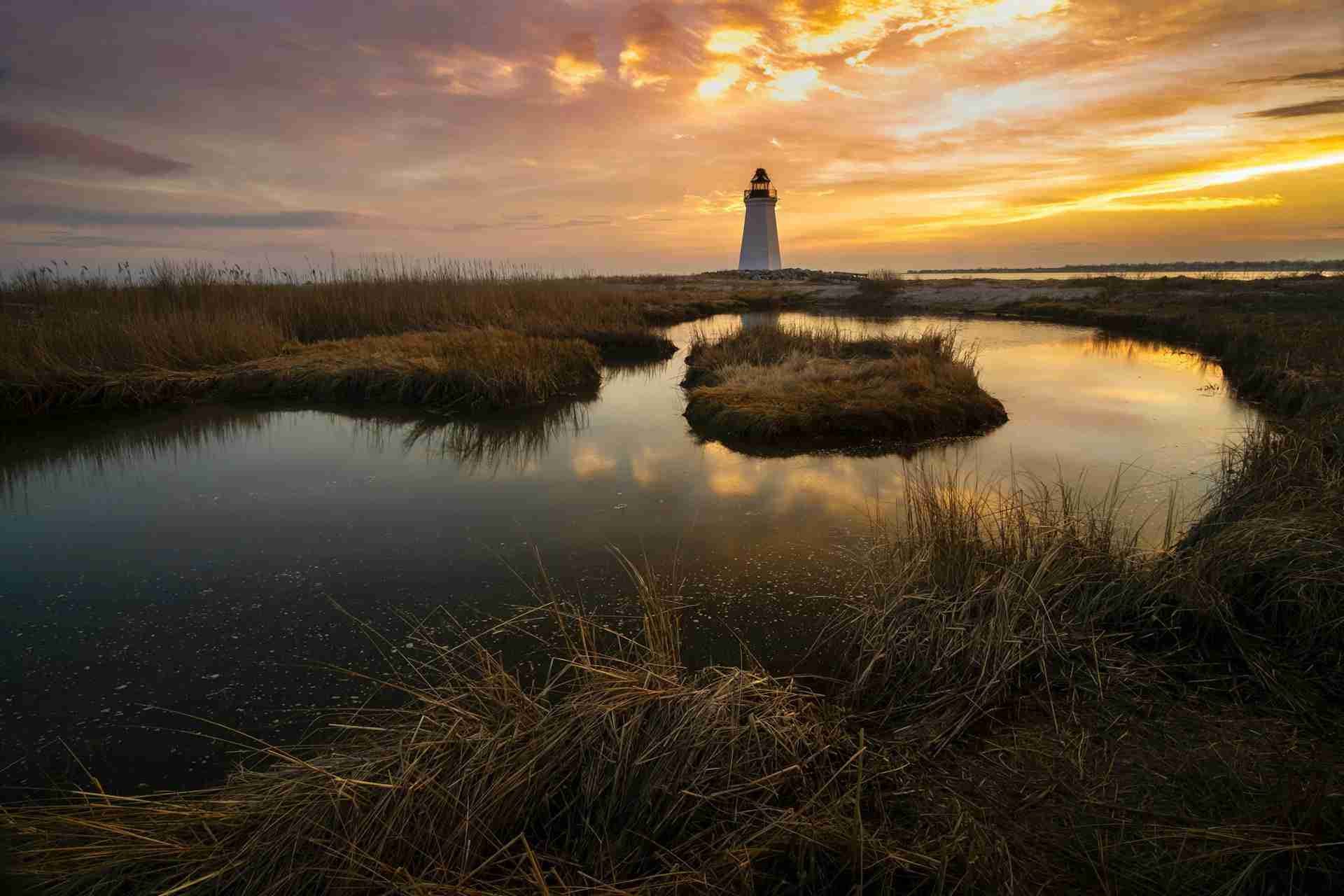
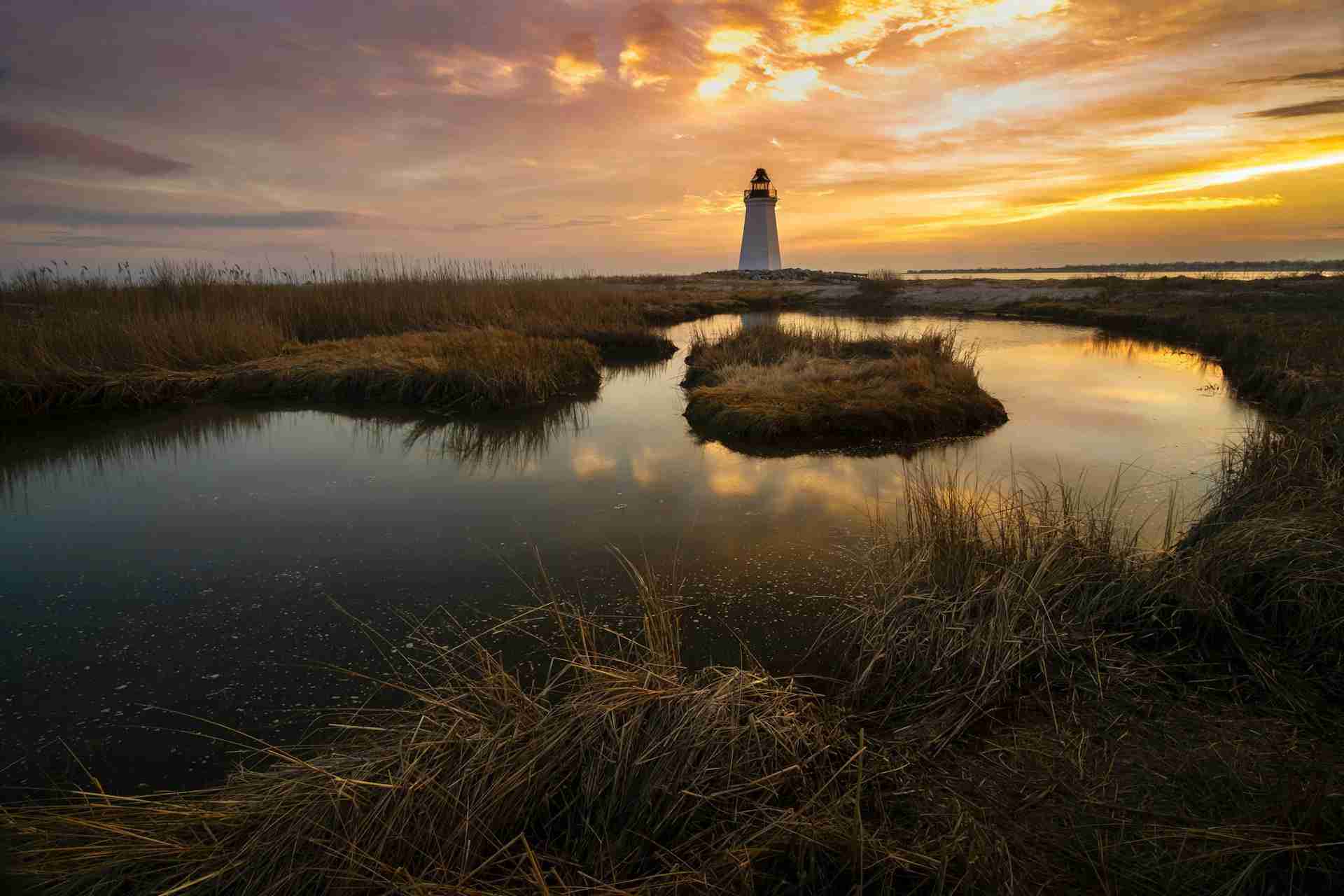
Located at the tip of a narrow breakwater on the edge of Long Island Sound, Fayerweather Island Light—also known as Black Rock Harbor Light—is a stark, photogenic lighthouse standing in contrast to its surrounding elements of tidal flats, rough stone causeways, and expansive coastal sky. Built in the early 1800s and restored in the 1980s, the stone structure is relatively short and weathered, offering rich texture for close-ups and clean silhouette potential for long-lens or wide-frame compositions. It is both visually simple and technically rewarding, offering dramatic shifts in character based on tides, light angle, and weather. For photographers who enjoy combining coastal minimalism with layered detail, this spot offers a rugged canvas of compositional opportunity.
Best Photography Opportunities
• Silhouette Framing at Sunrise
Due to its eastern orientation on Long Island Sound, Fayerweather Island Light is perfectly positioned for silhouette compositions at dawn. Arriving before first light allows for a pre-dawn color gradient across the sky, with the lighthouse rendered in crisp profile. Use a tripod and a remote shutter to capture a bracketed exposure sequence, as the sky transitions quickly during this time. A wide-angle lens in the 16 to 24 millimeter range lets you include the breakwater or tidal pools in the foreground for added depth. As the sun crests the horizon, the stone structure catches rim light, adding subtle edge definition and warming the overall tone.
• Long Exposure with Tidal Motion
The surrounding shoreline and stone causeway provide excellent subjects for long exposure work, especially during high tide or when waves are present. With a 10-stop ND filter, shutter speeds of 30 seconds or more are achievable, smoothing the water and isolating the lighthouse against a minimalist foreground. Position yourself along the seawall for a clean angle where water movement frames the structure rather than overwhelms it. Overcast skies work well for monochromatic compositions, while late afternoon sunlight adds rich contrast and helps define the weathered stone surface. Keep the horizon level and monitor tide patterns to avoid getting stranded on slippery rocks during extended setups.
• Texture Studies of Stone and Rust
Close-up detail photography thrives at Fayerweather Island Light. The tower's coarse brownstone blocks, rusted iron fittings, and lichen-covered surfaces offer abundant texture. A macro or short telephoto lens allows you to abstract portions of the structure, isolating cracks, anchor points, and weathered hardware. These images work well on cloudy days, where soft light enhances the surface without harsh shadows. Use manual focus and a tripod to control depth of field precisely, especially when working inches from the subject. Framing rusty bolts or patterns in salt-weathered stone against blurred backgrounds creates high-contrast studies that carry both narrative and design.
• Golden Hour Walkway Compositions
The stone jetty leading to the lighthouse is itself a strong compositional element. During golden hour, long shadows stretch across the uneven surface, creating rhythmic contrast between lit and shaded segments. Position your camera low and slightly off-center to exaggerate perspective, drawing the viewer's eye toward the structure. Including footprints, puddles, or grasses breaking through the cracks adds scale and texture. A standard zoom lens gives you the flexibility to adjust framing quickly as the light shifts, especially during the last half hour before sunset when the sky and ground tones balance most naturally.
• Storm Fronts and Dramatic Skies
The exposed position of the lighthouse makes it an ideal subject for storm photography. Approaching weather systems bring dynamic clouds, sea spray, and mood changes that transform the calm simplicity of the area into a dramatic landscape. Use a wide lens to capture the contrast between the lighthouse and the sky, or a longer lens to isolate the tower against darkened clouds. Be cautious of footing during wet or windy conditions, and prepare for rapidly changing light. Shooting just before or after a storm passes can yield rich color and edge lighting along the water or lighthouse rim.
Best Time to Visit
Fayerweather Island Light is accessible year-round, but the quality of light and tidal conditions make early spring through late autumn the most rewarding time for photography. Sunrise is the optimal time of day for dramatic backlighting and calm conditions, particularly between April and October when the sun rises further northeast, aligning well with the shoreline.
Late summer mornings tend to offer the most color-rich sunrises, with moisture in the air creating saturated gradients behind the lighthouse. Autumn delivers the best atmospheric clarity, ideal for sharp silhouettes and distant horizon lines. Winter visits can be productive, especially when snow dusts the rocks or ice forms in tide pools, but the causeway may be icy or closed due to weather.
Low tide opens up additional foreground interest with exposed rocks and tide patterns, while high tide enhances long exposure water smoothing. Wind direction affects water texture significantly, so calm mornings are preferable for reflection work and foggy conditions, while blustery afternoons produce choppier motion and more abstract results.
How to Get There
Fayerweather Island Light is located within Seaside Park in Bridgeport, Connecticut. The most common access point is through the park's southern parking areas, where a footpath leads to a long stone breakwater that serves as the only route to the island. This walk is approximately one mile round trip and crosses uneven, rocky terrain. Appropriate footwear is essential, especially after rain or during icy conditions.
There is a parking fee to enter Seaside Park during the warmer months, though off-season access is usually free. Photographers should plan to arrive early in the day, as the park closes at dusk and access to the lighthouse is prohibited after dark. Tripods are permitted, but drone usage may be restricted due to airspace regulations and proximity to residential areas.
The breakwater is not lit at night, and early morning or late evening shoots require a headlamp and caution. Cell service is generally available throughout the park, but it is best to let someone know your plans if shooting alone, especially before sunrise.
Recommended Photography Gear
A full-frame camera with reliable dynamic range is recommended to capture sunrise gradients, darkened clouds, and subtle texture in stone surfaces. A wide-angle lens is essential for sunrise compositions and foreground-rich perspectives, while a standard zoom lens provides flexibility for mid-range framing and quick response to changing light. A 70 to 200 millimeter lens is helpful for isolating the lighthouse against sky or water, especially during stormy conditions.
A tripod is necessary for long exposures, bracketing, and pre-dawn or blue hour work. ND filters—both variable and fixed—help manage shutter speeds during bright conditions and smooth water or cloud movement. A circular polarizer reduces glare on water and wet rocks, especially after rainfall. A weather-sealed bag or protective cover is useful during stormy shoots or winter visits.
Footwear with traction and ankle support is critical for walking the stone breakwater. Bring a small flashlight or headlamp for pre-sunrise setups and a towel or cloth to wipe down gear exposed to salt spray. Extra batteries are advised, especially during cold or long sessions.
Nearby Photography Locations
Just north of the lighthouse approach, this historic pavilion offers wood and stone architectural framing along the water, with views of Long Island Sound and passing sailboats during the summer.
A short drive west, this pedestrian promenade curves along the shoreline and includes benches, trees, and water views that are excellent for sunrise or golden hour compositions.
Located nearby in Black Rock Harbor, this colorful marina area includes fishing boats, dockside textures, and waterfront buildings that photograph well in late afternoon light.
• Pleasure Beach Walkway
Accessible from the same general area, this long pedestrian route across the barrier beach offers open sky, dune grass, and distant views of Fayerweather Island from an alternate angle.
For a complete change in subject matter, this inland park features a small zoo, stone bridges, and woodland trails, ideal for shaded compositions, wildlife photography, and macro detail.
Fayerweather Island Light offers a rare blend of coastal isolation, historical architecture, and seasonal variation just a short walk from city limits. For those willing to carry gear along the jetty and plan their timing around light and tide, it remains one of Connecticut's most satisfying shoreline subjects.
Comments
Loading comments…