
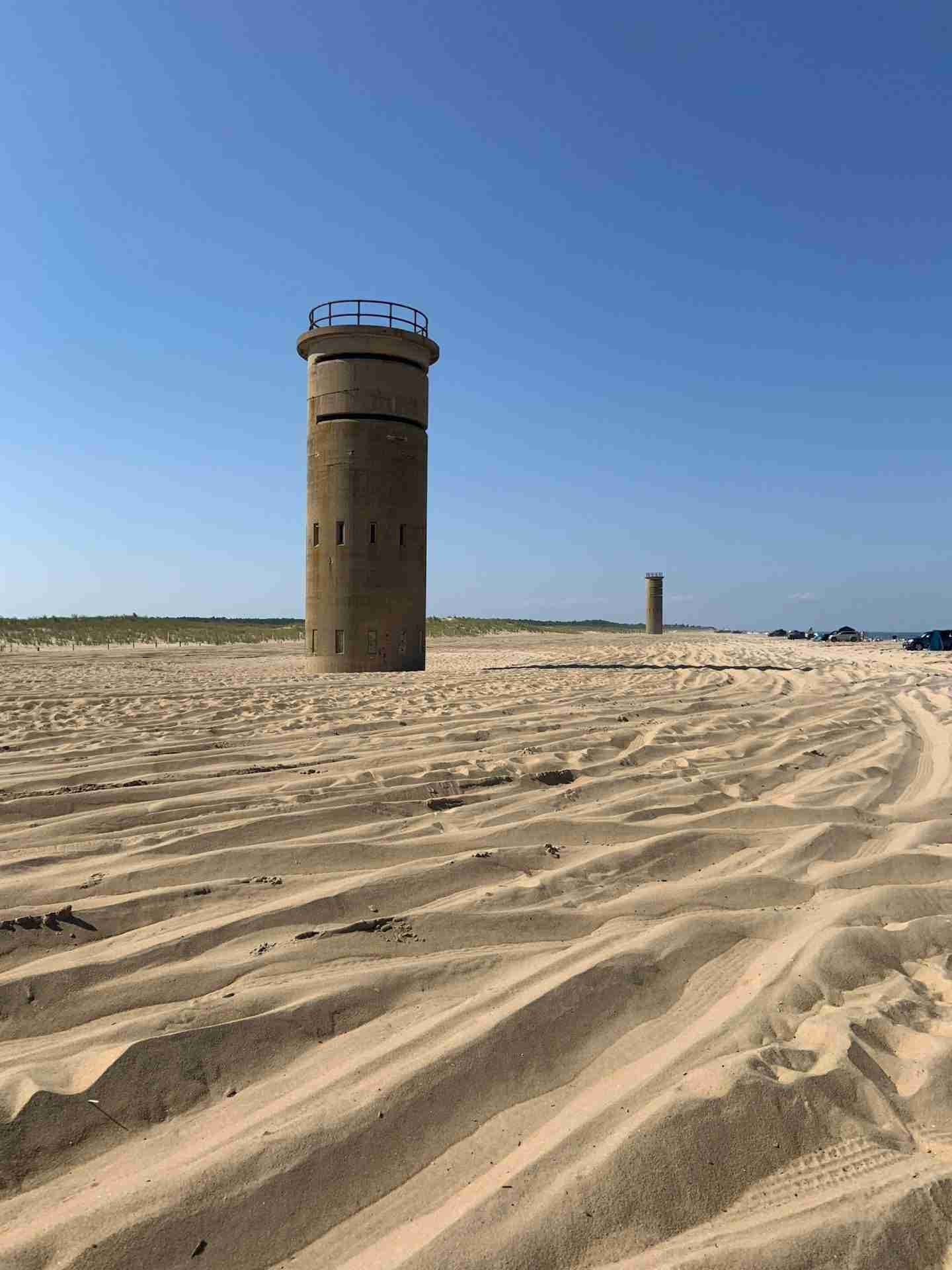
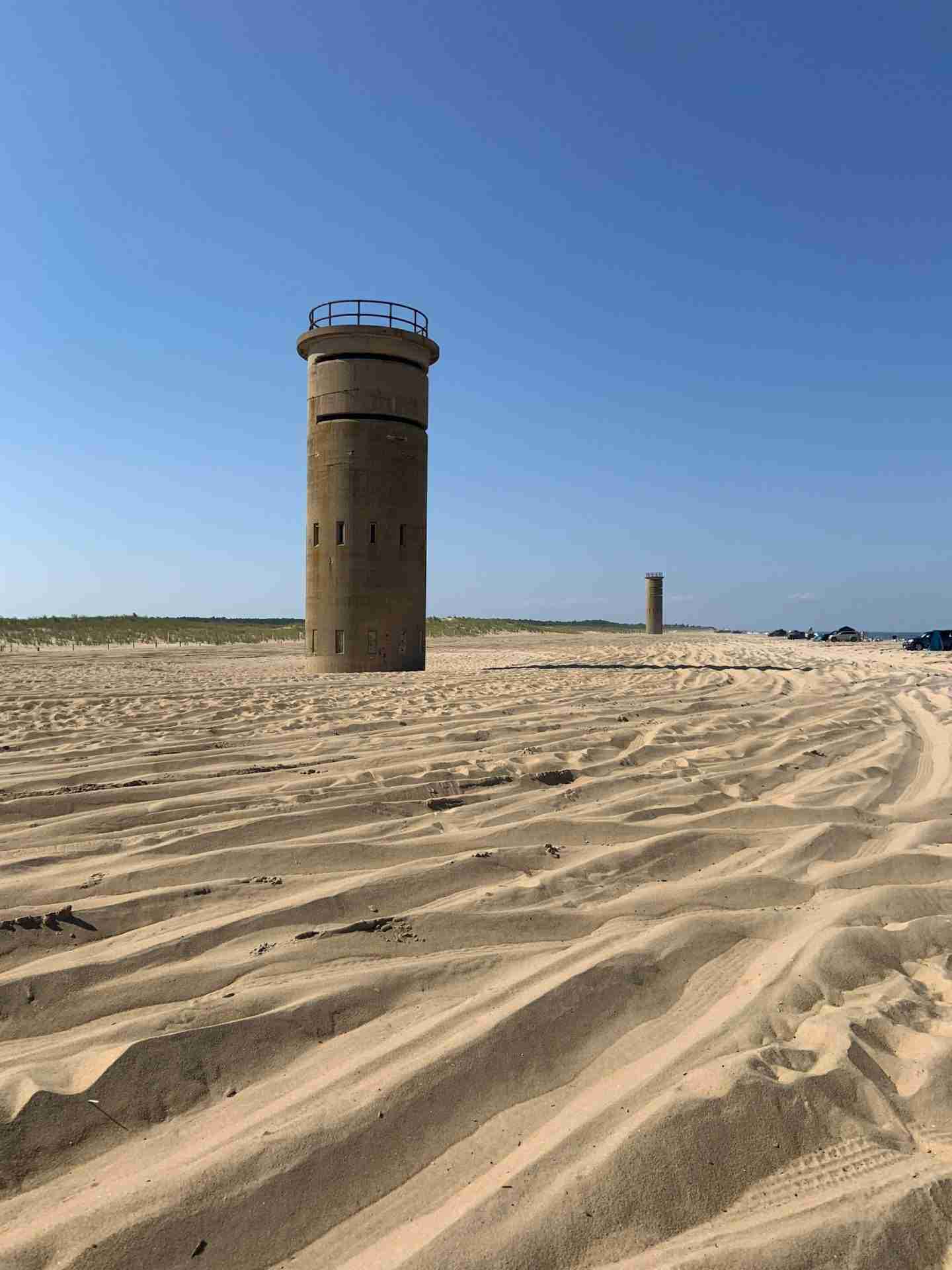
Rising like ghostly cylinders above the dunes and coastal pine of Cape Henlopen State Park, the WWII Artillery Fire Observation Towers are remnants of a wartime defense system that once guarded the mouth of the Delaware Bay. Built in the 1940s as part of Fort Miles, these concrete towers were designed to direct artillery fire from hidden gun emplacements along the coast, tracking enemy ships with precision. Today, the towers—weathered, silent, and still standing tall—offer a powerful contrast to the natural beauty surrounding them. For photographers, they serve as sculptural monoliths on the horizon, rich in historical narrative and visual drama, especially in changing coastal light.
Best Photography Opportunities
• Silhouettes at Sunset from the Dunes
The towers are most striking when silhouetted against the broad skies of coastal Delaware. Position yourself west of the towers during golden hour or sunset, when the sun drops behind them and bathes the sky in warm hues. Their cylindrical shapes stand stark against the gradient sky, especially when framed through beach grass or dune fencing.
• Low-Angle Shots from the Base
From directly below, the towers take on an imposing, minimalist quality. Use a wide-angle lens to exaggerate their height and curvature. Early morning side light enhances texture and reveals the weathering on the concrete, while cloudless days lend themselves to clean, graphic compositions.
• Framing Through Pine and Dune Grass
The towers are partially obscured by vegetation in many areas of the park, which creates natural framing options. Walk the trails through the maritime forest to find compositions where branches or dune grass part just enough to reveal the structures peeking through. These shots work well in soft, diffused light or fog, evoking a quiet sense of time passed.
• Abstract Details and Texture Studies
Many towers feature rusted metal doors, weathered ladders, and pockmarked surfaces from decades of salt exposure. These close-up details are excellent for textural photography or black-and-white treatments. Look for repeating lines, shadows, and signs of nature reclaiming the manmade.
• Observation Deck Views from the Open Tower
One of the towers (Tower 7) is open to the public and includes a spiral staircase leading to an upper platform. From here, panoramic views of the Atlantic, Delaware Bay, and surrounding dunes stretch out in every direction. This is a prime location for sunrise or sunset vistas and wide coastal compositions with sweeping light.
Best Time to Visit
Cape Henlopen State Park is open year-round, and each season brings unique light and mood to the observation towers. Spring and autumn offer the best atmospheric conditions, with cooler temperatures, changing skies, and fewer visitors. Morning fog is common in these transitional seasons and creates mysterious, layered compositions as the towers emerge from the haze.
Summer brings long days and crisp silhouettes, but midday sun can flatten the scene. Early morning and late evening are best for directional light and shadow interplay. Late afternoon light skimming across the dunes and up the towers brings out color in the sand, beach grass, and sky.
Winter photography rewards those willing to brave the wind and cold. The low sun creates long shadows, while occasional snowfall adds stark contrast and a sense of isolation. The absence of foliage and tourists enhances the towers' somber presence.
For the clearest skies and longest golden hour, plan visits during late spring and early autumn. Wind can be strong and unpredictable along the coast, so bring stabilization if using longer exposures or capturing tower silhouettes against moving clouds.
How to Get There
Cape Henlopen State Park is located at the southeastern tip of Delaware, just north of Lewes. The park entrance is well-marked and easily accessible via U.S. Route 9 and Delaware Route 1. Once inside the park, a network of paved and unpaved roads leads to various access points for the towers and surrounding trails.
Tower 7, the most accessible and climbable of the towers, is located near the Fort Miles Museum and Historical Area. A parking lot is available at the Battery 519 area, from which a short walk leads to the tower entrance. Other towers are visible from the beach and the Gordon's Pond Trail, which offers excellent hiking and biking paths that pass through the maritime forest and coastal scrub.
There is a modest entrance fee for vehicles entering the park, varying by season and residency, but no additional fee is required to access the towers or the observation deck at Tower 7. The stairway to the top is steep and narrow but safe, with handrails and interpretive signage at the summit.
Tripods are permitted throughout the park, and the wide-open dunes offer ample space to set up without disrupting foot traffic. Drones may be restricted within state parks, so check current regulations before planning aerial shots.
Exploring the Surrounding Area
Beyond the towers, Cape Henlopen offers a diverse array of photographic subjects, from wide Atlantic beaches to maritime forest, salt marshes, and historical bunkers. The Fort Miles Historic Area itself includes restored gun batteries, barracks, and interpretive displays—ideal for storytelling compositions that place the towers within their original wartime context.
The walking trails through the park reveal a surprising variety of habitats, including inland pine groves, tidal ponds, and open meadows. These environments provide a soft, organic contrast to the stark geometry of the observation towers, making for a well-rounded photographic outing.
The shoreline near Herring Point is known for dramatic surf, long sightlines, and quiet moments at sunrise—an excellent pairing with tower photography. Birdlife is also abundant throughout the park, especially in spring and fall when migratory species pass through, offering chances for wildlife shots along the Gordon's Pond Trail and salt marsh boardwalks.
Nearby Photography Locations
Just steps from Tower 7, Fort Miles features concrete bunkers, artillery pieces, and interpretive signage. The structures are ideal for industrial minimalism, black-and-white abstracts, and storytelling portraits.
This scenic multi-use trail leads through marshland and coastal forest, with several observation platforms. It's an excellent sunrise spot, especially in fall when migrating birds and mist combine for soft, ethereal landscapes.
A short drive from the park, Lewes offers charming historic streets, fishing boats, and nautical architecture. Golden hour here lights up the town's clapboard buildings and adds warm tones to the water.
Located at the northern tip of the park, where the Delaware Bay meets the Atlantic Ocean, The Point provides sweeping views of sandbars, tidal flats, and distant lighthouses. Ideal for minimalist compositions or long-lens shots of seabirds and ships.
• Rehoboth Beach Boardwalk and Jetty
About 20 minutes south, Rehoboth Beach offers a livelier, more urban coastal setting with clean lines, dynamic surf, and human interest subjects—great for switching from historical solitude to vibrant seaside energy.
The WWII Artillery Fire Observation Towers at Cape Henlopen are not only relics of a strategic past but sculptural icons of the Delaware coast—silent watchers above wind-carved dunes and restless surf. For photographers, they offer a rare combination of geometry, atmosphere, and historical resonance. Whether you're crafting stark monochromes, expansive landscapes, or moody studies of concrete and sky, these towers invite you to see the coast not just as a place of natural beauty, but as a place where memory and architecture quietly endure.
Comments
Loading comments…