
![Gulf Light and Civil War Stone: Photographing Fort Zachary Taylor Historic State Park Beach in Key West Where the turquoise […]](https://storage.googleapis.com/pixeo-blog.firebasestorage.app/article-images/wp-import/featured-133791.jpg)
Where the turquoise waters of the Gulf of Mexico meet the weathered brick walls of a Civil War-era stronghold, Fort Zachary Taylor Historic State Park offers one of the most visually diverse and compositionally rich photo locations in Key West. The site blends natural seascapes, dense tropical foliage, and heavy nineteenth-century architecture all within a short walk. Its beach, known locally as one of the best on the island, opens to expansive water views with shifting light, coral rock formations, and anchored sailboats. Meanwhile, the historic fort rises with thick walls, cannon-lined corridors, and iron fixtures that tell a very different story. The contrast between these two subjects, beach and battlement, creates a rare opportunity for photographers to move between airy, color-rich coastal scenes and tight, shadow-filled compositions of decaying stone. Every hour of the day brings different photographic energy, from glowing sunrises over the sea to moody textures in the inner chambers of the fort.
Best Photography Opportunities
• Sunrise along the coral-strewn shoreline
offers rich color, long shadows, and peaceful conditions with minimal visitors. Arriving just before dawn allows you to position along the southern curve of the beach where the light first breaks over the low trees. The beach is lined with weathered coral fragments, driftwood, and textured sand that respond beautifully to warm directional light. Using a tripod and long exposure techniques smooths the water and enhances reflections, while a wide lens helps frame the sun rising off the horizon. It is one of the few places in Key West where sunrise can be photographed without urban elements intruding into the composition.
• Midday light brings out vibrant blues and greens
in the shallow Gulf waters. This is the best time to experiment with high-contrast color compositions or abstract overhead views. Shooting from a low angle near the waterline or from a high perspective such as a nearby dune creates separation between color bands in the ocean. A polarizing filter is especially useful to reduce glare and reveal textures beneath the surface. Foreground interest can come from washed-up seaweed, coral rock, or even shadows cast by casuarina trees along the back edge of the sand.
• The interior of the fort is filled with heavy brick corridors
, vaulted arches, and rusted iron structures that shift dramatically in different light conditions. In late afternoon, sunlight enters through the narrow openings, casting angular beams that fall across the rough textures of the stone. This space favors slower, more deliberate shooting. A fast prime lens helps navigate the low-light conditions, and compositions often benefit from tight framing or leading lines. Look for cannons, stairwells, or iron doors to build depth and narrative into your shots. This is also an excellent location for practicing contrast-based black-and-white photography.
• The wooded area just beyond the beach transforms
into a silhouette-rich environment during golden hour. Sunlight filters through the trees, creating long shadows and pockets of warm color that shift every few minutes. Composing with human figures, bicycles, or shadows against the light adds scale and dimension. The filtered light also gives you a controlled way to shoot flare or haze without overexposing. A mid-range lens works well here to compress layers of trunks and leaves without losing the subtle variations in color and form.
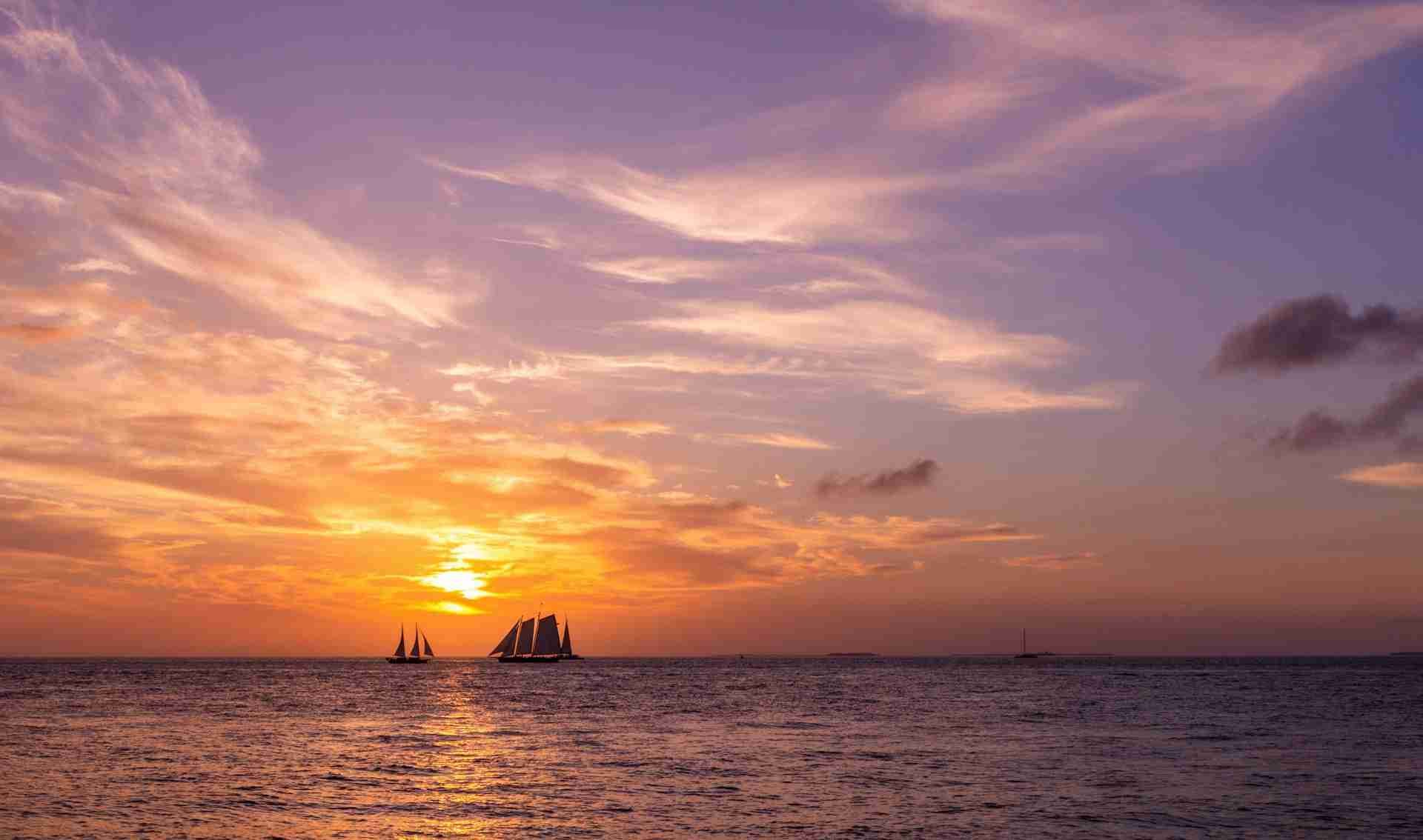
• Sunset from the beach's western jetty provides
an open view of the Gulf horizon with minimal visual interference. On clear evenings, the sky transitions through deep oranges, purples, and blues. Boats and paddleboarders often pass through the frame and can be used as moving elements to contrast against the stillness of long-exposure water. This is one of the most popular spots in the park, so arriving early helps secure a clear angle for tripod placement. The rocks along the jetty also serve as useful foreground anchors to stabilize wide compositions.
Best Time to Visit
Late autumn through early spring offers the best lighting and weather conditions for photography in Fort Zachary Taylor Historic State Park. From November to April, the air is drier, skies are often clearer, and the sun sits lower in the sky, producing more directional and golden-toned light during both sunrise and sunset. These months also bring cooler temperatures that make it more comfortable to carry gear and shoot for longer stretches.
Summer can be more challenging due to higher humidity, afternoon thunderstorms, and unpredictable light. While dramatic skies are common, the midday sun is often harsh and unflattering for most compositions. Early morning remains useful even in summer, when the park is quiet and the beach still holds overnight patterns in the sand and tide. Shooting inside the fort during summer can provide a break from the heat and an opportunity for controlled lighting conditions.
The park opens at 8 a.m. and closes at sundown, with the most productive times occurring within the first and last two hours of daylight. Tide levels are moderate throughout the year but can influence your ability to work from certain beach sections or explore the jetty safely. Wind conditions tend to be calmer in the morning, which helps for long-exposure work near the shoreline.
How to Get There
Fort Zachary Taylor Historic State Park is located at the southwestern tip of Key West and is accessible by car, bicycle, or on foot. The entrance is found at the end of Southard Street, just beyond Truman Annex. If driving, follow the signs through the gated park road to reach the main parking area. A single-day entrance fee covers both vehicle access and full use of the grounds, including the fort and beach areas.
For those staying in Old Town, the park is reachable by bike within ten to fifteen minutes. Bike racks are located near the entrance, and the terrain is flat and well maintained for carrying gear. Pedestrian access follows the same route and provides an easy walk from nearby lodging areas.
Once inside the park, the beach is a short walk from the parking area along a gravel path that passes through shaded picnic areas and restrooms. The fort itself is located to the east and can be reached within five minutes by foot. The grounds are open and accessible, and paths are wide enough for rolling camera bags or larger tripods. Commercial photography permits are required for organized shoots, and drones are not allowed without written permission from park authorities.
Recommended Photography Gear
A versatile setup that can shift easily between open beach photography and low-light interior work will serve you best in this location. A wide-angle lens in the 16 to 35 millimeter range is ideal for capturing the full scale of the beach and for framing large sky-and-water compositions. For tighter work inside the fort or to isolate details in the coral shoreline, a 24 to 70 millimeter lens offers useful flexibility.
A fast prime lens, particularly one in the 35 or 50 millimeter range, is recommended for low-light interiors and handheld shooting inside the fort's corridors. The contrast between brick, iron, and filtered light rewards lenses with strong rendering and minimal distortion.
For long exposures, a sturdy tripod is essential, particularly when shooting over uneven terrain near the rocks or jetty. Neutral density filters in six-stop and ten-stop strengths help control exposure for smoothing water or stretching sky movement. A circular polarizer is also useful to cut glare off the ocean and enhance contrast in shallow water.
The environment is tough on gear due to salt air, sand, and humidity. Weather-sealed cameras and lenses are recommended, and microfiber cloths should be kept accessible to clean surfaces frequently. A lightweight towel or dry bag helps keep equipment safe during sudden weather shifts or when setting up near the waterline. Footwear with grip is useful for climbing on rocks or walking across wet beach surfaces.
Nearby Photography Locations
• Truman Waterfront Park
is located just outside the entrance to the state park and offers broad views of the Gulf of Mexico, anchored boats, and open sky. It is an excellent location for clean sunset compositions, panning shots of marine traffic, or soft twilight color transitions over water.
provide a mix of weathered historic architecture and beach textures, with blooming tropical plants often growing against rusted iron and old brick. The location is quieter than other beaches and ideal for low-traffic long exposure work or close-up studies of decaying structures.
is famous for its public sunset viewings and street activity. It is not ideal for isolation or quiet landscapes, but it does offer candid opportunities and strong silhouettes when shooting from behind the crowd toward the horizon. Arriving early allows for position scouting along the seawall.
stretches along the south shore of the island and is best photographed in the early morning. It is long enough to avoid crowds and has minimal background clutter, making it a good place for drone photography or open water compositions with a minimal horizon.
• Southernmost Point and its surrounding seawall
offer a landmark-focused composition that is best captured before sunrise, when crowds are gone and the surrounding ocean is still. Including wave splash or low-angle framing from the edge of the street can provide a different take on this often-photographed location.
Fort Zachary Taylor Historic State Park Beach offers a rare combination of tropical shoreline and nineteenth-century stonework in one walkable location. With patience and planning, it is possible to create an entire body of work here that spans mood, subject, and light. From the surf to the cannon-lined halls, every part of the park holds visual weight for photographers who know how to see it.
Comments
Loading comments…