
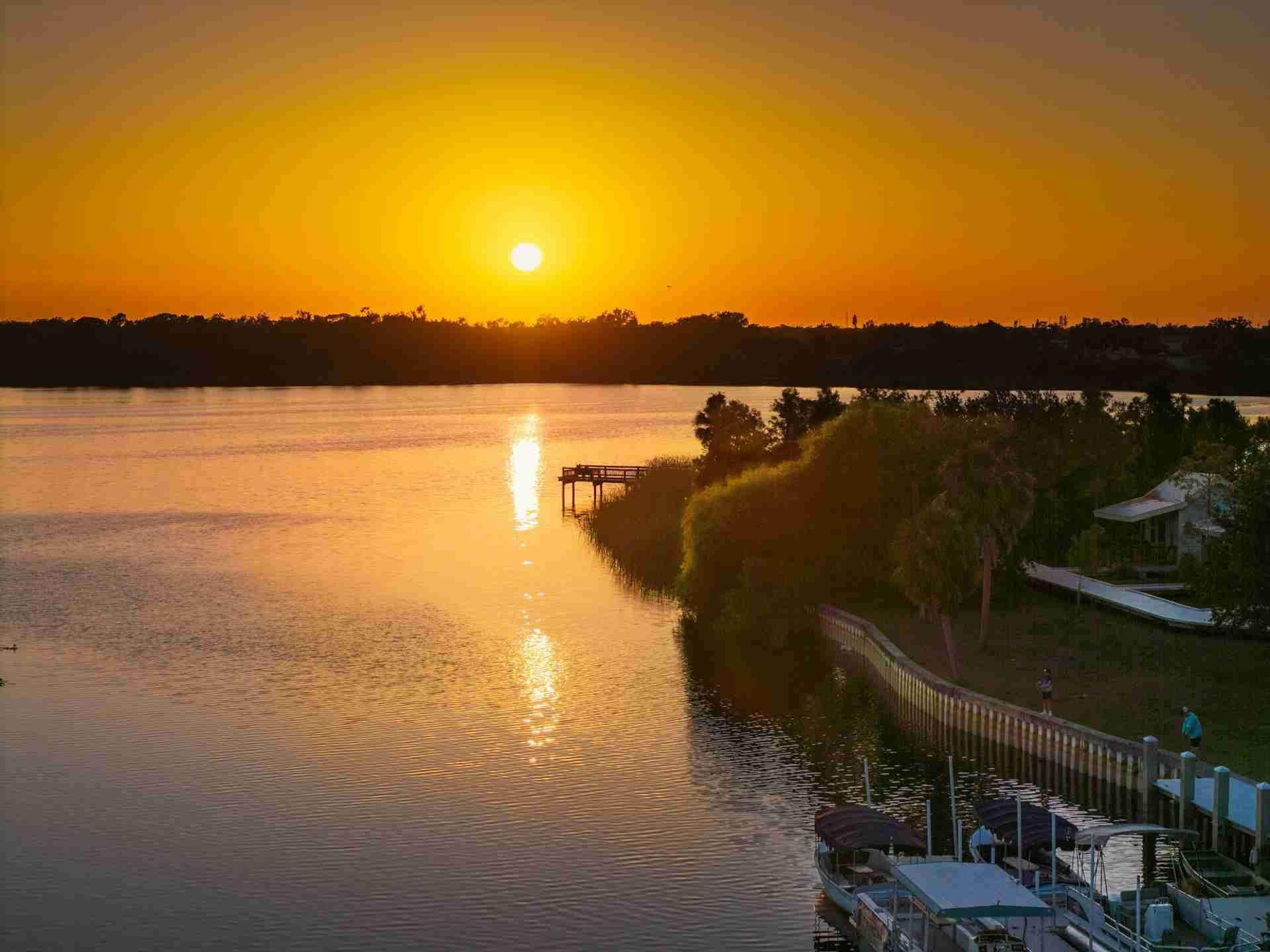
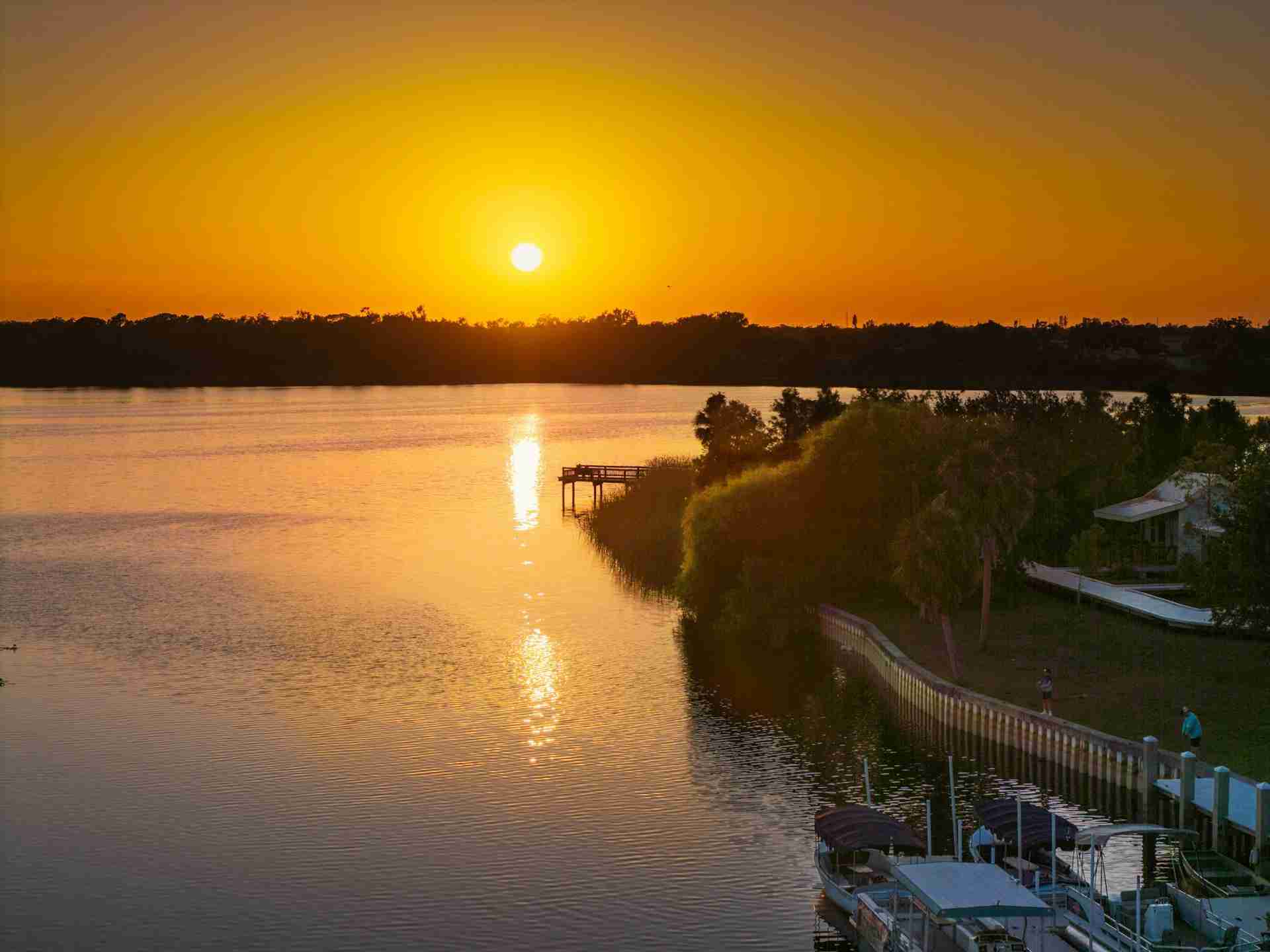
Jiggs Landing sits quietly along the Braden River, where slow moving water, cypress trees, and historic fishing cabins create a setting that's peaceful, photogenic, and rich with texture. Originally opened in the 1940s, the site has retained much of its rustic character, with preserved boardwalks, wood frame buildings, and rental cabins that blend into the low, marshy landscape. Early light filters through the Spanish moss, and still water reflects trees and clouds with surprising clarity. The calm atmosphere encourages a slow, methodical approach to photography, where everything from wide compositions to fine details can be explored. It's a location that rewards patience and offers something different in every season, with subtle changes in water level, sky, and wildlife activity keeping the scenery fresh and full of opportunities.
Best Photography Opportunities
• Boardwalk Overlooking the Braden River
The boardwalk offers multiple viewpoints looking out across the water, where long exposures can soften the river's surface and emphasize reflections of trees, clouds, and boats. The gentle curve of the walkway itself can be used as a lead in line, guiding the viewer's eye through the composition. Early in the day, warm side light adds depth to the wood grain of the railing and enhances the color of the riverbank foliage. Try different angles from the corners of the walkway to either isolate reflections or include the cabins for context. A tripod is useful here to create longer exposures or work with narrower apertures for more depth of field.
• Fishing Cabins and Wood Frame Details
The cabins are a highlight for photographers interested in rustic detail and texture. Faded paint, wood slats, screened porches, and hand painted signs provide plenty of subjects for both environmental context and tighter frame studies. These structures are best shot in angled light when the textures are enhanced and shadows add structure to the frame. A standard zoom lens allows you to switch between wide contextual views and tighter shots of signage, hinges, or tools. Black and white processing can also work well here, emphasizing the character of the buildings without distraction from color.
• Reflections in the River
On calm days, the river acts like a mirror, especially at sunrise, making it ideal for symmetry driven compositions. Spanish moss, overhanging branches, and wooden posts double in the water, creating layers of interest from top to bottom. This is also a good opportunity to use neutral density filters for long exposures, smoothing out the water to draw attention to shape and form. Reflections are strongest early in the morning before any wind picks up, so arrive just before dawn to set up. Slight changes in angle can dramatically affect balance and distortion in the mirrored image.
• Birdlife Along the Shoreline
Jiggs Landing is part of the Great Florida Birding Trail and offers reliable opportunities to photograph herons, egrets, anhingas, and other water birds. These subjects are often found perched on posts or slowly moving along the shoreline in early morning light. A telephoto lens between 200 and 400 millimeters is ideal for capturing detail without disturbing the birds. Use a shallow depth of field to isolate them from the background or shoot slightly wider to place them within their habitat. Bird activity is highest just after sunrise and before sunset, so keep your settings ready to respond quickly.
• Boats and Subtle Movement in the Marina
The small marina area is lined with anchored jon boats and rental canoes, many of which show signs of weather and age. These boats create interesting subjects for pattern and repetition work, particularly in low light or just after rainfall. Look for compositions that show the relationship between the boats, their reflections, and the surrounding vegetation. If there is mist on the river in the early morning, even simple scenes take on a soft, layered quality that's ideal for quiet compositions. Experiment with both color and monochrome depending on the conditions.
Best Time to Visit
The best time to photograph Jiggs Landing is during the cooler months, between November and April, when humidity is lower, light is more golden, and the area tends to be quieter. Mornings offer the best conditions, especially within the first hour after sunrise, when mist sometimes rises off the river and wildlife activity is at its peak. Early light moves softly across the water, enhancing reflections and illuminating the fishing cabins and shoreline with warmth. This is also the most stable time for tripod use and slow shutter speeds before any wind or boat traffic creates ripples in the water.
Evening shoots can also be productive, particularly during the winter when sunset arrives at a lower angle and throws long shadows across the dock. However, light tends to drop quickly behind the tree line, so timing and setup are important. Avoid midday visits if possible, as the flat overhead light and heat haze reduce contrast and color separation, especially on the water. In the summer months, the site can still be rewarding for detail work and bird photography, but early arrival is essential due to heat and heavy insect activity later in the day. Cloudy days can be ideal for texture and structure shots around the cabins and boardwalk.
How to Get There
Jiggs Landing is located in Bradenton, Florida, just off State Road 70 near the intersection with Linger Lodge Road. The entrance is clearly marked and leads to a small parking area next to the main dock and concession building. Parking is free, and the site is open to the public daily during daylight hours. All of the key photography areas, including the boardwalk, cabins, and marina, are accessible by foot within a few minutes of the lot.
There are no entrance fees to use the boardwalk or explore the public areas, though boat rentals and concessions are operated separately and may have their own hours and restrictions. Paths and docks are flat and suitable for carrying tripods or wheeled camera bags. Be cautious after rain, as the wooden surfaces can become slick. Restrooms are available near the concession area, and staff are usually on hand in the mornings if you have questions. The site is compact, making it easy to explore multiple perspectives in a single visit without needing to travel far.
Recommended Photography Gear
A wide angle lens in the 16 to 35 millimeter range is useful for capturing full views of the boardwalk, river, and cabins. It is especially helpful in low light when you want to include reflections or use foreground elements to add depth. A 24 to 70 millimeter standard zoom is ideal for flexible shooting throughout the park, allowing you to transition from environmental frames to detail work without needing to switch lenses. For wildlife and tighter isolation shots, a telephoto lens in the 100 to 400 millimeter range is recommended, particularly for birdlife and distant boats.
A lightweight tripod is valuable for early morning and long exposure work, especially around the boardwalk and river edge. Consider bringing a circular polarizing filter to manage reflections on the water and enhance cloud contrast. A neutral density filter is helpful if you plan to shoot the river with longer shutter speeds to smooth surface movement. Be sure to carry extra batteries and lens cloths, as humidity and fog can affect both power and clarity. Insect repellent, sunscreen, and a weather sealed bag or cover are essential in Florida's unpredictable climate. Because the site is small but varied, a single well packed backpack will be enough for most shooting sessions.
Nearby Photography Locations
Just a short drive away, this preserve features salt marshes, mangrove tunnels, and elevated boardwalks that offer great sunrise and sunset light. It is excellent for bird photography, wide landscape shots, and drone work, especially when tides are low and patterns appear in the water.
Located where the Manatee River meets Tampa Bay, this area has historical ruins, coastal trails, and open views toward the water. Sunsets are especially rewarding here, with silhouetted trees and long exposures over the shoreline.
A bit farther inland, this park offers vast wetland views, canopy walkways, and seasonal wildlife including alligators and migratory birds. Ideal for those looking to combine nature, wildlife, and moody light in a single visit.
For more urban framing, this stretch of walkway along the Manatee River includes piers, boats, and city skyline views that work well for twilight and blue hour photography. Reflections off the calm river are best on still evenings.
A shaded coastal site with interpretive trails, old trees, and beach access, this location offers a more relaxed, natural setting with strong light filtering through dense canopy and onto sandy shorelines.
Jiggs Landing is a place where Florida's older, quieter character still lingers. Its mix of slow water, rustic cabins, and early morning light makes it an easy and worthwhile stop for photographers looking to slow down and focus on subtle moments and reflections. Whether you are chasing light on the river or capturing stillness in weathered wood, this is a location that leaves plenty of room to explore.
Comments
Loading comments…