
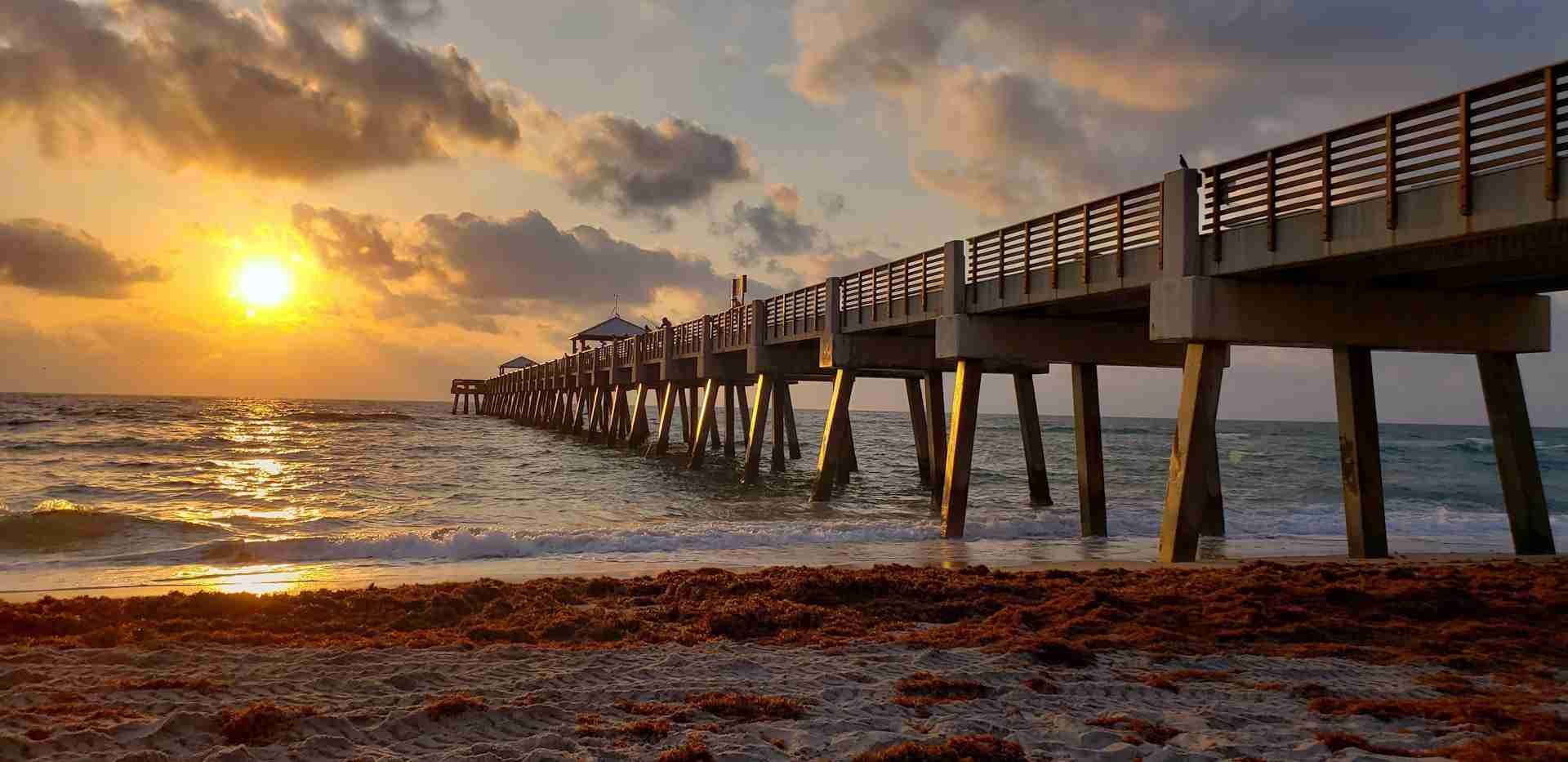
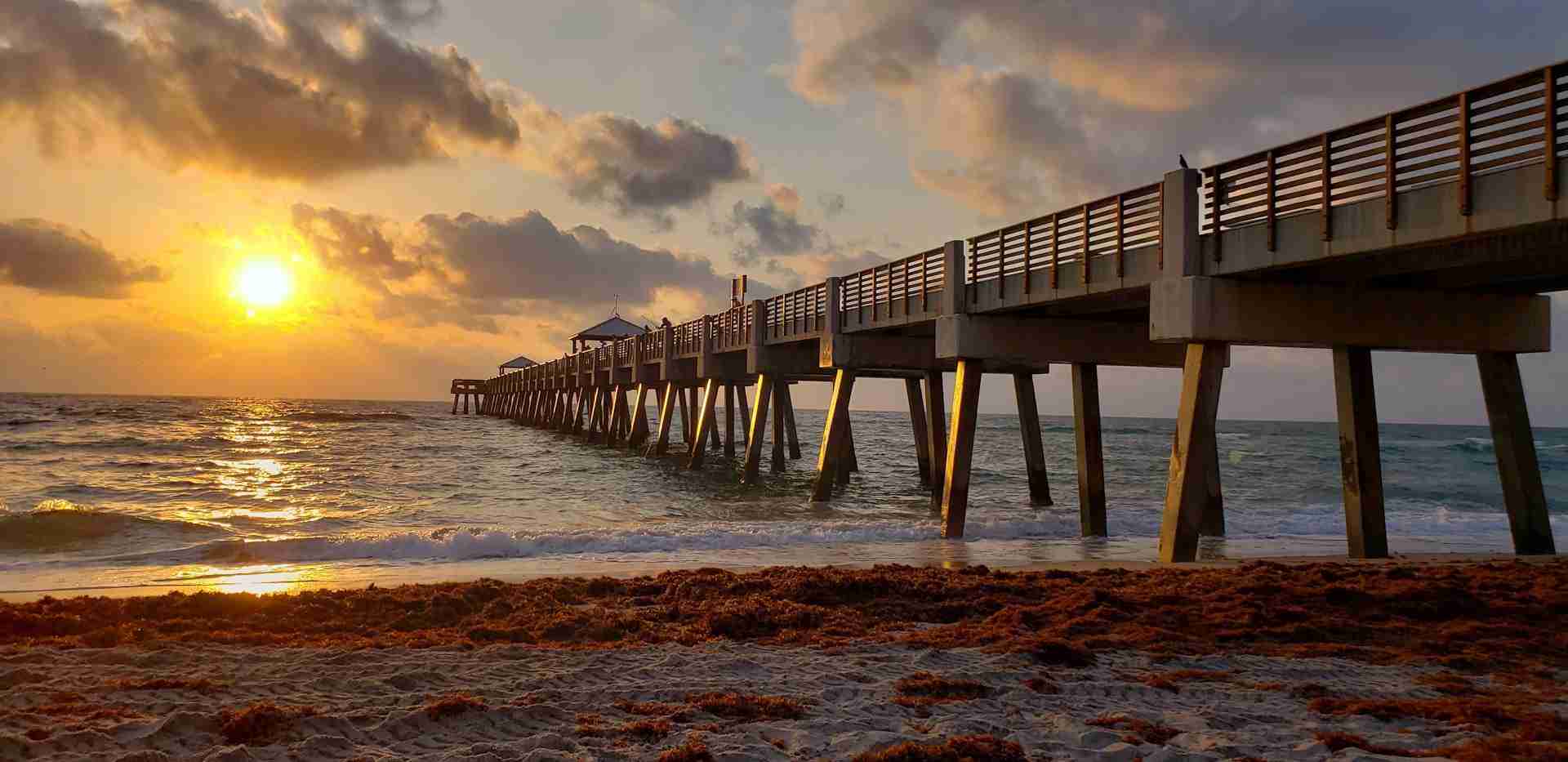
Juno Beach Pier, stretching 990 feet into the Atlantic Ocean, is an amazing photography location in South Florida with its vibrant sunrises and clean coastal aesthetics. With its strong lines, clean angles, and open surroundings, it offers dependable compositions in changing conditions. The beach is long and gently sloped, the pier is made of pale concrete that takes light well, and the water tends to move in slow, manageable rhythms. Whether you are shooting early light as the sun rises over the ocean or composing strong geometries beneath the pier's supports, this location gives you room to focus on shape, timing, and natural light. Photographers looking to work with symmetry, surf, and shifting weather will find plenty to explore in a single session.
Best Photography Opportunities
• Sunrise from the South Side of the Pier
Juno Beach faces directly east, making sunrise the best time to catch the ocean and sky in alignment. From the south side of the pier, you can frame the rising sun between or beside the supports, using the structure to anchor your composition. The beach in this area is usually clear of people early in the day, and the stillness gives you a chance to capture clean reflections in the wet sand. Use a wide-angle lens to get close to the foreground while keeping the entire pier in frame. Skies often hold thin cloud layers that glow as the sun climbs, giving you several phases of color to work with in a single shoot.
• Under the Pier for Strong Repeating Forms
Beneath the pier, the concrete supports form a natural tunnel that draws the eye toward the horizon. This repeating structure is ideal for symmetrical compositions and works well in both high contrast and soft light. The shot works best during low tide when the water pulls back and reveals more of the supports. Look for reflections in the wet sand and balance the vertical lines of the structure with a centered horizon. A tripod helps maintain a clean frame and keeps your lines steady if you are working with longer exposures.
• Golden Hour with Surfers and Breaking Waves
Juno Beach is a local surf spot with regular wave activity, especially after wind from the east or southeast. Golden hour before sunset brings warm side light that helps define the texture of the waves. You can shoot surfers directly or use them as scale elements beneath the pier. A mid-telephoto lens lets you compress the distance and capture detail in the surf without needing to stand too close to the waterline. The pier itself also works as a strong backdrop or framing element when shooting from farther down the beach.
• Long Exposures with Sky and Water Movement
On calm mornings or quiet evenings, Juno Beach Pier is an excellent place to work with long exposures. Use a six-stop or ten-stop neutral density filter to extend your shutter time and smooth the ocean surface. Include moving clouds for a sense of direction and flow, or focus on a static structure with a softened sea behind it. These shots benefit from stable conditions and low wind, and they often work best just before sunrise or after sunset when the contrast between sky and structure is more subtle. Be aware of shifting tide levels, which can affect how much of the pier is visible from your chosen angle.
• Storm Clouds and Afternoon Contrast
In the warmer months, afternoon storms build quickly inland and move east toward the ocean. These systems often create dark skies offshore while the beach remains in sunlight. The pier becomes a dramatic subject when framed against deep clouds and layered sky. Use a polarizer to bring out detail in the cloud forms and manage reflections on the wet sand. Lightning is common but unpredictable, so safety comes first. Wait until the storm moves offshore and use a longer lens to compress the frame and capture cloud movement as it passes behind the pier.
Best Time to Visit
The most reliable light and weather conditions occur from late October through early April. During these months, humidity drops, sunrise is later in the morning, and the skies are often cleaner. Morning sessions are quieter and give you the best opportunity for sharp reflections and low wind. Sunrise happens directly over the ocean, and when the sky is clear, the light hits the pier with soft pink and orange tones. In these cooler months, the beach is still warm but less crowded, making long exposures and wider compositions easier to manage.
Summer can bring vibrant color and strong light, but haze and heat often reduce clarity. Afternoon storms are frequent and short-lived, offering dramatic skies if you are already in place and ready. Sunrise remains your best option even in summer, as the beach is typically empty, and the air is still enough for clean conditions. Sunset works if you want to shoot warm side light hitting the west face of the pier, especially in winter when the sun angle is lower and shadows stretch across the sand.
Timing your visit around low tide gives you more space to shoot beneath the structure. Use tide tables and wind forecasts to help plan long exposure or reflection work. Early weekdays offer the best access with minimal foot traffic.
How to Get There
Juno Beach Pier is located in northern Palm Beach County at the end of Juno Beach Park. From Interstate 95, take the exit for Donald Ross Road and drive east until you reach Ocean Drive. The pier sits just north of the intersection, with a large public parking area adjacent to the beach. Parking is paid but straightforward, and spots are usually available early in the morning or late in the day.
The beach and surrounding area are open to the public, while the pier itself has a small fee for entry. You can shoot from the sand, the waterline, or under the pier at no cost. Restrooms, showers, and picnic shelters are available nearby. Photographers are welcome, though tripods should be used with awareness during peak hours. If you plan to shoot from on top of the pier, be mindful of fishing activity and avoid blocking access paths. Drones are restricted in the immediate area and may require approval under local regulations.
Recommended Photography Gear
A wide-angle lens is the first essential for photographing Juno Beach Pier. Whether you are capturing the full structure at sunrise or working underneath for symmetry, a focal length between 16 and 35 millimeters gives you the range needed to handle the scale of the scene. A mid-telephoto lens between 70 and 200 millimeters is useful for isolating surfers, pulling in storm clouds, or compressing waves against the pier.
A solid tripod is critical for long exposures and low light conditions. A six-stop or ten-stop neutral density filter will let you smooth out the water or show motion in the clouds during calm weather. A circular polarizer helps define sky tones and reduce reflections in the sand or sea. Make sure to bring a microfiber cloth to deal with salt spray, and consider a rain sleeve for your camera if shooting near the waterline.
Footwear that handles wet sand and water will keep you mobile while working around the pier. The light shifts quickly in this area, so simple gear changes and readiness are more important than a large kit. A camera with responsive autofocus and quick adjustment controls will help you keep up with changing light and wave movement, especially during fast sunrise shifts.
Nearby Photography Locations
Located about twenty minutes north, this preserve features jagged limestone rocks that break the flat line of Florida's coastline. Waves crash against the rocks at high tide, and sunrise here offers dramatic action against the ocean backdrop.
South of Juno Beach, this protected stretch of coastline includes boardwalks through mangroves, natural dunes, and a wide, quiet beach. It is ideal for minimal compositions and nature-focused scenes, especially early in the morning.
Farther south, Lake Worth Pier offers another clean structure with different spacing and design. The surrounding beach is more developed, but it provides variety in pier framing and often has larger wave activity.
• Riverbend Park
In nearby Jupiter, this inland park includes shaded creeks, walking trails, and cypress stands. Morning mist and soft filtered light make it a strong change of pace from beach shooting, especially with a long lens.
Just north of Juno Beach, the lighthouse overlooks the inlet and is best photographed during golden hour or blue hour from across the water. Reflections and bridge views give you multiple framing options from nearby walkways.
Juno Beach Pier may seem like a straightforward subject, but its simple structure and consistent light allow for a wide range of work. The surrounding beach is easy to access, the waterline shifts gently, and the sky often changes by the minute. With careful planning, a tight kit, and patience for the conditions, this location will reward you with quiet, balanced frames that carry the rhythm of Florida's east coast.
Comments
Loading comments…