
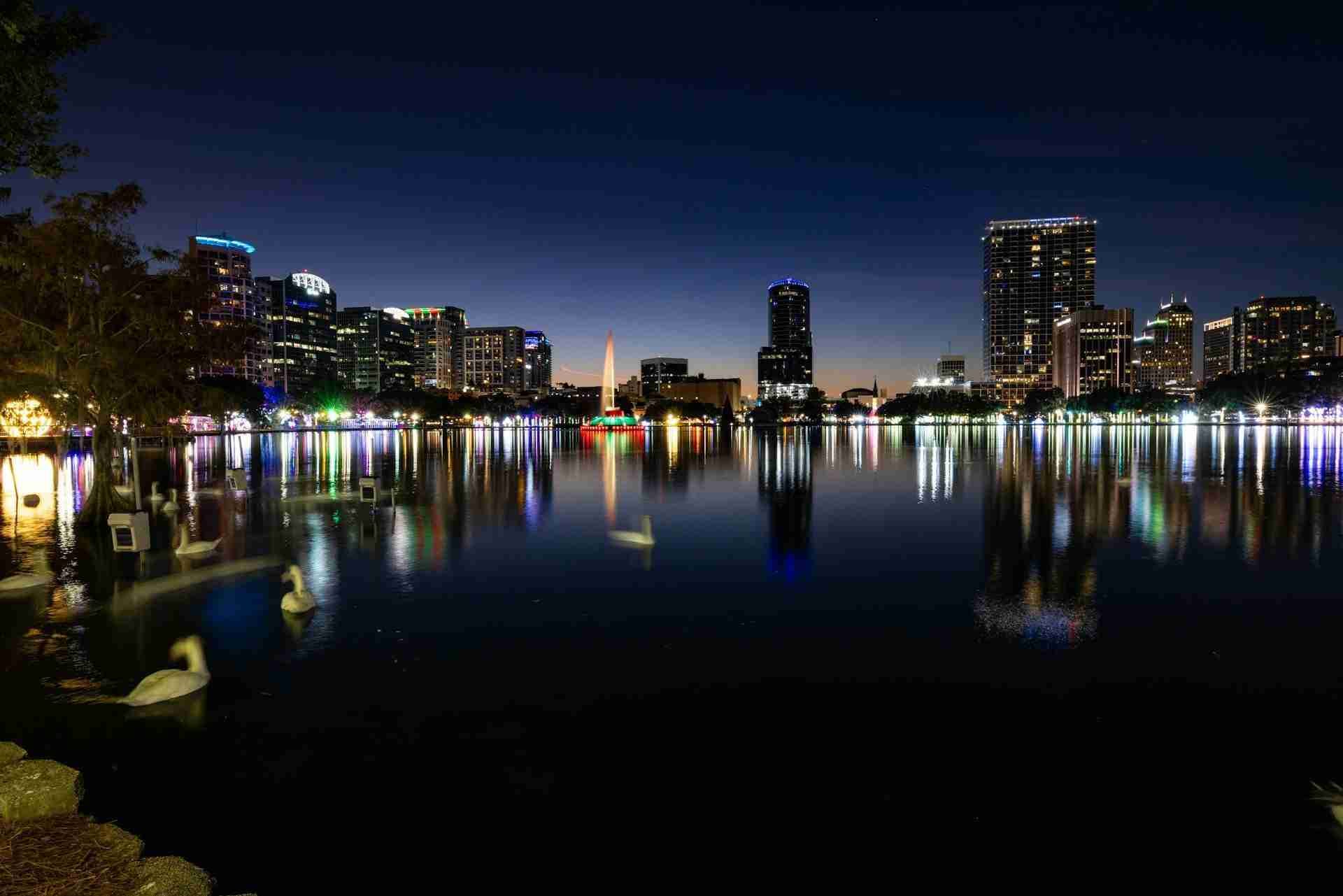
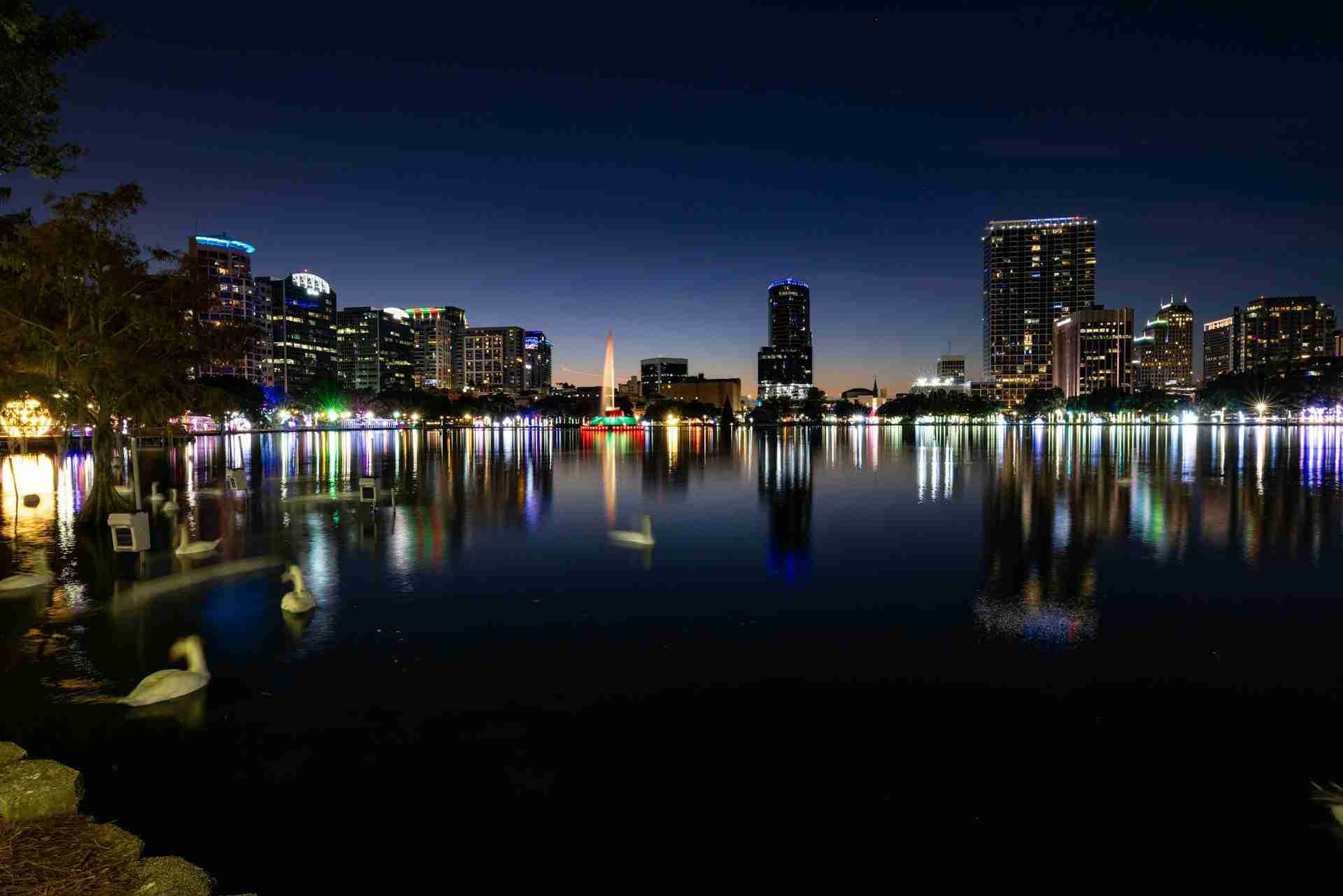
Lake Eola Park sits at the heart of downtown Orlando, offering a lush, urban oasis centered around a nearly mile-wide lake flanked by swan-shaped paddle boats, stately palms, and a dramatic skyline. Known for its fountain centerpiece, regular community events, and resident swan population, Lake Eola is both a local gathering spot and a photographer's playground. Whether you're shooting skyline reflections in glassy morning water or capturing silhouetted palms at sunset, this park delivers a diverse range of natural and urban compositions in a compact, walkable setting.
Best Photography Opportunities
• Orlando Skyline Across Lake Eola
: The park's northeastern shoreline provides the classic wide-angle composition of the lake with Orlando's high-rises reflected in the water. This view is especially powerful just after sunrise when the sky's warm tones glow behind the buildings and the water is typically calm enough for a crisp mirror image. A wide-angle lens helps capture the skyline with surrounding foliage and foreground texture like reeds or waterfowl.
• Linton E. Allen Memorial Fountain
: The iconic multi-tiered green fountain at the center of Lake Eola lights up in the evening, creating beautiful nighttime compositions. Use a tripod for long exposures during blue hour to capture the water's motion and the colorful lights shimmering across the lake's surface. The best angles often come from the south side of the lake, allowing the fountain to be framed against the downtown skyline.
• Resident Swans and Wildlife Detail
: Lake Eola is home to several species of swans, including the elegant black-necked and white mute swans. Use a telephoto or standard zoom lens to capture portraits of these birds as they glide across the water or nest along the shore. Mornings are best for soft light and fewer distractions in the background. Swans make excellent subjects for both high-key compositions and moody, low-light detail shots.
• Palm Trees and Natural Frames
: Tall palms around the lake provide perfect vertical elements to frame the skyline or pedestrian paths. Experiment with compositions that use tree trunks as natural dividers or shoot up into the canopy with a wide lens to emphasize the Florida light filtering through fronds. Side light at sunrise or sunset adds strong texture and shadow to the palms and ground surfaces.
• People and Events as Visual Texture
: The park often hosts weekend farmers markets, concerts, yoga classes, and art festivals. These provide opportunities for candid, environmental portraits or broader lifestyle compositions that show interaction between the community and landscape. Street-style or documentary photography excels here when paired with the reflective lake or skyline as a visual anchor.
Best Time to Visit
The best time to photograph Lake Eola Park is in the early morning, particularly during sunrise. The sun rises behind the skyline when viewed from the park's east side, illuminating both the buildings and water with warm directional light. Morning visits also offer the smoothest water conditions, ideal for reflection photography, and fewer crowds.
Golden hour in the evening is also photogenic, especially when photographing silhouetted palms, fountain lights, and ambient color transitioning through the skyline. Sunset from the western side of the park offers strong backlighting for subjects on or near the lake, while twilight provides a vibrant mix of architectural and environmental lighting.
Spring and autumn are the most comfortable seasons for shooting, offering cooler air, clearer skies, and reduced humidity. Summer mornings work well, but midday light is harsh and best avoided. Rainstorms are frequent in summer afternoons, so monitor weather closely—stormy clouds can dramatically enhance sunset shots after the rain clears.
How to Get There
Lake Eola Park is located in downtown Orlando, bounded by East Central Boulevard, North Rosalind Avenue, East Robinson Street, and North Eola Drive. It is easily accessible by car, bike, or foot, with several nearby public parking garages and metered street parking available.
Orlando's LYMMO bus rapid transit system includes stops near the park, and the site is walkable from many downtown hotels and business centers. The park's loop trail offers a complete circuit around the lake, with numerous benches, shade trees, and elevated viewpoints ideal for photography.
Public restrooms, water fountains, and picnic areas are available throughout the park. There are also nearby cafés and restaurants, which can be incorporated into broader urban storytelling compositions if you're documenting the city's lifestyle.
Recommended Gear and Shooting Tips
A wide-angle lens (16–35mm) is perfect for skyline reflections, fountain shots, and capturing the full breadth of the lake from shore. A mid-range zoom (24–70mm) allows flexibility in framing palm trees, swans, and casual park life. A telephoto lens (70–200mm) is especially useful for wildlife portraits, architectural compression, and candid street scenes from a distance.
A tripod is recommended for blue hour and night shots of the fountain and skyline. Bring a circular polarizer to enhance sky contrast and reduce water glare when shooting during the day, though use it carefully when working with wide lenses to avoid uneven polarization across the frame.
Sunrise and sunset sessions benefit from graduated neutral density filters to help manage exposure between sky and water, especially when clouds create high dynamic range. Be ready to shoot handheld if exploring events or photographing birds in motion—image stabilization and fast shutter speeds help capture fleeting moments clearly.
Bring extra batteries and lens cloths in the humid seasons, and be prepared to wipe condensation or fog from your lens during early morning sessions. Water-resistant footwear is useful if you plan to shoot from the lake edge or after rain.
Nearby Photography Locations
: Just east of Lake Eola, this charming neighborhood features brick-lined streets, murals, and colorful bungalows. Great for urban details and lifestyle compositions, particularly during morning light.
: Located west of the park, these buildings offer dramatic modernist and postmodern architecture, with clean lines and bold surfaces that work well for architectural abstractions and symmetry.
: A few blocks southwest of Lake Eola, this sleek, glass-fronted complex offers strong reflections, geometric lines, and interesting play between natural and artificial light.
: About a mile southeast, this shaded ravine features stone bridges, dense foliage, and filtered sunlight—perfect for nature-focused and portrait work in a moody, intimate setting.
: A short walk away, this historic rail and entertainment district combines vintage signage, brick facades, and elevated tracks ideal for architectural or urban storytelling work.
Lake Eola Park is a compact, ever-changing canvas that bridges Florida's natural beauty with the lines and reflections of modern city life. With each hour of light and season of color, it offers photographers a rare chance to explore the subtleties of form, nature, and urban rhythm in the heart of downtown Orlando.
Comments
Loading comments…