
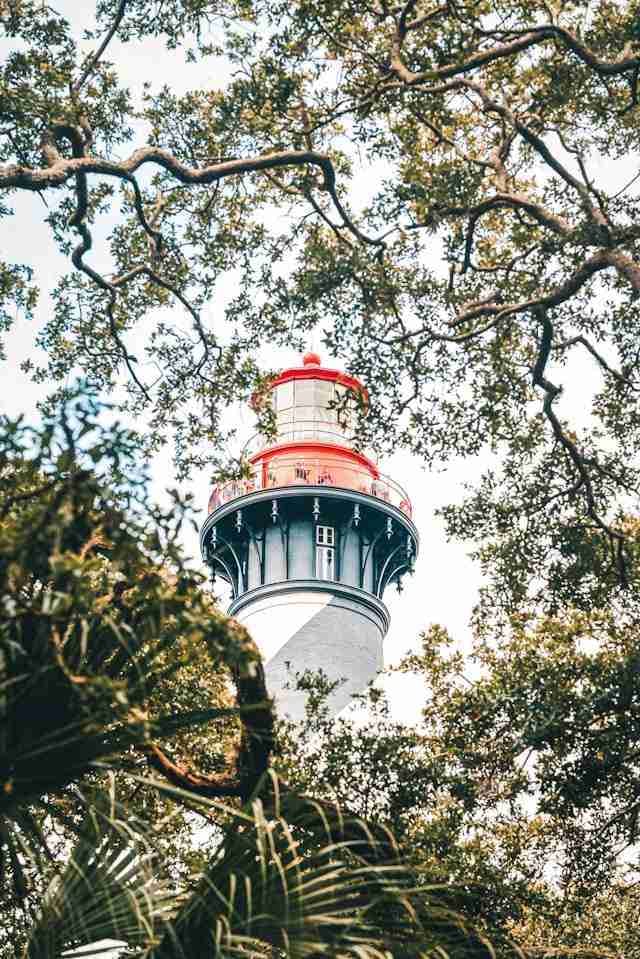
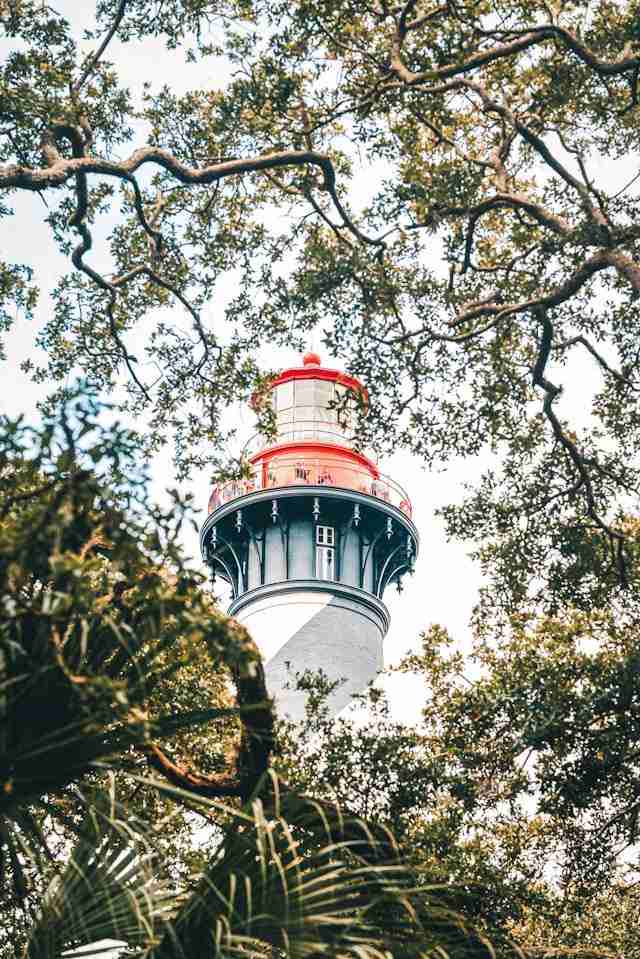
Rising majestically above Anastasia Island, the St. Augustine Lighthouse captures the essence of Florida's oldest city with its timeless maritime heritage and architectural elegance. This black-and-white striped sentinel, accompanied by keeper's cottages and historic outbuildings, commands attention at sunrise and dusk. The blend of coastal landscapes, verdant grounds, and reflective salt marsh makes this location ideal for landscape, architectural, and heritage photographers. Whether framing the spiraling staircase or capturing the winter light across the marsh, this site offers a captivating window into the region's past and present.
Best Photography Opportunities
• Dramatic sunrise behind the lighthouse tower
Positioning yourself on the marsh side from the boardwalk during early morning, you can frame the lighthouse rising above golden hues reflected in the salt pans. Use a wide-angle lens to incorporate the tower, marsh grasses, and morning mist in a cohesive scene. The soft light at dawn accentuates the tower's stripes and textures while mist or low clouds enhance atmosphere. Using exposure bracketing here ensures detail retention in both bright sky and shadowed masonry. Consider foreground elements like reeds or puddles to create layers of interest, and adjust your angle slightly for unique silhouettes of the keeper's buildings framed by dawn's glow.
• Beacon beam arcs at twilight
As blue hour approaches, the lighthouse beacon tips alight, casting rhythmic beams across the marsh and coastal palms. Place your tripod on stable walkways and use a slow shutter (15–30 seconds) to trace the circular sweep of the lens against deepening sky. Including foreground elements like marsh grasses, fence lines, or reflective puddles enhances depth and foreground interest. A mid-telephoto lens helps compress the beam's motion, creating dramatic concentric arcs enveloping the tower. Shoot from different elevations or distances to experiment with the symmetry of light trails and incorporate the glowing top lantern as a compositional anchor against the indigo sky. On clear nights, stars or passing boats may introduce additional light elements for creative compositions.
• Keeper's cottage and lantern house reflection studies
The complex around the lighthouse, including historic brick cottages and oil-house structures, sits beside small reflecting ponds. Shoot these features from low angles during calm hours to capture mirrored compositions that contrast building symmetry with environmental calm. A wide-angle or 24–70mm lens lets you frame the architecture and its reflection, while a polarizer may be dialed in to control glare and enhance water detail. Late afternoon light creates warm hues on red brick and tree canopies, enriching the reflections and producing painterly texture. Be mindful of foot traffic and use a shallow depth of field to emphasize your main architectural subject. If visiting during the holidays, string lights on the cottages add festive elements perfect for seasonal compositions.
• Spiral staircase interior in chiaroscuro light
Inside the tower, natural light pours through slit windows, casting dramatic shadows on the spiral staircase. Use a fast prime lens (35mm or 50mm) and moderate ISO to preserve ambient light mood. Frame the escalated spiral from above or below—shoot down the central column for symmetry, or shoot up to capture concentric curves leading to the sky. The interplay of light and dark shadows defines form and geometry, echoing the lighthouse's historic functionality. Consider shooting in monochrome to highlight texture and contour, and take time to let passing visitors clear for clean, uninterrupted shots. A slow, deliberate approach works best to capture the layered elegance of this unique architectural feature.
• Stormy coastal drama and wild surf
The northern side of the light marks the Atlantic shore's volatile mood. During onshore winds, waves crash dramatically against nearby jetties and the shoreline. Use a wide-angle lens to include both the tower and rough seas. With a 1/50–1/250-second shutter, freeze wave impact; use a 1–3-second exposure with ND filters for silky motion around the base. Consider monochrome processing to emphasize contrast, tonal texture, and stormy sky drama. Capture the juxtaposition of natural chaos with man-made steadiness by framing the tower sturdy against the blurred fury of wind and waves. Use a telephoto from afar for tighter, more isolated shots of the lighthouse bathed in wind-driven mist. Stormy conditions also lend themselves to dramatic time-lapse sequences, particularly when lightning or cloud movement is present.
Best Time to Visit
St. Augustine Lighthouse offers a dynamic visual experience year-round, but early mornings and late evenings provide the richest light and the most pleasing compositions. Spring and fall bring mild fog over the marsh and calm winds; perfect for sunrise reflections and crisp twilight. These seasons also offer vibrant foliage, giving added color to both marshland and architectural surroundings. Long summer days allow comfortable evening shoots, but humidity may affect visibility, so choosing your timing based on forecast clarity is important. Summer storms often roll in during late afternoon, and these dramatic clouds can add powerful emotion to your sunset frames.
Winter months deliver clearer skies and sharper light, with the tower's black stripes vividly defined against pastel skies and the occasional dusting of salt spray forming crystalline textures on nearby surfaces. Storm fronts during autumn and winter further amplify coastal drama, creating moody backdrops that contrast beautifully with the white and black of the tower. Weekdays and early mornings between 7–10 AM or after the last tour at sunset are best for avoiding crowds and opening up flexibility for setup and framing. If visiting on holidays or weekends, plan to arrive early and scout angles in advance to avoid interference from foot traffic.
How to Get There
The St. Augustine Lighthouse & Maritime Museum is located at 100 Red Cox Drive, St. Augustine, on the north end of Anastasia Island. From the historic downtown district, head east across the Bridge of Lions, then continue onto Anastasia Boulevard before turning right onto Red Cox Drive. Parking is available in a spacious lot just outside the entrance, with additional overflow during peak periods.
Admission is required to access the lighthouse tower, museum exhibitions, and historic structures, but the grounds and marshside boardwalks can often be enjoyed freely during daylight. Be sure to check for weather-related closures, especially during hurricane season or high wind advisories, which may affect access to the tower itself. Signage throughout the property is well-placed for orientation, and staff are available for site-related guidance. Photographers planning multi-hour shoots should bring water and prepare for Florida's variable weather by packing light rain gear and sun protection.
Recommended Gear for St. Augustine Lighthouse
To fully explore the variety of photographic compositions this site offers, bring a wide-angle lens (16–35 mm) to encompass tower-and-marsh panoramas, interiors, and dramatic skies. A mid-range zoom (24–70 mm) is invaluable for cottages, closer tower studies, and marshland focal compositions. A 70–200 mm telephoto lens provides excellent reach for isolating the beacon, shooting wildlife among the reeds, or compressing distant storms over the sea.
A sturdy tripod is crucial for twilight and blue hour images, long exposures, and stormy-day scenes. A circular polarizer helps manage reflection and enhances color depth in the marsh and sky. Use a lightweight 3–6 stop neutral density filter for smoothing wave action or softening cloud movement. A fast prime lens (35mm or 50mm) performs beautifully in the tower interior, capturing shadow play on the spiral staircase without the need for high ISO. Bring a remote shutter release for hands-free long exposures, along with extra batteries and weather covers for unpredictable Florida conditions. A headlamp is highly useful for navigating darker areas before dawn or after sunset.
Nearby Photography Locations
offers wide coastal dunes, salt marsh expanses, and fishing jetties. It's ideal for sunrise shoreline leads and birdlife framing. A morning walk toward the beach unveils reflective tidal pools and driftwood elements ideal for foreground layering.
• St. Augustine Pier (formerly Vilano Beach Pier)
provides long Atlantic vistas and swirling water motion—stunning at sunrise and overcast days. The structure itself offers symmetry and scale, while surfers and beachgoers offer dynamic subjects.
offers Spanish colonial architecture with layered limestone walls, moat reflections, and sturdy ramps—best early morning or late afternoon. The fort's historic cannons and shadows cast by its thick walls create rich monochrome potential.
• St. Augustine Historic District at dusk
features narrow streets, gas lamps, and Spanish-style architecture—giving rich local ambiance and warm mood shots. Long exposures after sunset can highlight light trails from passing trolleys or glow from window lanterns.
• Matanzas River Bridge viewpoints
offer framed river marsh and dense coastal canopy, with pelicans, boats, and dynamic river reflections during golden hour. Early morning fog can create ethereal atmospheres here, perfect for minimalist compositions or wildlife silhouettes.
Comments
Loading comments…