
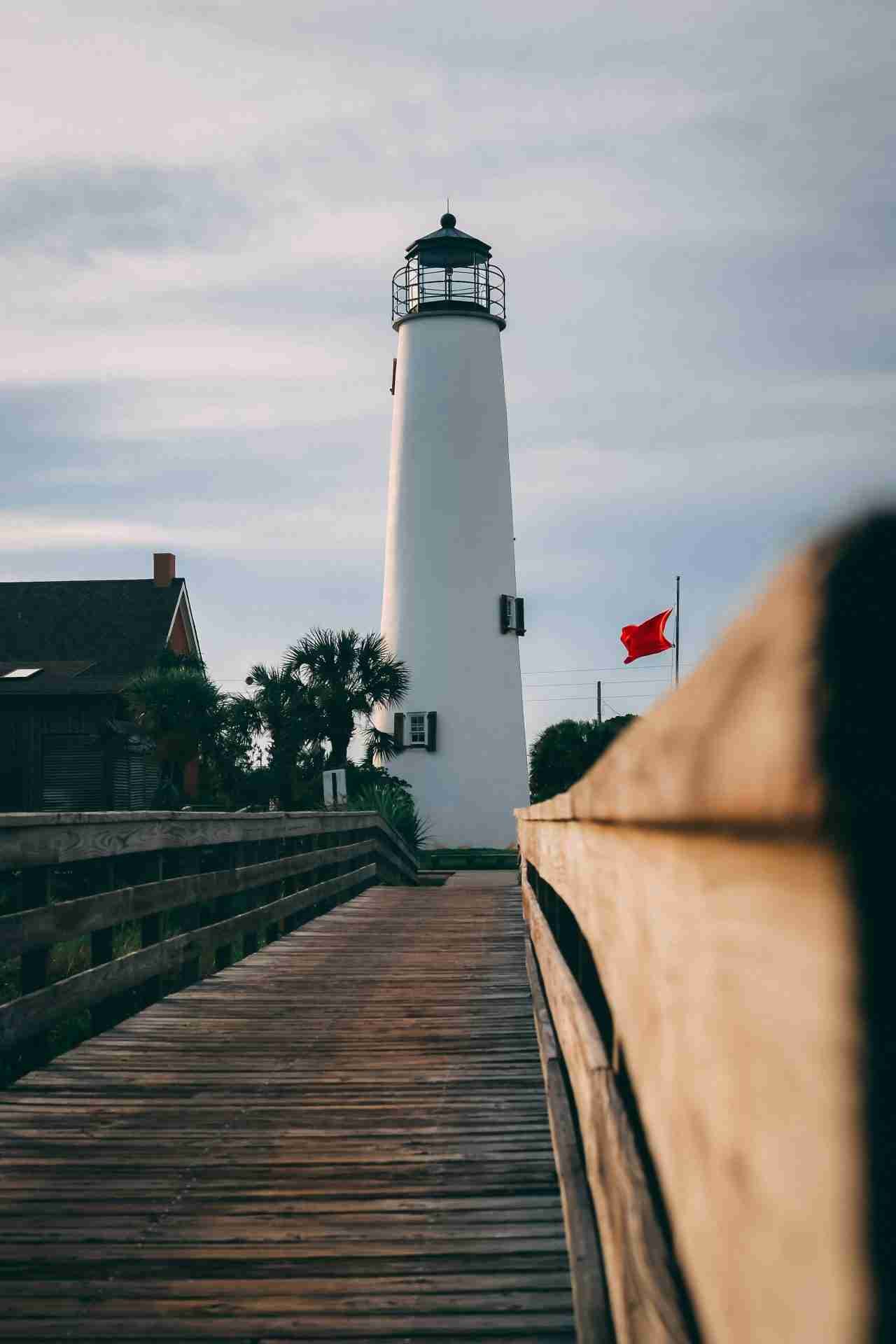
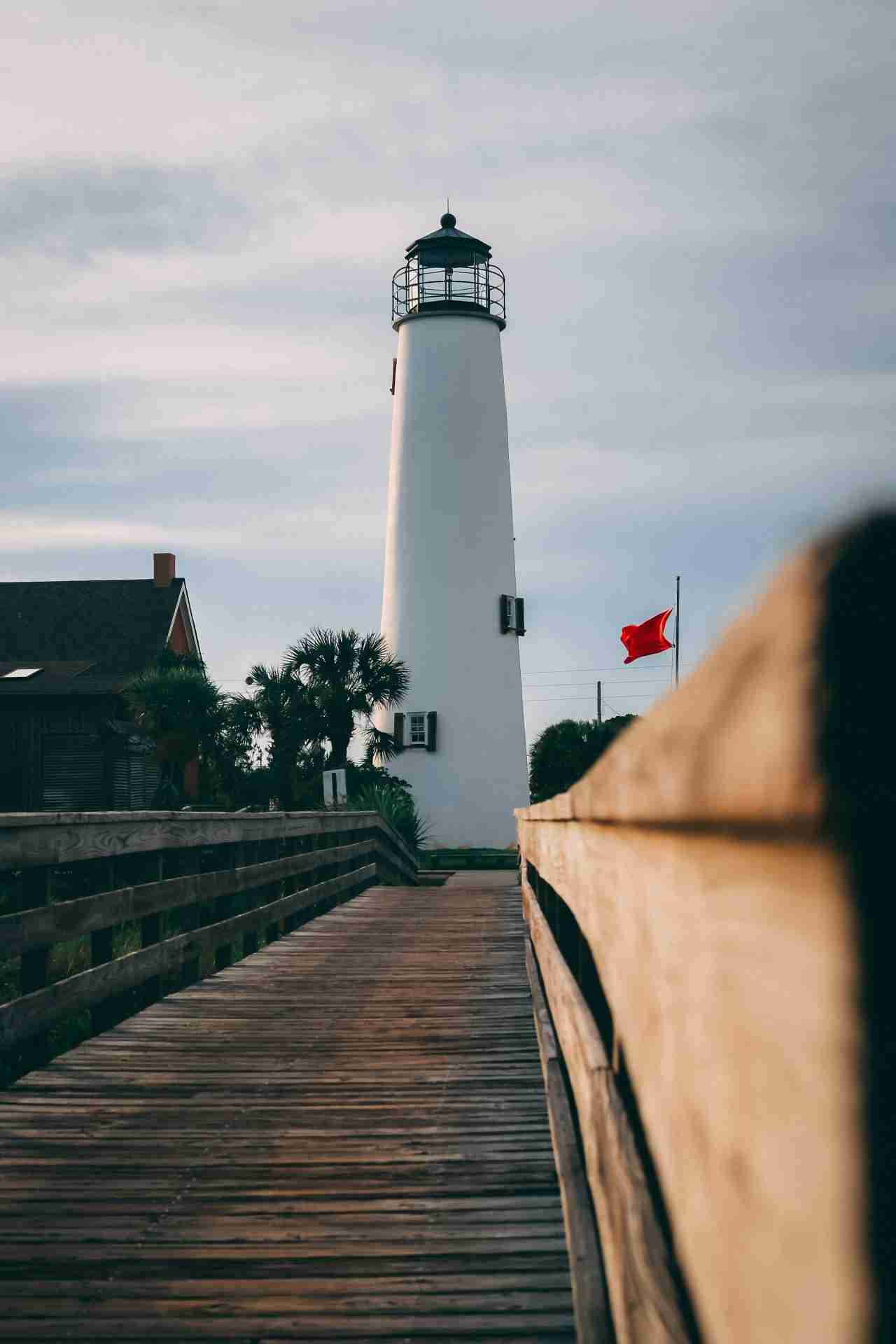
St. George Island Lighthouse stands just behind the dunes on the Gulf side of St. George Island, a barrier island off Florida's Forgotten Coast. Originally built in the 1800s and reconstructed in its current location after storm damage, the lighthouse now serves as both a visitor center and a photogenic subject. With white sand, sea grass, and big skies in every direction, this location offers a lot of flexibility for framing and light. The lighthouse's clean shape and pale color contrast nicely against the sky during the day and become especially striking at golden hour. Whether you're walking around the base, photographing from the dunes, or working the shoreline, this spot is ideal for simple, strong compositions with plenty of breathing room.
Best Photography Opportunities
• Classic Lighthouse Portrait
From just beyond the fenced off grass near the dunes, you can frame the lighthouse with natural foreground texture and open sky behind. This view is strongest in late afternoon when the sun lights the side of the tower and brings out the warm tones in the sand and plants. The simplicity of the scene works well for wide angle landscapes or tighter vertical frames that isolate the lighthouse. A polarising filter helps deepen the sky and reduce glare, especially on clear days. Early golden hour gives you enough light to work without rushing while adding soft shadows to shape the scene.
• Sea Grass, Dunes and Fencing in the Foreground
Walking along the nearby paths or beach entrances gives you opportunities to include low fencing, dune lines, or patches of sea grass in the lower part of the frame. These elements help lead the viewer's eye toward the lighthouse and provide depth without overpowering the composition. Shooting from a slightly lower angle makes the tower appear taller and separates it from the horizon. Light cloud cover can soften the background and help keep attention on the main subject.
• Golden Hour Views
The western side of the lighthouse catches warm light in the last hour before sunset. From this angle, you can shoot with open space behind the tower or include parts of the island's residential edge for context. The long shadow of the lighthouse stretches across the sand and gives your image more visual weight. A standard zoom lens works well here, allowing you to adjust between wide and medium frames without needing to move far. These conditions are also great for silhouettes if the sun drops low behind the tower.
• Vertical Compositions with Big Sky and Tower
Because the lighthouse is fairly compact and the surrounding land is flat, vertical compositions help emphasize the height of the structure. Shooting with a wide lens pointed slightly upward creates a sense of scale without distortion. Including plenty of sky adds breathing room and allows for stronger impact if the weather shifts. This is a good option on days with cloud patterns or strong color in the upper part of the frame. A handheld setup is often enough, especially in brighter conditions.
• Evening Blue Hour
After sunset, the park around the lighthouse stays open long enough to catch soft blue light behind the structure. The artificial lighting on the lighthouse gives it a glow that stands out against the cooler background. This is the best time for low light shooting and tripod work, especially if you want a cleaner, quieter frame. A longer exposure smooths any remaining activity and balances the contrast between warm and cool tones. Keep an eye on the horizon for color remaining after sunset.
Best Time to Visit
The best time to photograph St. George Island Lighthouse is in the late afternoon through golden hour. The sun sets over the island to the west, lighting the tower from the side and giving you warm light across the sand, grass, and structure. These conditions help define the tower without harsh shadows and add a soft color gradient to the sky. If you're staying past sunset, blue hour gives you a final chance to capture soft tones with less foot traffic.
Early morning is much quieter, but the lighthouse is front lit from the Gulf side. This works for clean documentary style shots or if you're working with cloud cover that helps break up the brightness. Overcast days give you more even light, which is helpful if you're focusing on textures or tighter framing. Seasonal differences are small, but winter tends to bring clearer skies and cooler color tones, while summer sunsets are longer and more dramatic when clouds build along the coast.
How to Get There
St. George Island Lighthouse is located in the center of St. George Island, Florida, along E Gulf Beach Drive. From the mainland, cross the Bryant Patton Memorial Bridge from Eastpoint and follow the main road directly to the lighthouse, which is visible as you approach the public beach access area.
Parking is available nearby, with spaces at the visitor center and beach access points just a short walk from the lighthouse. The grounds around the lighthouse are open to the public during daylight hours, and there is no fee to photograph from the outside. If you're planning to shoot inside or climb the tower, the lighthouse may charge a small admission fee, depending on the season and opening hours. All walkways and paths around the structure are level and easy to access, and there are restrooms and water stations nearby.
Recommended Photography Gear
A wide angle lens in the 16 to 35mm range is useful for framing the lighthouse with surrounding dunes, beach grass, and sky. A 24 to 70mm zoom works well if you want more control over framing or plan to include foreground elements. A polarising filter is helpful on bright days to manage glare and deepen the sky, especially when shooting side light in the afternoon.
A tripod is recommended if you're shooting blue hour or long exposures, particularly after sunset. A lens cloth or small brush helps clear sand or salt spray from your equipment, especially when the wind picks up. Because the area is flat and walkable, you can carry a light kit and still explore several angles without needing to move far.
Nearby Photography Locations
Just east of the lighthouse, the state park has miles of undeveloped coastline, wide dunes, and empty beaches perfect for morning light and long exposure work. It's one of the best places on the island for more isolated coastal scenes.
Across the bridge on the mainland side, these piers provide wooden textures, waterlines, and a strong view back toward the island. Great for evening light and reflected sky colors on calmer days.
West of the island, Apalachicola offers old storefronts, boats, and maritime textures that contrast with the clean lines of the lighthouse. It's ideal for mixing architectural and documentary-style shots.
Accessible by boat or charter, the original site of the first lighthouse is still visible in ruins. This is a more remote option for those wanting to connect the history of the newer tower to its original location.
Comments
Loading comments…