
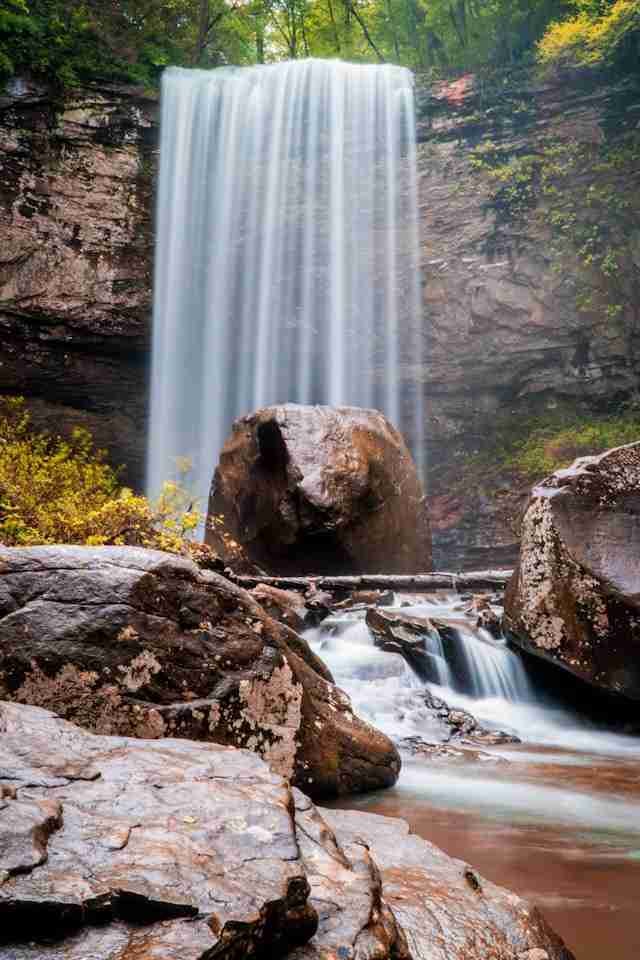
![Water and Rock in Motion around Hemlock Falls Hemlock Falls lies deep in the gorge of Cloudland Canyon State Park, […]](https://storage.googleapis.com/pixeo-blog.firebasestorage.app/article-images/wp-import/featured-134908.jpg)
Hemlock Falls lies deep in the gorge of Cloudland Canyon State Park, tucked into a natural bowl of layered rock and dense forest. Reached by a steep trail and a set of stone steps, the falls offer a clean vertical drop into a dark, shallow pool surrounded by moss and ferns. The waterfall isn't massive, but the combination of its shape, setting, and surrounding textures make it a strong subject, especially when the water is flowing steadily. Tree trunks and overhanging ledges provide natural framing options, and the light filtering into the canyon shifts subtly throughout the day. Photographers willing to make the descent are rewarded with moody compositions that balance water movement, rock form, and woodland detail.
Best Photography Opportunities
• View from the Pool with Full Waterfall Framing
One of the most effective compositions starts near the base of the pool, facing directly toward the waterfall. From this angle, you can use foreground rocks to anchor the bottom of the frame and lead the viewer's eye upward. A wide lens helps include the waterfall's full drop, the reflecting pool, and the moss covered canyon walls. Shooting at lower angles gives a grounded perspective and emphasizes the height of the falling water. Early morning is best for this shot, as the sun is still low and the canyon remains shaded. Reflections are strongest when the water is calm and there is little breeze.
• Close Range Texture Studies along the Rock Face
The stone wall that surrounds Hemlock Falls is full of subtle color shifts, water trails, and moss growth that lend themselves well to detailed compositions. Using a standard zoom or short telephoto, isolate small sections where water flows lightly across stone or where vegetation breaks up the rock pattern. These subjects benefit from even light, especially on overcast days when shadows are soft and the texture stands out. Slower shutter speeds help create contrast between the moving water and the still surface. Look for areas where mineral stains or erosion marks form natural lines through the frame.
• Framed Views from the Upper Platforms and Trail
On the way down to the base, several sections of the trail offer partial views of the falls framed by trees, railings, or outcroppings. These scenes work well for placing the waterfall within its environment and telling the broader story of the descent. Use a slightly longer focal length to compress the view and keep the waterfall large enough in the frame. Tree trunks and branches can create natural borders that add structure to the composition. These views are especially strong in the early morning when light filters softly through the leaves above.
• Foreground Rock and Water Flow Patterns
The base of the waterfall contains a wide area of scattered boulders, submerged stones, and shallow channels where water moves out from the pool. These features are ideal for building foreground interest and experimenting with different exposures. Compose with one or two larger rocks in the foreground, then layer the water behind them to draw the eye toward the fall. Using a midrange aperture can help keep both the rocks and the waterfall in focus without sacrificing depth. Pay attention to how the water curves or flows around natural shapes in the stone, especially during higher flow conditions.
• Canyon Wall Patterns and Natural Abstracts
Beyond the waterfall itself, the walls of the canyon include areas with repeating lines, mineral deposits, and natural textures that can be used for more abstract compositions. These scenes are often overlooked but can be strong additions to a photo set from the location. A telephoto lens lets you isolate these features without needing to climb or get too close to the rock face. Look for repeating shapes or natural geometry created by cracks and layers in the stone. These shots work well in flat light and can be processed in black and white to emphasize contrast and shape.
Best Time to Visit
The best time to photograph Hemlock Falls is between late winter and mid spring, when rainfall or snowmelt ensures a steady water flow. During this period, the surrounding moss and vegetation appear lush, and the canyon holds moisture that adds richness to rock surfaces and color depth. Early morning is ideal for shooting, as the sun has not yet reached the canyon floor and light remains soft and diffused. Calm conditions make long exposures easier and reduce movement in the trees and water surface.
Cloudy days offer great lighting for capturing detail and texture across the scene without blown highlights or deep shadows. Summer can bring lighter water flow and stronger sun, but the canyon's deep walls provide shade for much of the day. Autumn introduces some color along the upper trail and in scattered foliage near the base. Winter visits require caution due to ice and slippery conditions, but they can offer unique shots when the falls are partially frozen. If you're shooting after a storm, take extra care descending the stairs and navigating the rock areas near the pool.
How to Get There
Cloudland Canyon State Park is located in northwestern Georgia, near the town of Trenton. From Highway 136, follow the signs into the park and proceed toward the main visitor center. The Waterfalls Trail begins at a designated parking lot near the picnic area and is clearly marked. From there, the trail to Hemlock Falls is about one mile, with over 600 stairs and several switchbacks. The trail also passes Cherokee Falls, which is a worthwhile stop before continuing down to Hemlock.
There is a park entrance fee, which can be paid at the gate or via kiosk. The trail is open during daylight hours year-round, weather permitting. The route is well maintained, though the stairs can be slick after rain. A small backpack is recommended, and tripods should be carried securely to keep hands free for balance. Restrooms and water are available near the trailhead, and staff are often present in the mornings on weekends. Visitors should pack out all trash and avoid stepping off trail near sensitive moss and plant growth around the waterfall area.
Recommended Photography Gear
A wide angle lens in the 16 to 35 millimeter range is ideal for capturing the full drop of the falls, surrounding rock, and reflections in the pool. A 24 to 70 millimeter zoom is useful for trail shots, midrange scenes, and more structured compositions that balance water and forest. A short telephoto in the 70 to 200 millimeter range is helpful for isolating textures, wall patterns, and framed views from higher vantage points. A tripod is essential for working in the low light of the canyon and for shooting longer exposures at the water's edge.
Bring a circular polarizer to reduce glare on wet rock surfaces and deepen greens and browns. A neutral density filter allows for longer exposures, even in brighter conditions. Extra batteries are recommended, as exposure adjustments and long shutter use can drain power quickly. Footwear with strong traction is critical for safely navigating the stairs and wet stones near the base. A compact camera bag with chest or waist support will help distribute weight on the climb back up. Rain gear and a lens cloth are important if visiting during a wet spell or after recent storms.
Nearby Photography Locations
Located along the same trail just before Hemlock Falls, Cherokee Falls has a shorter drop but a wide basin and clean plunge that makes it excellent for long exposures. It is easily accessible and often has better flow in dry months.
This trail leads to several expansive viewpoints across the canyon and surrounding forest. Best visited in the late afternoon when shadows grow long and ridgelines layer in the distance.
Extending into the lower canyon, this trail includes boardwalks, forest scenes, and shallow water crossings. It is ideal for intimate woodland compositions, especially during spring bloom or early fall color.
This route offers rural landscapes, ridgeline views, and small roadside clearings that are perfect for morning mist or soft sunset shots on the drive to or from the park.
Positioned at the top of the park, this overlook provides a clear west-facing view that is excellent for capturing the last light of the day across layered hills and forest canopy. A short walk from the parking area makes it easy to reach with gear.
Hemlock Falls is a rewarding subject for photographers who enjoy working with layered textures, quiet light, and natural shapes. It may not be towering or flashy, but its canyon setting and subtle beauty make it well worth the climb. Thoughtful compositions and attention to detail go a long way here, especially when the falls are flowing and the forest is quiet.
Comments
Loading comments…