
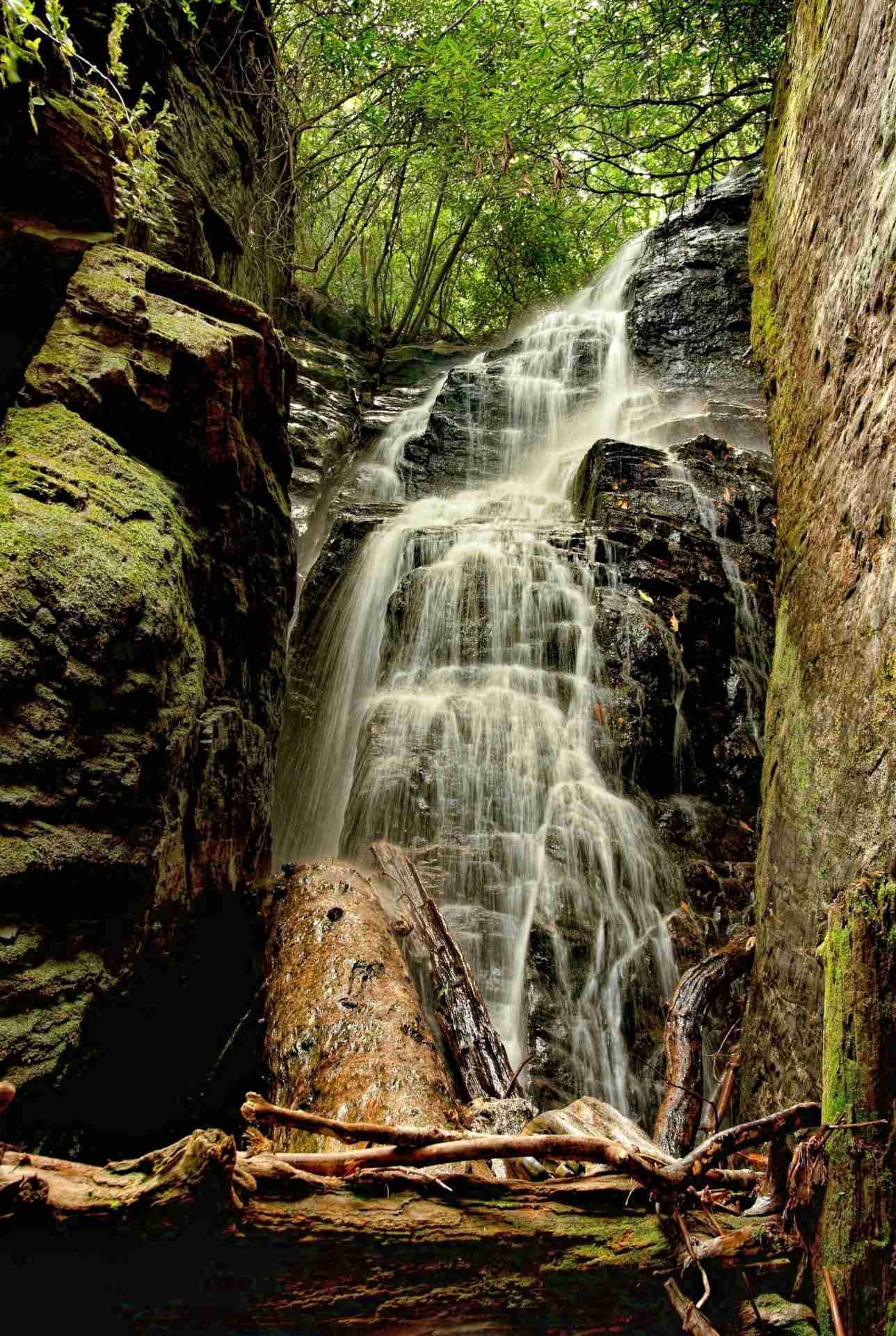
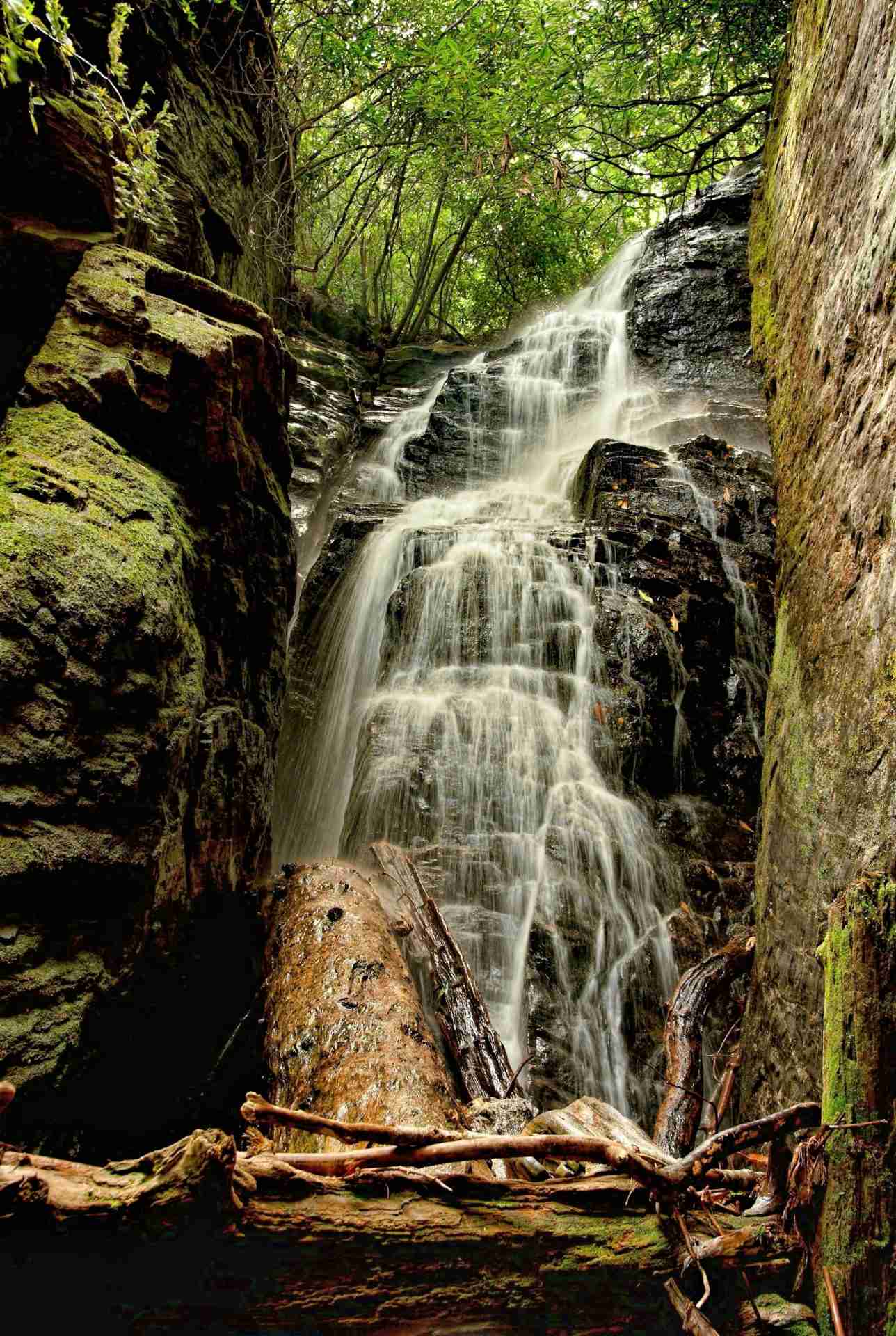
Raven Cliff Falls is one of the most distinctive waterfalls within the Chattahoochee–Oconee National Forest, with its unusual drop through a narrow split in a tall rock face. The hike follows Dodd Creek upstream through a shaded forest, passing a series of smaller cascades before reaching the main falls. What sets this location apart is not just height, but structure. The water disappears into a vertical crack in the cliff before emerging again lower down, creating a layered and visually distinct scene. The approach builds gradually, giving photographers multiple opportunities to work with moving water long before the final viewpoint. This is a location that rewards patience, good timing, and attention to conditions, especially after rainfall.
Best Photography Opportunities
• The Main Falls and Rock Split Formation
The defining feature of Raven Cliff Falls is the way the water funnels through a tall, narrow fracture in the cliff. From the main viewing area, the split rock face becomes the dominant compositional element, with water threading down through it rather than simply flowing over an edge. Long exposure techniques work especially well here, smoothing the water while preserving the hard vertical lines of the rock. Careful framing is important, as surrounding foliage can quickly clutter the edges of the frame. Lower light conditions in the shaded gorge make it easier to control highlights and hold detail in both rock and water. After rain, the flow is stronger and more photogenic, though footing can be slick.
• Cascades Along Dodd Creek
Before reaching the main waterfall, the trail passes several smaller cascades and stepped drops along Dodd Creek. These provide excellent opportunities for quieter compositions that focus on movement, texture, and layering. Because they are spread along the trail, you can often find cleaner framing options without large crowds. Working close to the water allows you to isolate individual flows and create intimate scenes. Overcast conditions are ideal for these smaller features, helping to avoid harsh contrast and blown highlights.
• Foreground Rock and Leading Lines
Near the main falls, large rocks and stream channels offer natural foreground elements that can anchor the composition. Positioning these carefully helps guide the viewer's eye toward the split cliff. Small adjustments in height and angle make a noticeable difference in how water paths align. This approach is especially useful when the main viewpoint feels visually busy. Taking time to refine foreground placement often results in stronger overall balance.
• Vertical Compositions Emphasizing Height
Because the falls drop through a tall rock face, vertical framing works particularly well. This orientation emphasizes the height of the cliff and the narrowness of the rock split. Including a small amount of surrounding forest canopy can provide scale without overwhelming the scene. A longer focal length helps simplify the frame and reduce distractions. These images tend to feel more focused and graphic than wider horizontal views.
• Seasonal Forest Changes
The shaded forest around the falls changes significantly with the seasons. Spring brings fresh green leaves and higher water flow, while autumn introduces warmer tones that contrast with dark rock and white water. Winter offers clearer sight lines through bare branches, though water flow may vary. Including subtle hints of the surrounding forest can help situate the waterfall within its environment. This approach works best when the foliage complements rather than competes with the main subject.
Best Time to Visit
Spring and fall are generally the most comfortable and photogenic seasons for Raven Cliff Falls. Spring often provides stronger water flow due to rainfall and fresher vegetation, which enhances contrast between rock and greenery. Autumn introduces color in the surrounding forest and cooler air, making the hike more manageable. Summer can be humid and busier, though early morning still offers workable light and quieter conditions. Winter can be productive for clearer views through leafless trees, but trail conditions may be muddy or slick. Early morning is the best time to avoid crowds and secure clean compositions at the main viewing area. Overcast days are particularly favorable, as they reduce contrast and make long exposure work easier. Planning a visit shortly after rainfall often results in stronger water flow and more dynamic images.
How to Get There
Raven Cliff Falls is located near Helen, Georgia, within the Chattahoochee–Oconee National Forest. The trailhead sits just off GA 348 (Richard B. Russell Scenic Highway). There is a dedicated parking area at the trailhead with ample space, followed by a clearly marked path that follows Dodd Creek upstream. The round trip hike is approximately five miles and is considered moderate in difficulty, with gradual elevation gain and uneven terrain. There is typically a parking or recreation area fee required for use of the trailhead facilities, though policies can change. Good footwear is essential, especially after rain, as sections of the trail can be muddy or rocky.
Recommended Photography Gear
A sturdy tripod is strongly recommended, particularly for long exposure work at both the cascades and main falls. A standard zoom lens covers most compositions, from wider environmental views to tighter framing of the rock split. A longer focal length can help isolate the waterfall and reduce visual clutter from surrounding branches. Neutral density filters are useful for extending shutter speeds in brighter conditions, though shaded forest light often reduces the need for heavy filtration. A polarizer can help manage glare on wet rocks and deepen color in foliage. Weather protection for gear is advisable, as mist and spray are common near the main falls. Carrying a manageable kit makes the five mile hike more comfortable and allows you to move deliberately along the trail.
Nearby Photography Locations
Located a short drive from Raven Cliff Falls, Anna Ruby Falls features twin waterfalls cascading side by side. It offers a different structure and easier access for comparison shots.
This waterfall drops into a broad basin and is viewed from a constructed platform. It provides a more open composition than the narrow split at Raven Cliff.
As the highest point in Georgia, Brasstown Bald offers sweeping mountain views that contrast with the enclosed forest feel of the waterfall trail.
The park includes lake views, wooded trails, and additional smaller cascades. It works well for extending a shoot beyond waterfalls.
This nearby waterfall offers a different style of cascade with relatively easy access. It pairs well with Raven Cliff for a waterfall focused outing.
Comments
Loading comments…