
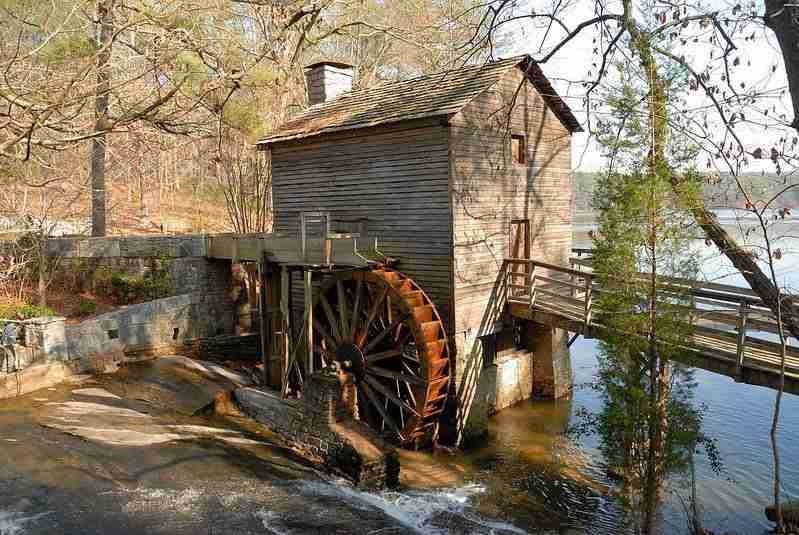
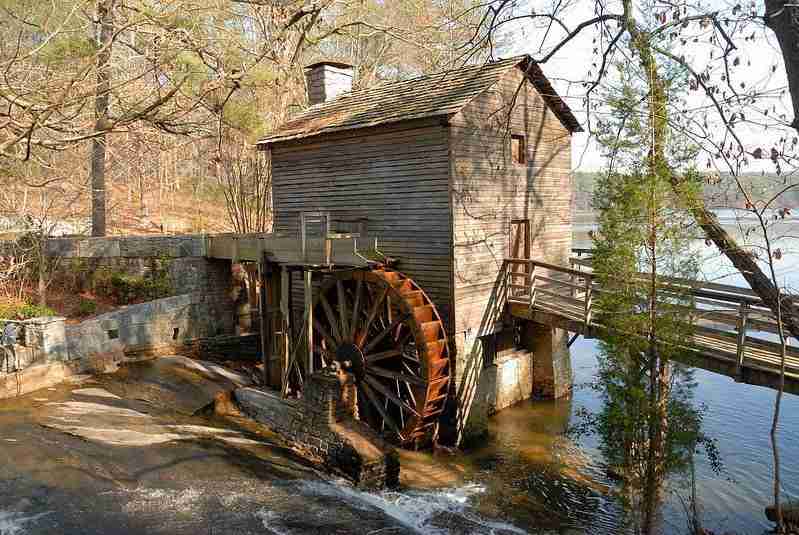
Tucked within the scenic landscape of Stone Mountain Park in Georgia, the Historic Grist Mill is a beautifully preserved 19th-century structure that offers photographers a glimpse into the past. Originally built in 1869, the mill was relocated to its current setting in the 1960s and now stands as a picturesque landmark surrounded by towering trees, a tranquil pond, and cascading water over a stone dam. With its weathered wooden exterior, rustic waterwheel, and natural setting, the grist mill provides endless opportunities for creative photography, whether capturing its historical charm, seasonal transformations, or reflections in the still water.
Best Photography Opportunities
• The Grist Mill and Waterwheel in Motion
– The large wooden waterwheel is the centerpiece of the mill, offering stunning compositions when captured from different angles. Using a slow shutter speed can create a silky effect on the water as it spills over the dam, while a faster shutter freezes the motion for a crisp, detailed shot. Shooting from a side angle can emphasize the movement of the wheel, while a front-facing perspective captures the symmetry of the mill's structure.
• Stone Bridge and Reflections in the Pond
– The stone bridge adjacent to the mill, combined with the still water of the pond, allows for stunning reflection photography. Capturing the mill mirrored in the water adds symmetry and balance to compositions, especially in the early morning when the water is at its calmest. Adding fallen leaves in autumn or a light mist in the morning can enhance the mood and depth of the image.
• Autumn Colors Framing the Mill
– In the fall, the surrounding trees burst into shades of red, orange, and yellow, providing a dramatic and colorful backdrop to the rustic wood and stone structure. A wide-angle lens can encompass the full scene, while a tighter crop can highlight the contrast between the warm foliage and the cool stone. Incorporating a foreground element such as overhanging branches or scattered leaves can create a natural frame for the composition.
• Golden Hour Light on the Mill
– The soft, warm tones of sunrise and sunset bathe the mill in a golden glow, emphasizing the texture of the wooden planks and stone foundation. The light filtering through the trees adds depth and warmth to images, creating a nostalgic, timeless effect. Positioning the mill so that the light catches the edges of the structure can add a beautiful rim-light effect for extra visual interest.
• Winter Frost and Snow-Dusted Scenes
– Though rare in Georgia, occasional winter frost or light snowfall transforms the grist mill into a magical, storybook scene. The contrast between the white dusting on the roof and trees against the dark wood makes for a striking composition. Capturing the morning light reflecting off the frost or ice formations around the waterwheel can add an enchanting wintery glow.
• Close-Ups of Historic Details
– The aged wooden beams, iron hardware, and stone foundation of the mill provide excellent subjects for texture-rich close-ups. Focusing on small details, such as the grain of the wood or the moss-covered stones, adds an artistic and abstract element to photography. Using a macro lens can further emphasize the fine details, such as tiny frost crystals in winter or the vibrant greens of moss after a rainstorm.
Best Time to Visit
The best time to photograph the Stone Mountain Historic Grist Mill depends on seasonal lighting and weather conditions. Autumn is particularly spectacular, with brilliant foliage reflecting in the pond, while spring offers lush greenery and blooming wildflowers. Early mornings provide the best conditions for reflections and soft, diffused light, while golden hour enhances the rustic tones of the mill. Overcast days are excellent for capturing details without harsh shadows, making them ideal for close-ups and long-exposure waterfall shots. Visiting during the weekdays or early in the morning helps avoid crowds, allowing for uninterrupted compositions.
In the summer months, bright sunlight can create strong contrasts and harsh shadows, so shooting during early morning or late afternoon provides better lighting. Additionally, the occasional misty mornings in spring and fall add an ethereal quality, softening the scene and making it more atmospheric. If aiming for winter photography, visiting right after a cold front increases the chances of finding frost-covered landscapes that enhance the mill's rustic charm. Regardless of the season, being mindful of weather conditions and seasonal changes can make all the difference in capturing the most striking images.
How to Get There
The Stone Mountain Historic Grist Mill is located within Stone Mountain Park, a short drive from Atlanta, Georgia. Visitors can access the site by car, with nearby parking available along the park's scenic loop. A short, well-maintained trail leads to the mill, making it easily accessible for all visitors. Entrance to the park requires a daily parking fee, and visitors should check the Stone Mountain Park website for seasonal hours, special events, and any restrictions.
Exploring the Stone Mountain Historic Grist Mill and the Surrounding Area
Beyond the grist mill itself, Stone Mountain Park offers a variety of additional photographic opportunities. The surrounding trails and wooded areas provide beautiful natural backdrops, while the lake near the mill offers peaceful water scenes. Exploring further into the park leads to scenic overlooks, historic buildings, and unique rock formations, all of which provide diverse compositions for photographers. Seasonal events such as the annual Christmas celebration and the famous laser show at the mountain's base offer further chances for creative and dynamic shots.
Nearby Photography Locations
– A short but steep hike or a scenic sky ride leads to breathtaking panoramic views from the top of Stone Mountain. The summit is especially stunning at sunrise and sunset, with sweeping vistas of Atlanta's skyline and the surrounding countryside.
– This historic wooden bridge, originally built in 1891, offers a picturesque setting for rustic photography. Framing the bridge with overhanging trees or capturing its reflection in the water creates timeless compositions.
– The serene waters of Stone Mountain Lake provide excellent opportunities for sunrise and sunset photography, with mist often rising from the water in the early morning. The reflection of the mountain in the lake makes for a stunning landscape shot.
– A unique landmark within the park, the Carillon Bell Tower creates interesting compositions, particularly when framed against the sky or captured during special musical performances.
Comments
Loading comments…