
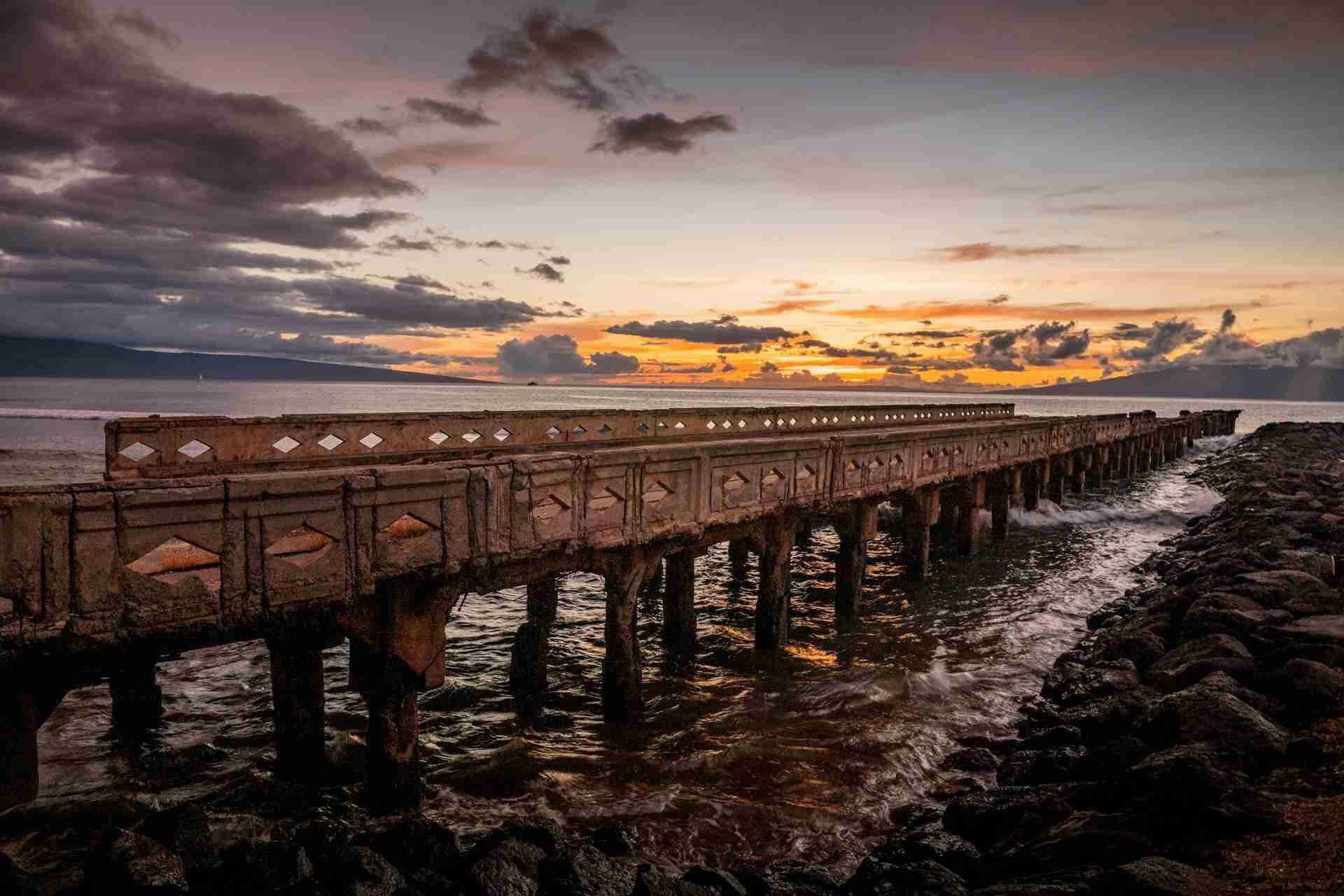
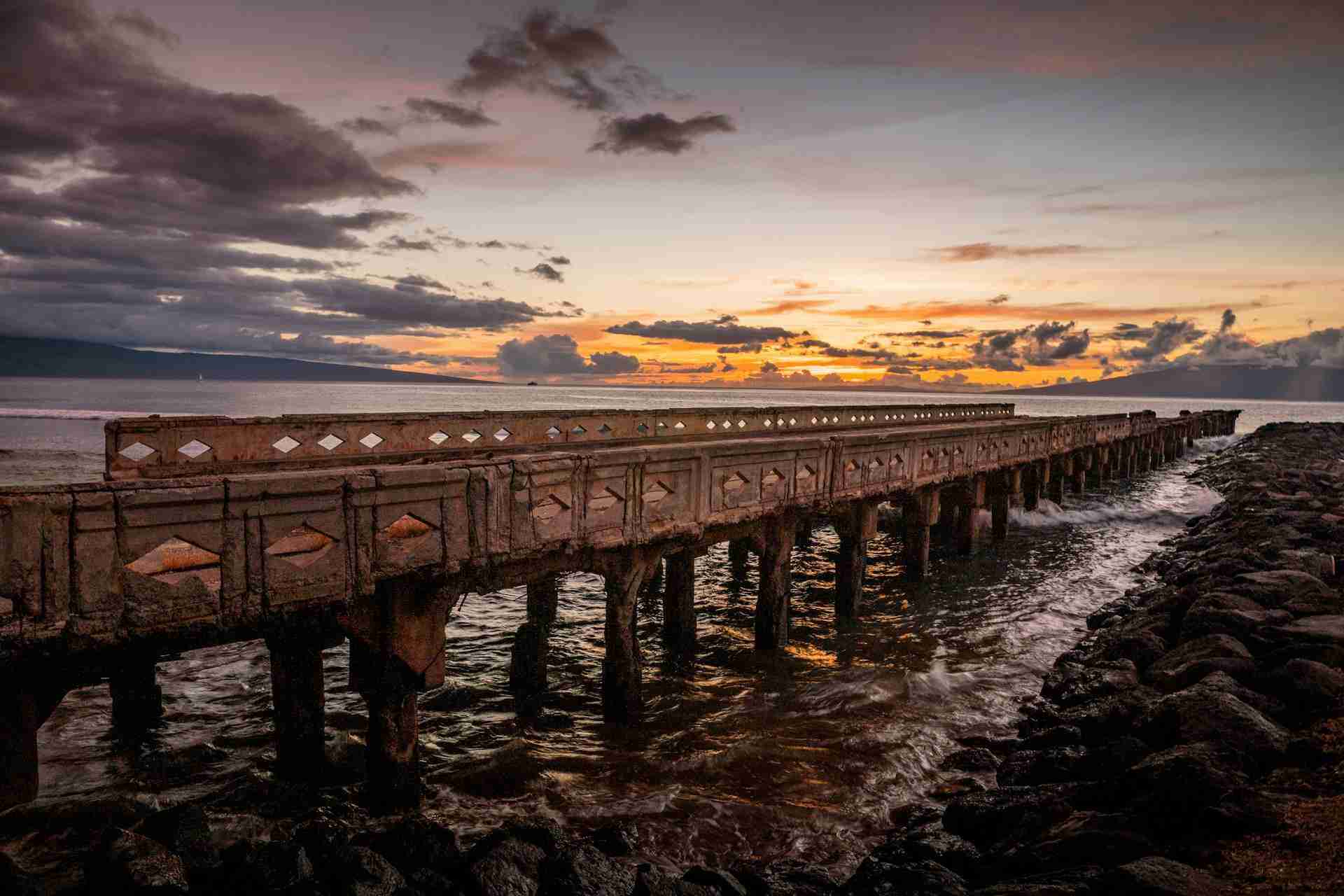
On Maui's western shore, where sugar exports once left the island for distant ports, the fractured remains of Mala Wharf now stand partially swallowed by the Pacific. Constructed in the early 1900s and later battered by hurricanes and decades of saltwater erosion, the wharf is no longer a functioning pier. What it has become, however, is one of the most photogenic and quietly dramatic shooting locations on the island. Rows of crumbling concrete pylons reach into the ocean, creating a grid-like rhythm broken only by tide and current. For photographers, it offers an unusual combination of geometry, marine life, and shifting tropical light, all within easy reach of Lahaina town. This is a place where decay meets regeneration, and where patience and timing can yield unforgettable images.
Best Photography Opportunities
• Aerial Views of the Submerged Wharf
From above, Mala Wharf reveals itself as a series of parallel, fragmented pylons stretching into shallow turquoise water. The uniformity of these ruined structures contrasts sharply with the organic movement of waves, coral, and sand patterns, creating a striking aerial subject. Drone photography excels here, especially when light conditions are clear and the ocean calm enough to expose the textures of the reef beneath the surface. Timing your flight during midday or early afternoon, when the sun is directly overhead, will help cut through surface glare and enhance visibility. The resulting compositions often feel abstract yet grounded in place, blending industrial remains with natural reef life in a single frame.
• Late Day Shoreline Compositions
For those shooting from shore, golden hour transforms Mala Wharf into a palette of warm tones and dramatic shadows. The remnants of the pier catch the light beautifully, turning rust-streaked concrete into golden beams reflected in rippling tide pools. Using a wide-angle lens and carefully chosen foreground elements, you can build layered compositions that lead the viewer's eye from the shoreline out toward the setting sun behind Lanai. The alignment of the wharf's supports also makes it easy to experiment with symmetry, diagonal lines, or even silhouettes against the colored sky. Golden hour here is not subtle. It's intense, fast-changing, and highly rewarding.
• Underwater Photography and Marine Life
Below the surface, the ruins have become an artificial reef attracting a wealth of marine life. Green sea turtles rest among the fallen beams, schools of tangs and butterflyfish swirl through gaps in the concrete, and occasionally, white-tip reef sharks glide slowly between the shadows. Photographers with underwater housings or GoPro-style rigs will find excellent opportunities here, particularly in the early morning when visibility is at its best. Wide-angle underwater lenses are ideal for capturing both marine subjects and the broader structure of the pier. Because of the location's accessibility from shore, it's possible to capture high-quality underwater images without needing to book a dive boat or travel far from town.
• Overcast Days for Long Exposures
While sunny skies define much of the Hawaiian visual style, overcast conditions bring a different mood to Mala Wharf. On days when clouds roll in from the mountains or storms build on the horizon, long exposure photography becomes especially powerful. With a neutral density filter and slow shutter speed, the sea flattens into a smooth surface while the jagged pylons stand in still contrast. This technique emphasizes the decay and geometry of the wharf and gives the scene a quiet tension. Framing the shot to include the West Maui Mountains in the background can add an extra layer of depth.
• Low Light and Night Shooting
The area around Mala Wharf remains dark enough after sunset to attempt night photography without overwhelming light pollution. On moonless nights, the Milky Way occasionally becomes visible over the water. The broken structures serve as excellent foreground anchors for night sky photography, and their irregular shapes catch just enough ambient light to register in long exposures. A small headlamp or handheld LED can be used sparingly for light painting, helping bring out detail without overpowering the stars. This is a niche shooting window, but one that can yield dramatic and unique images if conditions align.
Best Time to Visit
Mala Wharf is photographable year-round, but the quality of your shoot will depend on seasonal light, ocean conditions, and time of day. Summer offers the clearest water visibility, making it ideal for drone and underwater photography. Morning hours between June and September often bring glassy seas and direct overhead sunlight, both of which are key for capturing the submerged wharf and marine life. These are also the months when tradewinds arrive later in the day, giving photographers a longer window of calm conditions.
In winter, from November through March, swells are more common on the west side of Maui. While this makes underwater work more challenging, it creates excellent opportunities for dramatic skies, choppy surf, and moodier long exposures. Sunset is consistently strong throughout the year thanks to the location's western orientation, but during winter, the sun sets farther south and casts more angular light across the shoreline. For night sky work, April through October is best due to drier air and less frequent cloud cover. Always check tide charts and moon phases before planning a sunrise or night shoot.
How to Get There
Mala Wharf sits just north of central Lahaina. From Front Street, head inland on Prison Street or Lahainaluna Road, then turn west on Ala Moana Street. Follow this road until it transitions into Mala Wharf Road, which ends at a small parking area near the remains of the pier. The lot is unpaved but free to use and provides direct access to the beach and wharf. Arrive early to secure a spot, especially on weekends or during calm weather when divers and snorkelers frequent the area.
There are no permits or entrance fees required for photographing at Mala Wharf, and access is open to the public. The location is flat and walkable, with no hike or steep terrain involved. Drone operators will find adequate space along the nearby grassy areas or rocky shoreline to launch safely. If you're shooting underwater, there is a sandy beach entry point just to the south of the wharf that is commonly used by local dive instructors and shore divers.
Recommended Photography Gear
Because of the range of visual conditions at Mala Wharf, it helps to arrive with gear that can handle both high-contrast light and wet, windy environments. A weather-sealed mirrorless or DSLR camera is recommended, paired with a wide-angle lens for shoreline and pier compositions. If you're planning to shoot long exposures, bring a durable tripod and a set of neutral density filters to manage bright sky and moving water. A circular polarizer will also help reduce surface reflections when working near the water.
Underwater photographers should use a compact camera or mirrorless setup with housing rated for shallow dives. A dome port will improve wide-angle clarity, and if you shoot during early morning, strobes or a video light can help bring color back into deeper shadows. For drone work, compact quadcopters like the DJI Air or Mavic series are ideal for managing tight takeoff spots while still delivering high-resolution aerials. Keep lens cloths and extra batteries accessible—humidity and salt spray are persistent. A dry bag or waterproof backpack will make your life easier when moving between shoreline, gear setup, and water entry.
Nearby Photography Locations
Just ten minutes north of Mala Wharf, Ka'anapali offers sweeping views, open water compositions, and the distinctive volcanic bluff of Black Rock. Photographers can shoot cliff divers in motion, or focus on the interplay between surf, golden sand, and hotel silhouettes that reflect a different side of West Maui. Sunset here lights up the whole beach with saturated color, especially when there are low clouds on the horizon.
South of Lahaina, Launiupoko is less crowded and framed by lava rocks and tide pools that offer plenty of visual interest. It's ideal for slower, wide compositions that focus on shoreline textures and shifting light. Because of its slight elevation above sea level, it also provides excellent views of passing storms or golden light over the channel between Maui and Lanai.
Located farther north past Kapalua, Napili Bay is a curved beach lined with palms and framed by reef just offshore. The water clarity here is consistently good, making it ideal for both snorkeling and drone work. The arc of the beach and the soft pastel colors at sunrise make it a strong subject for balanced, quiet seascapes.
For a different vantage point entirely, head north toward the Waihee Ridge Trail. After a moderate hike, you'll reach panoramic views of central Maui, the West Maui Mountains, and even Lahaina in the distance. This is best in the early morning when the sun hits the ridgelines and creates strong shadows and contrast across the valleys.
• Olowalu Shoreline and Reef
About fifteen minutes south of Lahaina, Olowalu offers clear, shallow reef formations visible from both above and below. With drone gear, you can trace the patterns of coral heads stretching out into the bay. If you're shooting from the waterline, you'll find calm, protected areas with few swimmers, making it a great place for meditative, slow-shutter seascapes or snorkeling shots.
Mala Wharf shifts with each tide, fills with new life, and presents a different scene every time the light changes. For photographers who enjoy blending structure with nature, or who seek out locations that transform throughout the day, this spot offers uncommon creative potential. Every angle, every condition, and every hour tells a different story through the lens. Return more than once, and you'll come away with something entirely new each time.
Comments
Loading comments…