
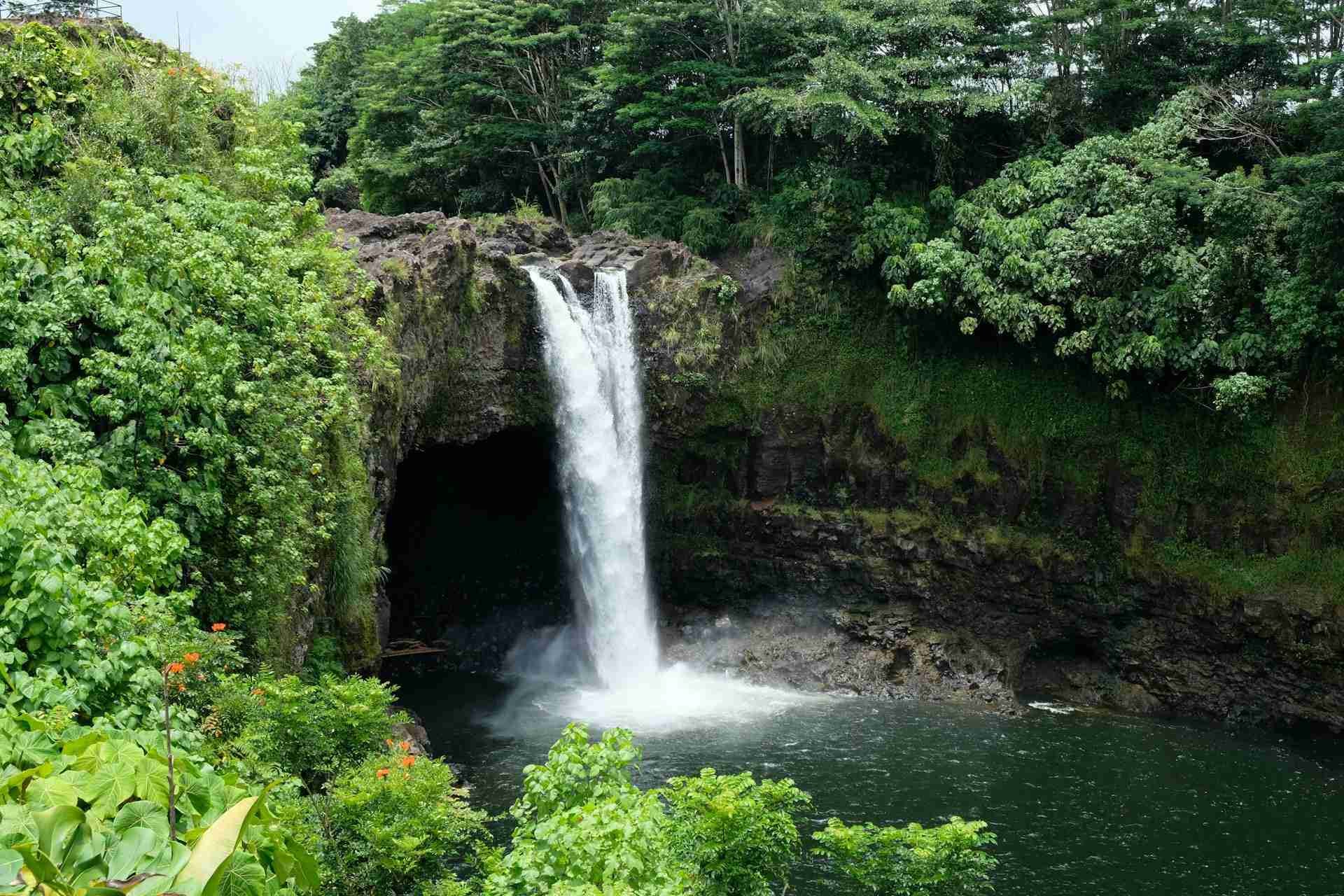
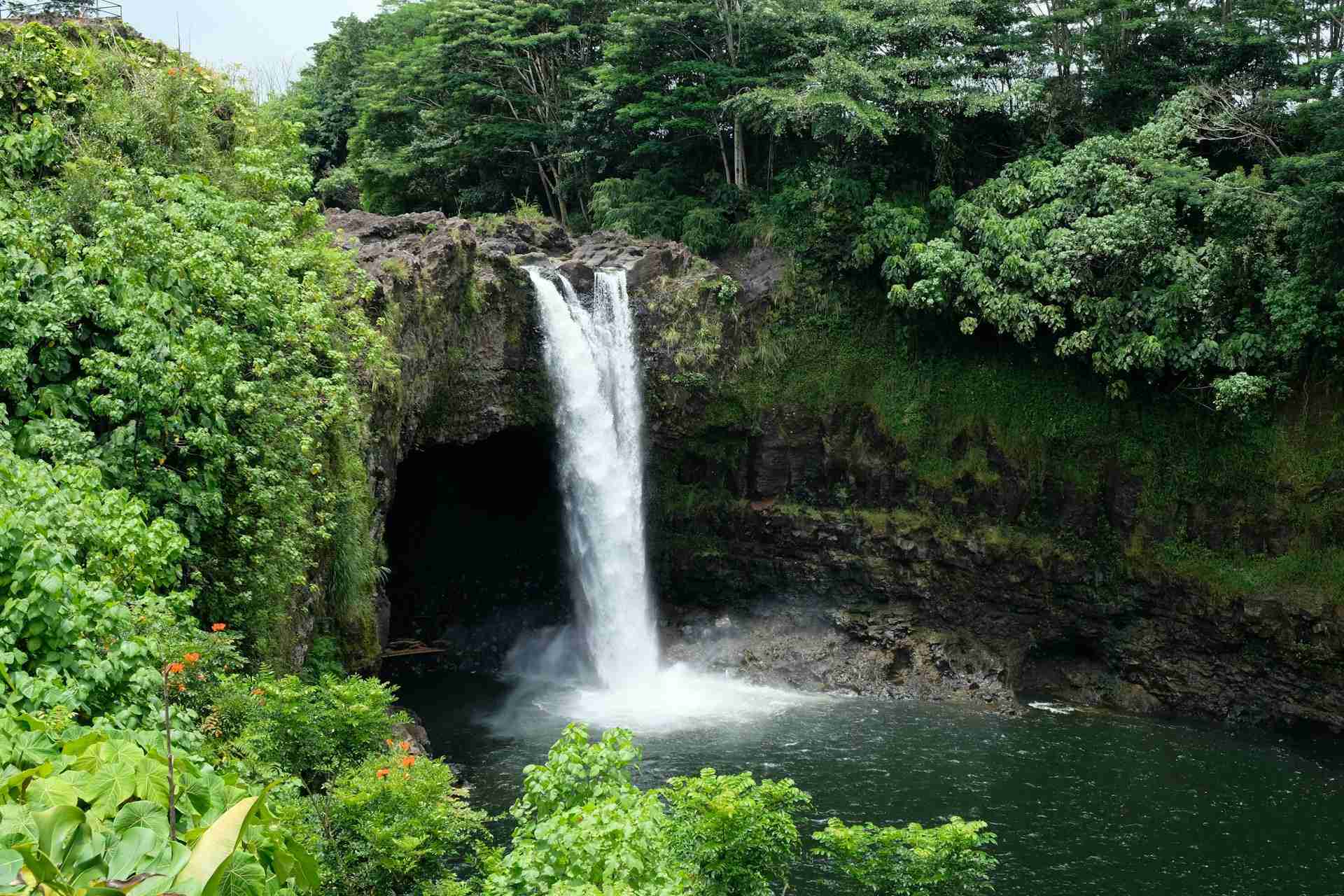
Rainbow Falls, just outside of downtown Hilo on the Big Island of Hawaii, is a dramatic waterfall tumbling over a lava cave into the Wailuku River. The falls get their name from the rainbows that often appear in the morning mist when sunlight filters through from the east. The falls drop about 80 feet over a wide cliff into a pool surrounded by jungle and basalt rock, creating a setting that blends volcanic texture with lush tropical vegetation. For photographers, Rainbow Falls is a chance to capture classic Hawaiian scenery without having to venture far from town. The location offers multiple vantage points, moody conditions during rain, and vibrant color when the sun is out. It is one of the easiest waterfalls to access on the island, but still offers strong visual potential with the right light and approach.
Best Photography Opportunities
• Rainbows in Morning Light
The main draw of this waterfall for photographers is the rainbows that form in the mist when morning sun hits from just the right angle. Arriving early, especially on a clear day, gives you the best chance to catch these bands of color forming in the spray. The viewing platform offers a perfect spot to frame the full falls and the base pool, with the rainbow typically forming just in front of the lava cave. Use a standard zoom lens around 24 to 70 millimeters to allow for both full falls and tighter rainbow shots. To make the rainbow pop, slightly underexpose the scene and position yourself so the sun is behind you and high enough to cut through the mist.
• Long Exposure from the Platform
The viewing area sits directly across from the falls and is ideal for long exposure photography, allowing you to smooth out the water's motion and capture the mist drifting across the frame. A tripod is necessary here, along with a neutral density filter if shooting during daylight. The surrounding rocks, mossy ledges, and jungle vegetation give the falls a textured frame, and the rock formation beneath the falls adds depth to longer exposures. Overcast days or light rain are also useful for this style of shooting, as they soften highlights and help the greens and browns stand out more evenly.
• Views from the Upper Trail
A short trail leads to the top of the falls, giving you a more dramatic perspective looking down the flow of the Wailuku River as it reaches the edge. From here, you can shoot along the river to the brink of the falls or turn back to photograph the surrounding trees, especially the massive banyan rooted near the path. These shots are less about the full waterfall and more about composition, scale, and using the river as a leading line. This area works well with a wide lens to exaggerate the flow or a telephoto to isolate water patterns and tree forms in the distance.
• Tropical Plant Life
The area around the falls is dense with tropical plant life, including ferns, vines, and moss covered lava rock. These surroundings provide strong opportunities for close up and abstract compositions, especially during or after rainfall when surfaces are wet and reflective. A macro or short telephoto lens helps isolate leaves, bark, and natural patterns. These shots are ideal for building a series that contrasts with the broader waterfall images and adds more intimate detail to a location that is often approached only for its main view.
• Changing Conditions After Rainfall
Rainbow Falls transforms significantly depending on rainfall. After heavy rain, the water becomes more forceful and brown with sediment, which brings a different visual quality to the scene. While this may not be the ideal time for rainbow hunting, it adds drama and power to the composition. Shooting from a safe distance on the platform allows you to work with the full width of the flow, which can split into multiple streams depending on volume. The mist during these times is heavier, creating a soft, layered look across the foreground and increasing the chance for lens flares and atmospheric effects.
Best Time to Visit
Early morning is the best time to photograph Rainbow Falls. Not only is the light coming in from the east and ideal for rainbow formation, but the site is also much quieter before tour buses and visitors arrive later in the morning. Aim to be in position by 7 or 8 am for the best chance at catching both good light and a rainbow.
Hilo receives a large amount of rain year round, which means the falls are rarely dry, but also that light can shift quickly. Overcast conditions work well for long exposures and for balancing the brightness of the water with the darker foliage. Rain showers are common and can add texture and sheen to surrounding rocks, though they can also make trail access more slippery. Late afternoon can also work for moodier compositions, though the main viewing angle is less directly lit at that time.
How to Get There
Rainbow Falls is located within Wailuku River State Park, just two miles from downtown Hilo. It's east to follow the signs leading to the park. The parking lot is free and typically has spaces available early in the morning, though it can fill up later in the day during peak tourist hours.
From the lot, the main viewing platform is only a minute's walk away and provides a clear, unobstructed view of the falls. To reach the upper trail and the top of the falls, look for the stone steps to the right of the main viewing area. This trail is short but can be slippery after rain. There are no entry fees, and tripods are allowed throughout the site. Basic restrooms and picnic tables are available, but there are no other facilities on site.
Recommended Photography Gear
A standard zoom lens, such as a 24 to 70 millimeter, is ideal for most views of Rainbow Falls, including the rainbow shots and full waterfall compositions. A wide angle lens is useful from the upper trail if you want to capture the river or tree canopy, while a longer lens can help compress the frame when working with atmospheric mist or layering tree forms.
A sturdy tripod is essential for long exposures, and a neutral density filter allows you to work with slower shutter speeds even in bright conditions. A circular polarizer can help manage glare on wet leaves and bring out color in the greens and rocks. Weather protection for both gear and yourself is important, as light rain can pass through quickly and the mist from the falls can drift across your equipment, especially on windy days. Footwear with good grip is recommended if you plan to explore the upper trail or shoot after rain.
Nearby Photography Locations
Just upriver from Rainbow Falls, this site features a series of small cascades and terraced lava formations. The textures and water flow here work well for long exposures, and the location is often quieter than Rainbow Falls.
This Japanese-style garden near Hilo Bay offers arched bridges, koi ponds, and views of Mauna Kea on clear days. The soft morning light here is ideal for slower-paced compositions and architectural elements.
Formed from ancient lava tubes, these caves offer a very different kind of shooting environment with moody, low-light conditions and natural rock formations. A tripod and headlamp are essential for any serious photography here.
• Hilo Bayfront and Coconut Island
The waterfront near downtown Hilo provides open views of Hilo Bay, moored boats, and distant mountains. Sunset and twilight work well here, especially when clouds begin to catch color over the water.
• Wailuku River Lower Trails
Below the falls, some unofficial trails and pullouts offer views of the river as it carves through jungle and basalt rock. These locations are less visited and work well for those looking to build a broader story of the river beyond the main falls.
Rainbow Falls is one of the most accessible and rewarding waterfalls on the Big Island, especially for photographers who work well with shifting light and changing weather. Whether you're chasing morning rainbows or building a series of long exposure studies, this location delivers consistent material in a compact and easy to reach setting. It's a strong way to begin a day of shooting around Hilo or to pair with other natural sites in the lush eastern part of the island.
Comments
Loading comments…