
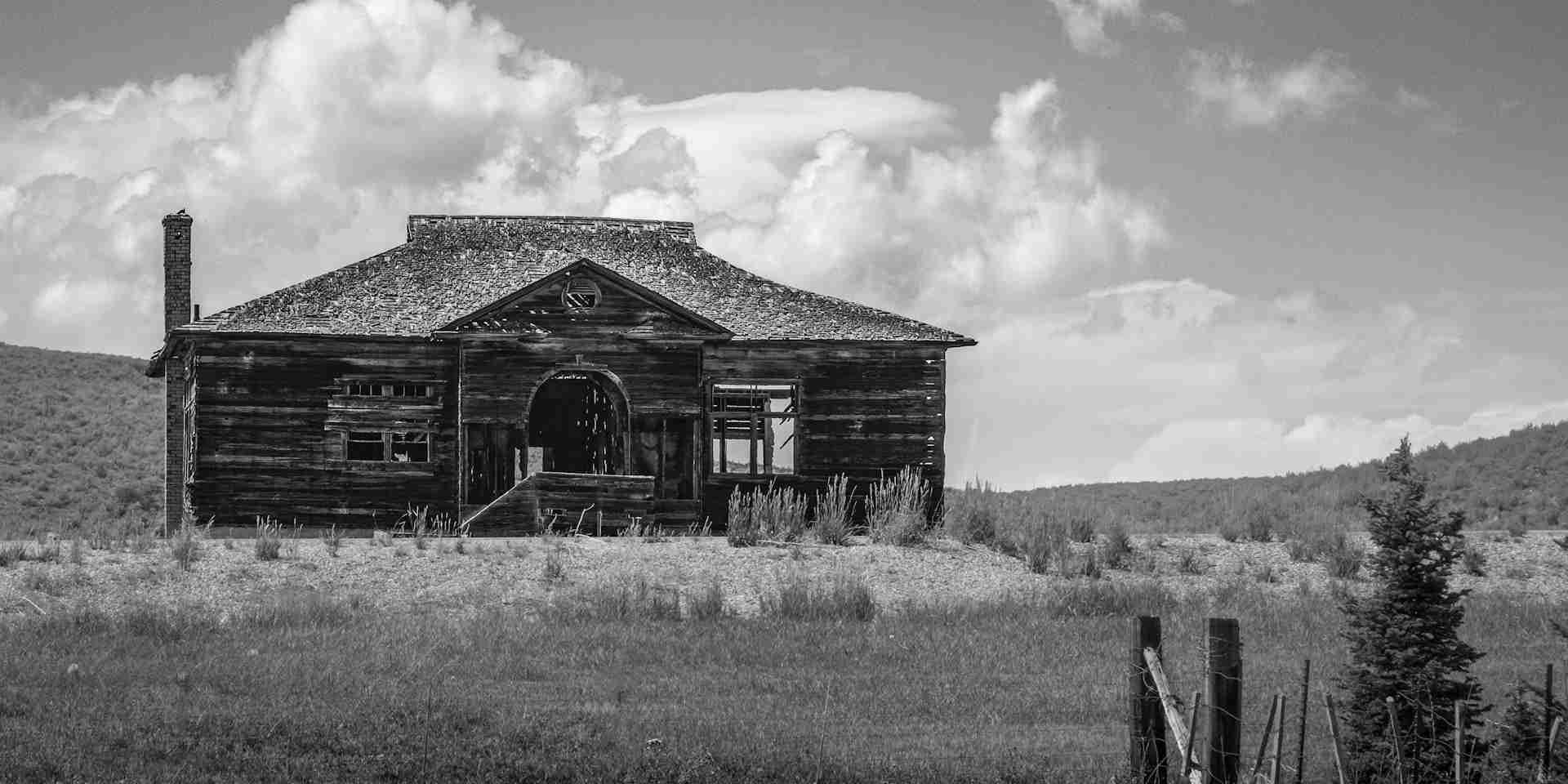
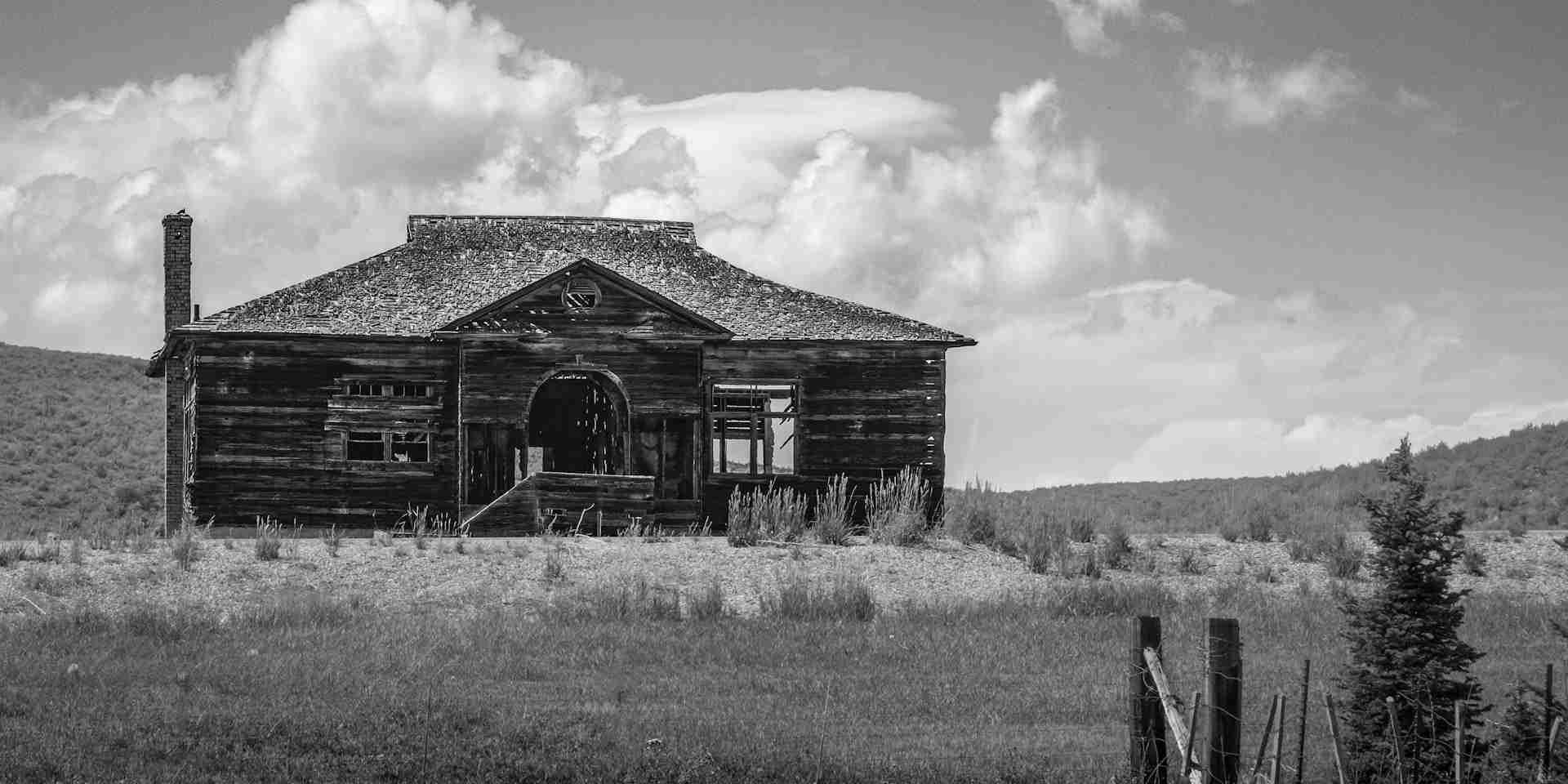
Just off Interstate 15 near the Idaho-Montana border, the abandoned schoolhouse in Humphrey stands quietly in the wide-open sagebrush plains of Clark County. With its collapsing roofline, faded clapboard siding, and broken window frames, the building feels suspended in time. There are no fences, no signs, and rarely another soul in sight, just weathered wood against a horizon that stretches for miles. For photographers, the site offers a raw kind of stillness, a place where light moves freely across decay and the absence of people becomes the subject. The structure's isolation and exposure to the elements make it a compelling canvas for anyone drawn to rural abandonment, expansive skies, and the simple geometry of forgotten places.
Best Photography Opportunities
• Framing the Schoolhouse in Wide Open Space
The surrounding plain offers a clean, uninterrupted horizon that is ideal for environmental portraits of the building. A wide-angle lens allows you to capture the structure in context, with sagebrush foregrounds and distant mountains anchoring the background. Early morning or late afternoon provides the best shadows for defining the warped lines and worn textures. Positioning the building low in the frame helps emphasize sky and isolation. The gravel frontage road or fence remnants can be used as subtle compositional elements.
• Textures and Close-Up Detail Work
The schoolhouse is full of character: cracked siding, rusted hardware, exposed insulation, and shattered glass that catches the light. These details come alive in soft directional light. Use a macro or short telephoto lens to isolate interesting textures and decay patterns. Overcast days or golden hour offer the best conditions for texture without harsh contrast. Focus on areas where wood grain, peeling paint, or rusted hinges intersect for layered, tactile images.
• Side Light and Shadow on the Façade
Depending on the time of day and season, the sun creates strong side lighting that shapes the structure with dramatic shadow. Sunrise and sunset offer directional warmth across the building's western or eastern walls. A polarizer can help deepen the sky and reduce glare off the wood. Use a tripod to stabilize your shot and refine framing during changing light conditions. Consider including nearby ground textures or surrounding brush to add scale and setting.
• Interior Light and Window Framing
If the building is safe to enter, the interior can offer powerful compositions using natural light from broken windows and doorways. Exposed beams, debris-strewn floors, and old fixtures form a moody setting. Bring a fast lens and use a high ISO if shooting handheld, as the interior is dark. Window frames can be used to create layered compositions or silhouettes, and side light through broken glass creates interesting patterns on floorboards and walls. Always use caution, as flooring may be unstable.
• Storm Skies and Black-and-White Conversions
The area around Humphrey is known for sudden weather shifts, especially during spring and late summer. Dark, rolling clouds build quickly, creating strong contrast behind the structure. These are perfect conditions for black-and-white photography. The angular roofline and straight verticals stand out against a shifting sky. Use a longer lens to compress cloud layers or go wide for more dramatic effect. Monochrome processing works well here to emphasize mood and contrast without distraction.
Best Time to Visit
From late April through October, conditions are typically clear, with accessible roads and minimal snow. Spring brings more color to the plains and low-growing wildflowers that break up the browns and grays. This is the best season for softer light, and clouds are common in the mornings. By mid-summer, the grass dries out and creates a more desaturated palette that suits high-contrast work.
Fall offers cooler temperatures and rich golden tones in the surrounding fields. Light becomes warmer and more directional, especially in the late afternoon. Sunrise also remains strong through October, casting long shadows and highlighting the structure's details before the sun climbs too high.
Winter visits may be possible, but access depends on road conditions. Snow adds a dramatic element, but contrast can be difficult if skies are overcast and the landscape becomes too uniform. If visiting in colder months, check local forecasts and road reports before committing to the trip.
Wind picks up in the afternoons year-round. For long exposures or tripod work, mornings tend to be calmer and easier to manage. Storms often arrive quickly and move through fast, offering brief but rewarding conditions for those ready to shoot on short notice.
How to Get There
Humphrey is located in eastern Idaho, just south of the Montana border. From Idaho Falls, take I-15 north for approximately 90 minutes. Use Exit 184, marked for Humphrey. After exiting, follow the frontage road west for less than a mile. The schoolhouse is plainly visible from the road, sitting slightly raised in the sagebrush. It faces south and is set back only a short distance from the pavement.
There is no designated parking area, but the road shoulder provides a safe place to pull over. There are no access restrictions or signage, and the site sits on what appears to be long-abandoned ground. Entering the building is not prohibited, but do so with extreme caution. The roof is partially collapsed, and the floors may be unstable.
Cell service is unreliable in the immediate area. There are no services in Humphrey, so plan to fuel up and prepare in either Spencer, Idaho to the south or Monida, Montana to the north. Bring water, snacks, and any tools you may need for gear maintenance in the field.
Recommended Photography Gear
A versatile kit is essential here, especially if you're aiming to cover both wide environmental shots and interior detail work. A full-frame or crop-sensor camera with good high ISO performance and dynamic range is ideal. For overall coverage, a 24 to 70mm lens offers the flexibility to move between full-building frames and tighter compositions. For landscape shots with expansive sky, a 16 to 35mm wide-angle works well, especially during sunrise or storms.
If you want to isolate architectural elements or compress the structure against its background, a 70 to 200mm lens is useful. It also allows you to work from a distance if the site is not safe to enter. For interiors or close detail work, bring a fast 35mm or 50mm prime lens that performs well in low light.
Use a tripod for golden hour or interior shooting, particularly if you're working at slower shutter speeds. Choose one with sturdy legs that can be secured on uneven or soft ground. A circular polarizer helps reduce glare on glass and enhances sky detail. A 3-stop or variable ND filter is useful for long exposure work, especially if clouds are moving quickly overhead.
Bring a dust blower, lens cloths, and protective covers for your gear. Gloves are helpful if you're working around sharp wood or glass. If you plan to enter the structure, wear boots with ankle support and stay alert to shifting footing or exposed nails.
Nearby Photography Locations
Just north on I-15, Monida Pass offers sweeping views of open grassland and rolling hills that make strong minimalist compositions. It's a useful stop for big sky frames and compressed layers, especially when low clouds hover near the horizon.
This small town has several aged buildings, an old café, and signage that offers classic roadside photography potential. It's a contrast to Humphrey's isolation and can add human-scale detail to your regional shoot.
• Beaver Creek Valley
Located west of Humphrey, this area provides rural ranchland, creek reflections, and low mountain backdrops. Visit in the morning for soft light and fog along the water, or shoot in the late afternoon when the grasses begin to glow.
• Island Park
About an hour west, Island Park offers a completely different landscape with forest, rivers, and volcanic terrain. This is a good extension if you want to include water features or moodier forest scenes in your trip.
To the northeast across the border in Montana, this refuge offers wetland reflections, open water, and excellent light during seasonal transitions. It's also a great location for birds and long lens work.
The schoolhouse in Humphrey is not just another roadside ruin. It's a quiet, weathered reminder of a time when small communities dotted this high desert corridor, now left behind by changing times and fast highways. For the photographer, its simplicity is part of its appeal. You don't need perfect conditions or a dramatic sky. You just need time, patience, and an eye for what's still standing.
Comments
Loading comments…