
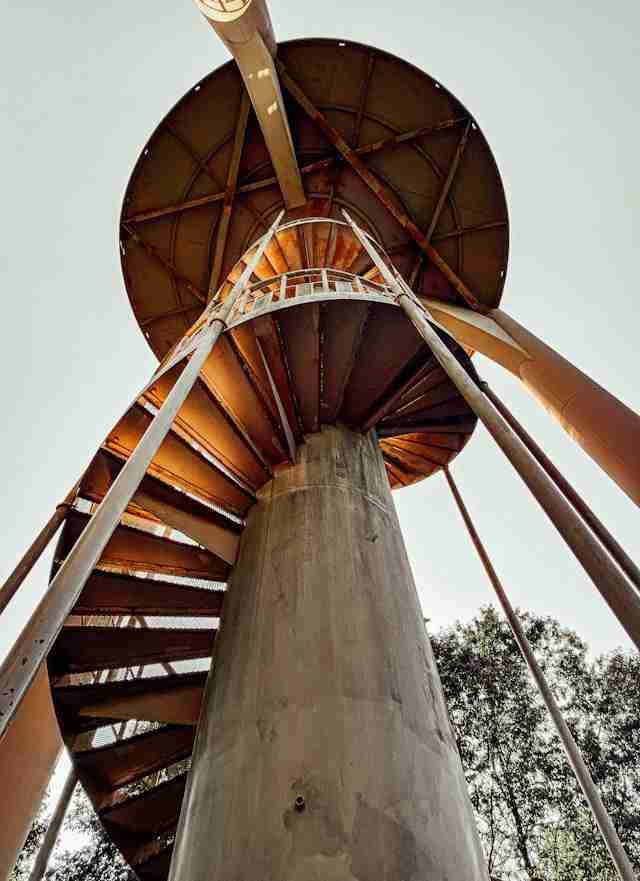
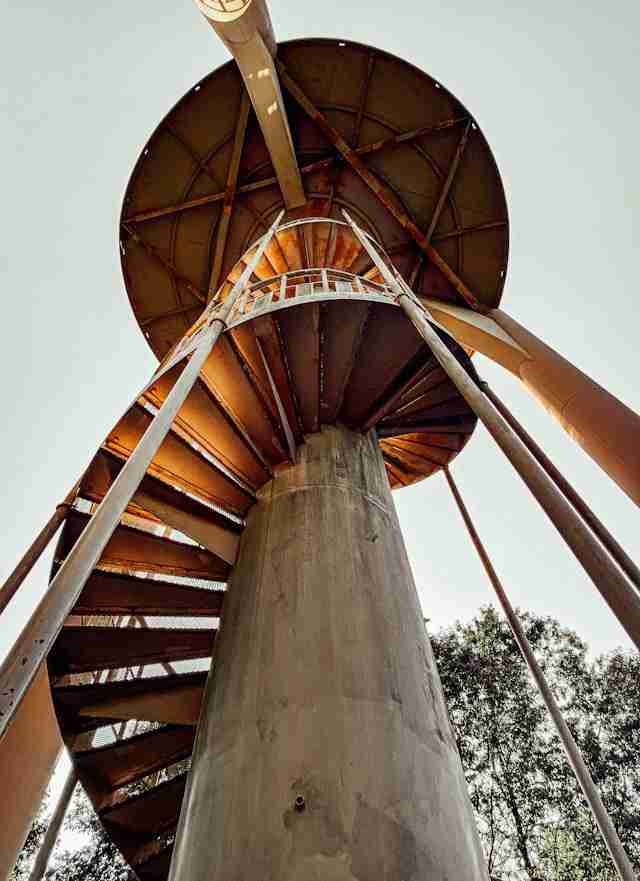
Standing at the southern edge of Illinois in Giant City State Park, the Giant City Observation Tower offers photographers a high vantage point above dense hardwood forests and layered ridgelines. Built of native sandstone and tucked into the Makanda hills, the tower provides one of the few elevated perspectives in the region that is accessible without long hiking or climbing. From the top platform, photographers can frame clean horizontal lines of trees, seasonal color shifts, and low morning fog rolling through the Shawnee Hills. The tower itself is also a visual subject, with strong vertical lines, weathered texture, and sharp contrast against the surrounding treetops. It's a versatile location where form, light, and height converge in a landscape otherwise dominated by ground-level views.
Best Photography Opportunities
Golden Hour Views from the Tower Platform
The observation deck provides uninterrupted views over the Shawnee National Forest, and the best time to shoot here is during the hour just after sunrise or just before sunset. From this high point, light rakes across the treetops, creating contrast between ridges and valleys, and highlighting subtle color shifts in the canopy. In the fall, the forest below bursts into warm reds and oranges, while morning fog often settles in the low areas, adding separation and softness. With a wide-angle lens, you can frame the vast sky overhead and use the treetops as texture in the foreground. A polarizer can deepen sky contrast on clear days, but be mindful of uneven tones across the wide view.
Tower Silhouettes Against the Sky
When viewed from the surrounding trail or nearby clearings, the tower itself becomes the subject. At sunrise or sunset, you can position the structure against the glowing horizon and shoot it in silhouette, emphasizing its geometric form. This works especially well in winter, when bare trees offer cleaner sightlines and the sun's position stays low throughout the day. Using a medium telephoto lens, you can compress the trees and sky, isolating the tower within layers of tone and texture. Overcast days also provide strong opportunities for minimalist compositions with the tower centered in a flat, muted background.
Layered Forest Landscapes with a Telephoto Lens
From the top of the tower, a longer lens reveals the subtle layering of the Shawnee Hills in the distance. During clear weather, you can capture ridge after ridge receding into the horizon, each one softened by haze or shifting light. This is especially effective in the early morning when atmospheric conditions add depth. In spring, new foliage adds fresh green tones; in autumn, the color palette shifts to earthier reds and golds. A 70 to 200 millimeter lens works well here, allowing you to flatten the scene and highlight the graphic quality of tree lines and ridge curves.
Black and White Studies of Light and Structure
The contrast between the built form of the observation tower and the organic shapes of the surrounding forest lends itself to monochrome photography. The vertical lines of the steel and stone structure stand out cleanly against the softer textures of trees and sky. On days with strong directional light, shadows along the stairs and railings create repeating patterns that can be framed for graphic effect. Shooting in black and white allows you to emphasize these contrasts without the distraction of color. Use side light in early morning or late afternoon to accentuate form and depth.
Storm Clouds and Atmospheric Change
Because of the tower's elevation and exposure, it's an excellent place to observe and photograph changing weather. In late summer and early fall, thunderstorms often form over the hills, creating dramatic skies and shifting light across the landscape. With a wide-angle or standard zoom lens, you can include the horizon line and the tower railing as anchor points while capturing cloud formations above. Long exposures during these conditions can soften fast-moving clouds or show subtle movement in trees below. Be cautious with gear, especially if lightning is in the area, and always prioritize safety when weather shifts.
Best Time to Visit
The observation tower is open year-round, but the best photography conditions occur in spring and fall when temperatures are comfortable and light quality is more forgiving. From late March through early May, the forest begins to green, and soft light at sunrise makes the treetops glow with fresh color. Morning fog is common in spring and adds atmosphere and separation across the landscape.
September through early November is the most photogenic time to visit. The forest canopy changes weekly, and light becomes warmer and more directional. Early mornings during this time often deliver a mix of low fog and golden sunlight, creating excellent opportunities for long-lens work from the platform. As leaves drop later in the season, the visibility through the forest improves, allowing for cleaner lines in lower compositions.
Summer can be productive, especially after sunrise when shadows remain long, but the high sun and haze make mid-day work more difficult. Overcast conditions can help even out the contrast and are ideal for working with the structure itself or exploring texture studies. Winter brings bare trees, clearer views of distant hills, and more dramatic skies, but cold temperatures and occasional ice make preparation essential. The tower remains accessible unless temporarily closed for maintenance or extreme weather.
How to Get There
The Giant City Observation Tower is located in Giant City State Park, just outside the town of Makanda in southern Illinois. From Makanda or Carbondale, follow signs for Giant City Road and enter the park via Giant City Park Road. Once inside the park, look for directional signs pointing to the tower, which is located near the southern end of the park loop.
There is a small parking area near the base of the tower, with direct access via a short paved path. No hiking is required, and the path is accessible for most visitors carrying gear. There are no entrance fees for the park or the tower, and the site is open during daylight hours. Tripods are allowed both on the tower platform and along the path below, though be considerate of other visitors during busy periods. Early morning offers the best conditions with fewer people and softer light.
Recommended Photography Gear
A wide-angle lens is essential for capturing the full expanse of the view from the tower, especially when working with dramatic skies or panoramic treetop scenes. A 16 to 35 millimeter lens gives you coverage for both vertical and horizontal compositions. For mid-range flexibility, a 24 to 70 millimeter lens works well when framing the tower from the ground or isolating sections of the forest. A 70 to 200 millimeter lens is particularly useful for compressing distant hills, layering ridges, and working with backlit fog or color during sunrise.
A sturdy tripod is recommended for low light work, long exposures, and careful composition, particularly on the tower platform where wind can affect stability. Use a lens hood and microfiber cloth to control glare and clean for moisture, especially in humid conditions. Neutral density filters can help extend exposure times for cloud movement, and a polarizer is effective for controlling reflections off foliage and deepening sky contrast.
Comfortable shoes with good grip are helpful for walking around the base and climbing the tower stairs safely with gear. A weather-resistant backpack and a rain cover for your camera are useful during unpredictable weather, particularly in spring or fall. Bring extra batteries, as cold temperatures and extended shooting sessions can wear them down faster than expected. If visiting during peak fall color, arrive early to secure parking and take advantage of the clearest views before crowds arrive.
Nearby Photography Locations
This loop trail passes through towering sandstone bluffs, narrow passageways, and mossy boulders. Light filters through the canopy, creating excellent conditions for forest detail shots and vertical compositions with tree trunks and cliff walls. Overcast days work best for balanced exposures and soft shadows.
A short drive from the tower, this natural rock formation stands isolated among the trees and offers unique textures and shapes. It's best photographed in soft afternoon light when the form is evenly lit and the surrounding forest adds depth and color.
Trillium Trail in Spring
During April and May, this trail features wildflower blooms along wooded paths. It's ideal for macro work, soft light portraits of native plants, and backlit leaf studies. Morning light here is diffused and even, allowing for subtle contrast and color control.
In the nearby town of Makanda, the historic boardwalk includes quirky shops, weathered wood textures, and low-slung buildings surrounded by trees. It's a good spot for contextual street-style shots or documentary work before or after time in the park.
Located in Shawnee National Forest about a 30-minute drive from the park, this rugged trail includes sandstone cliffs, forested valleys, and seasonal waterfalls. Its scale and light quality make it a strong secondary location for landscape work with broader compositional range.
The Giant City Observation Tower offers a rare combination of height, accessibility, and atmospheric variability. Whether you're chasing color in the fall canopy, fog rolling over morning ridges, or the sharp edges of winter skies, this vantage point delivers reliable, repeatable conditions with creative range. For photographers who enjoy blending human-built structure with open landscape and changing light, it's a location worth visiting again and again.
Comments
Loading comments…